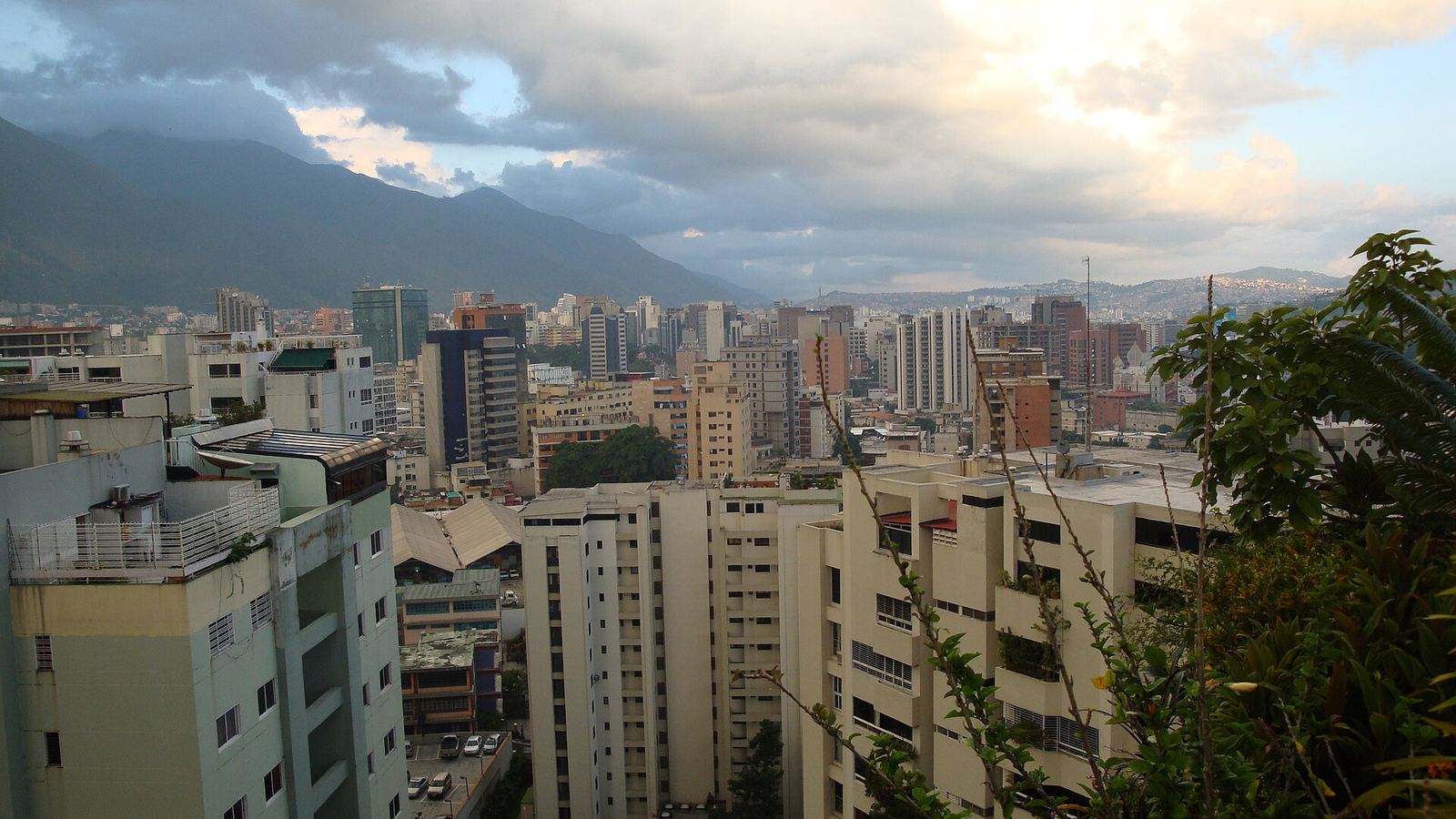
Caracas is a working mobile city again, but it is a rebuilt one, and the rebuild is three months old. The magnitude 7.2 and 7.5 earthquakes of 24 June 2026 struck a valley where operators hang a great deal of their radio equipment on the roofs of tall buildings, and the buildings that failed took the equipment with them. Movistar lost roughly half its national site count in the first hours, Movilnet slightly more, Digitel a quarter. Ninety percent of the country was back on air inside five hours and the capital was among the first places restored, so you will have bars in Chacao and Sabana Grande. What you will also meet, occasionally, is a street where the nearest mast has not been replaced yet and a service hosted abroad that loads slowly because half of the country's international cable capacity is still out.
The practical consequence for a visitor is that a Venezuela eSIM installed before departure is worth more here than in most capitals. Not because the network is bad, but because the alternative is walking around an unfamiliar city looking for an open carrier shop with your passport in your hand, and that is exactly the activity Caracas rewards least.
What This Guide Covers
Jump to the section most relevant to you
Mobile Coverage Across the Valley
Caracas sits in a narrow east to west valley between 870 and 1,043 metres, hemmed in by the wall of El Avila to the north, and that geography does most of the work in explaining coverage here. The flat floor of the valley, which is where the eastern municipalities and the commercial centre sit, is well served. The hillsides are not, and the difference can be a single block.
Across the eastern municipalities, Chacao and Baruta in particular, both private networks give you dependable 4G. Movistar tends to be the most consistent across the central corridor through Chacao, Altamira, Los Palos Grandes and El Rosal, which is unsurprising given it is the broadest network nationally. Digitel is at least as good in the same areas and better on the things that need upload rather than download: it measured 11.2 Mbps up and 63.5 milliseconds of latency in national testing across early 2026, against 7.1 and 81.2 for Movistar. If you are joining meetings from a hotel room in Las Mercedes, that gap is the one you will feel. Movilnet, the state network, averages 9.3 Mbps down nationally and is not worth choosing.
Signal thins out predictably in three places: up the hillside barrios that climb the southern side of the valley, along the northern edge where the ground rises into the national park, and in the pockets of the centre where a damaged building has taken its rooftop site out of service and the replacement is temporary. That last category is new since June and is the one that will keep improving month by month.
Which network your eSIM lands on
It is not a detail here. Airalo sells Venezuela under the package name Aragua Mobile and connects through Movistar, listed on the product page as Telefonica Moviles Venezuela. Nomad connects through Digitel. Both are fine across central and eastern Caracas. Digitel is the better bet if your days involve calls; Movistar is the better bet if you are heading out of the city into smaller towns.
Metro, Metrocable and Data on the Move
The Caracas Metro runs four lines and 47 stations and moves around two million passengers on an official day. Line 1 crosses the valley from Propatria in the west to Palo Verde in the east and is the one visitors use most, taking in Capitolio, La Hoyada, Bellas Artes, Plaza Venezuela, Sabana Grande, Chacaito, Chacao and Altamira. Line 2 runs from El Silencio to Zoologico, Line 3 drops south from Plaza Venezuela to La Rinconada, and Line 4 is a short link between Zona Rental and Capuchinos. Fares are nominal by any international standard and the system has spent long stretches since 2018 effectively free to ride.
Data underground is the usual story for a system of this vintage: patchy in the tunnels, workable on the platforms in the busier central and eastern stations, and reliable again the moment you come up the escalator. Do not plan on holding a call between Plaza Venezuela and Altamira. Do plan on your maps app knowing where you are when you surface, which is the part that actually matters.
The metro was suspended immediately after the 24 June earthquakes as a precaution and again briefly after a magnitude 5.2 aftershock on 30 June, and it returned to full commercial service on 23 August 2026 following a separate round of flooding. Two other systems worth knowing: the Metrocable aerial gondolas, which connect hillside neighbourhoods to the metro and give you a signal that is often better in the air than it was on the ground below, and BusCaracas and the wider Metrobus network filling the gaps between lines.
Before you go underground
- Download the offline map for the whole valley, not just your district. Reception at the platform is not a given.
- Screenshot your destination address in Spanish. Showing a driver or an attendant a picture beats explaining it.
- Keep the phone in a pocket rather than in your hand on a crowded platform.
- Have your hotel's number saved offline as a contact, not sitting in a booking email you need data to open.
Neighbourhood Notes: Chacao, Las Mercedes, Sabana Grande
Chacao, Altamira and Los Palos Grandes. The eastern business and dining district, and where most visitors stay. Coverage is the best in the city on both private networks and the carrier shops in Sambil Chacao are the easiest place in Venezuela to buy anything phone related. This is also the part of Caracas that took the worst of the June earthquakes: Los Palos Grandes and Altamira, both in Chacao municipality, saw high rise collapses and a great many buildings that are still awaiting structural assessment. Expect scaffolding, closed blocks and the occasional diversion, and expect at least one street where the mast that used to serve it is gone.
Las Mercedes and El Rosal. South and west of Chacao across the Guaire, this is the restaurant and nightlife belt and increasingly the office one. Hotel WiFi here is common and rarely fast. Coverage on the flat is good; it degrades as you climb toward Baruta. If you are working from Caracas for a fortnight, this and Chacao are the two districts where a Digitel connection will hold a video call without drama.
Sabana Grande and La Candelaria. The central commercial spine, built around a long pedestrian boulevard, with the El Recreo shopping centre and a dense run of cafes and shops. La Candelaria just to the north is the old Spanish and Portuguese quarter and the best cheap eating in the city. Coverage across both is solid. The advice that matters here is not technical: this is a busier, more mixed, more crowded part of town than the eastern districts, and a phone held out in front of you on the boulevard is more conspicuous than it would be in Altamira.
| District | Signal | Worth knowing |
|---|---|---|
| Chacao / Altamira | Strongest in the city | Best carrier shops, heaviest June earthquake damage |
| Los Palos Grandes | Good, some gaps | Residential and dining, several buildings still condemned |
| Las Mercedes / El Rosal | Good on the flat | Hotels and restaurants, weakens on the climb south |
| Sabana Grande | Solid | Central, crowded, keep the phone away on the boulevard |
| La Candelaria | Solid | Old quarter, dense streets, good food, poor lighting after dark |
| Hillside barrios | Weak to none | Coverage falls away with the gradient. Not a visitor area |
Using Your Phone in Public Here
Caracas carries a real advisory level risk and pretending otherwise would be useless to you. The US State Department moved Venezuela from Do Not Travel to Reconsider Travel on 19 March 2026, the first easing in seven years, and the current advisory still cites crime, kidnapping, terrorism, poor health infrastructure and natural disaster. This is a connectivity guide rather than a security briefing, so here is only the part that touches your phone.
The whole argument for arriving with data already working is that it lets you keep the device in your pocket. Someone standing on a corner rotating a map, visibly lost, holding an expensive handset, is the single most avoidable situation in this city, and it is exactly the situation an unconfigured phone creates. Working data does not make you safe. It removes one specific reason to stand still in public looking like a visitor.
One more point that belongs here rather than in a security section: install any VPN you plan to use before you arrive. Dozens of VPN vendors' websites are blocked at ISP level in Venezuela along with the Tor Project site and a list of public DNS resolvers, and your eSIM inherits that filtering because it is roaming on a Venezuelan network. The apps themselves have largely kept working. The download pages often do not.
Hotel and Public WiFi, and the Cable That Broke
Set your expectations low and you will not be disappointed. Hotels in the eastern districts, Altamira, Las Mercedes and Los Palos Grandes, almost all include WiFi, and it rarely runs faster than five to ten megabits. That is enough for email, messaging and a passable video call at a quiet hour, and not enough for two people in a room both trying to work. Cafes and coworking spaces exist and their reliability varies by the day.
There is a specific reason the city's fixed internet has felt slower since the summer. A submarine cable operated by Cirion Technologies ruptured near Puerto Viejo in Catia La Mar during the June earthquakes and took roughly half of Venezuela's international bandwidth with it. Operators mitigated the damage by keeping more traffic inside the country through the national internet exchange and by routing some of the remainder through Colombia, which is why the country did not simply fall off the map. What it means in practice is that a site or service hosted abroad can crawl while a Venezuelan one loads instantly, on the same connection, at the same moment.
Open public networks in malls and plazas are best avoided, and not only for the usual reasons. They are slow, they are crowded, and the sign in flows are frequently broken. If you are going to use one for anything involving a password, put a VPN in front of it. Better still, use your own data: a five gigabyte eSIM at 27 dollars covers an ordinary week here comfortably, because the days you spend outside the city are days you spend outside coverage anyway.
How much data a week in Caracas really takes
Maps, messaging, some browsing, a handful of calls and a moderate amount of social use lands most visitors between two and four gigabytes over seven days, especially with hotel WiFi absorbing the evenings. Three gigabytes at 19 dollars is the sensible floor; five at 27 is the comfortable answer. Only a working stay, with daily video meetings and uploads, justifies going higher, and that is the one case where Airalo's unlimited week at 41 dollars starts to make sense.
Arriving, and Getting Out of the Valley
Almost everyone arrives through Simon Bolivar International at Maiquetia, down on the coast in La Guaira state, about twenty kilometres north of the city over the mountain. Since 1 September 2026 the airport has been operating from four temporary modular terminals put up in its car parks, because the June earthquakes damaged the permanent buildings and fractured the runways. There is no confirmed carrier shop in those structures, and the local SIM route means a city branch and your passport rather than a counter on arrival. Arrive with the eSIM already installed and you skip the question entirely.
The Autopista Caracas La Guaira climbs from the coast through the Boqueron tunnels and its viaducts were inspected in the days after the earthquakes; the transport ministry reported no structural failures and normal operating conditions across all sections, with monitoring gauges installed to track any movement and reinforcement work started on viaduct three. Coverage along the climb is patchy in the cuttings and tunnels and fine at either end.
Day trips, and what they do to your signal. The Warairarepano cable car from Mariperez lifts you out of the valley onto the Avila ridge in a few minutes, and the signal up there is better than you would guess because you are in line of sight of half the city. El Hatillo, the colonial village in the hills to the south east, is well covered and an easy half day. The La Guaira coast at Macuto, Caraballeda and Naiguata is the trip to think hard about: those towns were the worst hit anywhere in the country, La Guaira was the last state to get back to full mobile service at eighty eight to ninety two percent of customers connected by 10 July, and much of the seafront is a reconstruction site rather than a day out. Colonia Tovar, the German founded village in the mountains of Aragua, is the classic longer day trip and will drop you in and out of coverage on the road up.
Frequently Asked Questions
Three months after the earthquakes, does a phone actually work in Caracas?
Yes, across the parts of the city a visitor uses. The 24 June shocks brought down a lot of the rooftop cell sites this city depends on, hitting Movistar for around half its national footprint, Movilnet for slightly more and Digitel for a quarter, but ninety percent of the country had service back within five hours and the capital was a priority for restoration. Where you will still notice the damage is in two specific ways: an occasional street where the mast has not been replaced, usually near a building that came down, and services hosted outside Venezuela loading slowly because a submarine cable rupture took away roughly half of the country's international bandwidth.
Will maps keep working on the metro between stations?
Not reliably in the tunnels. The Caracas Metro dates from 1983 and was not built with in tunnel coverage as a priority, so expect a signal on the platforms at the busier central and eastern stations, little to nothing between them, and full service the moment you reach street level. That is fine for the way people actually use the system: you check the route before you go down, ride, and come up knowing where you are. Download the offline map for the whole valley before your first journey rather than for one district, because the line you end up on is rarely the one you planned.
Which district should I base myself in if connectivity matters?
Chacao, and within it Altamira or Los Palos Grandes, for the strongest coverage on both private networks and the easiest access to carrier shops at Sambil Chacao. Las Mercedes and El Rosal are the near equivalent, with the same quality on the flat and a slight drop as you climb toward Baruta. If your days involve video calls, choose an eSIM that runs on Digitel rather than Movistar, because Digitel measured 11.2 Mbps upload and 63.5 milliseconds of latency in national testing against 7.1 and 81.2. Download speed between the two is nearly identical; everything else is not.
Is it worth putting a VPN on the phone for a trip here?
Yes, and install it before you leave. Venezuelan networks filter at the provider level on instruction from the regulator, and a travel eSIM roams onto exactly those networks, so it inherits the blocking. Signal has been blocked since August 2024 and around 61 independent news outlets with it. Dozens of VPN companies' own websites are blocked, along with the Tor Project site and a long list of public DNS resolvers, although the VPN applications themselves have largely continued to work. The practical trap is trying to download one after you land and finding the vendor's site unreachable. WhatsApp, for what it is worth, is not blocked and neither is calling over it.
How much does the city's altitude and geography affect the signal?
More than you would expect for a capital. Caracas sits in a valley running east to west between roughly 870 and 1,043 metres, closed off from the sea by the wall of El Avila, and the flat valley floor gets the coverage while the slopes do not. The practical version is that the eastern municipalities and the central corridor are consistently good, the hillside neighbourhoods climbing the southern side fall away quickly, and the northern edge where the ground rises into the national park is thin. The cable car up to the Avila ridge is a pleasant exception, since being high and in line of sight of the whole valley tends to help rather than hurt.