Buy Nomad, and buy it because of the network behind it rather than the price on the label. The two earthquakes that struck north central Venezuela within a minute of each other on 24 June 2026 cost Movistar roughly half its radio sites and Movilnet somewhere between half and sixty percent of its own, while Digitel came through having lost about a quarter. Ninety percent of the country had a mobile signal back inside five hours and by 10 July everywhere except La Guaira was reported fully restored, so this is not a country you arrive in expecting silence. It is a country whose mobile layer was patched back together at speed and still shows it. Nomad connects through Digitel and undercuts Airalo at three and five gigabytes, which is what most visitors actually buy. Airalo runs on Movistar, carries a far wider ladder, owns the only unlimited option, and takes the lead again from ten gigabytes upward. Holafly has no Venezuela product and leaves the country out of its fourteen nation Latin America bundle, so it is not in this comparison at all. Size the purchase with the eSIM Finder if you would rather not guess.
Quick Pick: the Best eSIM for Venezuela
Nomad (Venezuela 5 GB / 30 days): 27 dollars for five gigabytes over a month beats Airalo's 30 for the identical allowance, and it lands you on Digitel, the operator that lost the least capacity in June and posts the lowest latency of the three national networks. For a week or two based on Caracas with a domestic hop, this is the one.
Our picks
Best overall: Nomad. Lowest per GB: Airalo. Or use the eSIM Finder.
Venezuela eSIM Plans Compared
Indicative pricing. Tap through for live rates.
| Provider | Plan | Data | Duration | Price | Network |
|---|---|---|---|---|---|
| Airalo | Venezuela 1GB | 1 GB | 3 days | $6.50 | Movistar (Telefonica Moviles Venezuela) |
| Airalo | Venezuela 3GB | 3 GB | 7 days | $20 | Movistar (Telefonica Moviles Venezuela) |
| Airalo | Venezuela 5GB | 5 GB | 30 days | $30 | Movistar (Telefonica Moviles Venezuela) |
| Airalo | Venezuela 10GB | 10 GB | 30 days | $39 | Movistar (Telefonica Moviles Venezuela) |
| Airalo | Venezuela 20GB | 20 GB | 30 days | $49 | Movistar (Telefonica Moviles Venezuela) |
| Nomad | Venezuela 1GB | 1 GB | 7 days | $7 | Digitel |
| Nomad | Venezuela 3GB | 3 GB | 30 days | $19 | Digitel |
| Nomad | Venezuela 5GB | 5 GB | 30 days | $27 | Digitel |
| Nomad | Venezuela 10GB | 10 GB | 30 days | $45 | Digitel |
Airalo Venezuela Plans
Airalo: The Wider Ladder, on Movistar
Sold as Aragua Mobile, from 1 GB up to 20 GB plus the only unlimited packages on offer
Airalo lists Venezuela under the package name Aragua Mobile, and the ladder is unusually granular because it charges separately for each validity window. The entry point is 1 GB over three days at 6.50 dollars. Three gigabytes runs 19 dollars for three days or 20 for seven. Five gigabytes is 28 dollars over a week, 29 over a fortnight and 30 over a month. Ten gigabytes goes 38, 38.50 and 39 across the same three windows, and 20 GB is 48 for fifteen days or 49 for thirty. That last figure is the best straight per gigabyte rate any mainstream brand offers for this country, at 2.45 dollars.
The unlimited packages behave the way Airalo's unlimited products behave everywhere: three gigabytes a day at full speed, then unrestricted data throttled to about 1 Mbps until the clock rolls over. They cost 22 dollars for three days, 32 for five, 41 for seven, 53 for ten and 99 for fifteen. The seven day option at 41 dollars is the one that makes sense if you are working from Caracas and would rather not think about it; the fifteen day at 99 is poor value against simply buying 20 GB for 49.
Strengths
Weaknesses
Nomad Venezuela Plans
Nomad: Cheaper in the Middle, and on the Better Network
Four Venezuela packages routed through Digitel, the operator that came through June best
Nomad keeps the Venezuela range short and prices it where most people buy. One gigabyte over seven days is 7 dollars, three gigabytes over thirty days is 19, five over thirty is 27 and ten over thirty is 45. Set that against Airalo and the pattern is clear: Nomad is a dollar cheaper at 3 GB with more than four times the validity, three dollars cheaper at 5 GB, and six dollars more expensive at 10 GB. Below ten gigabytes it is the better buy on price alone.
The reason to prefer it goes beyond the money. Digitel took the smallest hit on 24 June, losing 20 to 25 percent of its sites against roughly half for the other two, and it is the network with the lowest latency and the strongest upload in national testing, which is what a video call from a Caracas hotel actually depends on. It also holds the 50 MHz of 3.5 GHz spectrum bought in the January 2025 auction, so whatever 5G Venezuela gets in the next few years arrives here first. The trade off is that Nomad's plans reset a daily high speed allowance and drop to 512 kbps once you have used it, and there is nothing above 10 GB.
Strengths
Weaknesses
Mobile Networks in Venezuela
Three operators share the country. Movistar is the Telefonica subsidiary and the one Airalo sells you, listed on its product page as Telefonica Moviles Venezuela. Digitel is the privately held challenger, the network Nomad routes through, and the operator that has spent the last two years pulling ahead technically. Movilnet belongs to the state through CANTV, carries a large subscriber base on paper, and is comfortably the weakest of the three by every measurement anyone publishes. No travel eSIM brand resells it, which is a mercy rather than a gap.
The gap between the three widened sharply in January 2025, when the regulator held the first spectrum auction in eleven years. Digitel paid about 86.9 million dollars for 50 MHz at 3.5 GHz, the classic mid band 5G allocation, and has since talked about more than 2,400 sites already capable of carrying 5G with a target of 4,200. Movistar took 40 MHz at 2.5 GHz for roughly 36 million to thicken its 4G layer, with 5G to follow through dynamic spectrum sharing across a planned 805 sites and a stated two year investment of 487 million euros. Movilnet and CANTV won nothing, because they never filed an economic proposal. That single fact tells you most of what you need to know about where the state network is heading.
Independent measurement backs the ordering up. MedUX sampled the Venezuelan networks nationwide across the first quarter of 2026, more than 100,000 speed tests, and came out with average downloads of 26.9 Mbps on Movistar, 25.9 on Digitel and 9.3 on Movilnet. Uploads split the top two apart: 11.2 Mbps on Digitel against 7.1 on Movistar. Latency did the same, 63.5 milliseconds on Digitel against 81.2 on Movistar and 79.3 on Movilnet. Read together, Movistar and Digitel are close on raw download and Digitel is the better network to hold a call or a video meeting on.
What 24 June did to the radio layer
The magnitude 7.2 and 7.5 shocks arrived about half a minute apart, the first near Yumare in Yaracuy and the second offshore of Catia La Mar in La Guaira. Venezuelan operators mount a great many cells on rooftops, and rooftops were what failed. Movistar lost around 50 percent of its sites in the first hours, Movilnet 50 to 60 percent, Digitel 20 to 25. A submarine cable landing operated by Cirion ruptured near Puerto Viejo in Catia La Mar and took roughly half of the country's international bandwidth with it, which operators worked around by keeping more traffic local through the national exchange point and by routing some of the rest through Colombia. Recovery was faster than anyone expected: 90 percent of the country had service within five hours, and by 10 July only La Guaira was still short, at 88 to 92 percent of customers connected. The United Nations put telecommunications losses near five billion dollars, the single largest infrastructure line in a 37 billion dollar total.
One post disaster measure is worth understanding so you do not count on it. Two days after the earthquakes Movistar received temporary authorisation to run satellite direct to device service with Starlink, giving free direct to cell connectivity to its subscribers around La Guaira, with work under way to extend it to Digitel and Movilnet customers, alongside roughly 1,600 donated Starlink terminals in the worst hit municipalities. That was built for Venezuelan subscribers in an emergency, not as a feature of the network a visiting eSIM roams onto. Treat it as context for how the country got back online, not as a fallback in your pocket.
The part nobody sells you on the product page. A travel eSIM in Venezuela is a roaming agreement onto Movistar or Digitel, and it therefore inherits whatever those networks are ordered to filter. Blocking here is applied at the provider level on instruction from CONATEL, the telecoms regulator, and it lands on every major carrier and fixed ISP at once. Signal has been blocked since 8 August 2024 and, on the most recent independent monitoring, remains so. Around 61 independent news outlets are blocked. X was blocked on the same August 2024 date and stayed that way for nearly two years, until CONATEL rang the operators at 11pm on 24 June 2026 and ordered the block lifted so people could find each other after the earthquakes; users reported it working without a VPN from that night. Telegram was blocked in January 2025 and is usable again. TikTok was blocked for a month in early 2025 and is not now. Dozens of VPN company websites, the Tor Project site and a long list of public DNS resolvers were blocked in the same period, though the VPN apps themselves have largely kept working. Install what you need before you fly rather than trying to download it there.
What is not blocked matters just as much, because this is the claim that gets repeated wrongly. WhatsApp works, and so do WhatsApp voice and video calls. A proposal to block it was floated publicly in August 2024 and never carried out. There is no standing VoIP restriction in Venezuela of the kind the Gulf states ran for years, so ordinary calling over data is fine. If a comparison site tells you otherwise, it is repeating the proposal rather than the outcome.
Coverage Across Venezuela
Coverage where travelers actually go:
| Area | Coverage | Notes |
|---|---|---|
| Caracas | Good | Solid 4G across the eastern municipalities and the centre on Movistar and Digitel, with rebuilt sites in Chacao and Los Palos Grandes where buildings came down in June. |
| Maiquetia & the airport road | Recovering | La Guaira was the last state back to full service, still 88 to 92 percent connected in mid July. Expect it to work now and expect the occasional hole. |
| Maracaibo, Valencia, Barquisimeto | Good | The other large cities carry dependable 4G on both private networks. Movilnet is present and noticeably slower wherever you meet it. |
| Isla de Margarita | Good | Porlamar and the Playa El Agua strip are well covered and served by domestic flights from Maiquetia. Thinner on the Macanao peninsula in the west. |
| Merida & the Andes | Variable | Fine in Merida city and along the main road. The paramo, the Mucubaji lakes and the higher passes drop out for long stretches. |
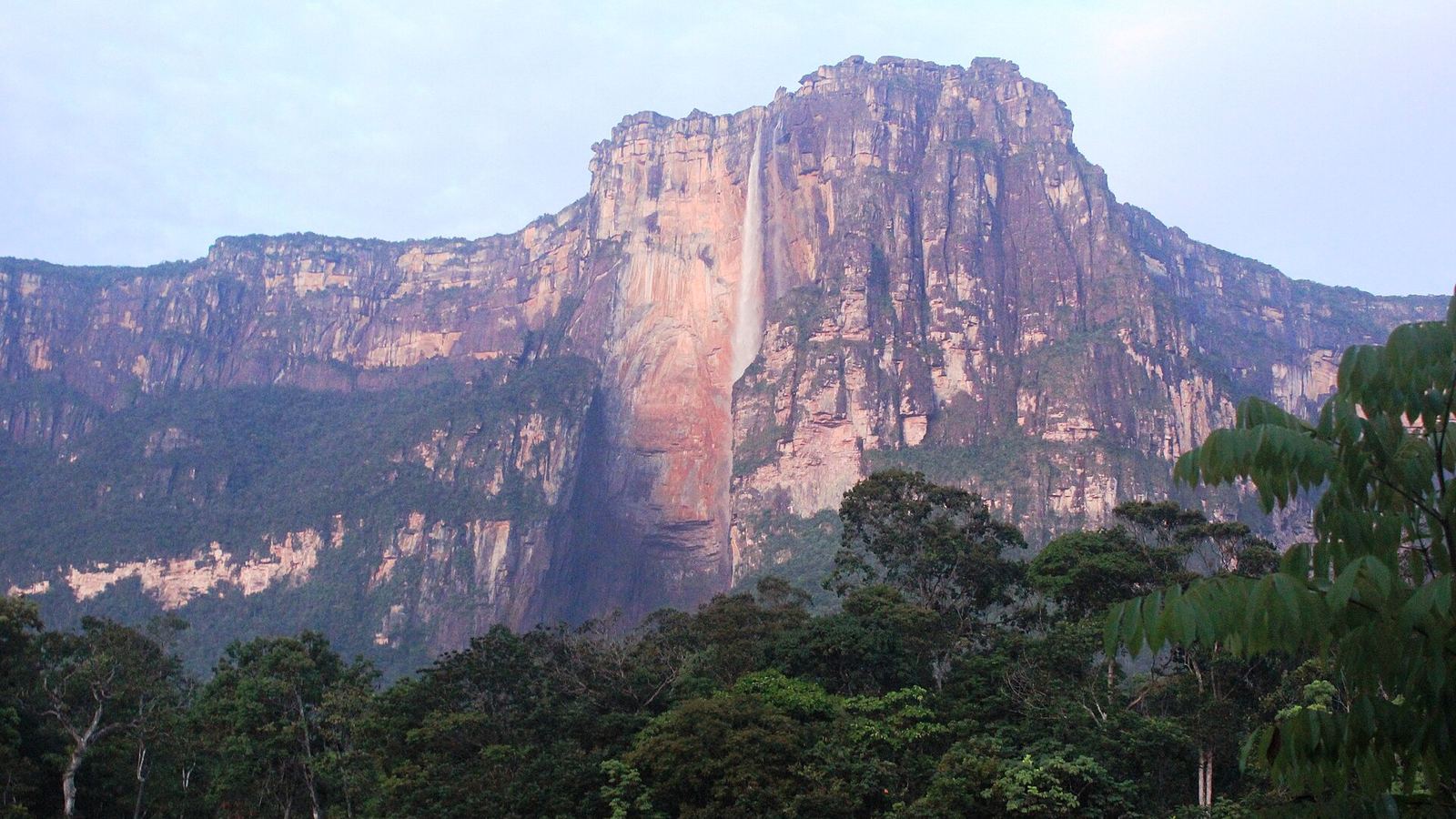
| Canaima, Gran Sabana, Los Roques | None to minimal | Angel Falls, the tepui country and the archipelago are effectively offline. Camps run on their own satellite links if they have anything at all. |
How to Choose the Right Plan
Work out your data size first, because the answer to which provider flips at ten gigabytes. Under that, Nomad is both cheaper and on the better network: 19 dollars for 3 GB over a month or 27 for 5 GB over the same window, against Airalo at 20 and 30. Over ten gigabytes, or if you want unlimited, Airalo is the only game, at 39 dollars for 10 GB, 49 for 20 GB or 41 for seven days of unlimited. Holafly does not sell Venezuela and does not slip it into the Latin America regional plan either, so do not buy that bundle expecting it to cover Caracas.
Then size to the itinerary rather than the calendar, because Venezuela has an unusual amount of dead ground in it. A fortnight that includes Canaima, the Gran Sabana or Los Roques might spend five or six days with nowhere to spend data at all, which makes 5 GB comfortable where the same trip in Colombia would need twice that. A working stay based in Caracas is the opposite case and is the one place Airalo's unlimited week at 41 dollars earns its price.
Buy and install before you fly. That advice is close to universal on this site, but the reasons here are specific: Maiquetia is running out of four temporary structures in a car park with no verified carrier kiosk, the arrivals hall the old counters sat in is out of service, and the road up to Caracas is the wrong place to discover you have no data. While you are at it, install any VPN you intend to use, because the app stores work but a long list of VPN vendor websites is blocked at ISP level and your eSIM inherits that filtering along with the signal.
Finally, keep the local SIM question in proportion. Bolivar priced data is cheap and the eSIM is not, but the official and parallel exchange rates were more than 85 percent apart through the first quarter of 2026, the counter wants your passport, and the carrier shops are in city malls rather than at the airport. For two weeks or less, pay the eSIM premium and spend the time on something else. For a month or more, get a Digitel or Movistar number once you have found your feet.
Frequently Asked Questions
Is the mobile network actually usable after the June 2026 earthquakes?
Yes, with caveats that depend on where you are. The 24 June doublet destroyed a large share of rooftop cell sites, hitting Movistar for about half its network and Movilnet for slightly more, and Digitel for around a quarter. The rebuild was unusually quick: 90 percent of the country had service back within five hours, and by 10 July the only place still short of full restoration was La Guaira, the state containing Maiquetia and the airport, at 88 to 92 percent of customers connected. What has not fully healed is international capacity, because the Cirion submarine cable near Catia La Mar ruptured and took roughly half of it away. In practice that shows up as occasional slowness on services hosted abroad rather than as no signal at all.
Nomad or Airalo, and does it matter which network they use?
It matters more here than almost anywhere. Nomad sells Venezuela on Digitel, Airalo sells it on Movistar. Digitel lost the least capacity in June, holds the lowest latency of the three networks at 63.5 milliseconds and the best upload at 11.2 Mbps, and won the 3.5 GHz spectrum for 5G. Movistar edges it on raw download at 26.9 Mbps against 25.9 and has a broader footprint in the smaller towns. On price Nomad wins the middle of the range, 19 dollars for 3 GB and 27 for 5 GB against Airalo at 20 and 30, and Airalo wins from 10 GB up, 39 dollars against 45. If you want more than 10 GB, or you want unlimited, Airalo is the only one offering it.
Do sanctions stop me buying a Venezuela data plan?
No. The US Treasury's own guidance is that its sanctions programmes, the Venezuela regulations included, do not generally prohibit transactions ordinarily incident to travel to or from any country, and a prepaid data plan for a trip sits squarely inside that. The 2026 picture is looser still: after the political change in January the US issued broad general licences easing oil and mining restrictions, and in April 2026 added General Licence 56 covering commercial negotiations and General Licence 57 covering certain financial services, while individual designations remain in force. The practical point for a traveller is different from the legal one. You are buying from Airalo or Nomad with a card issued at home, before you leave, which sidesteps the genuinely awkward part of Venezuela, which is paying for anything locally.
What is blocked, and will WhatsApp calling work?
WhatsApp works and so do its voice and video calls. A block was proposed in August 2024 and never implemented, and there is no standing VoIP restriction in the country. What is blocked, at ISP level on CONATEL instruction and therefore inherited by any eSIM roaming on a Venezuelan network, is Signal, in place since August 2024, along with roughly 61 independent news outlets and a long list of VPN company websites, the Tor Project site and public DNS resolvers. X was unblocked on the night of 24 June 2026 after the earthquakes and Telegram and TikTok are usable again. Download any VPN you intend to use before you travel, because the app stores work but the vendors' own sites often do not.
Is a local prepaid SIM cheaper than the eSIM?
In bolivars, yes, dramatically. In practice the comparison is unstable enough that most short stay visitors should not bother. Carrier packs are priced in bolivars, and what that costs you in dollars depends entirely on which rate you got: the central bank had the official rate at 301 to the dollar in early January 2026 and 467 by late March, while the parallel rate people actually transact at was running near 560, a gap of more than 85 percent. Add a passport registration requirement at the counter, cash in a currency you have to source before you arrive, and carrier shops concentrated in city malls, and a 27 dollar eSIM bought before departure is the simpler purchase for a trip of two weeks or less. Anything longer, get a local number once you are settled.
Should I bother buying data for Canaima, Los Roques or the Gran Sabana?
No, not for those legs specifically. Angel Falls and the Canaima lagoon, the tepui country of the Gran Sabana and the Los Roques archipelago all sit outside the terrestrial networks, and the camps that have any connection at all run their own satellite link and ration it. Buy your data for the Caracas end of the trip and the domestic airports, download offline maps and your itinerary before you fly out of Maiquetia, and treat the days in the interior as genuinely offline. That is the honest sizing for a two week trip that includes one of these: five gigabytes goes a long way when half your days have nowhere to spend it.