Kazakhstan is one of the few countries where a local SIM card is substantially cheaper than a travel eSIM, and where we would still stop and think before telling you to buy one. Operators here sell 25 GB for a month at around 4,000 tenge, comfortably under ten dollars, and no international eSIM comes near that. What you pay instead is administrative. Every prepaid line in the republic is registered against an identity document, the assistant will normally photograph you at the counter, and your handset's IMEI number goes into a state database called BDIK that decides whether that phone is permitted on a Kazakh network at all. Roaming devices, which is precisely what a travel eSIM is, never touch the system. So the real question is not which option is cheaper. It is whether saving fifteen dollars or so is worth twenty minutes at a desk and a permanent record tying your handset to your passport number. Below is what the three operators charge, how the registration actually runs, and where the line falls.
What This Guide Covers
Jump to the section most relevant to you
Three Operators, and Why They Cooperate
The Kazakh market settled into three national networks and then, unusually, watched them start signing agreements with each other. Beeline Kazakhstan is the VEON-owned leader on subscribers, holding something like 45 percent. Kcell sits close behind on about 42 percent and belongs to Kazakhtelecom, the state-controlled fixed-line incumbent. Tele2, which still sells under the Altel name in places, holds the remaining thirteen percent or so and changed hands in 2025 when Qatar's Power International Holding bought it.
The cooperation is not sentiment, it is geography. Reaching a village of three hundred people six hours from the nearest city costs the same whichever logo is on the mast, so the three operators run a shared rural build that has put 3G and 4G into close to a thousand small settlements. The practical consequence for a visitor is welcome: in the villages, the difference between the networks has narrowed a great deal since the advice on most travel forums was written.
Which one to ask for at the counter
Tele2 is the cheapest and, on 2025 speed testing, the fastest, averaging close to 70 Mbps, which makes it the obvious buy for a city-based trip. Kcell is the one to want if your route runs off the main corridors, because Kazakhtelecom's fibre is what feeds the outlying masts and Kcell inherited the older national footprint. Beeline sits in between with the largest subscriber base and a reputation among overland drivers for holding on where others give up. None of the three is a bad answer in Almaty.
What a Kazakh SIM Actually Costs
This is where the country surprises people. Kazakh data is cheap by any international standard, and cheap in a way that makes the usual eSIM sales pitch harder to make honestly. Figures below are 2026 counter prices converted at roughly 460 tenge to the dollar, and they move with promotions, so treat them as the shape of the market rather than a quotation.
Typical prepaid bundles, 2026
Kcell. 25 GB for thirty days at about 4,100 tenge, 35 GB at about 5,100 tenge, and an unlimited month around 8,200 tenge.
Beeline. A wide ladder from 7 GB near 3,300 tenge, through 13 GB near 4,100 and 18 GB near 5,100, up to 44 GB around 7,200 tenge, all on thirty-day validity.
Tele2 and Altel. The budget end and the best value for a light user: 2 GB near 900 tenge, 4 GB near 1,400 tenge, 8 GB near 1,750 tenge.
Expect the airport branches to sit above these numbers. A commonly reported arrivals-hall deal is 25 GB for a month at 6,000 tenge, which is roughly a third more than the same package in a city shop.
Read that ladder next to the eSIM prices on the Kazakhstan eSIM guide and the gap is stark. A 5 GB travel eSIM costs somewhere between $14 and $16, or 6,400 to 7,400 tenge. For that money a Beeline shop will sell you thirty or forty gigabytes. Anyone who tells you the eSIM is the cheaper option in Kazakhstan has not looked at a Kazakh price list.
What flattens the difference is how little data most visitors actually use. If a fortnight in Almaty consumes six gigabytes, buying forty is not a saving, it is a larger number for a smaller purpose. The comparison that matters is not price per gigabyte, it is total spend against total hassle.
The IMEI Database, Explained Properly
Kazakhstan operates a central register of mobile handsets. Every device using a SIM issued inside the country has its IMEI number recorded and linked to the identity of the subscriber, and operators are required to cut off service to handsets that are not in the register. Kazakhs are identified by their IIN, the national identification number; foreign visitors are entered against passport details instead. Registration itself is free.
Two clarifications matter, because most write-ups garble them. First, this is not an import tax or a customs procedure at the airport; nobody inspects your phone on arrival. Second, and more usefully, roaming devices are explicitly exempt. A handset connecting to a Kazakh network through a foreign subscription is a roamer, and the register does not apply to it, which is exactly the position a traveller using an international eSIM is in.
How buying a card actually goes
1. Hand over your passport. No other document in your wallet will substitute for it.
2. Expect to be photographed, usually holding the passport, as part of the identification step.
3. Choose a bundle and pay in tenge. Card payment is normal in city branches and at the airport.
4. Your handset's IMEI is submitted with the subscription. Wait for the line to come up and load something data-heavy before you walk away.
5. If you swap that SIM into a second phone later, the second handset needs registering too.
None of this is sinister and none of it takes very long. It is simply a permanent, identity-linked record of which phone you carried into the country, created in exchange for cheap data. Some travellers do not care at all. Others would rather not, and that preference is a perfectly good reason to pay a little more for an eSIM. The rules on device registration were also tightened again in March 2025 for handsets brought in from abroad, so check the current position if you are moving to Kazakhstan rather than visiting.
Where to Buy a SIM Around the Country
Almaty airport. All three operators keep kiosks in the arrivals hall, and there are self-service SIM machines near baggage reclaim for the hours when the desks are quiet. Prices run above the city and the queue after a wide-body arrival is real. The Almaty Airport guide goes through which terminal holds what, and why the free WiFi there is harder to get onto than it looks.
City branches. In Almaty the operator shops cluster along Abay Avenue and around the malls, with Mega Almaty and Dostyk Plaza each holding at least one. In Astana, look on the left bank near the Khan Shatyr end of Turan Avenue. Staff in the flagship branches usually manage some English; in a small-town shop, translation apps do the work.
Elsewhere. Every regional centre worth stopping in has branches, and small towns carry resellers inside supermarkets. Rural resellers can be less reliable about completing the registration correctly, which is worth knowing if the line fails to activate an hour down the road.
Two payment quirks to plan around
Kazakhstan runs on Kaspi.kz QR payments to a degree that catches visitors off guard: market stalls, taxis and cafes will all present a QR code first. The app is tied to a Kazakh identification number, so it is effectively closed to short-stay tourists whether or not they hold a local SIM. Carry tenge in cash for bazaars, marshrutka fares and mountain villages, and expect cards to work fine in Almaty and Astana.
The Numbers Side by Side
| Option | What you get | Price | Suits |
|---|---|---|---|
| Tele2 small bundle | 4 GB, 30 days, with a Kazakh number | Around 1,400 KZT | A light user staying a month |
| Kcell tourist bundle | 25 GB, 30 days | Around 4,100 KZT | The best coverage per tenge off the corridors |
| Beeline large bundle | 44 GB, 30 days | Around 7,200 KZT | Working remotely without fixed broadband |
| Airport counter | 25 GB, 30 days | Around 6,000 KZT | Nobody, if a city shop is an option |
| Travel eSIM | 5 GB, 30 days, data only | $14 to $16, near 6,400 to 7,400 KZT | Most two-week trips |
| Travel eSIM | 20 GB, 30 days, data only | $32 to $37, near 14,700 to 17,000 KZT | Drivers running navigation all day |
| Unlimited eSIM | No allowance, 10 days | $34, near 15,600 KZT | A short trip with heavy map use |
Set out like that, the local card is roughly three to five times cheaper per gigabyte, and the eSIM is roughly twenty minutes and one passport scan cheaper. Both statements are true. Which of them decides your purchase depends on how long you are staying and how you feel about the database.
Practical Notes Before You Commit
Buy a Kazakh SIM when
Buy an eSIM when
There is no roaming union here that helps a visitor. A Kazakh prepaid card reverts to international rates the moment you cross into Kyrgyzstan at Korday or into Uzbekistan at Zhibek Zholy, and a Kazakhstan-only eSIM simply stops working. For a Central Asia loop, buy a regional plan deliberately before you set off rather than a national one at the border.
The whole country now runs on one clock. Kazakhstan abolished its second time zone on 1 March 2024 and moved everything to UTC+5, so a thirty-day bundle bought in Aktau and a thirty-day bundle bought in Oskemen expire at the same moment. It sounds trivial until you have argued with an activation window.
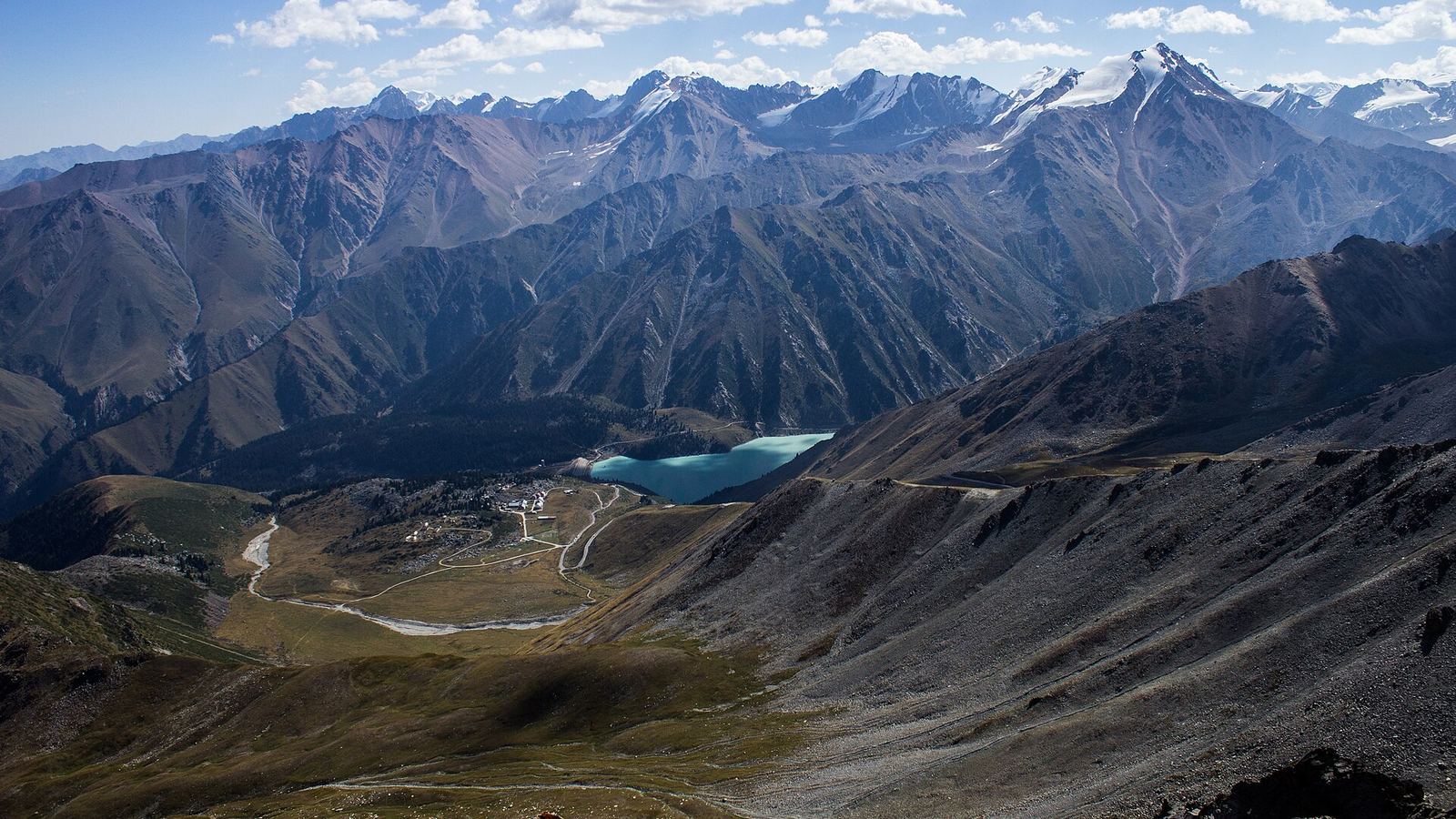
Download the mountains before you drive into them. Charyn, the Kolsai lakes, Lake Kaindy and the road above Big Almaty Lake are all thin to blank on every network, and guesthouses in Saty rarely have WiFi worth the name. The Almaty city guide covers which day trips keep a signal and which do not.
Keep the old line alive. Whichever route you take, leave your home SIM installed and switched to data off. Banking apps and airline check-in still send verification codes to it, and a Kazakh prepaid number will not receive those.
Frequently Asked Questions
Will the shop really photograph me buying a SIM card?
Usually, yes. Identification is not just a glance at the passport: assistants commonly take a photo of you with the document as part of registering the line, and the process is standard rather than a sign that something is wrong. It also means every traveller has to be present for their own number, so one person cannot equip a family while the others wait with the bags. Budget fifteen to twenty minutes per line, more if the branch is busy.
How many tenge should I set aside for a month of data?
Less than you expect. Tele2 will sell 8 GB for around 1,750 tenge, Kcell will sell 25 GB for around 4,100, and Beeline's largest consumer bundle at 44 GB sits near 7,200. In dollars that is roughly four to sixteen. The SIM itself is usually a token amount folded into the bundle. Airport pricing runs about a third higher, so if you can wait until you reach a city branch, wait.
Does the device database mean my phone could get blocked?
Only if you use a Kazakh SIM and the registration is not completed properly, which is the situation the rule exists to catch. Operators are obliged to stop serving handsets missing from the register, so an incorrectly processed purchase in a small reseller can leave a line that connects for a day and then dies. If you are roaming on a foreign subscription or an international eSIM, the register does not apply and there is nothing that can be blocked.
Which operator makes the most sense for a two-week visitor?
Tele2 if you are staying in Almaty, Astana and Shymkent, because it is the cheapest at the counter and measured as the fastest in 2025 testing. Kcell if you are driving out to the smaller places, since Kazakhtelecom's fibre feeds its outlying masts and its footprint reaches further off the corridors. Beeline is the reasonable middle, with more subscribers than either and a good record on long overland routes.
Can I keep using a Kazakh SIM after crossing into Kyrgyzstan or Uzbekistan?
Technically yes, financially no. There is no regional equivalent of European roam-like-at-home working in a visitor's favour, so the card flips to international rates at Korday, at Zhibek Zholy and at every other crossing. Anyone doing the classic Almaty to Bishkek to Tashkent run should buy a multi-country plan in advance instead. Expect a quiet twenty minutes at the border while the phone gropes for a network on the far side.