Airalo is the eSIM to default to for Kazakhstan, because it connects through Kcell, whose masts hang off Kazakhtelecom's national fibre estate, and in a territory of 2.7 million square kilometres the useful question is never how fast a network is but whether there is a mast within reach at all. This is the ninth largest country on the planet and the emptiest of the large ones outside the Arctic, at roughly seven people per square kilometre. The drive from Almaty to Aktau on the Caspian covers about the ground between London and Athens, and almost all of it is steppe. Coverage follows the population, so it is excellent in Almaty, Astana and Shymkent, dependable along the main road and rail corridors, and simply not there for long runs in between. Nomad is cheaper per gigabyte on Beeline, the largest network by subscriber count, and Holafly is the only option that hands you two networks to fall between on a long drive. One local rule shapes all of it: Kazakhstan ties handset IMEI numbers to the SIM cards sold inside the country, and a roaming travel eSIM never enters that database. If you have no idea how many gigabytes a fortnight of this needs, the eSIM Finder will work it out.
Quick Pick: the Best eSIM for Kazakhstan
Airalo (Kazakhstan 5 GB / 30 days): Runs on Kcell, the network fed by Kazakhtelecom's national fibre, which is what decides whether a small town four hours from anywhere has service at all.
Our picks
Best overall: Airalo. Lowest per GB: Nomad. Unlimited: Holafly. Or use the eSIM Finder.
Kazakhstan eSIM Plans Compared
Indicative pricing. Tap through for live rates.
| Provider | Plan | Data | Duration | Price | Network |
|---|---|---|---|---|---|
| Airalo | Kazakhstan 1GB | 1 GB | 7 days | $5 | Kcell |
| Airalo | Kazakhstan 3GB | 3 GB | 30 days | $11 | Kcell |
| Airalo | Kazakhstan 5GB | 5 GB | 30 days | $16 | Kcell |
| Airalo | Kazakhstan 10GB | 10 GB | 30 days | $26 | Kcell |
| Airalo | Kazakhstan 20GB | 20 GB | 30 days | $37 | Kcell |
| Nomad | Kazakhstan 1GB | 1 GB | 7 days | $4 | Beeline Kazakhstan |
| Nomad | Kazakhstan 5GB | 5 GB | 30 days | $14 | Beeline Kazakhstan |
| Nomad | Kazakhstan 10GB | 10 GB | 30 days | $22 | Beeline Kazakhstan |
| Nomad | Kazakhstan 20GB | 20 GB | 30 days | $32 | Beeline Kazakhstan |
| Holafly | Unlimited 5-day | Unlimited | 5 days | $19 | Tele2 Kazakhstan / Beeline |
| Holafly | Unlimited 7-day | Unlimited | 7 days | $27 | Tele2 Kazakhstan / Beeline |
| Holafly | Unlimited 10-day | Unlimited | 10 days | $34 | Tele2 Kazakhstan / Beeline |
| Holafly | Unlimited 15-day | Unlimited | 15 days | $47 | Tele2 Kazakhstan / Beeline |
| Holafly | Unlimited 30-day | Unlimited | 30 days | $69 | Tele2 Kazakhstan / Beeline |
Airalo Kazakhstan Plans
Airalo: The Default Choice, on the Network with the Best Backhaul
Kcell coverage, a 3 GB middle tier nobody else sells, and top-ups you can buy from the road
Kcell belongs to Kazakhtelecom, and in a country this size that ownership is the whole argument. A base station in a town of four thousand people is only as useful as the fibre feeding it, and Kazakhtelecom is the fixed-line incumbent that laid most of the fibre in the republic. Airalo is the only one of the three providers here riding that network, which is why it is the safest single answer for a trip that leaves the Almaty grid: the road south to Turkestan, the long run north to Astana, a night in Saty village below the Kolsai lakes.
The plan ladder also fits how people actually travel here. Four days in Almaty using maps, a translation app and Yandex Go does not consume 5 GB, and Airalo is the only provider on this page selling a 3 GB tier at $11 rather than making you jump from a token gigabyte to a month-sized bucket. In-app top-ups matter more in Kazakhstan than in most places, because the alternative to buying data on your phone is finding a shop, and out here shops can be two hundred kilometres apart.
Strengths
Weaknesses
Holafly Kazakhstan Plans
Holafly: Two Networks and No Data Counter for the Long Drives
Unlimited data on Tele2 with Beeline underneath it, priced by the day rather than the gigabyte
Two things make Holafly worth its premium in Kazakhstan specifically, and neither is the usual streaming argument. The first is that it is the only provider on this page reaching two networks. On a ten-hour drive across Zhetysu, a phone hunting between Tele2 and Beeline recovers a signal minutes earlier than a phone locked to one operator, and those minutes are the difference between live navigation and a paper guess at the next junction.
The second is that live navigation is expensive in a way people underestimate. Google Maps or 2GIS running continuously for eight hours, re-routing on roads with no numbered exits, chews through an allowance faster than an evening of video does. If your Kazakhstan looks like Almaty to Charyn to Kolsai and back with a Mangystau flight bolted on, a plan with no counter removes an entire category of worry. If your Kazakhstan is four days in one city, this is simply the most expensive way to buy it.
Strengths
Weaknesses
Nomad Kazakhstan Plans
Nomad: The Cheapest Gigabytes, on the Largest Network
Beeline coverage at roughly $1.60 a gigabyte once you reach the 20 GB plan
Nomad is cheaper than Airalo at every plan size the two share, by roughly twelve to fifteen percent, and it does that on Beeline, which carries more Kazakh subscribers than either rival at around 45 percent of the market. Beeline has also spent recent years rebuilding some 1,800 sites with massive MIMO equipment and putting money into the shared rural broadband programme, so the old assumption that the cheap option must be the weak network does not survive contact with the coverage maps.
The gap that does remain is a matter of where the two operators historically built. Kcell inherited the older national footprint and the fibre that feeds it, and there are still corners of the republic, particularly small settlements off the main corridors in the centre and the west, where a Kcell handset finds a bar and a Beeline handset does not. For a trip anchored on Almaty, Astana and the roads between them, that difference is theoretical, and Nomad is simply the better buy.
Strengths
Weaknesses
Mobile Networks in Kazakhstan
Kazakhstan has three mobile networks, and unusually they have spent recent years signing agreements with one another rather than fighting over the same city blocks. The reason is arithmetic. Two point seven million square kilometres, fewer than twenty million people, and a density of about seven per square kilometre: covering that alone is not a business, it is a public works project.
Beeline Kazakhstan, owned by VEON, is the largest by subscribers at roughly 45 percent of the market, and it is the network most often recommended for long overland journeys. Kcell carries about 42 percent and belongs to Kazakhtelecom, the state-controlled fixed-line incumbent. That parentage matters more here than any brand loyalty, because a remote base station is only as good as the fibre behind it and Kazakhtelecom owns most of the fibre in the republic. Tele2, which trades alongside the Altel brand and holds the remaining share of about 13 percent, passed to Qatar's Power International Holding in 2025 and competes on speed rather than reach, posting average downloads near 70 Mbps in 2025 testing, the quickest of the three.
For eSIM buyers that resolves cleanly. Airalo rides Kcell. Nomad rides Beeline. Holafly is the only provider reaching two of them, Tele2 with Beeline behind it, which is the arrangement you want on a long drive where one network against two is the difference between navigation and guesswork. All three operators also share a rural programme that has brought 3G and 4G to close to a thousand settlements of 250 people or more, so the gap between them in villages is narrower in 2026 than older forum advice suggests.
5G here is a 2027 story, not a 2026 one
Kcell and Tele2 switched on limited commercial 5G in early 2025 and have jointly committed to roughly 7,000 base stations and 80 percent population coverage by the end of 2027, while Beeline has been rebuilding some 1,800 sites with massive MIMO arrays. For a visitor in 2026 that means 5G exists in central Almaty, in Astana and in a handful of regional capitals, and nowhere else at all. Travel eSIMs mostly land on 4G, which runs 25 to 60 Mbps in Almaty and is more than enough for maps, Yandex Go and photographing a menu into a translation app. Do not pick a plan here for its 5G badge.
Coverage Across Kazakhstan
Coverage where travelers actually go:
| Area | Coverage | Notes |
|---|---|---|
| Almaty | Excellent | Strong 4G across the whole grid from Panfilov Park up to Al-Farabi Avenue, 5G in the centre, and signal that survives the metro tunnels. |
| Astana | Excellent | Dense 4G and early 5G across the left-bank ministries, the Yesil river districts and the highway out to the airport. |
| Shymkent & Turkestan | Very good | Reliable across the southern capital and along the corridor to the Khoja Ahmed Yasawi mausoleum and the Sauran ruins. |
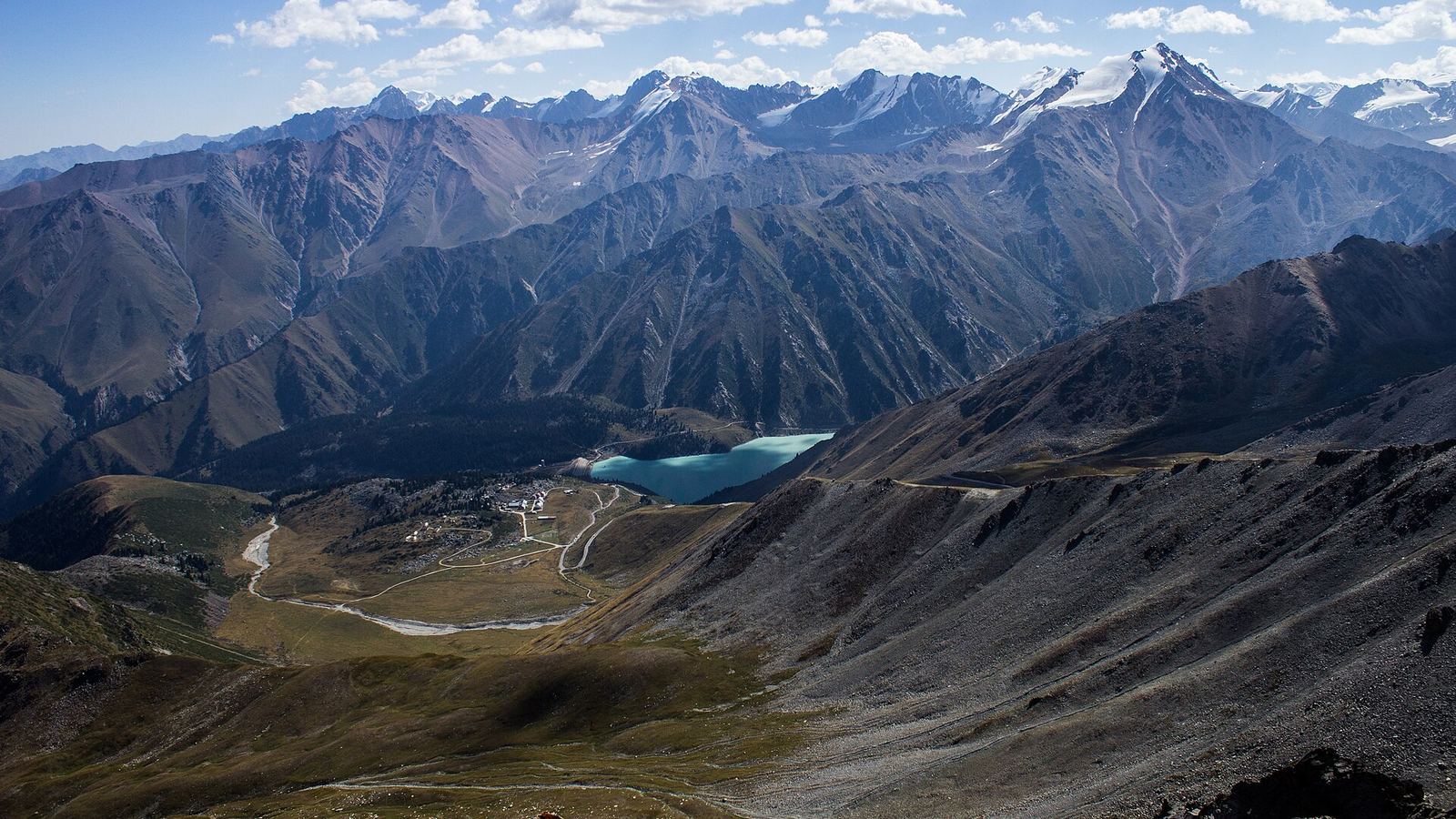
| The Almaty mountains | Good | Fine at Medeu and along the Shymbulak gondola line, thinning quickly on the Big Almaty Lake road above the checkpoint. |
| Charyn Canyon & the Kolsai lakes | Variable | Occasional bars at the canyon rim and in Saty village, effectively nothing down in the Valley of Castles or at Lake Kaindy. |
| The steppe highways | Variable | Masts cluster at settlements along the Almaty to Astana and Aktobe corridors, with long blank runs of road between them. |
| Mangystau & the Caspian west | Poor | Aktau itself is well covered, but Bozjyra, Torysh and the desert tracks beyond the city are offline in every practical sense. |
How to Choose the Right Plan
Begin with the map, not the price list. If Kazakhstan means Almaty, a couple of days in Astana and the flight between them, all three providers cover you comfortably and you should buy the cheapest gigabytes, which is Nomad at $14 for a 5 GB month on Beeline. If you want something smaller than 5 GB but larger than a token gigabyte, Airalo is the only one selling a 3 GB tier, and its Kcell connection is the more reassuring of the two single-network options once you leave the corridors. If you are renting a car for Charyn, the Kolsai lakes or anything in Mangystau, Holafly stops being an indulgence: two networks and no data counter is exactly the specification a ten-hour driving day asks for. Whichever you choose, install it at home. The airport WiFi in Almaty will not let you online until it has sent you an SMS, which is an awkward requirement for a phone with no working line.
Frequently Asked Questions
Does Kazakhstan's IMEI registration rule apply to a travel eSIM?
No, and this is the single strongest practical argument for one. The state database, known as BDIK, links a handset's IMEI number to the identity of whoever bought the SIM, and it governs SIM cards issued inside Kazakhstan. Roaming devices sit explicitly outside the scheme, and a travel eSIM from Airalo, Nomad or Holafly is exactly that: a foreign subscription roaming onto a Kazakh network. There is nothing to register, no passport handed over a counter and no photograph taken. Buy a local card instead and your handset does enter the database, with service cut off if the registration is not completed.
Will I have signal driving out to Charyn Canyon and the Kolsai lakes?
For some of it. The road east from Almaty toward Chundzha holds a workable signal for the first couple of hours, and the canyon rim car park usually shows a bar or two on Kcell and Beeline. Descend into the Valley of Castles and it goes. Further on, Saty village below the Kolsai lakes has patchy coverage, and Lake Kaindy in its forest of drowned spruce has none whatsoever. Download the whole region offline before you leave the city, because no provider changes this answer.
Which network should I want under my eSIM for a long road trip?
Kcell if you are choosing one, which points you at Airalo. Its footprint reaches further into small towns because Kazakhtelecom's fibre backhaul reaches further, and that is what determines whether a mast exists in a settlement of three thousand people. If you would rather not choose at all, Holafly is the only provider selling access to two networks here, and a phone that can hunt between Tele2 and Beeline picks up a signal sooner after a blank stretch than one locked to a single operator.
Is an eSIM actually cheaper than a Kazakh SIM card?
Honestly, no. Kazakhstan sells some of the cheapest mobile data anywhere, and a local card carrying 25 GB for a month costs somewhere near 4,000 tenge, well under ten dollars. No international eSIM matches that. What the eSIM saves you is the passport scan, the photograph at the counter, the IMEI entry and the queue in the arrivals hall. Our Kazakhstan SIM card guide works through both sides of that trade in tenge.
How much data does a two-week Kazakhstan trip need?
Between 5 and 10 GB for most people, if the itinerary is Almaty with a few day trips and perhaps a flight to Astana. Push toward 20 GB or an unlimited plan if you are driving, because live navigation running six or eight hours a day across roads with no numbered junctions consumes far more than an evening of video. Guesthouse WiFi is common in Almaty and rare in the mountain villages, so do not plan around finding it.
Can one eSIM cover Kazakhstan plus Uzbekistan and Kyrgyzstan?
Yes, if you buy for the region rather than the country. Airalo and Holafly both sell Asia-wide plans taking in Kazakhstan alongside its neighbours on one profile, which suits a Central Asia loop that crosses at Korday or flies on to Tashkent. A Kazakhstan-only plan stops dead at the border, and so does a Kazakh prepaid SIM, which reverts to international roaming rates rather than continuing at domestic ones.