Airalo is the travel eSIM to buy for Bhutan, and for a good number of visitors it is a convenience purchase rather than a necessity. Bhutan levies a Sustainable Development Fee of 100 US dollars per person per night on top of the 40 dollar visa, and most people still arrive on an itinerary put together by a licensed operator, which means a guide, a driver, and very often a local B-Mobile card handed over somewhere on the first afternoon. That is what makes this country unlike anywhere else on this site. The local SIM may already be inside the price you paid months ago, so the honest question is not which eSIM is cheapest but whether you want to cover the gap between the wheels touching down at Paro and someone else sorting it out for you. Holafly sells no Bhutan plan at all, so it is out of this conversation entirely. Nomad does sell here, at roughly three times what Airalo charges per gigabyte. If you are unsure how much data a nine day guided circuit really burns, the eSIM Finder will size it in about a minute.
Quick Pick: the Best eSIM for Bhutan
Airalo (Bhutan 5 GB / 7 days): Airalo's Paro plans ride B-Mobile, the network that reaches furthest once the road leaves Thimphu, and at 17 dollars for 5 GB over a week they undercut Nomad's Bhutan pricing by a wide margin. Buy it to cover the arrival gap and the long driving days, not because Bhutan is hard to connect to.
Our picks
Best overall: Airalo. Lowest per GB: Airalo. Or use the eSIM Finder.
Bhutan eSIM Plans Compared
Indicative pricing. Tap through for live rates.
| Provider | Plan | Data | Duration | Price | Network |
|---|---|---|---|---|---|
| Airalo | Bhutan 5GB | 5 GB | 7 days | $17 | B-Mobile (Bhutan Telecom) |
| Airalo | Bhutan 10GB | 10 GB | 30 days | $36 | B-Mobile (Bhutan Telecom) |
| Airalo | Bhutan 20GB | 20 GB | 30 days | $49 | B-Mobile (Bhutan Telecom) |
| Nomad | Bhutan 1GB | 1 GB | 7 days | $20 | B-Mobile (Bhutan Telecom) |
| Nomad | Bhutan 3GB | 3 GB | 30 days | $45 | B-Mobile (Bhutan Telecom) |
| Nomad | Bhutan 5GB | 5 GB | 30 days | $65 | B-Mobile (Bhutan Telecom) |
Airalo Bhutan Plans
Airalo: The Default Choice, and the Only Cheap One
The Paro package family on B-Mobile, from 1 GB up to 20 GB plus unlimited options
Airalo sells Bhutan under the name Paro, and the range is wider than most people expect for a country this size. The entry point is 1 GB over three days at 5.50 dollars, which is genuinely useful if all you want is a working phone on arrival day before the package SIM appears. From there the ladder runs 3 GB at 11.50 to 12.50 dollars depending on validity, 5 GB from 17 dollars for a week up to 20.50 for a month, 10 GB from 29.50 to 36 dollars, and 20 GB at 49 dollars for thirty days. The pricing is tuned to trip length rather than to volume, so a longer validity on the same allowance costs a couple of dollars more.
Airalo also lists a set of unlimited Paro packages that behave differently from the metered ones: 3 GB a day at full speed and then unrestricted data at around 1 Mbps for the rest of the day, priced at 26 dollars for three days, 39 for five, 50 for seven and 65 for ten. That is expensive against the metered ladder, and on a guided itinerary where half your waking hours are spent in a vehicle or inside a dzong it is hard to justify. It makes more sense for a working visitor staying in Thimphu who wants to stop counting.
Strengths
Weaknesses
Nomad Bhutan Plans
Nomad: Same Network, Roughly Triple the Price
Three Bhutan packages on B-Mobile, priced well above the alternative
Nomad normally earns its place on this site as the cheapest per gigabyte, and Bhutan is the country where that reputation collapses. Its three Bhutan packages are 1 GB over seven days at 20 dollars, 3 GB over thirty days at 45 dollars, and 5 GB over thirty days at 65 dollars. Set the last of those against Airalo asking 20.50 dollars for the same 5 GB over the same thirty days and the gap is not a rounding error, it is more than three times the money for identical data on the identical network.
Nomad is also explicit that its Bhutan plans reset a high speed allowance every twenty four hours from activation and throttle to 512 kbps once the daily portion is used, which is worth knowing if you plan to move a lot of photographs. There are two situations where buying it anyway makes sense: you already hold Nomad credit and would rather spend it than lose it, or you want a second profile on a second network slot as insurance and are not price sensitive. Otherwise this is a straightforward comparison with a clear answer.
Strengths
Weaknesses
Mobile Networks in Bhutan
Bhutan runs on two mobile networks and no more, which makes the comparison unusually short. B-Mobile is the mobile arm of Bhutan Telecom, the state-owned incumbent, and it carries roughly seven in ten mobile users in the country. TashiCell, formally Tashi InfoComm, is the private challenger that arrived in 2008 and holds most of the rest. Both are competent inside the western valleys. The separation shows up on the roads between them, and B-Mobile generally holds a signal longer on the climbs, in the eastern dzongkhags, and around the smaller settlements where only one operator has bothered to put up a mast.
That matters more than usual here because of a detail travellers rarely check: every travel eSIM sold for Bhutan rides B-Mobile. Airalo's Paro packages and Nomad's Bhutan packages both terminate on Bhutan Telecom, so choosing between the two providers is a choice about price and validity, not about coverage. If you specifically want to be on TashiCell, that means a physical card bought inside the country, because the mainstream eSIM brands do not resell it.
How much 5G you will actually see
TashiCell switched on commercial 5G in Thimphu, Paro and Phuentsholing in December 2021 on band n78, with Bhutan Telecom following in Thimphu weeks later. Four and a half years on, the footprint is still essentially those three towns. Everywhere else on a normal Bhutan itinerary is 4G, and pockets of the east and the high valleys drop to 3G or to nothing. Treat 5G as an occasional bonus in the capital, not something to plan an eSIM purchase around, and note that the 4G layer here needs 1800 MHz support rather than the low bands some travellers assume.
One more quirk worth knowing before you compare price tables. Bhutan is a small market of under 800,000 people ringed by mountains, and wholesale data costs are correspondingly high. A gigabyte that costs a dollar in Vietnam costs several here on every travel eSIM. That is not a provider being greedy, it is the shape of the market, and it is the reason the local counter looks so much cheaper on paper.
Coverage Across Bhutan
Coverage where travelers actually go:
| Area | Coverage | Notes |
|---|---|---|
| Thimphu | Excellent | Solid 4G across the whole valley floor from Babesa up to Motithang, with 5G in patches around the city core on both networks. |
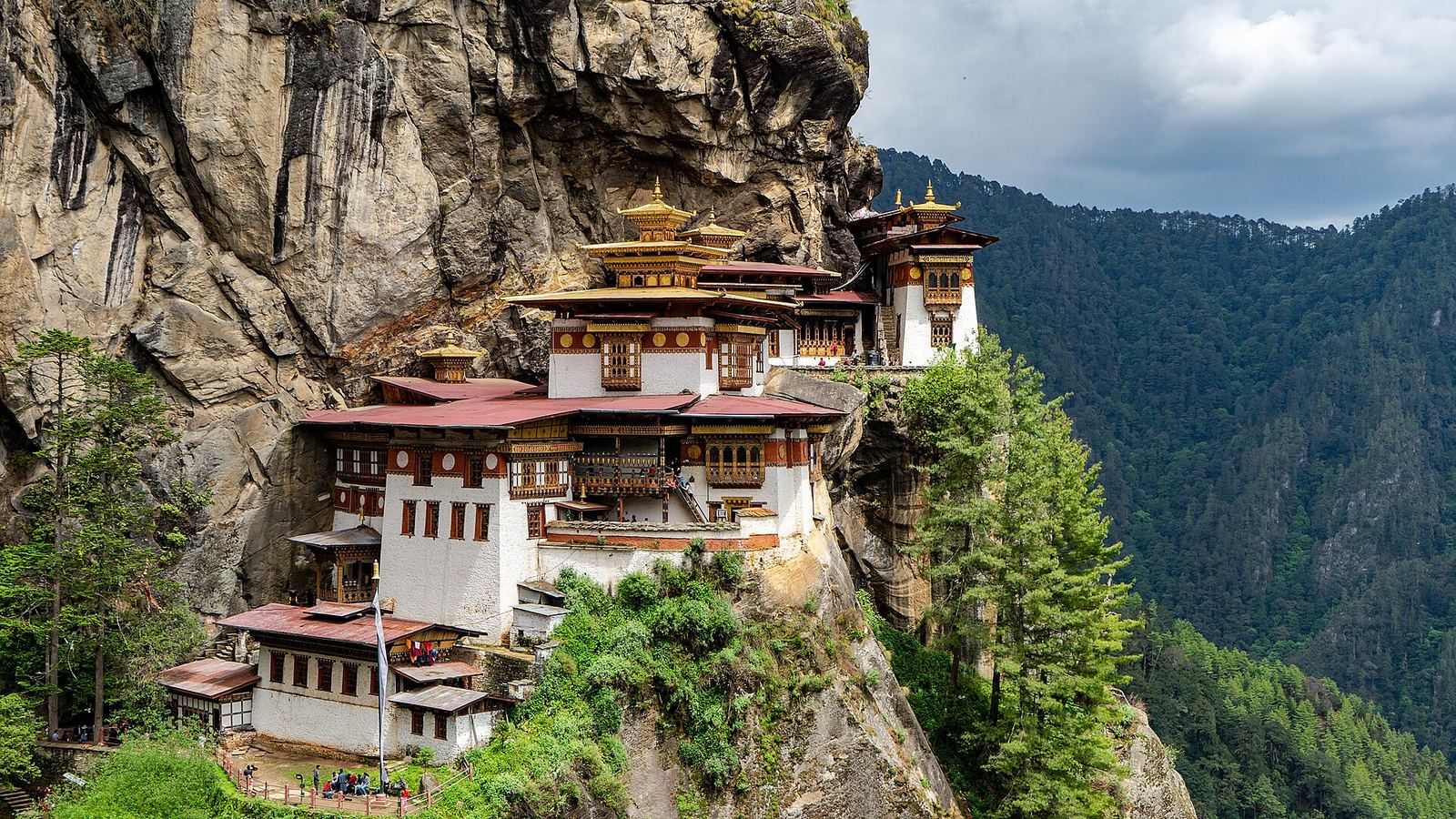
| Paro valley | Very good | Reliable 4G at the airport, along the valley road and in Paro town; thinner on the climb to Taktsang and gone inside the monastery buildings. |
| Dochula Pass | Variable | Usable at the 108 chortens and the cafeteria, then intermittent on the switchbacks either side as the road drops toward Punakha. |
| Punakha & Wangdue | Good | Steady 4G around the dzong, Khuruthang and the valley hotels; weaker up the Mo Chhu toward the northern trailheads. |
| Bumthang | Patchy | Workable in Jakar and Chamkhar town, dropping to 3G or nothing in the Tang and Ura valleys and on the Yotong La crossing. |
| Trekking routes | None to minimal | The Jomolhari and Snowman routes are effectively offline. Expect signal only where a trail happens to pass above a valley settlement. |
How to Choose the Right Plan
Start by reading your own booking. If the operator has written a local SIM into the package, a 1 GB Airalo plan at 5.50 dollars is all you need, bought purely to cover the walk from the aircraft to the vehicle and the message home. If the booking says nothing, size the plan to the shape of the itinerary rather than to the number of days: a western circuit of Paro, Thimphu and Punakha spends most of its time in coverage, so 5 GB over seven days at 17 dollars is comfortable, while anything that pushes east through Bumthang will use less data than you expect simply because there is nothing to connect to for hours at a stretch. Only consider Airalo's unlimited Paro packages if you are staying put in the capital and working. Nomad is the fallback rather than the value option here, at roughly triple the money for the same B-Mobile connection, and Holafly is not an option at all because it does not sell Bhutan. Whatever you buy, keep it as the backup rather than the plan: the local card your guide arranges will be cheaper for anything beyond a week.
Frequently Asked Questions
If my tour package includes a SIM card, is an eSIM still worth buying?
It depends how you feel about the first few hours. Operators do commonly arrange a local B-Mobile card, but that usually happens once you have met your guide, cleared the airport and reached the vehicle, and sometimes not until you get to Thimphu that evening. An eSIM covers the landing, the message home saying you arrived, and any confusion at the arrivals hall. It also gives you a second line if the package SIM turns out to be a basic tourist card with no data pack loaded on it. If none of that worries you and the itinerary is confirmed in writing, skipping the eSIM is a perfectly reasonable call in Bhutan, which is not something this site says often.
Does the Sustainable Development Fee cover anything to do with connectivity?
No. The SDF is 100 US dollars per person per night for most nationalities, set at that level from September 2023 and scheduled to hold until the end of August 2027, with children aged six to twelve at half and under fives exempt. Indian nationals pay 1,200 ngultrum a night instead. It funds healthcare, education, conservation and carbon offset programmes, not your mobile data, and it is paid up front with the visa application rather than at a counter on arrival. Budget for the SIM or eSIM separately.
Which travel eSIM providers actually sell Bhutan plans?
Of the three brands this site tracks, only Airalo and Nomad have a Bhutan product. Holafly does not sell Bhutan at all, so if you have used its unlimited plans elsewhere in Asia you will need a different provider for this trip. Both Airalo and Nomad connect through B-Mobile. Airalo is substantially cheaper per gigabyte, with 5 GB over seven days at 17 dollars against Nomad charging 20 dollars for a single gigabyte, so unless you already hold Nomad credit there is little reason to choose it here.
Will I have any signal on the Dochula Pass or in Bumthang?
Partly. Dochula at around 3,100 metres has usable coverage at the chorten complex and the cafeteria where every vehicle stops, which is enough for photographs to upload while you wait for the clouds to clear off the Himalayan wall. The switchbacks either side are intermittent on both networks. Bumthang is the bigger gap: Jakar and Chamkhar hold a signal, but the Tang and Ura valleys and the passes in between drop away, and a full eastern itinerary will include several hours a day with nothing. Download offline maps and any reading material before you leave Thimphu.
Can I use one eSIM across Bhutan, Nepal and India on the same trip?
Only with a regional plan, and read the country list carefully before you buy. Plenty of South Asia and Asia regional eSIMs quietly omit Bhutan, because the wholesale agreement is harder to get than for the bigger neighbours. Airalo's broader Asia packages do include it, but check the destination list on the product page rather than assuming. For a typical routing of Kathmandu or Delhi in, Paro for a week, then out the same way, two separate country eSIMs are usually both cheaper and less prone to nasty surprises.
Is the connection good enough to work remotely from Thimphu?
For email, messaging and ordinary video calls, yes. Thimphu has stable 4G with 5G in parts of the centre, and hotels in the city are generally fine for a call that matters. What you should not plan on is a heavy upload day from a rural hotel in Bumthang or Phobjikha, where the connection is shared, slow and often satellite-backed. If you have deadlines, schedule them for the Thimphu and Paro nights of the itinerary and treat the eastern legs as offline time.