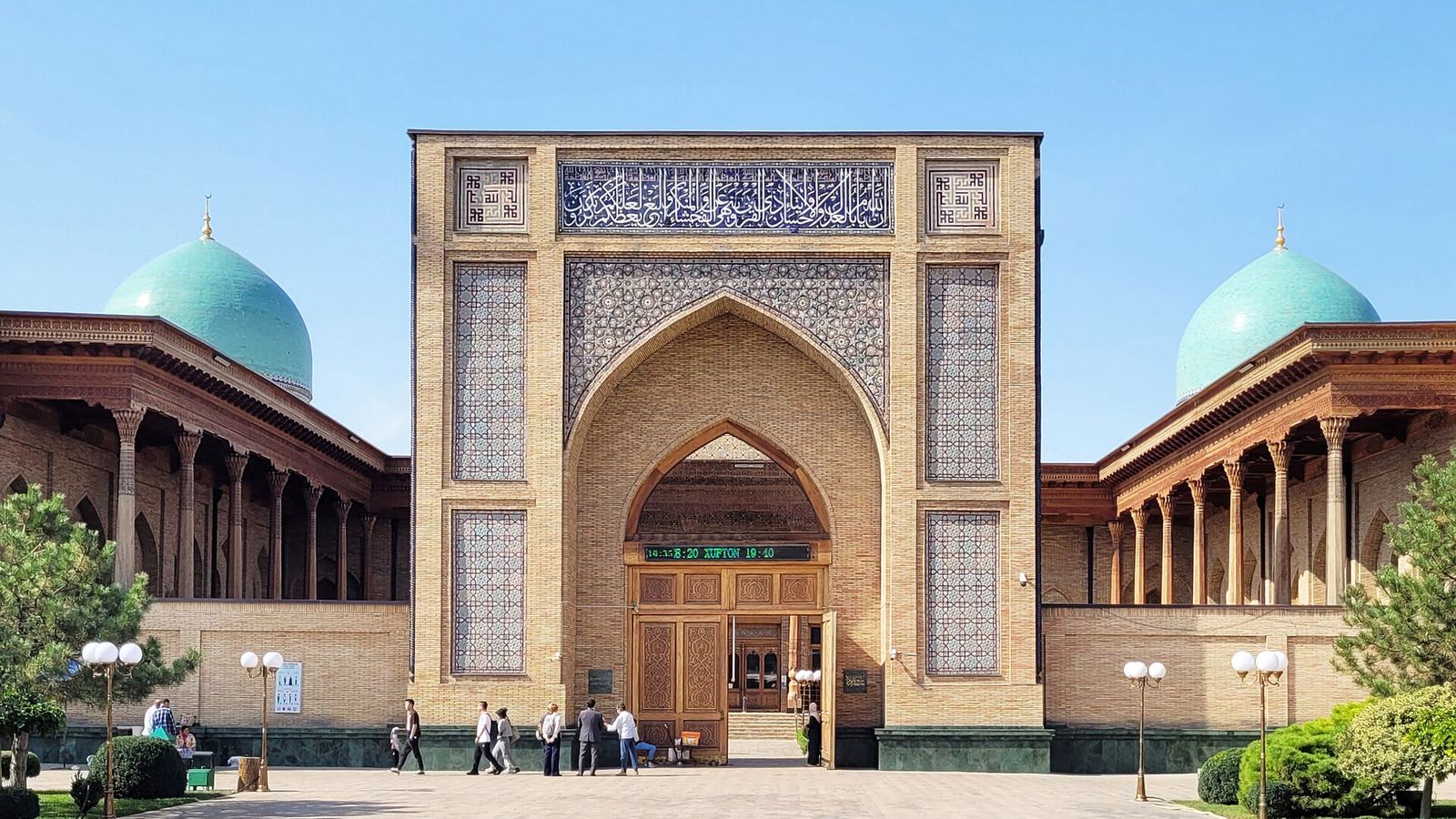
Tashkent will not be the place your connection fails you. The capital carries dense 4G with genuine 5G through the centre, and in a piece of engineering nobody expects from a Central Asian metro, it carries signal down the tunnels too. What catches visitors out here is the surrounding admin: an arrival at three in the morning with no way to call a taxi, public WiFi that wants to text you a code before it lets you in, and payment apps that quietly assume you hold an Uzbek number. A travel eSIM installed before you fly sidesteps all three, and because every provider selling Uzbekistan rides the same Beeline network, you are choosing on price rather than gambling on coverage.
What This Guide Covers
Jump to the section most relevant to you
How Good the Signal Really Is in Tashkent
Tashkent is a city of roughly three million spread across a wide, low, tree-lined grid, and all four national operators have built it out properly. Beeline, Ucell, Mobiuz and Uzmobile all deliver dependable 4G across the whole administrative area, with 5G concentrated in the central districts and expanding steadily. In everyday use a travel eSIM here gives you 20 to 60 Mbps, which is more than adequate for uploading a morning's worth of photographs from Hazrati Imam over a plate of plov at lunch.
The distinctions between operators are visible only in testing rather than in your hand. Ucell took Uzbekistan's reliability award in results published in March 2026, meaning fewer failed sessions and dropped connections in ordinary use, while Beeline leads on raw subscriber numbers and Uzmobile leads on rural reach that Tashkent does not need. Since every travel eSIM sold for this country connects through Beeline, that comparison is more useful for choosing a local card than an eSIM.
Where the capital dips
Two situations are worth knowing about. Thick Soviet-era concrete does what thick Soviet-era concrete always does, so the deeper museum halls and the interiors of the older hotel blocks can drop you to one bar. And the newer suburban sprawl out past Sergeli and toward the ring road is built faster than the towers follow, so a guesthouse booked cheaply on the far southern edge of the city may perform noticeably worse than anything inside the Kichik Halqa Yoli inner ring.
The Metro, the ATTO Card and Signal Underground
The Tashkent metro is the oldest in Central Asia and, for a visitor, one of the best value attractions in the country. Four lines, around fifty stations, some seventy kilometres of track, trains from roughly five in the morning until midnight and every two to four minutes at peak. The three original lines run underground; the fourth, the Ring line, is elevated and gives you a moving window onto the eastern suburbs.
Then there is the connectivity story, which is genuinely unusual. Ucell finished a build with Huawei that laid over a hundred kilometres of fibre and installed more than two hundred transmitters through the system, putting 5G on the platforms and 4.5G inside the running tunnels. It was the first project of its kind in the region, and measured throughput on a moving train has reached 142 Mbps. In plain terms: your maps keep working between stations, and you can hold a video call rattling under Amir Timur Square.
Fares and how to pay
A ride costs 1,700 som with a contactless ATTO card or through the ATTO app, against 3,000 som for a paper-free cash token at the window. That is a difference of about ten US cents per journey, which sounds trivial until you make six journeys a day for a week. Pick up an ATTO card at any station kiosk and load it with cash. The same card works on city buses. Note that the operator has been preparing a shift from the flat fare to distance-based pricing, so check the board rather than assuming a single price.
Do take the time to look up. Photography in the metro was forbidden until 2018, which is why the stations went undocumented for decades and why they still feel like a discovery. Kosmonavtlar is lined with ceramic medallions of Soviet space heroes against a deep blue that reads as outer space; Alisher Navoi is a run of pale blue domes borrowed from a madrasah ceiling; Pakhtakor works cotton motifs into mosaic. Your phone will have signal in every one of them, which is a modern sentence about a very Cold War place.
District Notes: Chorsu, the Centre and Yunusabad
Coverage is strong across the whole city, but the three areas most visitors move between behave a little differently.
Chorsu and the old town
The great blue-green dome of Chorsu bazaar sits at the edge of the surviving old quarter, near the Kukeldash madrasah and a short ride from the Hazrati Imam complex. Signal is fine on the surface and around the dome, and it thins under the deepest part of the market roof where the meat and dairy halls are, in the same way any large enclosed hall behaves. Chorsu is also one of the public spots the city lists as a free WiFi zone, if you want a fallback while bargaining over dried apricots.
Amir Timur Square and the centre
The colonial-era grid around the square, taking in the tree-lined pedestrian stretch of Sailgokh that everyone calls Broadway, plus Mirobod and Yakkasaray to the south, has the best connectivity in the country. This is where 5G is dense, where the good cafes are, and where a data-heavy morning of translation and navigation costs you nothing in frustration. Amir Timur Square is another listed free WiFi zone.
Yunusabad
North of the centre, Yunusabad is Soviet microdistrict housing, the Mega Planet shopping centre and the 375 metre television tower that remains the tallest structure in Central Asia. The third metro line runs up through it. Coverage is solid throughout, and the mall is a reliable indoor spot if you need to sit down with a laptop and a decent connection for an hour.
Getting between them, Yandex Go is the default. It works on a foreign phone number and a foreign card, prices are fixed in advance rather than negotiated, and a cross-town ride is usually a few dollars. It is also the single strongest argument for landing with data already live rather than trying to arrange one at the airport.
Public WiFi in Tashkent and Its Catch
Tashkent has more free WiFi than most visitors expect. The government publishes a list of free zones that includes Chorsu bazaar, Amir Timur Square and the State Museum of History, most cafes and restaurants offer it as a matter of course, and every hotel provides it, though the reliable connections tend to be in the four and five star properties rather than in a converted courtyard house.
The authentication problem
Public hotspots here generally do not simply open. Expect to enter a mobile number and receive an SMS code before the session starts, and expect to sit through a short run of local advertising as well. Foreign numbers are usually accepted, which is the good news. The bad news is obvious: if you have just landed with no working data and no roaming, receiving an SMS to authenticate onto the WiFi that would let you buy data is a circle you cannot square. That is the exact scenario a pre-installed eSIM removes.
Treat all of it as backup rather than infrastructure. Speeds on shared café connections in the old town can be slow, hotel WiFi in older buildings often struggles past the first floor, and none of it follows you into a shared taxi to the train station. Use it to back up photographs overnight and let your own data handle the day.
Setting Yourself Up on Arrival
Most flights into Tashkent land awkwardly early or awkwardly late, a legacy of the connecting schedules through Istanbul, Dubai and Moscow. That makes the first hour on the ground the part worth rehearsing.
Buy and install at home
Add the profile to your phone while you are still on your own broadband, a day or two out. Uzbekistan plans almost always start counting their validity from first connection rather than from purchase, so installing early costs you nothing.
Leave your home line in place
Keep your usual SIM active for messages and turn its data roaming off, hard. Uzbekistan sits outside every roaming union that matters, so an unattended background sync on your home plan here is genuinely expensive.
Switch over on the taxiway
Enable the Uzbek line as your data line while the aircraft is still rolling. By the time you are through passport control it should show a carrier name, and you can order a Yandex Go from the baggage hall rather than negotiating on the forecourt.
Download the maps first
Before you leave your hotel WiFi on day one, save offline maps of Tashkent, Samarkand, Bukhara and Khiva, plus the roads between them. You will be very glad of the last of those out in the Kyzylkum.
The alternative is the counter, and it is not a bad one in this country: Ucell and Beeline both staff desks in the arrivals baggage hall around the clock, and the local bundles are absurdly cheap, as the Uzbekistan SIM card guide sets out in som. It costs you the queue, a passport scan and the walk. The Tashkent Airport guide covers exactly where those desks sit and what they charge.
Day Trips and Onward Legs: Where the Signal Changes
Tashkent is a base as much as a destination, and the trips out of it vary enormously in how well they are covered.
| Trip | Getting there | Coverage |
|---|---|---|
| Samarkand | Afrosiyob high-speed train, 2 hr 08 min, from around 311,000 som in economy | Strong. Workable 4G most of the way, brief drops in cuttings. Onboard WiFi is rationed near 100 MB per passenger. |
| Charvak reservoir and Chimgan | Car or taxi, roughly 80 to 90 km northeast, 1.5 to 2 hours | Fine around the reservoir shore, the resort bases and the chairlifts. Patchy once you climb into the Ugam-Chatkal ridges. |
| Kokand and the Fergana Valley | Road over the Kamchik Pass, about 4 to 5 hours, or a train through the tunnel | Good in every valley town. The pass road itself has real gaps, and the long rail tunnel is a dead zone. |
| Chimgan ski season | Amirsoy and Beldersay resorts, same road as Charvak | Decent at the resort villages and lift stations, unreliable on the upper slopes and back bowls. |
The Samarkand run is the one most people do, and it deserves a specific note: the Afrosiyob is a Talgo trainset rated at 250 km/h and tickets go on sale 45 days ahead, selling out within hours for popular dates in spring and autumn. Buy early, then use your own data on board rather than the train's, which is capped tightly enough to be useful only for checking a booking reference.
For anything heading west from Bukhara toward Khiva, stop expecting coverage altogether. That is a different problem, and the Uzbekistan eSIM guide sets out which parts of the circuit each provider can and cannot reach.
Frequently Asked Questions
Does mobile data actually work in the Tashkent metro tunnels?
Yes, and better than in most European systems. Ucell and Huawei completed a build that installed more than two hundred transmitters and over a hundred kilometres of fibre through the network, giving 5G on the platforms and 4.5G inside the tunnels themselves. Measured speeds on a moving train have reached 142 Mbps. You can navigate, message and hold a video call between stations without touching a station hotspot.
What does a metro ride cost and how do I pay for it?
A journey is 1,700 som using a contactless ATTO card or the ATTO app, or 3,000 som if you buy a token with cash at the window. Cards are sold at station kiosks, take cash top-ups and also work on the city buses, so it is worth getting one on your first morning. The metro has been preparing a move to distance-based fares, so read the board rather than assuming the flat rate holds forever.
Why does the free WiFi keep asking for my phone number?
Because Uzbek public hotspots authenticate by SMS. You enter a mobile number, wait for a code, watch a short reel of local advertising and then get online. Foreign numbers are generally accepted, so it works if you already have a live line. It fails badly in the one situation you need it most, which is landing with no data at all and trying to get connected, since the code has nowhere to arrive.
How much data will a few days in the capital actually use?
Not much. Between hotel WiFi in the evenings and the amount of the day you spend inside madrasahs and museums, three or four days in Tashkent typically costs a gigabyte or two of maps, Yandex Go, translation and messaging. If the capital is a stop on a longer Silk Road circuit, size the plan for the whole route rather than for the city, which usually means 5 GB over a fortnight.
Is there signal on the Chimgan and Charvak trip out of the city?
Around the reservoir, the resort villages and the chairlift bases, yes. It weakens as soon as you gain height into the Ugam-Chatkal ridges, and the back slopes are unreliable on every network. The drive out is roughly 80 to 90 kilometres and covered for most of its length. Save an offline map before you leave the city and treat the higher ground as unconnected.