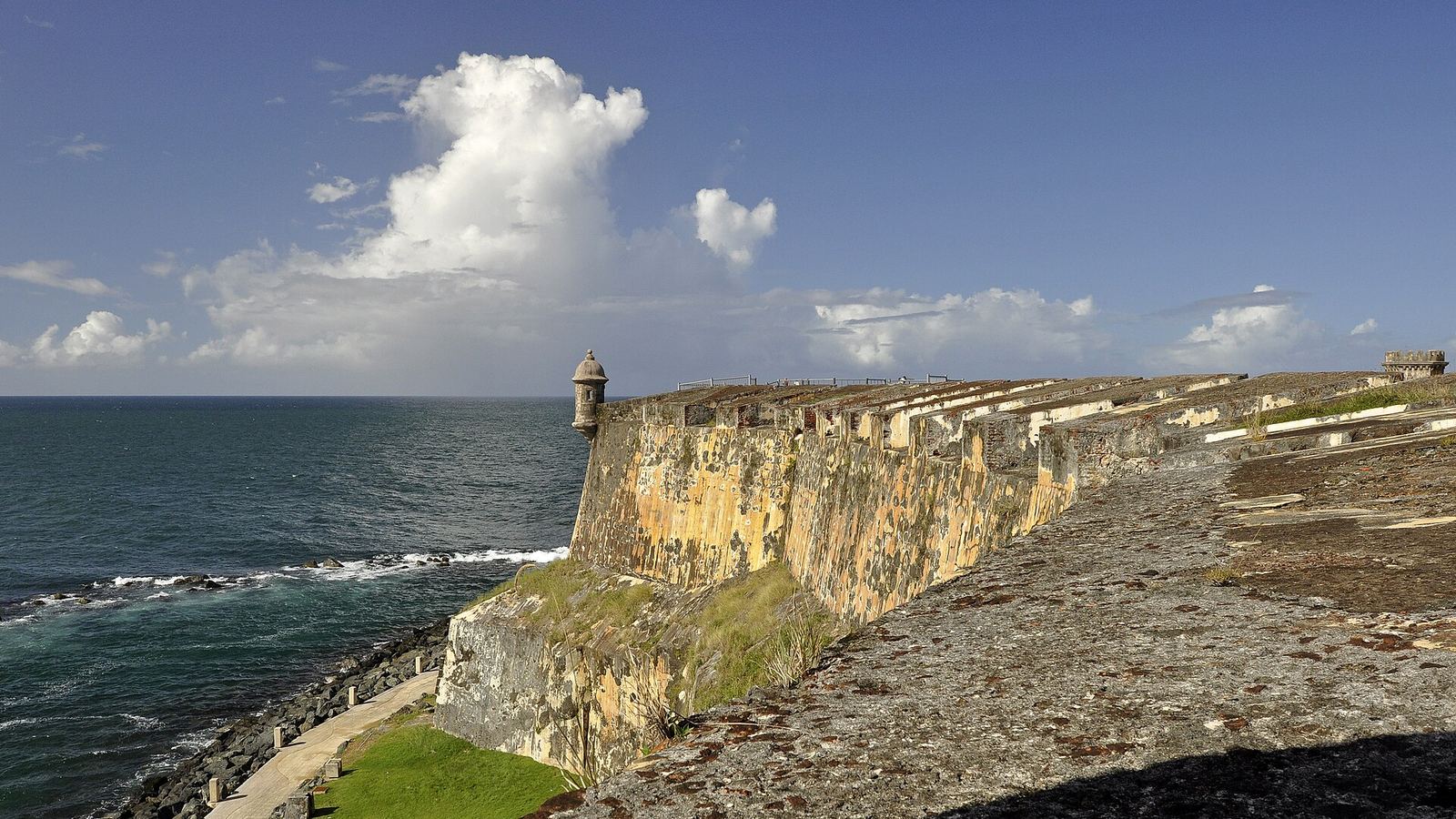
San Juan is an easy city to be online in and a confusing city to shop for connectivity in, because the answer depends entirely on which passport you are carrying. Arriving from the mainland United States, you have already bought your San Juan data and it is sitting inside the plan you pay for at home. Arriving from anywhere else, this is a foreign city that happens to bill in dollars and speak fluent American retail, and you need a plan of your own. Assuming that is you, the good news is that the metro is comprehensively covered: T-Mobile posts island-wide average downloads near 119.5 Mbit/s, Claro and Liberty both carry 5G across the tourist districts, and the practical differences show up only when you leave the coast. The two things that will actually cost you signal are the walls of the old city and the moment your rental car starts climbing.
What This Guide Covers
Jump to the section most relevant to you
How the Three Networks Behave Across the Metro
All three operators cover greater San Juan properly, and this is one of the better-served cities in the Caribbean by any measure. T-Mobile is the speed leader by a distance, having swept every speed category in Opensignal's June 2026 island report with an average download of 119.5 Mbit/s and 15 Mbit/s up, plus the strongest reliability score at 935 out of 1,000. Claro holds the coverage ranking and runs 5G across the whole metro. Liberty Mobile, which inherited AT&T's towers here, won the Video Experience award outright on 69.8 points and improved its reliability score by a hundred points in a year, the biggest jump anyone recorded.
Where you will actually notice a difference is indoors, and it has nothing to do with which logo is on your plan. Old San Juan is built of thick masonry laid down between the sixteenth and eighteenth centuries, with narrow streets, deep interior patios and buildings that were designed to keep the sun and the sea out. They keep radio waves out with equal enthusiasm. A guesthouse room on an inner courtyard behind two feet of stone will read one or two bars where the street outside reads five. The fix is the same one locals use: step onto the balcony or into the patio and the signal comes back.
The concrete problem in the beach towers
The Condado and Isla Verde hotel strips have the opposite architecture and a related issue. These are reinforced concrete towers built to survive hurricanes, and hurricane-grade construction with impact-rated glazing attenuates mobile signal noticeably. An oceanfront room with the balcony door open is fine. The same room with the storm shutters drawn and the glazing sealed is measurably worse. If your room reads badly, try the balcony before you blame the eSIM, and remember hotel WiFi is doing most of the work in these buildings anyway.
A Free Train, a 75-Cent Bus and the Old San Juan Trolley
San Juan has the cheapest public transport of any city on this site, and in 2026 part of it is not merely cheap but free. The Tren Urbano runs 16 stations on a single line from Bayamon in the south west to Sagrado Corazon in Santurce, and fare collection has been suspended since March 2024 with no announced restart date. You walk on. When collection returns, the published fare is 1.50 dollars with no increase planned. Two things it will not do: it does not reach the airport, and it does not reach Old San Juan, both of which surprise first-time visitors who assumed a metro would.
Most of the alignment is elevated or at grade, which means signal on the platforms and on board is generally fine. The exception is the bored section beneath Rio Piedras, where the line dips underground and coverage becomes intermittent between stations rather than absent. It is a short stretch and a minor inconvenience, but if you are following live directions it is worth loading them before you descend.
Buses, the trolley and how to pay
The AMA bus network charges 0.75 dollars on its thirty-plus regular routes, with only the E20 and E30 express services priced higher at 2.00 dollars. Drivers need exact change in coins, or you can tap a contactless bank card or a phone, which is far easier and what most visitors end up doing. Old San Juan additionally runs a free trolley on multiple loops through the walled city, operating roughly from 7am to 7pm, which is genuinely useful for the climb up toward El Morro on a hot afternoon. It is popular enough that waiting for one can take longer than walking.
Above ground, coverage on the bus routes is uniformly good, including the long runs out through Santurce and Hato Rey. Rideshare is the other pillar of getting around: Uber and Lyft both operate across the metro, and a hop between Old San Juan, Condado and Santurce typically runs 5 to 10 dollars. That is a small enough number that many visitors never touch public transport at all, which makes a working data connection more valuable here than a transit card.
Neighborhood Notes: Old San Juan, Condado, Santurce and Isla Verde
Old San Juan is where most first-time visitors stay and where the connectivity is at its most theatrical: perfect on the blue cobblestones of Calle San Sebastian, mediocre three rooms deep inside a colonial townhouse. Street level across the whole seven-block grid is strong on every network. The open ground around Castillo San Felipe del Morro and Castillo San Cristobal is exposed and covered well. Restaurants and cafes along Calle Fortaleza and around Plaza de Armas all hand out WiFi passwords freely.
Condado and Ocean Park are the beachfront high-rise districts and the fastest ground in the city. This is where the 5G is densest, where remote workers cluster, and where a video call over mobile data will hold without you thinking about it. Ashford Avenue is dependable end to end. Ocean Park is quieter and lower rise, and coverage is equally solid.
Santurce, the district that stays up latest
Santurce is where San Juan's nightlife and street art live, centred on La Placita de Santurce and the murals of the Santurce es Ley project. It is flat, densely built and well covered on all three networks, and it is one stop from the northern terminus of the free Tren Urbano at Sagrado Corazon. Practical note for a night out here: La Placita fills up hard at weekends, and getting a rideshare out at 2am works far better if you are the one with data rather than the one asking a friend to book.
Isla Verde sits east toward the airport and is the resort strip proper, a line of large hotels along one of the better city beaches. Coverage is strong, the T5 bus runs through it, and it is close enough to Luis Munoz Marin that arriving guests are often checked in before their eSIM has finished registering. The trade against Old San Juan is charm for convenience, and against Condado it is roughly a wash on both.
Free WiFi in San Juan and Where It Gives Out
Puerto Rico runs a public hotspot programme that places free WiFi in plazas, parks and libraries across all 78 municipalities, and San Juan is well served by it. In the walled city the three main squares all have free access: Plaza Colon, Plaza de Armas and Plaza San Jose. Outside the old town, Parque Luis Munoz Marin in Hato Rey is another reliable public spot. None of it demands a local phone number, which is more than can be said for civic networks in a lot of the region.
The commercial layer is stronger still. San Juan has a substantial cafe culture and a large population of remote workers, so connections at places like Cafe Cuatro Sombras in the old city are fast enough for real work rather than just email. Hotel WiFi across Condado and Isla Verde is generally excellent, and beach bars along the strip almost all offer it.
Where the free stuff carries you
Where it leaves you holding a dead phone
The realistic verdict is that plaza WiFi is a pleasant supplement for someone sitting down, and useless for someone moving. San Juan is a city where the useful actions, hailing a car, finding a beach entrance, checking a ferry departure, all happen while you are walking.
Getting Online on Your First Afternoon
There are three sensible routes to a working connection in San Juan, and unusually for this site, one of them is doing nothing at all.
Route one: you already have it
If your line is a standard American postpaid plan, you are done. The island is domestic territory for AT&T, T-Mobile and Verizon, your phone attaches to a network before you reach baggage reclaim, and nothing is billed differently. Skip the counters, skip the eSIM, and spend the twenty dollars on a drink at La Factoria instead. The only readers this does not cover are those on budget prepaid brands that cap domestic roaming.
Route two: an eSIM installed before departure
The right answer for almost every visitor arriving from outside the United States. Buy it at home, install the profile, and switch it on once you have landed. You walk out of the terminal with maps and a rideshare app already working, which matters more here than usual because the taxi and Uber decision at the kerb has real money attached to it. Which provider you pick determines which network you sit on, and the Puerto Rico eSIM guide sets out who rides what.
Route three: a local prepaid card once you are settled
Worth doing only for a long stay. Head to a full carrier store rather than an airport kiosk, ideally at Plaza Las Americas in Hato Rey, which sits on the currently free Tren Urbano. Bring an unlocked phone. Nobody will ask to register your passport, since US federal rules apply here, but the minimum prepaid purchase of roughly 19 to 25 dollars makes this poor value for a seven-night holiday.
Whichever route applies, do one thing before you leave the metro: download offline maps covering the eastern end of the island and the interior. San Juan will never let you down. The rainforest and the mountain roads absolutely will.
Day Trips: El Yunque, the Ceiba Ferry and the Drive to Ponce
San Juan's day trips vary enormously in how hard they test a data plan, and the ranking is not the one most people guess. The rainforest an hour away is far more demanding than the city two hours away.
| Day trip | Rough travel time | Coverage reality |
|---|---|---|
| El Yunque National Forest | 45 to 60 minutes east | Fine on the PR-191 corridor and at the visitor facilities. Drops under canopy on the La Mina and Mount Britton trails. |
| Vieques via the Ceiba ferry | 75 minutes to Ceiba, then 40 to 45 minutes at sea | Good at the terminal and in Isabel Segunda and Esperanza. Poor at Playa Negra and on the back roads. |
| Culebra via the Ceiba ferry | 75 minutes to Ceiba, then about an hour at sea | Dewey is covered. Flamenco is usable. Zoni and the eastern beaches often are not. |
| Ponce | 1.5 hours south on PR-52 | Strong at both ends. The crossing of the Cordillera Central in the middle is the thinnest stretch of the drive. |
The ferry day is the one to prepare for properly. Boats to both islands leave from Ceiba on the east coast, not from Fajardo as older guidebooks still say, and as of May 2026 an adult one-way fare is 2.00 dollars to Vieques and 2.25 dollars to Culebra. You are asked to arrive an hour before departure and check-in closes ten minutes out, so the schedule is unforgiving. Tickets and live service updates come through the ferry operator's website or its app, both of which need data at exactly the moment you are sitting in a car park in Ceiba rather than in a hotel lobby.
El Yunque, and the reservation rule that changed
The forest dropped its entry reservation requirement, along with the small booking-platform processing fee that came with it, so the PR-191 recreation corridor is currently free to enter without a prior ticket. Conditions and construction closures do change, so check the Forest Service page the morning you go, which is easier done over hotel WiFi than at the forest gate. Once inside, treat the signal as a bonus: the canopy and the ravines take it away quickly on the trails, and the waterfall stops are exactly where people discover they cannot look up the walk back.
Frequently Asked Questions
Is the Tren Urbano really free to ride in 2026?
Yes. Fare collection on the 16-station line between Bayamon and Sagrado Corazon has been suspended since March 2024 and no restart date has been announced, so you simply walk through. When it does return, the published fare is 1.50 dollars per ride with reduced rates for students, seniors and passengers with disabilities. Two limits are worth knowing before you plan around it: the line does not serve the airport, and it does not run into Old San Juan, so the walled city is reached by bus, trolley or rideshare.
Why does my signal drop inside my Old San Juan guesthouse?
Because the building is doing what it was built to do. The walled city dates from the sixteenth to eighteenth centuries and its townhouses have thick masonry walls, deep interior patios and small openings, all of which block radio as effectively as they block heat. It is an architectural effect rather than a network failure, and it happens on Claro, Liberty and T-Mobile alike. Step out onto the balcony or into the patio and the bars return. Guesthouse WiFi is generally the better bet indoors here.
Could I skip buying data and live on the free plaza WiFi?
Not comfortably. The island-wide public hotspot programme covers plazas, parks and libraries in all 78 municipalities, and in the old city that means Plaza Colon, Plaza de Armas and Plaza San Jose, all genuinely free with no local number demanded. The problem is that San Juan rewards mobility. Hailing an Uber out of La Placita at 2am, checking a ferry departure from a car park in Ceiba, or finding a beach access road all happen away from a bench, and that is where WiFi stops helping.
Which district gives me the fastest data for working remotely?
Condado, with Ocean Park close behind and Isla Verde a comfortable third. Those are the high-rise beachfront districts where 5G is densest and where a mobile-only video call holds without drama. T-Mobile measured an island-wide average download of 119.5 Mbit/s in mid-2026 and the metro is where that number comes from. Old San Juan is fine on the street and unpredictable indoors, which makes it a lovely place to stay and an awkward place to take a morning of meetings from.
Do I need a working connection for the ferry to Vieques or Culebra?
It helps considerably. Both boats sail from Ceiba on the east coast rather than Fajardo, roughly 75 minutes from San Juan, and tickets, schedule changes and service alerts all live on the operator's website and app. Fares as of May 2026 are 2.00 dollars each way to Vieques and 2.25 to Culebra, and you are expected an hour before departure with check-in closing ten minutes out. That timetable leaves no room for finding out about a cancellation once you have already arrived.