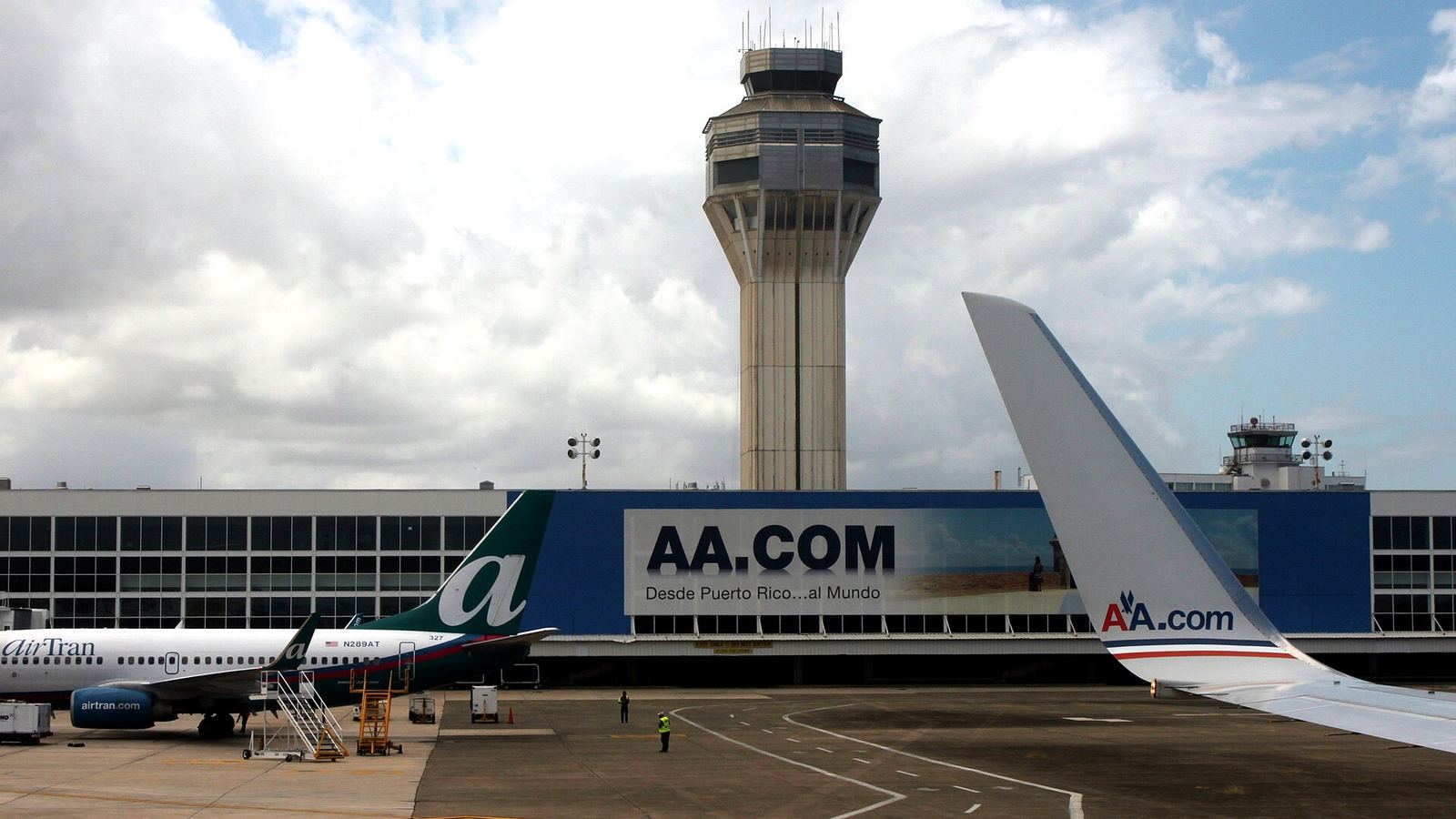
Luis Munoz Marin handles more passengers than any other airport in the Caribbean, and a very large share of them never think about connectivity for a second, because they flew in from Orlando or Newark on a plan that treats this island as domestic. If that is you, this page is a curiosity. For everyone arriving from Madrid, Bogota, Toronto or London, SJU is a slightly awkward airport to sort out a connection in, and the awkwardness is geometric rather than commercial. The best-stocked phone retail sits past security, which is precisely the side of the building an arriving international passenger has already left behind. The free WiFi is decent but runs on a clock. And the decisions with real money attached, taxi against rideshare against a 75-cent bus, all get made outside on the kerb where the terminal network no longer reaches.
What This Guide Covers
Jump to the section most relevant to you
Where You Can Actually Buy a SIM at SJU
SJU is laid out as connected concourses rather than separate buildings, lettered A through D and reachable from one another once you are inside. Concourse A is the newest and westernmost section, home to JetBlue plus Air Canada, Avelo and Tradewind. Concourse B is the busiest and holds the check-in desks for Delta, United, American, Southwest and Spirit. Concourse C handles a good deal of the international traffic including Iberia, Copa, Avianca and Frontier alongside JetBlue's international arrivals. Concourse D is where the small regional operators sit. Concourse A has its own security checkpoint while the other three share a central one.
The phone retail is scattered rather than concentrated. The most complete option, a shop stocking both Claro and Liberty products with bilingual staff, sits airside in Concourse A near gate 12. There is Claro presence in Concourse B, a T-Mobile service desk in Concourse C, and kiosks and vending machines near the baggage claim areas in B and C that handle prepaid cards and refills. Hours follow American mall hours rather than airport hours, and most of it winds down in the evening rather than trading through the night.
The layout problem, spelled out
The best shop is behind security. An arriving international passenger clears immigration, collects a bag, walks through customs and is now landside, with no way back to Concourse A gate 12 without a boarding pass. What remains available are the landside kiosks and vending machines, which sell cards and refills perfectly well but cannot help much with an unlocked-handset problem or an activation that fails. If you are connecting onward through the airside part of the building, you have far better options than someone whose journey ends here.
On price, the local counters sell visitor bundles from around 15 dollars for 3 GB up toward 85 dollars for unlimited, and the underlying prepaid plans start near 18.99 dollars at Claro and 25 at Liberty. Nobody will register your passport against the line, because US federal rules apply on the island, but you do need an unlocked phone and the patience to do this after a long flight.
SJU Free WiFi and the Clock Attached to It
The network to join is SJU Free WiFi, sometimes broadcast as SJUFreeWiFi. Connect, open a browser, and the welcome page loads on its own. The airport operator rolled it out across the whole building, so it reaches the concourses, the check-in halls and the baggage claim areas rather than clustering around a few gates.
The catch is a sixty-minute session limit. After an hour the connection drops and you have to go back through the welcome page and register again to get another block. In practice that is more than enough for a long layover if you do not mind reconnecting, and it is entirely enough for the one thing it is genuinely brilliant at: buying and installing a travel eSIM on the spot if you forgot to do it before flying. Purchase, download the profile, activate, and you leave with a working line without ever finding a counter.
Do the eSIM install before you leave the building
An eSIM profile has to be downloaded over an internet connection, and doing that on airport WiFi is far more comfortable than discovering at the taxi rank that you cannot get online to buy the thing that would get you online. If your plan is to sort connectivity out on arrival rather than in advance, join the network at the gate, finish the install while you wait for your bag, and check that mobile data actually flows before you step through the doors.
What the WiFi does not do is travel with you, and at SJU the transition point is unusually consequential. The airport sits close to the city, so the ride is short, but the fare decision waiting outside has a spread of fifteen dollars or more attached to it and it needs an app to resolve.
Getting Into Condado, Old San Juan and Isla Verde
There is no rail link from SJU. The Tren Urbano exists but stops well short of the airport, so every route into town is on the road. The saving grace is that the airport is genuinely close to the tourist districts, minutes from Isla Verde and around a quarter of an hour from Condado in reasonable traffic.
| Route | Cost | Time | Notes |
|---|---|---|---|
| Taxi to Isla Verde (Zone 2) | Around 12 USD | 5 to 10 min | Fixed zone rate, no meter. Add the 3 USD airport fee. |
| Taxi to Condado, Ocean Park or Miramar (Zone 3) | Around 17 USD | 15 to 20 min | Same fixed system, posted at the rank before you get in. |
| Taxi to Old San Juan and Puerta de Tierra (Zone 4) | Around 21 USD | 20 to 30 min | The longest of the standard zone runs. |
| Uber or Lyft | Roughly 10 to 25 USD | 10 to 30 min | Available around the clock. Pickup is on level 1 of the parking structure, not at the kerb. |
| Bus T5 | 0.75 USD | 45 to 70 min | Runs Terminal Iturregui in Carolina to Terminal Covadonga in Old San Juan via the airport and Isla Verde, roughly every 30 minutes. |
The taxi system here is refreshingly transparent and worth understanding before you land. Fares are set by zone rather than by meter, the rates are posted at the stand, and the price covers the vehicle rather than the head, so a group splits it. Layered on top are a 3 dollar airport entry and exit charge, a free first bag with 1 dollar for each additional one, and a 2 dollar surcharge for journeys between 10pm and 6am. That structure means you know the number before you open the door, which removes the haggling that makes arriving in many cities unpleasant.
Where the rideshare pickup actually happens
Uber and Lyft cannot collect from the arrivals kerb at SJU. Drivers use level 1 of the parking structure, reached by following the ground transportation signs and crossing over, and the app will direct you to a numbered spot. It is a two-minute walk that catches out people expecting a car to appear where the taxis queue. Booking it obviously requires data, which is the single most persuasive argument on this page for arriving with a live line rather than intending to sort one out later.
The Case for Landing With Data Already Running
For once this is not a straightforward pitch, because a large share of arrivals at this airport genuinely need nothing. American postpaid customers are already covered and should ignore every option below. What follows applies to visitors arriving from outside the United States, for whom the choice is between doing this before departure or doing it in a terminal after a long flight.
Reasons to set it up in advance
Reasons it might not be worth it
The other thing buying ahead lets you control is which network you end up on, which is not a small detail on this island. Airalo puts you on T-Mobile, the fastest and most reliable operator here by the 2026 measurements. Holafly puts you on Claro, whose 5G is built against land area and holds up better in the interior and on the outer islands. Nomad puts you on Liberty, the former AT&T network. A counter at the airport sells you whichever brand that counter carries. The Puerto Rico eSIM guide lays out which provider connects to which operator and where each one starts to struggle.
Airport Counter Against a Travel eSIM
On most of this site the local counter wins on price and loses on everything else. Puerto Rico is the exception, because prepaid here is a residential product on a monthly cycle rather than a tourist bundle, which means the travel plan is usually both cheaper and easier for a normal holiday.
| Local SIM bought at SJU | Travel eSIM | |
|---|---|---|
| Typical cost | From around 15 USD for 3 GB, up to 85 for unlimited, on plans starting near 18.99 | Roughly 4 to 25 USD metered, or 18.90 upward for unlimited by day |
| Ready when | After you have found an open counter landside | Before the cabin doors open |
| ID needed | No registration, though photo ID may be asked for payment | No |
| Network choice | Whatever that counter stocks | You pick the operator by picking the provider |
| Island phone number | Yes | No, data only |
| Keeps your home number live | Only on a dual-SIM handset | Yes, the physical SIM stays put |
| Best for | Stays of a month or more, anyone needing a local number, locked handsets | Holidays of a week or two, late arrivals, anyone who wants a rideshare app working at the kerb |
One comparison puts the whole thing in proportion. The difference between the Zone 4 taxi fare into Old San Juan and a rideshare on a quiet evening is roughly the price of a small island eSIM. Get the connectivity decision right and it pays for itself on the journey out of the car park. The San Juan city guide covers what happens to your signal once you are behind three hundred year old walls, and the Puerto Rico SIM card guide goes deeper on what the local operators charge.
Frequently Asked Questions
Which concourse do I look in for a SIM card at SJU?
The fullest option is airside in Concourse A near gate 12, a shop carrying both Claro and Liberty products with bilingual staff, and it is no use to you if you have already cleared customs. Landside you are looking at Claro presence in Concourse B, a T-Mobile service desk in Concourse C, and kiosks and vending machines near the baggage claim areas in B and C. Retail keeps normal evening hours here rather than trading overnight, so a late arrival may find shutters down.
How long does the free airport WiFi last before it cuts out?
Sixty minutes per session. Join the network called SJU Free WiFi, let the welcome page load in a browser, and you are online for an hour, after which the session ends and you register again for another block. It reaches the concourses, check-in areas and baggage claim rather than just a few gate lounges. It is quick enough to buy and install a travel eSIM profile while you wait for your luggage, which is the most useful thing you can do with it.
What should a taxi to Condado cost, and is the price fixed?
Around 17 dollars, and yes, it is fixed. San Juan airport taxis run on a zone system set by the tourism authority with the rates posted at the rank, so there is no meter and no negotiation. Isla Verde is about 12 dollars, Condado, Ocean Park and Miramar about 17, and Old San Juan about 21. Expect a 3 dollar airport entry and exit charge on top, a dollar for each bag after the first, and a 2 dollar surcharge between 10pm and 6am. The fare covers the car rather than each passenger.
Is there a public bus from the airport into Old San Juan?
Yes, route T5, and at 0.75 dollars it is the cheapest way into town by a wide margin. It runs between Terminal Iturregui in Carolina and Terminal Covadonga in Old San Juan, passing the airport and the Isla Verde hotel strip, roughly every half hour every day of the week. Drivers take exact change in coins or a contactless tap from a card, phone or watch, and no bills. Allow considerably longer than a taxi, and think twice with heavy luggage at a busy hour.
I am connecting on to St Thomas or Tortola. Does my Puerto Rico plan come with me?
No. An island-only plan covers Puerto Rico and stops there, so the US Virgin Islands and the British Virgin Islands both need their own coverage. American postpaid customers usually have the US Virgin Islands folded into the same domestic footprint, which makes the hop painless for them and not for anybody else. If your route runs through several islands in the northern Caribbean, buy a single regional plan that names each destination rather than a separate purchase per landing.