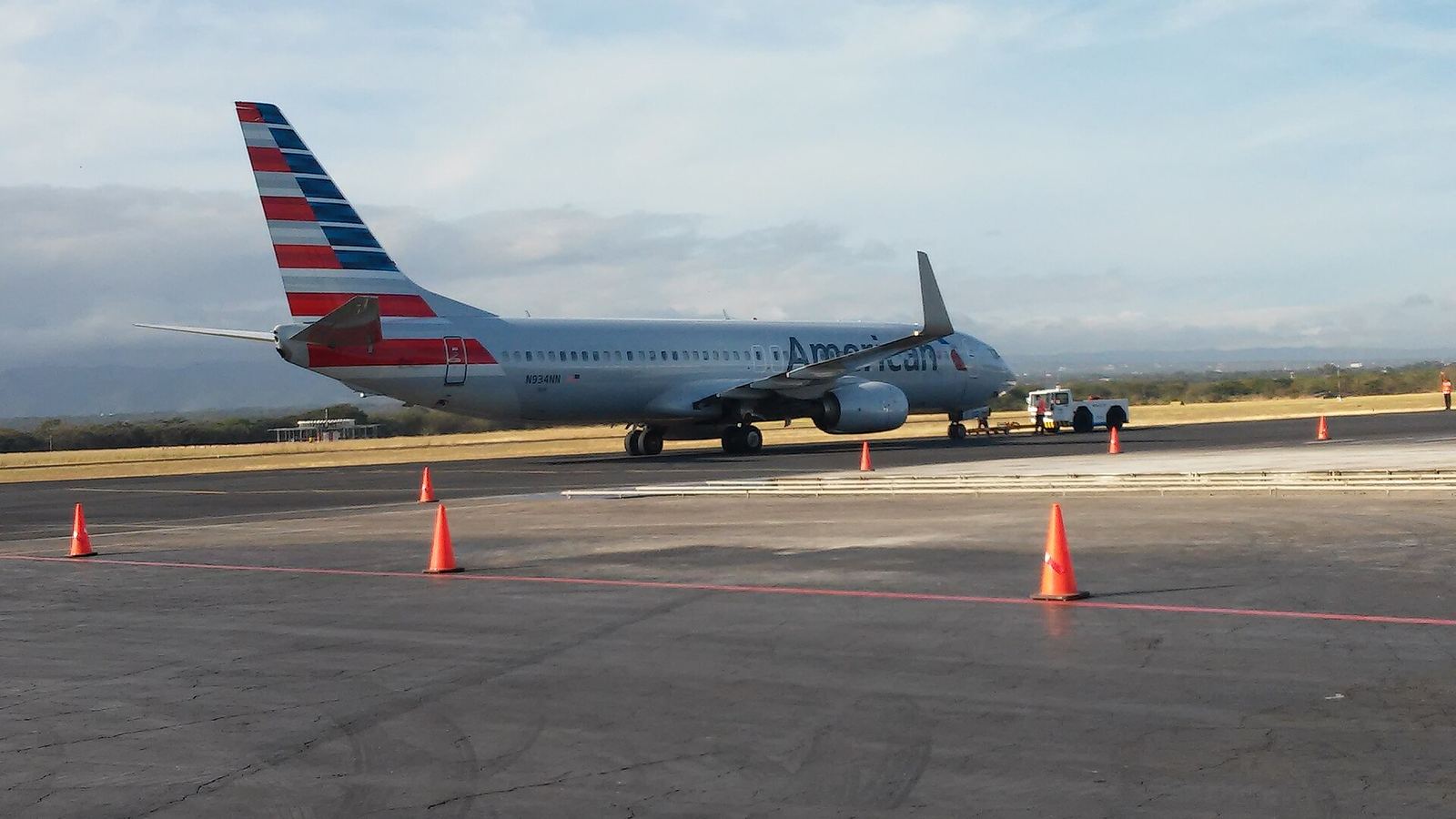
Augusto C. Sandino is a single-terminal airport where buying a local SIM is cheap, straightforward and completely dependent on somebody being behind the counter. Claro and Tigo both keep kiosks in the arrivals hall, they will register a line against your passport and load a data pack in a few minutes, and travellers report paying somewhere in the five to ten dollar range for a bundle that would cost three or four times that as an eSIM. The problem is the timetable. Reported hours here track the daytime flight bank, and a late evening arrival regularly finds the desks closed, which is exactly when a stranger in an unfamiliar city most wants a working phone. Managua is also not where most visitors are going: the majority are heading straight out to Granada, an hour down the road, and the hour in the car is the part of the day where data does the most work.
What This Guide Covers
Jump to the section most relevant to you
SIM and eSIM Options in the Arrivals Hall
MGA is a compact operation. There is one terminal, divided internally between international and domestic departures, and everything an arriving passenger needs sits on the lower level once you are through immigration and baggage. Signage runs in Spanish and English, and the walk from the aircraft to the exit doors is short by any standard.
Both Nicaraguan operators are represented in that hall. A Claro counter is the one travellers mention most often, and it can do the entire job on the spot: register the line, cut or supply the chip, apply a pack and confirm data is flowing before you walk away. Tigo maintains a presence too. Prices at these desks are close to what a shop in the city charges, because Nicaragua does not really run the airport markup that airports elsewhere in the region do, and reports from arriving passengers put a SIM with a usable data bundle at roughly five to ten dollars depending on which pack they were sold.
The staffing question, which is the whole question
Neither operator runs these desks around the clock and neither publishes hours you could plan against. What travellers consistently report is that the counters follow the daytime schedule and that arrivals after about nine in the evening can find them shut with nothing open behind them. Selection can be thinner than in a city store as well, so the pack you are offered may not be the pack you would have chosen. If your flight lands in daylight and you are not in a hurry, the kiosk is a perfectly good option. If it lands after dark, or if you are being met by a driver on a schedule, do not build your evening around it.
The Terminal WiFi and How Far It Actually Gets You
Managua provides free wireless internet across the terminal, and unlike a number of Central American airports it does not meter it aggressively or throw a paywall at you after the first hour. For the things you need in an arrivals hall it is adequate: message whoever is meeting you, confirm a booking, look up a fare, tell somebody at home you landed.
Where it lets you down is not the speed but the geography. The airport sits on the Carretera Norte, roughly eleven kilometres east of central Managua, and Granada is another hour beyond that. The moment you step outside to find a taxi you are back on whatever mobile connection you brought with you, and everything genuinely useful about being connected in Nicaragua happens in that next hour rather than in the terminal.
Do this before you leave the building
If you have not sorted mobile data, spend five minutes on the airport connection front-loading the drive. Download the offline map tile for Managua and the whole corridor south to Granada, screenshot your accommodation address and the name of the street it is on, save the phone number of whoever is expecting you as an actual contact, and note down the fare you have been quoted. That is a small amount of preparation that removes almost every way the next hour can go wrong, connected or not.
The Hour Down the Road to Granada
Very few visitors stay in Managua. The overwhelming majority of arrivals at MGA are on their way somewhere else, and for most of them that somewhere is Granada, roughly forty five kilometres away on the far side of the capital. Estimates for the drive vary between about fifty five minutes on a clear run and a good two hours if you hit Managua traffic at the wrong hour, so budget an hour and a half and be pleased when it is less.
The good news is that this route is about as well covered as anywhere in the country. The road out of Managua and down through the Masaya corridor sits in the middle of both operators' build, and you will hold LTE for practically the entire journey. That makes the drive the most valuable connected hour of a Nicaraguan trip, and it is why the arrival gap matters more here than the raw price of data suggests.
| Option | Roughly | Time | Notes |
|---|---|---|---|
| Cooperativa taxi from arrivals | 40 to 90 USD | 1 to 2 hours | Fixed fare agreed at a desk inside the hall before you meet the driver |
| Pre-booked private transfer | Around 65 USD for up to four | 1 to 2 hours | Driver waiting with a name board, no negotiation on arrival |
| Taxi plus Casimiro Sotelo microbus | Well under 20 USD total | 2 to 3 hours | Taxi to the terminal, then a microbus of about ninety minutes |
| Overnight in Managua, travel next day | Cost of a room | Next morning | Sensible for very late arrivals rather than a cost-saving move |
One route note that catches returning visitors out. The bus terminal everyone used to call UCA is now generally referred to as the Casimiro Sotelo terminal, and it has moved to a temporary site out toward Pista UNAN near the Rigoberto Lopez Perez lights. If you are directing a taxi there, say the new name and the new location, because the old one will send some drivers to the wrong place.
Cooperativa Taxi, Private Transfer or the Microbus
The three ways out of MGA suit three different kinds of arrival, and the deciding factor is usually what time it is and how much luggage you are carrying rather than the money.
The cooperativa taxis work from a desk inside the arrivals hall: you state your destination, pay or agree a fixed fare there, and are then assigned a driver. That structure is the point, because it takes the haggling out of the kerb and gives you a price before you meet anybody. Quoted fares to Granada vary a lot between sources, from around forty dollars up to sixty five for a small group and ninety for a larger one, so confirm the number at the desk rather than assuming what you read online.
A pre-booked transfer costs about the same and removes the last uncertainty, since somebody is standing there with your name. It is the right answer for a family, a late landing, or anyone who does not fancy negotiating in Spanish after a long flight. The microbus route is genuinely cheap and genuinely fine in daylight with light bags, but it means a taxi across town to the Casimiro Sotelo terminal first, then a crowded ninety minute run to Granada, and it is not something to attempt at night with two suitcases.
Arriving with working data means
Arriving without it means
MGA Counter Prices Against an eSIM, in Cordobas
This is the comparison that decides it, and in Nicaragua it does not come out the way it does in most countries, so it is worth setting out plainly. Conversions below use 36.8 cordobas to the dollar, roughly where the currency has sat through 2026.
| What you buy | Where | Cost | Working when? |
|---|---|---|---|
| Claro chip and a data pack | MGA arrivals kiosk | Around 5 to 10 USD | After the queue, if the desk is open |
| Claro 7 GB, 15 days | Shop in Granada or Managua | C$200, about 5.45 USD | Next day, once you are in town |
| Tigo 3 GB, 5 days | Shop or reseller | C$70, about 1.90 USD | Next day |
| Travel eSIM 1 GB, 3 days | Bought before departure | 6 USD | The moment the aircraft lands |
| Travel eSIM 5 GB, 30 days | Bought before departure | 21 USD | The moment the aircraft lands |
Read the middle rows and the airport looks like a reasonable deal, because it more or less is. Nicaragua does not gouge arriving passengers on connectivity the way plenty of places do, and a five to ten dollar SIM with a real data bundle is not something to feel aggrieved about. What the table cannot show is the risk column: an unstaffed counter at half past nine at night turns the cheapest option into no option, and there is no second chance until the following morning in Granada.
The arrangement that handles both realities costs about six dollars. Buy a small travel eSIM before you fly so the phone works from the moment you are through immigration and through the hour on the road, then pick up a Claro chip and a 200 cordoba pack the next morning near Granada's central park if you are staying more than a fortnight. Anyone here for a week or less can skip the second step entirely and just size the eSIM properly. Verified provider prices are on the Nicaragua eSIM guide, the cordoba counter packs are laid out in the SIM card guide, and the Granada guide covers what happens to your signal once you head for the lake.
Frequently Asked Questions
Are the SIM counters at Managua arrivals actually open when I land?
During the day, almost certainly. Late in the evening, quite possibly not. Claro and Tigo both hold kiosks in the arrivals hall and neither publishes hours you could rely on, but the pattern travellers describe is that staffing follows the daytime flight bank and that arrivals after around nine at night find the desks shut. Stock and plan choice can also be narrower than in a city store. Treat the kiosk as a bonus if your flight is a daytime one, and have another way to get online if it is not.
Is the wireless in the terminal free, and does it need a login?
It is free and it covers the terminal, which is more than several airports in the region manage without a paywall or a strict time limit. It is fine for the things you actually need airside: messaging whoever is collecting you, confirming a reservation, checking a fare. Use the time on it to download offline maps for Managua and the road south, because the connection ends when the building does and the useful part of the journey starts right after that.
How long is the drive from MGA to Granada, and do I keep a signal?
Between about an hour on a good run and closer to two if Managua traffic is against you, over roughly forty five kilometres. Coverage on that route is among the best in Nicaragua, since the road out of the capital and down through the Masaya corridor is where both operators have concentrated their network, so you should hold LTE almost the whole way. That makes it a genuinely productive hour if your phone is working, which is the strongest practical argument for sorting data before you land rather than after.
What should I expect to pay to get from the airport to Granada?
Quotes vary more than they should. The cooperativa taxi desk inside arrivals fixes a fare before you meet a driver, and reported prices to Granada run from around forty dollars up to sixty five for a small group and about ninety for five or more people. A pre-booked private transfer lands in a similar range with the added certainty of somebody holding a sign. The budget route is a taxi to the Casimiro Sotelo terminal, formerly known as UCA and now at a temporary site near Pista UNAN, then a microbus of roughly ninety minutes, which comes in well under twenty dollars in total.
Is it cheaper to buy at the airport or online before I travel?
Cheaper at the airport, on the number alone. A SIM with a data bundle at the MGA kiosk runs about five to ten dollars, and the same pack in a Granada shop is cheaper again, where the smallest travel eSIM is six dollars for a single gigabyte over three days. What the online purchase buys is not gigabytes, it is timing: it works on landing, needs no passport handed over a counter, and does not care whether anyone is on duty. For a trip of a week or less that certainty is usually worth the premium. For a month it is not, and a local chip is the better buy.