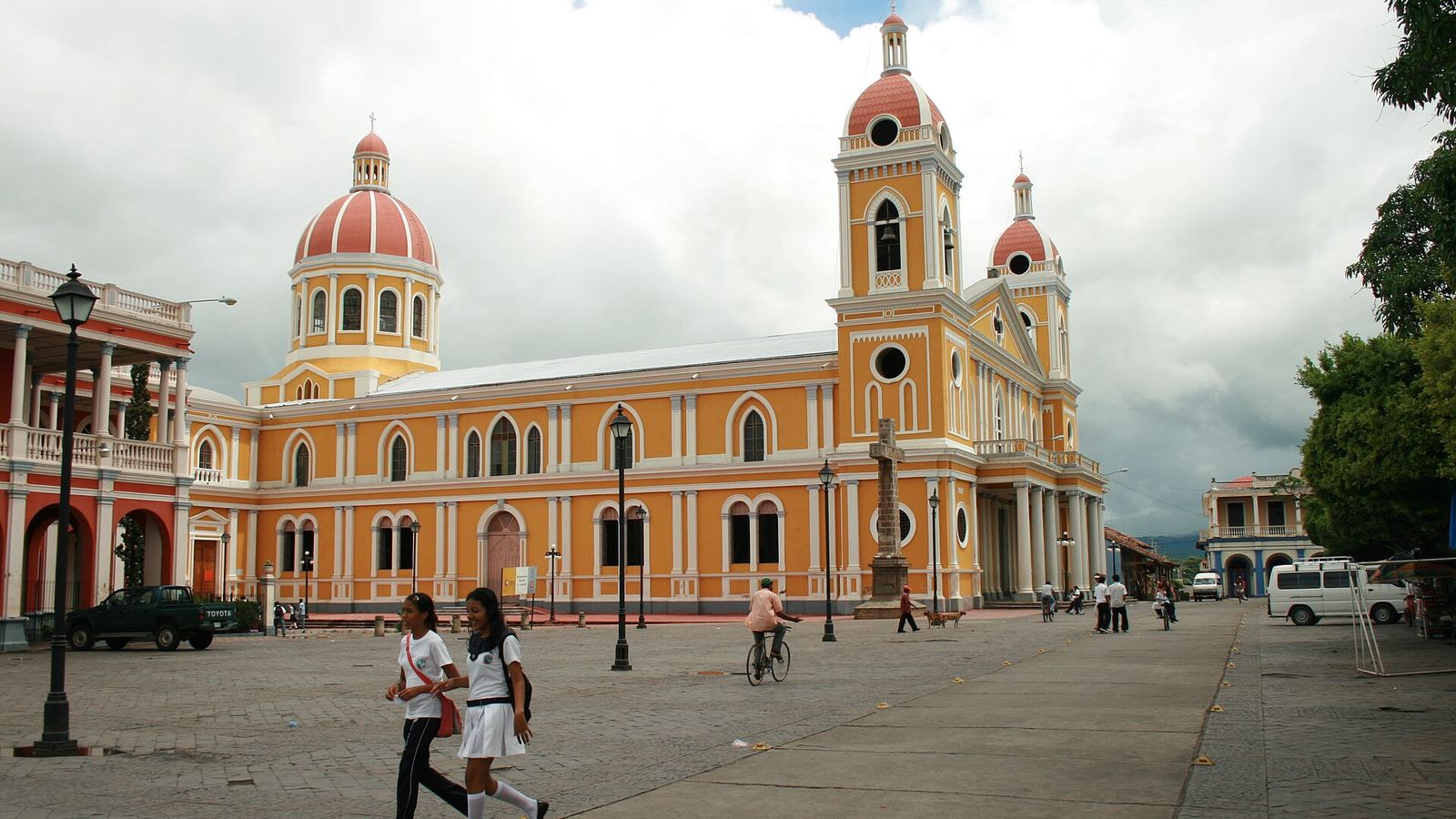
Granada itself is not a connectivity problem, and anybody telling you otherwise has not been. The old town is a compact grid of about a dozen blocks between Parque Central and the lakefront, both Nicaraguan networks cover it properly, and you will run LTE from your hotel courtyard to the far end of La Calzada without thinking about it. What makes this a page worth reading is everything Granada is a base for. The boats out into Las Isletas, the truck ride up Mombacho into the cloud forest, and above all the run south to Rivas, the pier at San Jorge and the crossing to Ometepe are where a Nicaraguan itinerary stops being a city break and starts testing whether you actually have data. Ometepe is the honest test case on this whole site: two towns with real coverage, a ring road that fades to 3G, and two volcano trails with nothing at all. Plan the eSIM around those days rather than around the ones you spend eating on La Calzada.
What This Guide Covers
Jump to the section most relevant to you
How the Signal Sits Over the Colonial Grid
Granada is small in a way that flatters mobile coverage. Almost everything a visitor does happens inside a rectangle roughly a kilometre on its long side, running east from Parque Central down to the water, and both Claro and Tigo have that rectangle comprehensively covered with LTE. Speeds in the fifteen to thirty megabit range are normal on Claro, which is plenty for maps, video calls and pushing photographs to a cloud drive over a coffee.
Claro is the one to be on if you have a choice, and the reason has less to do with Granada than with everywhere you will go from it. Inside the grid the two are close enough that you would struggle to tell them apart. Twenty kilometres south, on the road toward Rivas, the difference starts showing up as Tigo bars that display a connection and then time out. Since the two travel eSIM providers with sensible pricing here both connect through Claro anyway, most visitors get the right answer without having to make a decision.
The one thing that genuinely degrades signal in Granada
Colonial construction. The houses along the grid are adobe and stone with walls that can run half a metre thick, high ceilings, and rooms arranged around an interior courtyard with no exterior windows at all. A bedroom on the inner side of a restored colonial hotel can sit two bars below the street outside its front door. This is not a network fault and no eSIM fixes it. The practical response is the same one locals use: take the call in the courtyard, where the sky is open, rather than in the room.
Parque Central, the Cathedral and the Length of La Calzada
Orientation in Granada is almost impossible to get wrong, which matters because it means you can afford to be offline here in a way you cannot on the island. The mustard-yellow Cathedral of the Assumption fronts the east side of Parque Central, and La Calzada runs straight out from it toward Lake Cocibolca. Walk west a couple of blocks instead and you reach Iglesia La Merced, whose bell tower is the standard sunset climb and, incidentally, the best place in town to get a clean signal and a photograph out to somebody at once.
La Calzada is where visitors spend their evenings and where the connectivity story is most straightforward: it is a pedestrianised strip of restaurants and bars, every one of which has WiFi, and it holds LTE end to end. The one place things loosen is the far eastern end, where the street opens toward the Centro Turistico and the lakefront. Out there the buildings stop, the masts are behind you, and the signal thins from confident to merely adequate. It is a difference of degree rather than a dead zone.
Two blocks that are worth knowing about
The Convento y Museo San Francisco, a block and a half north of the park, is one of the oldest church foundations on the American mainland and holds the pre-Columbian basalt statues brought over from Isla Zapatera. Thick walls, dim galleries, and predictably weak signal inside, so look things up before you go in. Meanwhile the municipal market a few blocks south of the park is dense, roofed and chaotic, and your phone will hold data there but your attention will not, which is the more useful warning of the two.
Cafe WiFi Along the Calzada, and What It Will Not Do
There is no municipal WiFi network blanketing Granada, and nobody should plan around finding one. What there is instead is an unusually high density of restaurants, cafes, hostels and hotels running open or password-shared connections, concentrated on La Calzada and around Parque Central, and in a town this small that gets you most of the way there.
The quality varies more than the coverage does. A well-run cafe on the Calzada at ten in the morning will give you something perfectly usable for a video call. The same connection at eight in the evening, with forty people on it and every one of them streaming, is a different proposition. Hotel WiFi in the restored colonial properties is generally the most reliable option in town, partly because the guest count is low and partly because those places have invested in it.
Use the WiFi for the big jobs, the eSIM for the rest
The sensible division of labour in Granada is to do anything heavy over a fixed connection and let mobile data handle everything mobile. Push the day's photographs and download offline maps for Ometepe from your hotel in the evening; use the eSIM for navigation, WhatsApp, booking a shuttle and looking up a ferry time. Done that way, a 5 GB plan lasts a fortnight here without any effort at all, and you never find yourself standing on a pier trying to load a booking confirmation on 3G.
Out on Las Isletas and Up Into the Cloud Forest
Two of Granada's three signature excursions start within twenty minutes of the park and they behave very differently on a phone.
Las Isletas are the several hundred small islands scattered across the lake just south of town, thrown there when Mombacho blew a chunk of its cone into Cocibolca. Boats leave from Puerto Asese and from the Centro Turistico at the end of the lakefront, and the standard trip is an hour or two weaving through the channels past fishermen, herons and a startling number of private houses. Coverage out there is better than you would expect, because you are never more than a kilometre or two from the shoreline and the Granada masts have a clear line over open water. Expect it to hold for most of the trip and to wobble in the narrower channels where the vegetation closes over the boat.
Mombacho is the opposite experience. The reserve is run by Fundacion Cocibolca and the way up is an eco-mobile, a converted truck seating a couple of dozen people, that grinds up a slope hitting forty percent gradients for about half an hour to reach the cloud forest station near the summit. Entry to the reserve on its own runs around five dollars; the truck and entry together come to roughly twenty two. As you climb, the town and its masts drop away below and behind, and the cloud forest at the top is exactly the kind of environment where you should assume a phone is a camera rather than a communication device.
Before you get on the truck
Screenshot your return arrangements. The eco-mobile runs to a timetable and the last one down is not negotiable, so the single most useful thing on your phone up there is a photograph of the schedule rather than a live page you are hoping will load. The same goes for a boat trip on the Isletas: agree the price and the duration at the dock, in cordobas, before you push off, because renegotiating anything from the middle of the lake is a losing position whether or not you have bars.
Rivas, San Jorge and the Crossing to Ometepe
This is the leg that decides whether the eSIM was worth buying. From Granada the road runs south down the Panamericana to Rivas, then a few kilometres east to the little port of San Jorge, where the ferries and lanchas leave for Moyogalpa on Ometepe. The road itself is fine: the highway spine is where both operators have concentrated their build, and you will keep LTE for essentially the whole drive. Rivas and San Jorge are both properly covered. The interesting part starts when the boat pulls away.
How the crossing actually goes
1. Get to San Jorge. The pier is a short hop from Rivas by taxi. Sailings run through the day from around seven in the morning to about half past five in the evening, with a reduced timetable on Sundays and public holidays.
2. Pay at the pier. Foot passengers pay in the region of fifty cordobas each way, plus a one dollar tourist levy. Taking a vehicle across is a different order of expense, in the fifteen to twenty dollar range.
3. Cross in about an hour. The run to Moyogalpa takes roughly sixty minutes on the ferry. Signal holds for a good portion of it because the boat is never far from either shore, but it goes soft in the middle of the channel and it is not something to rely on.
4. Land at Moyogalpa. The port town has LTE on both networks, so whatever you needed to confirm can be confirmed on the dock.
5. Go inland at your own risk. This is where it changes, and the next paragraph is the important one.
Ometepe is two volcanoes joined by an isthmus and the coverage map follows that shape exactly. Moyogalpa in the west and Altagracia on the northeast side both carry LTE from Claro and Tigo. Much of the ring road connecting them and running around to the Maderas side drops to 3G, which is enough for WhatsApp and not much else. The slopes of Concepcion and Maderas have no usable service whatsoever, and both of those are full-day hikes with a guide. Balgue, Santa Cruz and the southern half of the island are thinner and more variable than the north. If you are staying anywhere other than Moyogalpa or Altagracia, ask the property directly which network reaches them, because the answer is specific to the spot and they will know it precisely.
Where an eSIM Earns Its Money Around Granada
Set against Nicaraguan counter prices, a travel eSIM is an expensive way to buy gigabytes and a cheap way to buy certainty. On a Granada-based trip the certainty is worth more than it sounds, because the days when connectivity actually matters here are the days when you are furthest from a shop that could sell you an alternative.
The eSIM pays for itself when
Buy the local card instead when
For most people the sizing question answers itself. Five gigabytes covers a fortnight based in Granada without any discipline at all, because so much of a Nicaraguan day is spent somewhere there is nothing to spend data on. If you want the numbers rather than the argument, the Nicaragua eSIM guide lists verified provider prices, the SIM card guide has the cordoba packs at the counter, and the eSIM Finder will size a plan against your actual itinerary.
Frequently Asked Questions
Is the signal in Granada good enough to work from for a week?
Yes, with one caveat about where you sit. Both networks run LTE across the old town at speeds in the fifteen to thirty megabit range, which handles video calls and file uploads without complaint, and the restored colonial hotels generally have solid fixed WiFi on top of that. The caveat is the architecture: half-metre adobe walls and rooms built around interior courtyards will cost you bars indoors. If a call matters, take it in the courtyard or on a terrace rather than in a windowless bedroom, and it will be fine.
Do I keep data on the boat trip through Las Isletas?
Mostly. The islets sit close to the Granada shoreline and the town's masts have an unobstructed line across open water, so a standard hour or two on the lake holds a connection for most of its length. It wavers in the tighter channels where trees close in overhead, and it is weakest at the far end of the circuit. None of that matters much because you are back at Puerto Asese or the Centro Turistico shortly afterwards. Agree the price and the duration with the boatman on the dock rather than assuming you can sort it out afloat.
What happens to my phone on the way up Mombacho?
It becomes a camera. The eco-mobile climbs for about half an hour up gradients reaching forty percent to reach the cloud forest station, and the higher you go the further the town's masts fall behind and below you. Assume the summit and the trails around it are effectively offline. The one thing to do before boarding is photograph the descent timetable, because the last truck down is fixed and a screenshot beats hoping a page loads. Entry alone is around five dollars, with the truck included it is roughly twenty two.
How bad does coverage really get on Ometepe?
It splits cleanly into three. Moyogalpa and Altagracia have LTE on both Claro and Tigo and behave like any small Nicaraguan town. Most of the ring road between them and around toward Maderas sits on 3G, which carries messages and little else. The volcano trails on Concepcion and Maderas have nothing at all, and both are guided full-day climbs, so plan on being uncontactable for those. Download offline maps and your accommodation details in Granada or at San Jorge before the ferry leaves, not after you land.
Should I sort out data in Granada or wait until I reach the island?
Sort it in Granada. There are proper Claro and Tigo branches within a couple of blocks of the central park, staffed by people who do this all day, and the pack you buy there costs the same as it would anywhere else in the country. Moyogalpa has resellers and top-up points but far less capacity to fix a problem, and if you are staying on the Maderas side you may not be back in a town with a real shop before your ferry out. Buy in Granada, test it before you leave the counter, then cross.