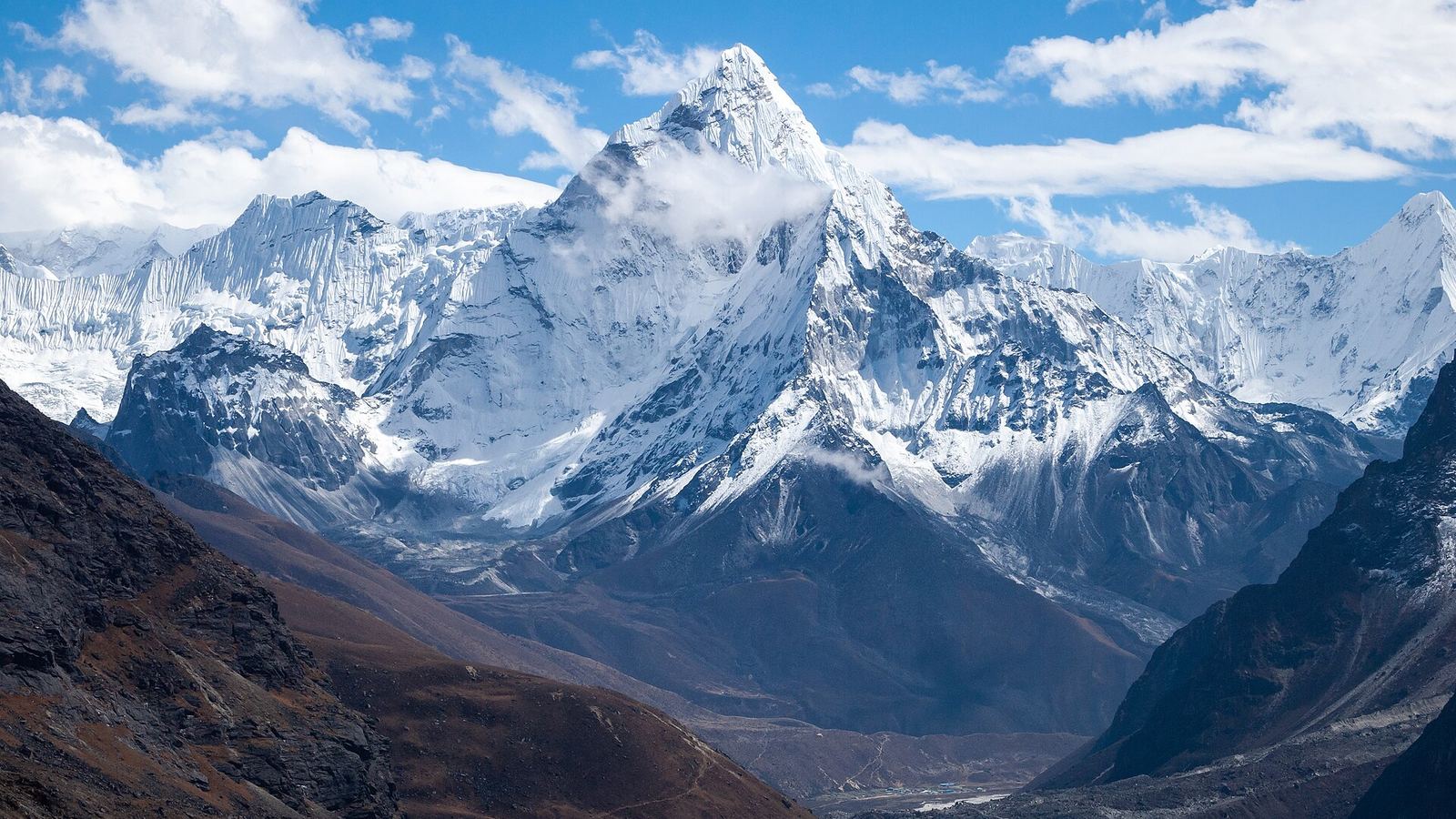
Nepal splits into two connectivity countries, and the split happens at about 3,500 metres. Down in the Kathmandu Valley, along Pokhara's Lakeside strip and across the Terai, Ncell is the faster network and the one almost every travel eSIM connects to, which makes Airalo the sensible default for a trip built around Durbar squares, momo crawls and a paraglide over Phewa Tal. Climb past the treeline and the ranking inverts. Nepal Telecom, the state operator that older Nepalis still call Namaste and everyone else calls NTC, keeps a bar alive in villages where Ncell has quietly given up, which is why trekkers who care about a nightly message home look at Holafly, the only one of the big three riding NTC. Nomad sits alongside Airalo on Ncell and undercuts it on the mid-size buckets.
Set expectations before you buy anything. There is no commercial 5G anywhere in Nepal as of mid-2026, so every plan on sale is a 4G plan. Gorak Shep and Everest Base Camp have no connection worth planning around on any network, the Thorong La crossing is a guaranteed blackout of fifteen hours or more, and above Namche Bazaar the thing that actually gets your photos home is a paid teahouse WiFi card, not your eSIM.
Quick Pick: the Best eSIM for Nepal
Airalo (Nepal 10 GB / 30 days): Runs on Ncell, the quickest network across Kathmandu, Pokhara and the lower trekking valleys, at roughly a quarter of what an unlimited Nepal plan costs, with in-app top-ups for a stretched itinerary.
Our picks
Best overall: Airalo. Lowest per GB: Nomad. Unlimited: Holafly. Or use the eSIM Finder.
Nepal eSIM Plans Compared
Indicative pricing. Tap through for live rates.
| Provider | Plan | Data | Duration | Price | Network |
|---|---|---|---|---|---|
| Airalo | Nepal 1GB | 1 GB | 7 days | $5 | Ncell |
| Airalo | Nepal 3GB | 3 GB | 30 days | $11 | Ncell |
| Airalo | Nepal 5GB | 5 GB | 30 days | $16 | Ncell |
| Airalo | Nepal 10GB | 10 GB | 30 days | $26 | Ncell |
| Airalo | Nepal 20GB | 20 GB | 30 days | $37 | Ncell |
| Nomad | Nepal 1GB | 1 GB | 7 days | $4 | Ncell |
| Nomad | Nepal 5GB | 5 GB | 30 days | $14 | Ncell |
| Nomad | Nepal 10GB | 10 GB | 30 days | $22 | Ncell |
| Nomad | Nepal 20GB | 20 GB | 30 days | $32 | Ncell |
| Holafly | Unlimited 5-day | Unlimited | 5 days | $19 | Nepal Telecom (NTC) |
| Holafly | Unlimited 7-day | Unlimited | 7 days | $27 | Nepal Telecom (NTC) |
| Holafly | Unlimited 10-day | Unlimited | 10 days | $34 | Nepal Telecom (NTC) |
| Holafly | Unlimited 15-day | Unlimited | 15 days | $47 | Nepal Telecom (NTC) |
| Holafly | Unlimited 30-day | Unlimited | 30 days | $69 | Nepal Telecom (NTC) |
Airalo Nepal Plans
Airalo: The Ncell Plan Most Visitors Should Start With
Cheap metered buckets on Nepal's quickest network
Airalo lists its Nepal packages under the Patancell name, and they all connect through Ncell. For the shape of trip most people fly to Kathmandu for, a few days in the valley, a bus or a short flight to Pokhara, a teahouse walk and maybe a Chitwan detour, that is the right network at the right price. Ten gigabytes across thirty days lands near $24, which is roughly what a single day of unlimited data costs from the premium end of the market.
The ladder is unusually granular, which helps here more than in most countries. Because trekking days burn almost no data, a 5GB plan at $17 over thirty days is often enough for a fortnight, and you can add more from the app during a rest day in Namche or Manang without hunting for a shop. The honest limitation is altitude: Ncell is the network that fades first as you climb, so an Airalo plan is a poor fit for anyone whose main objective sits above Manang or Dingboche.
Strengths
Weaknesses
Holafly Nepal Plans
Holafly: The One That Puts You on Nepal Telecom
Unlimited data on the network that survives altitude, at a price that stings
There is exactly one reason to look at Holafly for Nepal, and it is the carrier on the back of the plan. Nepal Telecom's rural build-out is what keeps a phone alive at Dingboche, on the trail above Chame and in the villages either side of Muktinath, and Holafly is the only mainstream travel eSIM that connects to it here. If your trip is a serious high-altitude trek and your family expects a message from every teahouse, that changes the calculation in a way price alone does not.
Everything else about it argues the other way. Nepal is one of Holafly's more expensive destinations, with seven days landing around $65.90 against roughly $17 for a month of metered Airalo data, and the sharing allowance is limited to 500 MB a day, so it is a weak choice for anyone travelling with a laptop or a partner to tether. For Kathmandu, Pokhara and Chitwan, where Ncell is both faster and vastly cheaper, this is money spent on nothing you will notice.
Strengths
Weaknesses
Nomad Nepal Plans
Nomad eSIM: Keener Pricing on the Mid-Size Buckets
Ncell data with a flatter price curve than the big-name rival
Nomad connects through Ncell like Airalo does, so the coverage story is identical and the decision comes down to arithmetic. Its curve is flat in the middle, with 3GB and 5GB over thirty days sitting close together near $14 and $15, which makes the 5GB plan the standout if you want a month of validity for a two or three week trip. The 10GB tier at roughly $24 matches its rival, so at that size pick on app preference rather than price.
Where it is weak is the very small end, where a single gigabyte costs more than three does. Treat the 1GB plan as a top-up rather than a purchase. And because it shares Ncell with Airalo, it inherits the same ceiling: this is a plan for the valley, Pokhara, Chitwan and the lower trails, not for the days when you are above the last stand of rhododendron.
Strengths
Weaknesses
Mobile Networks in Nepal
Three operators hold licences in Nepal, but visitors only ever weigh up two of them, and the two are close enough in size that neither can be dismissed.
Nepal Telecom, the state-owned incumbent branded Namaste, reported roughly 15.8 million GSM mobile lines in the regulator's mid-February to mid-May 2026 management report, alongside about 48.9 percent of all internet subscriptions in the country. Its advantage is geographic rather than technical. Because NTC was built as public infrastructure, its towers went up to serve district headquarters and hill villages that no commercial operator would have bothered with, and that legacy is exactly what a trekker benefits from. Speeds in the capital are unremarkable, commonly measured in the 5 to 15 Mbit/s band, but at Dingboche or on the climb out of Chame it is frequently the only carrier still registering.
Ncell, the Axiata-owned private challenger, sits just behind on lines at roughly 14 million and holds about 32.8 percent of internet subscriptions, yet it feels like the better network wherever tourists actually spend most of their nights. In Thamel, around Patan Durbar Square, along Lakeside in Pokhara and in Bandipur, Ncell routinely delivers 10 to 40 Mbit/s where NTC delivers a third of that. It is also the network behind most travel eSIMs sold for Nepal, including Airalo's Patancell plans and Nomad's. SmartCell is a distant third with a patchy footprint and no reason for a visitor to consider it.
On 5G, ignore the marketing. The Nepal Telecommunications Authority finalised frequency allocation and declared itself ready to auction spectrum in June 2026, and Nepal Telecom has completed internal testing with Kathmandu and Pokhara pencilled in first, but nothing has gone commercial. Any Nepal eSIM advertising 5G is describing a future, not your holiday.
The altitude flip that decides your purchase
Below about 3,500 metres the two networks trade blows and Ncell usually wins on speed. Above it, the pattern changes hard. On the Annapurna Circuit, trekkers consistently report Ncell fading out somewhere past Manang while NTC hangs on with a thin but usable 3G signal, and the same holds in the upper Khumbu, where the occasional weak bar at Lobuche is almost always the state network. If your itinerary is Kathmandu, Bhaktapur, Chitwan and Pokhara, buy on price and take an Ncell-based plan. If you are walking to Thorong La or Everest Base Camp and genuinely need to check in each evening, either pay for Holafly on NTC or plan to buy a cheap physical NTC card in Kathmandu to carry as a second line. Many guides carry both and switch as the ground rises.
Coverage Across Nepal
Coverage where travelers actually go:
| Area | Coverage | Notes |
|---|---|---|
| Kathmandu Valley | Very good | Solid 4G across Thamel, Patan, Boudhanath, Bhaktapur and the Ring Road, with Ncell noticeably quicker than NTC in the tourist districts. |
| Pokhara & Lakeside | Very good | Ncell is strong the length of the Lakeside strip and around Sarangkot; coverage thins on the Australian Camp and Dhampus ridge walks. |
| Lower Khumbu (Lukla to Namche) | Good | Both networks carry usable 4G at Lukla and Namche Bazaar at 3,440 metres, which is the last genuinely fast point on the Everest route. |
| Upper Khumbu (Dingboche to Base Camp) | Poor | Intermittent 2G and 3G at Tengboche and Dingboche, degraded at Lobuche, effectively nothing at Gorak Shep or Base Camp at 5,364 metres. |
| Annapurna Circuit | Variable | Besisahar, Chame, Pisang, Manang, Muktinath and Jomsom are covered; NTC outlasts Ncell above Manang and the Thorong La pass has none. |
| Chitwan & the Terai | Good | Reliable data through Sauraha, Bharatpur and along the highway corridor, dropping off inside the national park buffer and on jungle drives. |
How to Choose the Right Plan
Answer one question first: what is the highest place you will sleep? If the honest answer is Pokhara, Bandipur, Sauraha or a Poon Hill teahouse, take Nomad or Airalo on Ncell, buy 5GB to 10GB, and spend the difference on a scenic flight. If the answer involves Dingboche, Lobuche, Manang or Muktinath, either accept Holafly on Nepal Telecom for the days that matter, or run an Ncell eSIM as your everyday line and buy a physical NTC card in Thamel for about NPR 90 as an altitude backup, which is what most Nepali guides do. Then plan for the gaps rather than pretending they do not exist: download offline maps and your permit copies before leaving the valley, budget NPR 200 to 500 per device for teahouse charging above Namche, carry rupees in cash because the ride-hailing apps want a Nepali number for their SMS codes, and expect to be genuinely unreachable on the pass days.
Frequently Asked Questions
Ncell or Nepal Telecom for a trip that includes a trek?
It depends where the trek tops out. For teahouse routes that stay under roughly 3,500 metres, such as Poon Hill, the Ghorepani loop or Mardi Himal, an Ncell-based eSIM like Airalo or Nomad is faster and much cheaper. For the Everest Base Camp trail above Dingboche or the Annapurna Circuit above Manang, Nepal Telecom is the network that keeps finding a signal, and Holafly is the only mainstream eSIM that rides it. Trekkers who want both usually pair an Ncell eSIM with a physical NTC card bought in Kathmandu.
Will anything work at Everest Base Camp?
Not dependably, and you should not build a plan around it. Signal on the Khumbu route degrades steadily past Dingboche, turns to occasional weak 2G at Lobuche and is effectively absent at Gorak Shep and Base Camp itself at 5,364 metres. What does work is Everest Link, a wireless provider that has pushed fibre up the valley and sells prepaid access at teahouses as far as Gorak Shep. Cards run in the region of NPR 300 to 600 for a session, with larger packages toward NPR 1,000, and that is how most trekkers actually send a summit-day photo.
Does Nepal have 5G yet?
No. As of mid-2026 there is still no commercial 5G service available to the public anywhere in Nepal. The telecom regulator has finalised frequency allocation and said it is ready to run a spectrum auction, and Nepal Telecom has finished internal testing with Kathmandu and Pokhara lined up as the first cities, but the launch keeps slipping. Every eSIM and every local prepaid pack you can buy today delivers 4G at best, and 3G or 2G once you gain serious altitude.
How much data is realistic for a two-week Nepal trip?
Around 10 GB is comfortable for a fortnight that mixes Kathmandu, Pokhara and a teahouse trek, because the walking days consume very little once you are out of coverage and lodges hand out WiFi passwords at dinner. Push toward 20 GB if you are staying in the valley, working from cafes in Thamel or Patan, or uploading video every evening from Lakeside. Trekkers routinely finish with data unspent, so it is usually cheaper to start modest and top up in the app than to buy the biggest bucket.
Is Holafly worth the price premium in Nepal?
Only for a specific traveller. Holafly's Nepal plans are expensive by its own global standards, running roughly $65.90 for seven days and $85.90 for ten, and its hotspot sharing is capped at 500 MB per day. What you are actually paying for is the Nepal Telecom connection, which is the better network on high trekking ground, plus unlimited data under a fair use policy. For a valley-and-Pokhara holiday it is poor value against a $17 Airalo bucket. For a three-week Annapurna Circuit where staying reachable matters, the argument is genuinely different.
Can I keep my usual number active while using a Nepal eSIM?
Yes, and it is worth doing. Travel eSIMs for Nepal are data-only, so your home SIM stays in the tray purely to receive bank codes and calls, with its own data roaming switched off. The one thing this does not solve is a Nepali mobile number, which some local services expect. Kathmandu ride-hailing apps such as Pathao and inDrive send a verification code by SMS to a Nepali line, so if you plan to use them, budget for a cheap physical Ncell or NTC card alongside the eSIM.