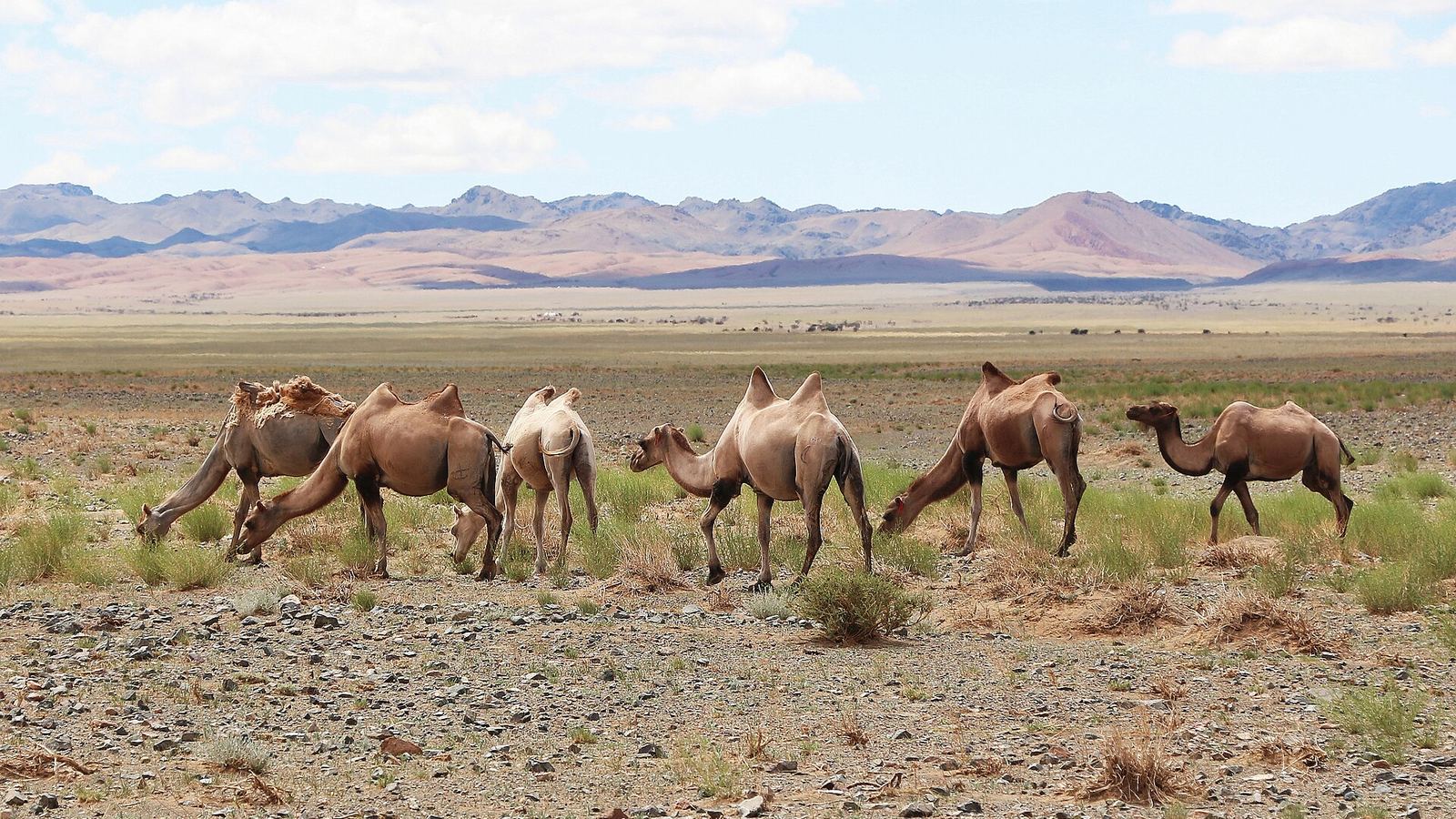
Mongolia is the country where this guide has to be blunt: nothing you buy will keep you online across the Gobi, and any page promising otherwise is selling you something. About half of Mongolia's 3.5 million people live in Ulaanbaatar and the rest are scattered across 1.56 million square kilometres, so the towers follow the people and the people are not where you are going. What you can control is which operator you ride and how much you pay for the hours when bars do appear. That first part is unusually simple here, because Airalo, Holafly and Nomad all connect through Mobicom, the operator with the widest reach beyond the capital. With the network decision made for you, the remaining question is money, and on a countryside itinerary that argues hard against unlimited: you cannot spend data you have no signal to spend. Nomad's 10 GB at 35 dollars carries a fortnight of steppe travel with room to spare. Not sure how much your route needs? Run the eSIM Finder.
Quick Pick: the Best eSIM for Mongolia
Nomad (10 GB / 30 days): It rides Mobicom like every other travel eSIM sold for Mongolia, so you give up no coverage, and it costs a third of an unlimited plan you would spend half your trip unable to use anyway.
Our picks
Best overall: Nomad. Lowest per GB: Nomad. Unlimited: Holafly. Or use the eSIM Finder.
Mongolia eSIM Plans Compared
Indicative pricing. Tap through for live rates.
| Provider | Plan | Data | Duration | Price | Network |
|---|---|---|---|---|---|
| Airalo | Mongolia 1GB | 1 GB | 7 days | $5 | Mobicom |
| Airalo | Mongolia 3GB | 3 GB | 30 days | $11 | Mobicom |
| Airalo | Mongolia 5GB | 5 GB | 30 days | $16 | Mobicom |
| Airalo | Mongolia 10GB | 10 GB | 30 days | $26 | Mobicom |
| Airalo | Mongolia 20GB | 20 GB | 30 days | $37 | Mobicom |
| Nomad | Mongolia 1GB | 1 GB | 7 days | $4 | Mobicom |
| Nomad | Mongolia 5GB | 5 GB | 30 days | $14 | Mobicom |
| Nomad | Mongolia 10GB | 10 GB | 30 days | $22 | Mobicom |
| Nomad | Mongolia 20GB | 20 GB | 30 days | $32 | Mobicom |
| Holafly | Unlimited 5-day | Unlimited | 5 days | $19 | Mobicom |
| Holafly | Unlimited 7-day | Unlimited | 7 days | $27 | Mobicom |
| Holafly | Unlimited 10-day | Unlimited | 10 days | $34 | Mobicom |
| Holafly | Unlimited 15-day | Unlimited | 15 days | $47 | Mobicom |
| Holafly | Unlimited 30-day | Unlimited | 30 days | $69 | Mobicom |
Airalo Mongolia Plans
Airalo: Day-Count Unlimited, With the Widest Support Net
Mobicom coverage sold by the day, plus the largest app and help desk of the three
Airalo's Mongolia catalogue has shifted toward day-count unlimited pricing, running from three days at 18 dollars to a month at 89, and daily-allowance packs of 500 MB to 2 GB per day still surface in some storefronts. Whichever shape you are shown, the host network is Mobicom, so the coverage you get is identical to what the other two provide and the choice comes down to money and service.
On service Airalo is the strongest of the three in Mongolia specifically, which is worth more here than it sounds. Reinstalling a profile is a genuine risk on a trip where you might spend nine hours out of contact and then need everything to work the moment you reach a soum centre with two bars, and having a support channel that answers at three in the morning Ulaanbaatar time has real value. Where Airalo struggles is the arithmetic: 89 dollars for a month of unlimited on an itinerary that physically prevents you from using it is a hard sell against a 49 dollar 20 GB plan on the same towers.
Strengths
Weaknesses
Holafly Mongolia Plans
Holafly: Unlimited and Simple, at a Price the Terrain Undermines
Same Mobicom towers as everyone else, sold with a daily hotspot allowance
Holafly's Mongolia product is the same Mobicom connection as its rivals wrapped in day-count unlimited pricing, with a 1 GB daily tethering allowance so a group can share without the plan being unlimited for four devices at once. In a country where unlimited pays off, that structure is excellent, and there is a version of a Mongolia trip where it does pay off: a fortnight based in Ulaanbaatar working remotely, running video calls from a Zaisan apartment and streaming in the evenings.
The version most people book is the other one, and there the pricing runs into physics. Thirty days costs 111.90 dollars, which on a Gobi or Khuvsgul itinerary buys unlimited access to a network you will be outside of for most of the daylight. There is no coverage advantage to offset it, because the towers are shared with the cheaper options. Take Holafly here if you are staying in the capital and value never watching a counter, and look elsewhere if the plan involves a driver and a rooftop tent.
Strengths
Weaknesses
Nomad Mongolia Plans
Nomad eSIM: The Right Answer for Almost Every Mongolia Trip
Identical Mobicom coverage at a third of the price of unlimited
Nomad wins Mongolia by not charging you for something the country will not let you use. The 30-day tiers run 3 GB at 14 dollars, 5 GB at 23, 10 GB at 35 and 20 GB at 49, all on the same Mobicom towers that carry the unlimited products, and a seven-day 1 GB starter at 6 dollars covers a genuine stopover. Nomad also throttles to 512 kbps rather than cutting you off when a daily high-speed allocation runs out, which is a kinder failure mode than a dead connection when you are trying to send a location pin from a fuel stop.
Size it against how Mongolia actually consumes data. Offline maps get downloaded in Ulaanbaatar, camps and towns come with whatever WiFi they have, and the real drain is messaging, photo backup and the odd navigation check between towns. Two weeks of that lands comfortably inside 10 GB, and 20 GB covers a month for most people. The trade-offs are real but small: no phone number, so a driver cannot call you back on it, and a support operation smaller than Airalo's if something goes wrong at a bad moment.
Strengths
Weaknesses
Mobile Networks in Mongolia
Four operators share the Mongolian mobile market, and the subscriber table is not the ranking that matters to a visitor. Mobicom, backed by Japan's KDDI and trading since 1996, holds roughly 38 percent of subscribers and, far more usefully, the largest tower footprint in the country. Unitel, entirely Mongolian owned, sits near 33 percent and runs tri-band LTE on 700, 1800 and 2300 MHz, pushed out with carrier aggregation to some 363 regional localities. Skytel and G-Mobile divide most of what is left, Skytel reaching around 80 percent of the population on a city-weighted footprint, G-Mobile trading on a rural reputation inherited from its CDMA years that its current network no longer quite earns.
Between the top two the argument is genuinely close and it splits by region. Mobicom is the safer default through the south and the Gobi aimags and along the eastern routes. Travellers heading west into Bayan-Olgii and Khovd, on the other hand, report Unitel holding on in places Mobicom does not. Since every mainstream travel eSIM sold for this country runs on Mobicom, that western exception is the single case where queueing for a local Unitel card in Ulaanbaatar before your domestic flight is worth the trouble.
5G exists and is close to irrelevant for the trip you are planning. Unitel lit Mongolia's first 5G site in the capital back in 2022 and cleared regulatory approval in May 2025 to build nationally, switching on the capital alongside provincial centres, after which the regulator distributed 5G licences to Mobicom, Unitel and Skytel with G-Mobile and ONDO following. What that produces on the ground is Ulaanbaatar, a handful of aimag capitals and the industrial sites such as Oyu Tolgoi where automation justifies the spend. Outside those dots you are on 4G at best, 3G frequently, and nothing at all often enough that it stops being remarkable by day three.
Why the coverage maps look better than the country feels
Reach here is quoted against people, and Mongolian people are concentrated to a degree almost nowhere else matches: two residents per square kilometre nationally, with half of everybody in a single city. An operator can truthfully claim to serve 95 percent of Mongolians and still leave most of the map dark. Picture the network not as a blanket but as a constellation: a dot over each of the 21 aimag capitals, smaller dots on most of the 330 soum centres, thin threads following the paved roads between them, and an enormous quantity of nothing in the gaps. A Gobi tour spends its daylight hours in the nothing and its nights parked near a dot.
Coverage Across Mongolia
Coverage where travelers actually go:
| Area | Coverage | Notes |
|---|---|---|
| Ulaanbaatar | Excellent | Dense 4G everywhere in the built-up city, with 5G live on all three big operators across the central districts. |
| Darkhan, Erdenet & the paved north | Very Good | The industrial cities and the sealed roads linking them hold steady 4G on Mobicom and Unitel. |
| Aimag capitals & soum centres | Good | Dalanzadgad, Kharkhorin, Moron and the provincial towns all have usable data. Signal arrives as you enter town and leaves as you exit. |
| Gorkhi-Terelj & Tsonjin Boldog | Mixed | Fine at the Chinggis Khaan statue and along the Terelj road. Behind the ridges and up the side valleys it thins fast. |
| Gobi tracks & the deep south | Poor to none | Yolyn Am, Bayanzag and the Khongoryn Els dunes read no service for hours at a stretch on every network. |
| Altai, Khuvsgul backcountry & long overland legs | Poor to none | Hours of driving between any bar of signal. This is satellite messenger territory, not eSIM territory. |
How to Choose the Right Plan
Start by admitting what your itinerary is. If Mongolia means Ulaanbaatar plus a couple of day trips, any of the three works and the sensible move is Nomad at 23 or 35 dollars, or Holafly if you are working remotely and want to stop thinking about it. If Mongolia means a driver, a Land Cruiser and eight days heading south, buy metered and buy modestly, because the landscape will do your data rationing for you. Ten gigabytes is a generous fortnight in those conditions. Then handle the part no eSIM covers: download offline maps of the whole route before you leave the capital, tell someone your itinerary, and for anything in the Altai or the far Khuvsgul backcountry carry a satellite messenger, since Apple's satellite SOS did not reach Mongolia as of 2026 and Iridium-based devices did. Finally, if a domestic flight west to Bayan-Olgii is on the plan, spend twenty minutes buying a local Unitel card in Ulaanbaatar as a second line, because that is the one corner of the country where the Mobicom-only eSIM market leaves a real gap.
Frequently Asked Questions
Will anything I buy keep me online across the Gobi?
No, and that is not a failure of the product you chose. The southern Gobi has coverage where there are people, meaning Dalanzadgad and the soum centres, and effectively nothing across the long stretches between them. Yolyn Am, Bayanzag and the Khongoryn Els dunes will show no service for hours on any Mongolian network. What a decent eSIM buys you is the evening at the ger camp when the phone finds a distant tower, plus the fuel stops and the town nights. Plan the trip around being offline and treat every reconnection as a bonus rather than an entitlement.
Which Mongolian operator do the travel eSIMs run on?
Mobicom, all three of them. Airalo, Holafly and Nomad each list Mobicom Corporation as the host network for their Mongolia plans, which is fortunate given Mobicom holds the broadest footprint outside Ulaanbaatar. It also means comparing these providers on coverage is pointless because there is nothing to compare, and the only travel product that changes your network here is one of the smaller operators such as Ubigi, which rides Unitel instead. That matters solely if your route runs west toward Bayan-Olgii.
Is an unlimited plan worth the money for a countryside trip?
Rarely, and Mongolia is the clearest case on this site. Unlimited pricing assumes you will be somewhere you can consume data continuously, whereas a Gobi or Khuvsgul itinerary hands you a few connected hours a day at most. Paying 89 or 112 dollars for a month of unlimited when the terrain caps your realistic use at a few gigabytes is buying capacity the landscape will not let you touch. Metered plans win here for the same reason they lose in Seoul. Anyone staying entirely inside Ulaanbaatar for a working month is the exception.
Should I carry a satellite messenger as well?
For a genuine backcountry itinerary in the Altai, deep Khuvsgul or the western Gobi, yes, and it is the most useful piece of advice on this page. A Garmin inReach works on the Iridium constellation, which has real global reach, and gives you two-way texting plus an SOS button that functions where every Mongolian tower is a hundred kilometres away. Do not count on your phone for this: Apple's Emergency SOS via satellite covered only around 20 countries as of 2026 and Mongolia was not one of them. Mongolian customs does control the import of specialised communications equipment, so declare the device rather than hiding it.
How does a local Mongolian SIM compare on price?
It is cheaper, though the margin is smaller than the usual gap between local prepaid and travel eSIMs. Reckon on roughly 15,000 to 18,000 tugrik for 5 GB over 30 days and 20,000 to 25,000 for 10 GB, which at about 3,600 tugrik to the dollar puts a decent countryside bundle near five to seven dollars against 23 to 35 for the equivalent eSIM. You pay for that with a passport registration that takes 10 to 30 minutes at a counter, and with the risk that the airport shops are shut when your night flight lands. Our Mongolia SIM card guide runs through the operator packages in detail.
Do the ger camps have WiFi?
Some of the larger tourist camps do, usually a satellite or fixed-wireless link shared across the whole site, and it behaves the way you would expect a single link shared by forty guests to behave. It will carry a message home. It will not carry a video call, and it frequently disappears entirely once the camp generator goes off for the night. Family-run gers and mobile herder camps generally have nothing. Download your maps, your reading and anything you need offline before leaving the last town.