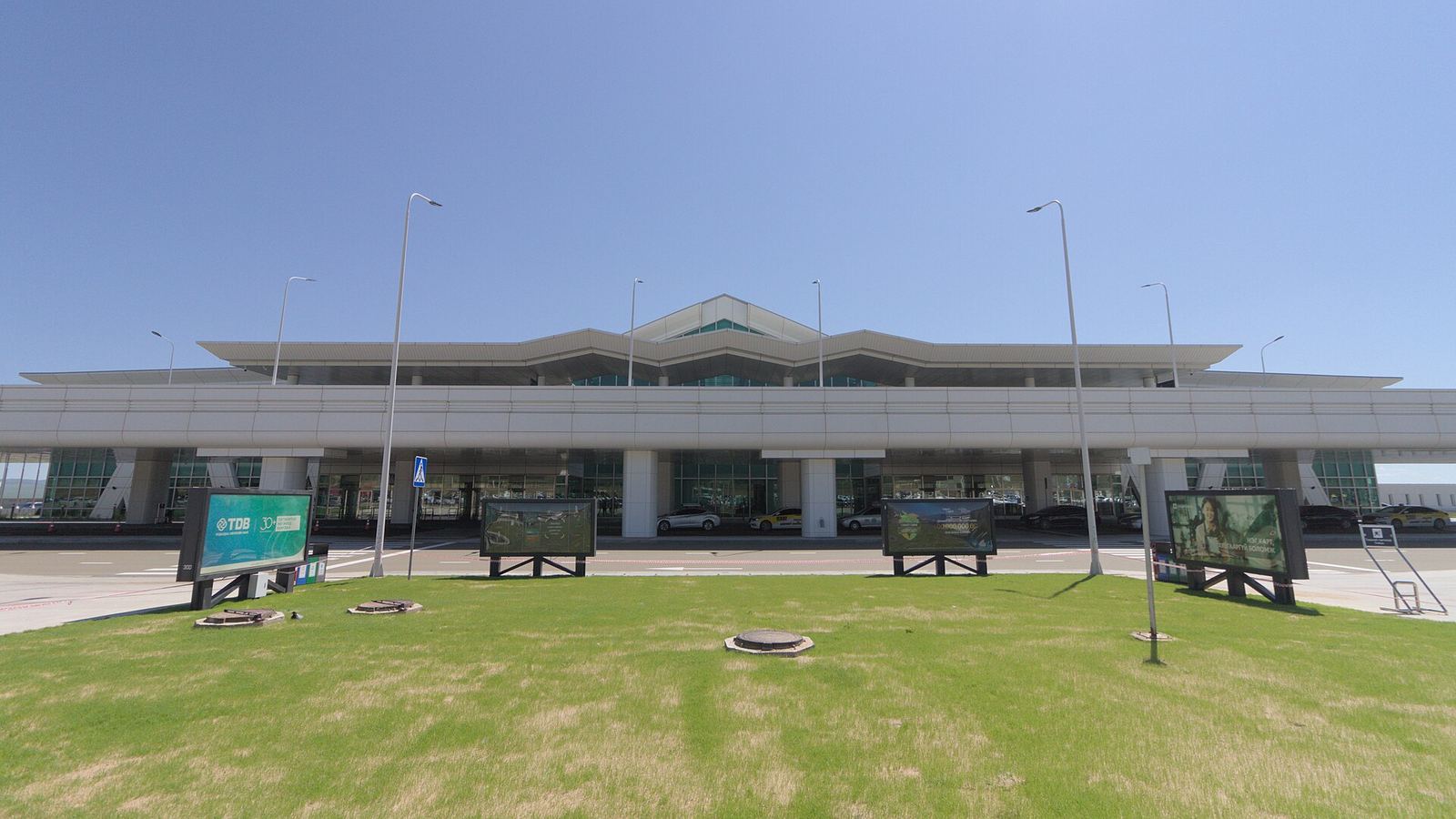
Chinggis Khaan International opened in July 2021 and it is a pleasure to arrive at: one modern passenger terminal handling international and domestic traffic from the same concourse, short walks, no queues worth the name, and none of the corridor-marathon quality of the airports most people connect through to get here. What it has instead is distance and opening hours. The terminal sits 52 kilometres south of Ulaanbaatar, about an hour by road on a good run and half as long again in traffic, and the carrier counters in arrivals stop selling around ten in the evening. Several of the flights that bring visitors to Mongolia, including a number of the connections from Seoul and Istanbul, land after that. Arriving without a plan is not a disaster here, but it is the one airport on this site where the phrase there will be a shop is doing real work.
What This Guide Covers
Jump to the section most relevant to you
The Carrier Counters, and When They Close
Clear immigration and baggage reclaim and you emerge into a single arrivals hall with everything grouped close together: a SIM card counter near the exits, a Mobicom outlet and a Unitel booth in the public area, currency exchange, ATMs, car hire and a transportation service desk. Between them the counters carry plans from Mobicom, Unitel and Skytel, with G-Mobile available at some positions.
Hours are the thing to note down. The general SIM counter runs roughly 6am to 10pm daily, the Mobicom outlet has posted hours in the range of 7:30am to 7:30pm, and the Unitel booth typically works from early morning until eight or ten in the evening. Nothing sells SIM cards here after midnight. Given that a meaningful share of arrivals into Ulaanbaatar are late-evening or overnight, this is not a theoretical problem.
What the counters charge, and what you need
Airport packages generally sit between 15,000 and 35,000 tugrik, which at roughly 3,600 to the dollar is about four to ten dollars, with larger tourist bundles carrying calls running up toward 60,000. A representative pair: Unitel has sold 3 GB over five days for 15,000 tugrik, and Mobicom lists tourist packs around the 20,000 and 60,000 marks. Bring your passport, because Mongolian prepaid lines must be registered to an identity document and there is no way around it. Bring tugrik as well, since cards are usually but not universally accepted, and expect the process to take between 10 and 30 minutes per person rather than per group.
The pricing is honest and the staff are helpful, so nothing about this transaction is unpleasant. The question is simply whether you want to conduct it after a long flight, at the end of a queue, with a driver waiting, when the alternative is walking straight out of the building on a line that already works.
The Free Terminal WiFi and Its Limits
UBN provides free wireless internet throughout the passenger terminal, covering the arrivals hall, the check-in area and the gate lounges. Unlike some airports it does not advertise a memorable network name in advance, so rather than hunting for a specific string, open your WiFi list once you are inside and take the airport network at the top of it. Signage in arrivals and at the gates points to the current name if you cannot identify it.
Speeds are perfectly adequate for the job most people need it for, which is telling somebody you have landed and confirming the arrangements at the other end. It is also enough to buy and install a travel eSIM on the spot, which is the realistic recovery move if you meant to organise one before flying and did not, and it works at hours when every counter in the building is closed.
Sort out your ride before you walk outside
Do this while you are still standing in the WiFi. UBN is 52 kilometres out and the road into the city has stretches where you would rather not be negotiating a fare or a pickup point from a standstill. Pull up your accommodation's location, check the current bus departure time, and if you are being collected, confirm where. Ten seconds of preparation inside the terminal saves a genuinely awkward twenty minutes at the kerb.
The distance is what makes the gap between terminal WiFi and mobile data matter more here than at most airports. At an airport twenty minutes from town you can improvise. On an hour-long run through open country toward a capital where street addresses are frequently approximate and much of the signage is Cyrillic, being offline in the back of a car is a slower and more stressful experience than it sounds on paper.
The 52 Kilometre Run Into Ulaanbaatar
There is no rail link, so everything into the capital goes by road on the same highway. The good news is that this particular corridor has solid mobile coverage along its whole length, so whatever you arrange, you will be connected while you travel provided you have a live line.
| Route | Cost | Time | Notes |
|---|---|---|---|
| Bus X19 | 15,000 MNT adult, 7,000 MNT child | About 1 hour | Runs to Sukhbaatar Square. Air-conditioned coach with 45 seats, roughly 07:40 to 23:10. Tickets from staff on board, cash or card. |
| Bus X20 | 10,000 MNT | About 1 hour | Same pickup point, heads instead to the Dragon bus terminal area on the west side of the city. |
| Prepaid airport taxi | Around 100,000 MNT (about 30 USD) | 1 to 1.5 hours | Booked at the transportation service counter past the arrivals lobby. Cards accepted. The safe default after the buses stop. |
| Metered or app taxi | 80,000 to 120,000 MNT | 1 to 1.5 hours | Cheaper than a hotel car but needs data at the kerb to price and book. |
| Hotel or private transfer | 100,000 to 200,000 MNT | 1 to 1.5 hours | Pre-arranged. Worth it for groups with luggage or a 2am landing. |
Both airport buses leave from the road one lane back from the arrivals lobby rather than immediately outside the doors, which is the single detail most likely to cause confusion, so walk out and cross to the next carriageway. The X19 is the one most visitors want because it terminates at Sukhbaatar Square, in the middle of everything, for around four dollars.
Ignore the drivers working the arrivals doors
Unlicensed drivers approach arriving passengers at UBN as they do at most airports, and the quoted price tends to be several times the going rate. Use the transportation service counter, the buses, or an app. Being able to check what a ride should actually cost, which requires data, is the practical defence, and it is worth roughly the price of the eSIM in a single transaction.
Why Arriving With a Working Line Pays Off Here
A travel eSIM is not the cheapest data in Mongolia and this page will not pretend it is. A local card gives you five to ten gigabytes for a few dollars. What buying ahead purchases at this particular airport is insurance against the two things that go wrong: a late landing at closed counters, and a 52 kilometre journey begun without any way to check what it should cost.
Arguments for sorting it out beforehand
Arguments against
The position most experienced Mongolia travellers end up in is a hybrid: land on an eSIM so the airport and the first evening are frictionless, then decide about a local card once you are in the city and know how long the trip really is and where it is going. The Mongolia eSIM guide explains why all three major providers give you the same network here, and the SIM card guide has the local pricing in tugrik.
Counter Packages Against a Travel eSIM
Set the two options beside each other and the local card wins clearly on money while the eSIM wins on timing and hassle. Because both run on the same towers in this country, nothing else separates them.
| Local SIM at UBN | Travel eSIM | |
|---|---|---|
| Typical cost | 15,000 to 35,000 MNT for a counter pack, roughly 4 to 10 USD | Around 23 to 35 USD for 5 to 10 GB, more for unlimited |
| Available when | Roughly 6am to 10pm, nothing overnight | Any hour, including a 2am landing |
| Passport required | Yes, registered per person | No |
| Setup time on arrival | 10 to 30 minutes at the counter | None, the line is already live |
| Network | Mobicom, Unitel or Skytel, your choice | Mobicom on all three major providers |
| Mongolian number | Yes | Generally not |
| Best for | Daytime arrivals, longer stays, western itineraries wanting Unitel | Night landings, short trips, groups who cannot afford the counter delay |
One comparison puts the whole thing in proportion. The difference between an eSIM and a local card is roughly 25 dollars. The difference between the fare an unlicensed driver quotes at the arrivals door and what the ride should cost is often about the same, and you need data to know which is which. Get both decisions right and the airport transfer effectively pays for the connection.
Coming Back Through for the Domestic Flight
Most visitors pass through this terminal more than once, because the domestic network operates from the same concourse and the flights out to Dalanzadgad for the Gobi, Murun for Khuvsgul and Olgii for the Altai are how you skip two days of driving. That second visit is the one worth preparing for, because it is usually the point at which you are heading somewhere with no coverage at all.
What to do in the terminal before a domestic departure
Use the free WiFi and the last dependable signal you will have for a while. Download offline maps covering the whole region you are flying to rather than just the town you land in. Confirm your pickup at the far end in writing, since the person meeting you may be the only human who knows where you are going. Top up your data allowance now, because agents exist in the aimag centres but you may not reach one for days. And send anybody who worries a message saying when they should next expect to hear from you.
Coverage at the domestic destinations follows the same pattern as everywhere else in Mongolia: the aimag capitals have proper service, the road out of them has some, and the landscape beyond has none. Dalanzadgad will give you 4G. The drive from Dalanzadgad to the dunes will not. If your route involves the Altai or the deeper Khuvsgul backcountry, this terminal is also your last realistic chance to think about whether a satellite messenger belongs in your bag, since Apple's satellite SOS did not extend to Mongolia as of 2026 and an Iridium-based device is the only thing that reaches you out there.
Two airport codes, one airport
Chinggis Khaan International carries the code UBN, while the old Buyant-Ukhaa facility it replaced in 2021 used ULN. Both still surface in booking engines and on older maps, and a certain amount of travel writing has not caught up, so if a page describes an airport fifteen minutes from the city centre it is describing the closed one. The current terminal is the one 52 kilometres south, and every flight arrives there.
Frequently Asked Questions
My flight gets in at midnight, can I still buy a SIM?
No. The SIM positions in arrivals work daytime hours, roughly 6am to 10pm for the general counter and shorter for the individual Mobicom and Unitel outlets, and nothing sells prepaid lines here overnight. Since a fair share of arrivals into Ulaanbaatar land late in the evening, this catches people out regularly. The free terminal WiFi still works, so you can buy and install a travel eSIM standing in the arrivals hall, which is the usual recovery. Otherwise you are waiting until a city branch opens the next morning.
How far out is the new airport, and how long does the drive take?
Fifty-two kilometres south of Ulaanbaatar, which works out at around 60 kilometres of driving and typically an hour, stretching to an hour and a half if the city end is congested. This is a substantial change from the old Buyant-Ukhaa airport, which sat close to the centre and closed to commercial traffic in 2021. Plan your departure day around the real number rather than the one in older guidebooks, particularly for a morning flight.
Is the airport bus a realistic option with luggage?
Yes, and it is good value. The X19 is an air-conditioned coach with 45 seats running to Sukhbaatar Square in about an hour for 15,000 tugrik, roughly four dollars, with children at 7,000. It operates from about 07:40 until 23:10 and you buy from staff on board with cash or card. The X20 runs the same route at 10,000 tugrik but finishes near the Dragon terminal on the western side instead. Both pick up from the road one lane back from the arrivals lobby rather than directly outside the doors.
What should a taxi into the city actually cost?
Between 80,000 and 120,000 tugrik, which is about 22 to 33 dollars, with the prepaid counter inside arrivals generally landing near 100,000 or 30 dollars and accepting cards. Hotel and private transfers run higher, 100,000 to 200,000. Drivers who approach you at the arrivals doors typically ask for considerably more than any of that. Having data at the kerb so you can check the going rate is the simplest defence and roughly pays for a week of eSIM in one transaction.
Is the terminal WiFi good enough to install an eSIM on arrival?
Comfortably. The free wireless service reaches the arrivals hall, check-in and the gate areas, and it carries enough bandwidth to complete a purchase, download a profile and activate a line while you stand there. The network name is signposted inside rather than published in advance, so pick the airport network from the list once you are through. It is genuinely the best fallback available at this airport, since it works at hours when every staffed counter is closed.