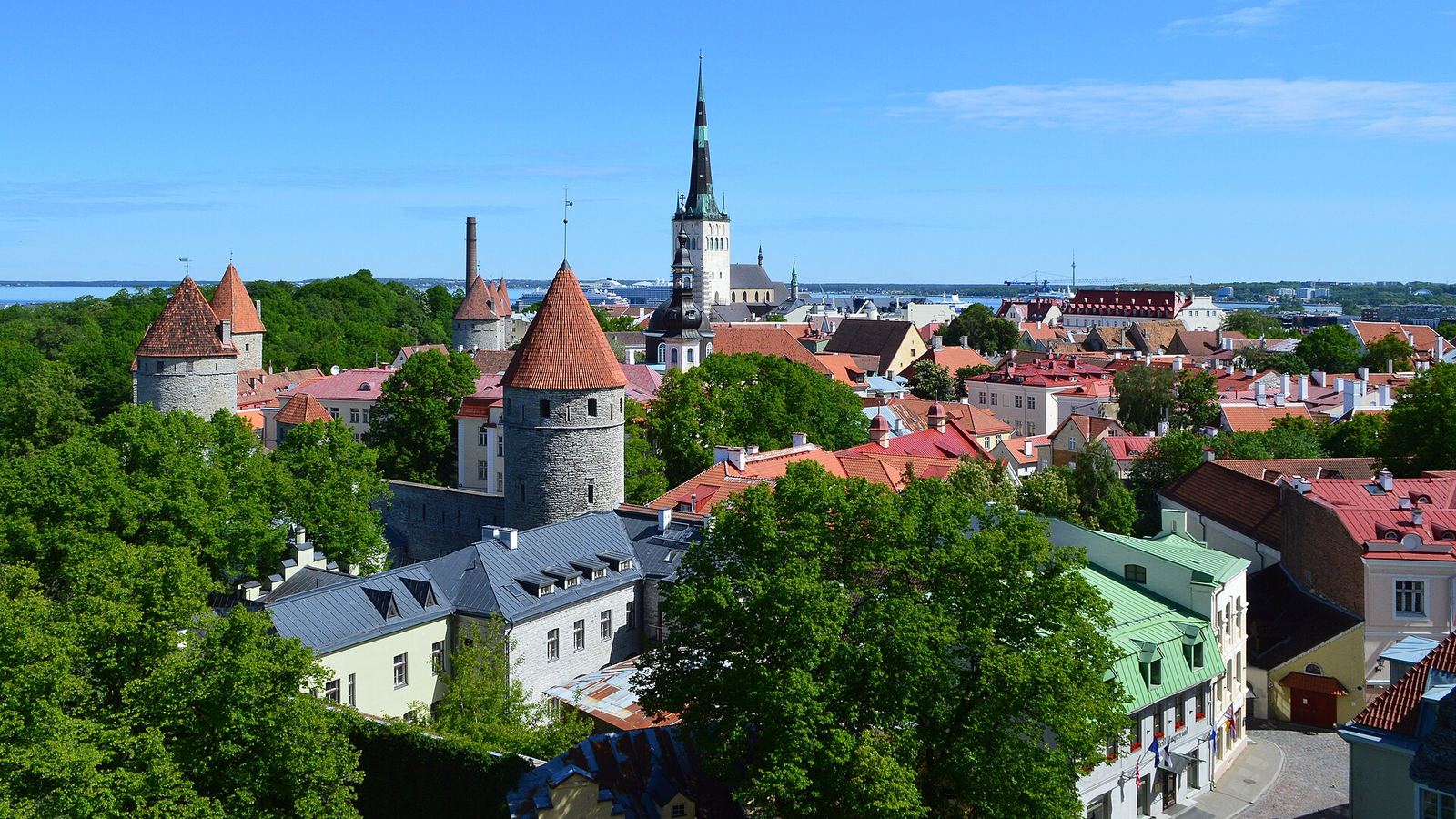
Estonia produces one of the strangest results on this site. The country that invented online voting, put internet access in its constitution and files 99 percent of its public services through a web browser is also the country where you can buy a prepaid mobile line without telling anybody who you are. There is no registration law here. There is a proposal from the Interior Ministry to introduce one, and there are shop assistants who will ask for a passport out of habit or company policy, but the legal requirement that slows this transaction down almost everywhere else simply does not exist yet. Combine that with prices that make a month of data cheaper than a cinema ticket, and the case for a local card is stronger in Estonia than in most of Europe. The case against it is narrower than usual too, and it comes down to a single question: is Estonia the whole trip, or is it one stop on a route that continues to Helsinki, Riga or somewhere further?
What This Guide Covers
Jump to the section most relevant to you
Three Networks, 1.37 Million People, Almost No Difference
Estonia supports three mobile network operators on a population of around 1.37 million, which works out at roughly 450,000 potential customers each. That sounds unsustainable and is not, because Estonians use a great deal of data and because the country is compact enough that building a national network does not require the tower count a larger nation would need. At the end of 2024 the technical regulator TTJA counted Telia Eesti on 44 percent of subscribers, Elisa Eesti on 32 percent and Tele2 Eesti on 24 percent, with the three of them accounting for better than 98 percent of all lines between them.
Here is the part that makes shopping easy: the practical difference between them is small enough that you can choose on price without feeling reckless. Independent measurement puts Telia's availability around 98.7 percent and hands the 4G coverage award jointly to Telia and Elisa rather than to one of them. Tele2 has been the most energetic 5G builder lately, taking its footprint from roughly 70 percent of the population toward close to 90 percent through 2026. There is no Estonian equivalent of the one network that saves you in the mountains, because there are no mountains and the flat, forested, thinly populated parts of the country are covered anyway.
Prepaid brands, and which parent they belong to
Each operator sells prepaid under more than one label, which is why the kiosk shelf looks more crowded than the market actually is. Super is Telia's prepaid brand. Zen and plain Elisa cards come from Elisa. Smart and plain Tele2 cards come from Tele2. Two names you may see in older guides are gone: Simpel was retired in 2024 and Diil no longer sells prepaid starters. None of these are virtual operators renting capacity, so a Smart card gets the same towers and the same speeds as a Tele2 contract line.
Telia Eesti, Sold Prepaid as Super
Telia is the incumbent, the largest, and the one an Estonian will name if you ask which network is safest rather than which is cheapest. Its 4G reaches beyond 99 percent of the population, and in a country where the population is spread across small towns, farm roads and coastline rather than concentrated in one metropolis, that figure translates into something meaningful for a visitor. Forest roads through Lahemaa, the lanes across Muhu and Saaremaa, the run down to Parnu: Telia holds them.
Prepaid comes under the Super label, with starter packs typically in the one to four euro range depending on what promotion is running and how much credit is loaded. Once the card is live you buy packages rather than paying per megabyte, and the shape of those packages is generous by the standards of western Europe. Expect somewhere around four to four and a half euros for a five gigabyte week, nine to ten euros for twenty gigabytes across a month, and roughly twenty to twenty-five euros for an unlimited monthly package. Those are shelf prices that move with promotions, so treat them as the right order of magnitude rather than a quotation.
Who Super suits
Anyone whose Estonia extends past Tallinn. If the plan includes driving to Lahemaa manor houses, crossing to the islands or spending a night in a village guesthouse in Voru county, Telia is the network least likely to make you think about it. It is also the sensible choice for a longer stay, because the one to two euro premium over the cheapest option stops mattering across a month.
Elisa Eesti, and the Zen Prepaid Range
Elisa Eesti belongs to the Finnish Elisa group, which is a useful thing to know if your trip involves the ferry, because it means the brand on your Estonian card is also a household name on the other side of the Gulf. In Estonia it holds around 32 percent of subscribers, shares the top 4G coverage rating with Telia, and has 5G live across roughly 70 percent of the population with the build weighted toward Tallinn, Tartu and the larger towns.
Prepaid appears both under the Elisa name and as Zen. The packages lean more toward voice-and-data combinations than pure data buckets, which suits someone who wants an Estonian number for restaurant bookings and taxi callbacks. Typical combination packs have run around five euros for half a gigabyte with generous call minutes, eight euros for two gigabytes, and eleven euros for six gigabytes plus texts. If you only want data, ask specifically for a data package rather than accepting the first bundle offered, because the combination packs bury a lot of the price in minutes you will never dial.
Elisa is the network behind several international travel eSIMs sold for Estonia, which produces an amusing situation where a visitor can end up on exactly the same radio equipment whether they spent four euros at a kiosk or twenty online. The Estonia eSIM guide sets out which provider rides which operator.
The Finnish connection, and what it does not buy you
Sharing a corporate parent with Finland's Elisa does not mean an Estonian Elisa card behaves like a Finnish one across the Gulf. Once you dock in Helsinki you are roaming under EU rules like anybody else, on the fair-use allowance calculated from what you paid in Tallinn. The group relationship is a piece of trivia rather than a travel hack. What it does explain is why Elisa's Estonian network quality tracks so closely with the standards set on the other side of the water.
Tele2 Eesti, and the Smart Cards
Tele2 is the smallest of the three at around 24 percent of subscribers and behaves exactly as the smallest of three usually does: it competes on price and it builds hard to close the gap. The 5G expansion is the visible part of that, moving from roughly 70 percent population coverage toward close to 90 percent over the course of 2026. Speeds on Tele2 are competitive and its network reaches every place a visitor is realistically going.
Prepaid sells as plain Tele2 and as Smart, and Smart starters have appeared for as little as ninety-five cents, which is less than the bus fare from the airport. Data packages sit at the aggressive end of an already cheap market: figure on roughly four euros for a five gigabyte week and around nine for a twenty gigabyte month. For a visitor who wants the lowest possible number on the receipt and is not going anywhere unusual, this is the pick.
Where Tele2's price advantage stops mattering
The gap between the cheapest Estonian package and the most expensive one is often two or three euros. That is a rounding error against the cost of a single museum ticket, so do not contort your itinerary around it. Choose Tele2 if you are in Tallinn and Tartu and want the cheapest thing on the shelf. Choose Telia if you are heading somewhere with more trees than people and would rather not think about it again.
The Anonymous SIM That Still Exists in the EU
Most guides written about buying a SIM abroad open with a paragraph about passports. Estonia does not need one, and the reason is genuinely interesting rather than a technicality. Estonia has never legislated mandatory prepaid registration. The Interior Ministry has proposed ending anonymous prepaid cards, arguing that Estonia is one of very few EU states where they remain available and that fraudsters and criminals exploit exactly that, but as things stand the requirement is a proposal rather than a rule.
What buying one actually looks like
1. Walk into an R-Kiosk, a supermarket or an operator store and pick a starter pack off the shelf.
2. Pay, by card or cash, usually one to four euros.
3. Put the card in, wait for it to register, and buy a data package through the operator's app, its self-service site or a text message shortcode.
4. That is the whole process. It takes minutes, and there is no queue for a registration desk because there is no registration desk.
Two caveats keep this honest. First, individual retailers and operator stores may still ask to see identification as their own policy, particularly if you are buying several cards, and you should carry a passport anyway. Second, this could change: the proposal has been live for some time and a country this comfortable with digital identity is unlikely to resist forever. If you are reading this well after the update date at the top of the page, assume the position may have moved.
The wider point is worth sitting with. Estonia gives every resident a cryptographic digital identity, lets them vote and sign contracts with it, and runs almost the entire state through it, and then declines to attach that machinery to a four euro phone card. It is a reminder that the e-Estonia story is about making things frictionless, not about surveillance for its own sake.
What Estonian Prepaid Actually Costs
The following is a fair picture of the 2026 shelf. Every operator runs promotions and the numbers move, so read this as the shape of the market rather than a price list to hold anybody to.
| Option | Typical package | Price | Best for |
|---|---|---|---|
| Smart (Tele2) | Starter pack | From around EUR 0.95 | The cheapest possible way to get an Estonian number |
| Tele2 / Smart | 5 GB, 7 days | Around EUR 4.00 | A long weekend in Tallinn |
| Super (Telia) | 20 GB, 30 days | Around EUR 9 to 10 | A fortnight covering the islands and the south |
| Super (Telia) | Unlimited, 30 days | Around EUR 20 to 25 | Remote workers and long stays |
| Elisa / Zen | 6 GB plus calls and texts, 30 days | Around EUR 11 | Anyone who wants an Estonian number, not just data |
| Travel eSIM | 10 GB, 30 days | Roughly USD 16 and up | Short trips, late arrivals, no shopping on day one |
The honest arithmetic: a local card will usually save you somewhere between ten and twenty-five dollars against an international plan of similar size. That is real money on a cheap trip and irrelevant on an expensive one, and it is roughly what you would lose by taking an airport taxi instead of the tram twice. Where the local card genuinely wins is duration. Nothing sold internationally competes with twenty gigabytes for under ten euros once you are staying for a month.
Where to Buy a SIM in Estonia
R-Kiosk. The green kiosks are the default answer and they are everywhere: train stations, shopping centres, the arrivals hall at the airport, most busy street corners. They stock starter packs from all three operators and the transaction takes a couple of minutes. The Tallinn Airport guide covers the arrivals branch and its hours.
Supermarkets. Selver, Rimi, Coop and Maxima all carry starter packs near the tills. If you are buying groceries for an apartment stay anyway, this is the least effort option available.
Operator stores. Telia, Elisa and Tele2 all have staffed shops in Tallinn's larger centres, including Ulemiste and Viru Keskus, and in Tartu and Parnu. Go here if you want a person to set the package up for you, if you want a prepaid eSIM rather than a plastic card, or if something goes wrong.
Topping up without visiting anywhere
This is Estonia, so the self-service route is excellent and it is the one locals use. Each operator has an app and a web self-service portal that takes a card payment and applies the package instantly. Payment kiosks and supermarket tills will also top up a number if you prefer cash. The one thing you need first is a data connection to complete the purchase, which is a mildly circular problem if you have just run out, and a good argument for buying a bigger package than you think you need.
What an Estonian Card Does Once You Leave
This is where the local option turns out to be more flexible than the international one, which is the reverse of what most people expect. An Estonian prepaid card is an EU line, so it roams across the whole European Economic Area under roam-like-at-home rules. Cross to Helsinki, drive to Riga, fly to Lisbon, and it keeps working with no surcharge. A travel eSIM bought as an Estonia plan generally does none of that, because it is provisioned for one country and simply stops at the frontier.
The catch is the fair usage cap. Because Estonian data is cheap, the roaming allowance calculated from your package is small. The EU formula gives operators a floor of twice your monthly package price excluding VAT divided by the reference rate, which for a nine euro package is a modest handful of gigabytes rather than the twenty you enjoy at home. Once past it, the surcharge is capped at around two euros per gigabyte before VAT. That is not ruinous, but it does mean an unlimited Estonian package becomes a metered one the moment you leave.
An Estonian card handles this well
Where it lets you down
So Which Should You Actually Buy?
Split it by trip shape rather than by price, because the price gap here is smaller than the effort of getting it wrong.
Buy an Estonian card if you are staying more than a fortnight, if you want a local number, if you are working from Tallinn for a stretch, or if you simply enjoy the fact that a country this digitally advanced will still sell you a line with no questions asked. The value is genuine and the friction is close to zero.
Buy a travel eSIM if Estonia is a short stop, if you land after the kiosks shut, if you want to be connected as you walk to the tram platform, or if you would rather not spend any of a three-day trip shopping. A metered plan from Nomad or Airalo covers a normal week for the price of a couple of coffees more than the local option.
Buy a regional Europe plan if the itinerary includes the ferry to Helsinki, the coach south to Riga or an onward flight anywhere in the union. This is the case that catches the most people out, because Tallinn is unusually well placed for exactly that kind of hopping and a single-country plan quietly becomes useless the moment you use it.
The two settings to change before you travel east
Whatever you buy, do this before going to Narva or anywhere along the Russian frontier. Switch network selection from automatic to manual and pick an Estonian operator by hand, so the phone cannot wander onto a Russian tower where EU roaming rules do not apply. And if your route crosses the Gulf of Finland by ship, put the handset in flight mode for the sailing and use the vessel's own WiFi, because onboard maritime cells are excluded from EU roaming and priced accordingly. The Tallinn city guide covers what your phone does once you are back on dry land.
Frequently Asked Questions
Do I need to show a passport to buy a prepaid card in Estonia?
Legally, no. Estonia has not introduced mandatory prepaid registration and remains one of the few EU countries where an anonymous card is still on the shelf, although the Interior Ministry has proposed changing that on the grounds that criminals exploit it. In practice a shop assistant may ask for identification as company policy, particularly for multiple cards, so carry your passport rather than assuming you will never be asked. It is worth checking the current position if you are reading this long after the date at the top of the page, because this is exactly the kind of rule that changes quietly.
Which Estonian operator gives a visitor the fewest problems?
Telia if you want the safest answer, because its 4G reaches beyond 99 percent of the population and it measures best for availability, which shows up on island roads and forest lanes rather than in Tallinn. Tele2 if you want the lowest price, with Smart starters seen under one euro and five gigabyte weeks around four. Elisa sits between them and has the friendlier packages if you want calls and texts alongside data. Since the price spread across all three is usually two or three euros, this is a decision worth about ninety seconds of thought.
How do I add more data once the package runs out?
Through the operator's app or web self-service, which in Estonia is genuinely fast and available in English, or by paying cash at a supermarket till or payment kiosk. Every operator also accepts card payment online and applies the package immediately. The circular problem is that the app needs data to work, so if you are completely empty you will need WiFi from a cafe, a hotel or one of the many public hotspots to fix it. Buying a slightly larger package than you expect to use is the cheap way to avoid the whole situation.
Can I use an Estonian prepaid card in Finland or Latvia?
Yes, and this is the local card's hidden advantage over a single-country travel eSIM. Estonian lines are EU lines, so roam-like-at-home applies across the European Economic Area with no surcharge. What changes is volume. Because Estonian packages are cheap, the fair usage roaming allowance derived from them is fairly small, and an unlimited domestic package converts into a fixed bucket the moment you cross a border. Beyond it, operators may charge a surcharge capped at roughly two euros per gigabyte before VAT.
Can I get an eSIM rather than a plastic card from an Estonian operator?
Yes, though the smoothest route is a store rather than the website. Telia and Elisa both issue prepaid eSIM profiles, and staff at an operator shop in Ulemiste, Viru Keskus or a Tartu branch will set one up while you wait. Self-service purchase online can assume an Estonian identity document at some steps, which is precisely the thing a visitor does not have. If you want the convenience of an eSIM without a store visit, an international travel profile installed before you fly is the simpler path.