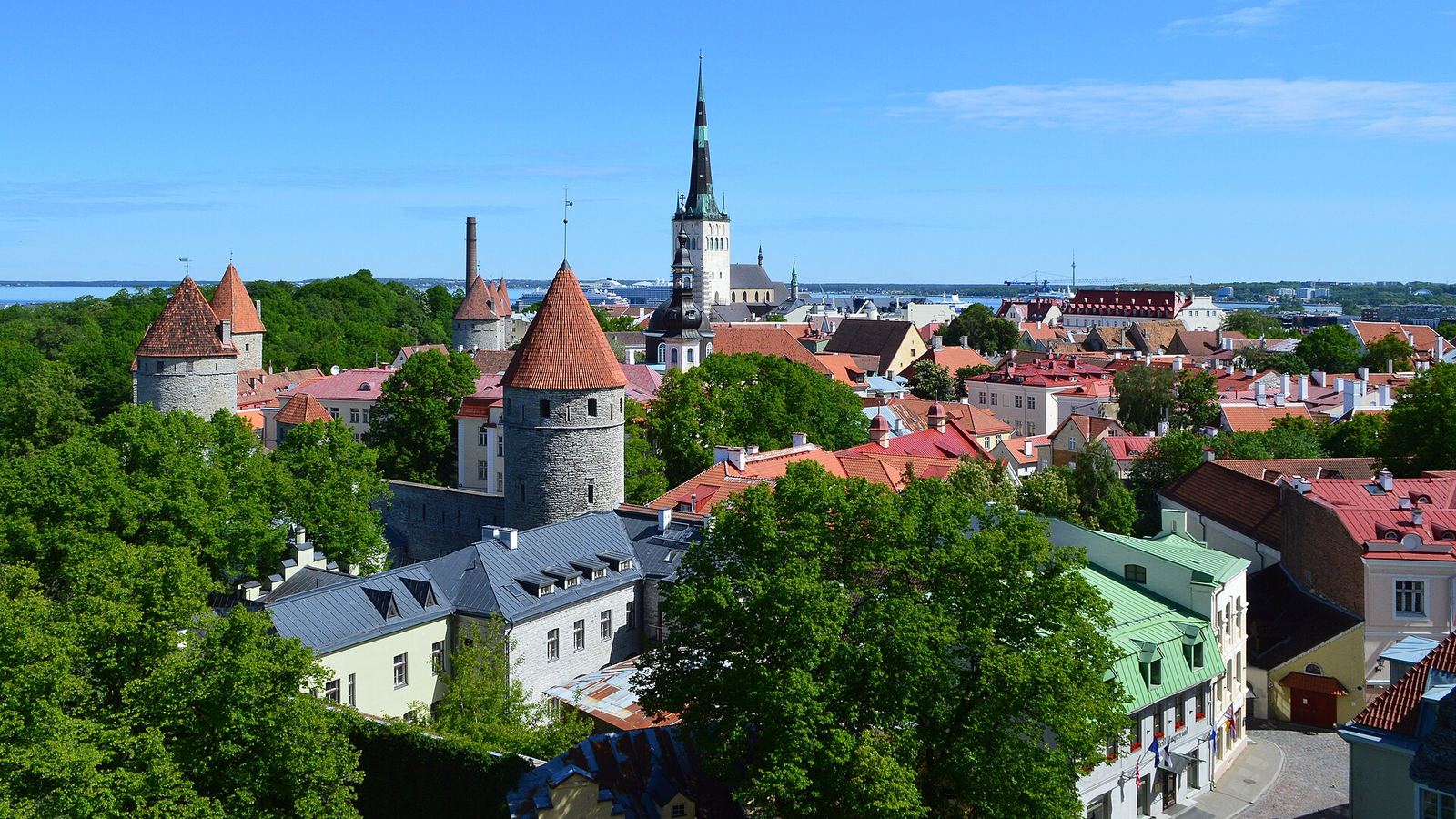
Estonia is one of the few destinations on this site where coverage barely enters the decision, so the honest answer is to buy on price and on what happens at the edges of the country. Three operators serve 1.37 million people across a territory smaller than Denmark, all three are strong, and the version of Estonia that most visitors see is comprehensively covered on any of them. That pushes Nomad to the front simply because it costs the least per gigabyte and carries two Estonian networks rather than one. Airalo sits on Elisa Eesti and is the better app if you want to top up mid-trip, and Holafly only earns its premium if you genuinely intend to burn uncapped data. The two things worth thinking about before you buy have nothing to do with speed tests. If your trip includes the two-hour sailing to Helsinki, understand that the middle of the Gulf of Finland is not covered by EU roaming rules at all and can bill at satellite rates. If it includes Narva, understand that a handset left on automatic network selection can quietly attach to a Russian carrier across the river, where roam-like-at-home does not apply and the per-megabyte pricing is brutal. Both are avoidable in about ninety seconds of phone settings, and almost nobody warns you. Sizing the plan is the easy part, and the eSIM Finder will do it for you.
Quick Pick: the Best eSIM for Estonia
Nomad (Estonia 10 GB / 30 days): Around 16 dollars for a month of data on both Tele2 and Elisa, which is the cheapest credible way to cover a country where every network already works, and having two Estonian carriers to fall back on is quietly useful near the eastern border.
Our picks
Best overall: Nomad. Lowest per GB: Nomad. Unlimited: Holafly. Or use the eSIM Finder.
Estonia eSIM Plans Compared
Indicative pricing. Tap through for live rates.
| Provider | Plan | Data | Duration | Price | Network |
|---|---|---|---|---|---|
| Airalo | Estonia 1GB | 1 GB | 7 days | $5 | Elisa Eesti |
| Airalo | Estonia 3GB | 3 GB | 30 days | $11 | Elisa Eesti |
| Airalo | Estonia 5GB | 5 GB | 30 days | $16 | Elisa Eesti |
| Airalo | Estonia 10GB | 10 GB | 30 days | $26 | Elisa Eesti |
| Airalo | Estonia 20GB | 20 GB | 30 days | $37 | Elisa Eesti |
| Nomad | Estonia 1GB | 1 GB | 7 days | $4 | Tele2 / Elisa |
| Nomad | Estonia 5GB | 5 GB | 30 days | $14 | Tele2 / Elisa |
| Nomad | Estonia 10GB | 10 GB | 30 days | $22 | Tele2 / Elisa |
| Nomad | Estonia 20GB | 20 GB | 30 days | $32 | Tele2 / Elisa |
| Holafly | Unlimited 5-day | Unlimited | 5 days | $19 | Elisa / Telia |
| Holafly | Unlimited 7-day | Unlimited | 7 days | $27 | Elisa / Telia |
| Holafly | Unlimited 10-day | Unlimited | 10 days | $34 | Elisa / Telia |
| Holafly | Unlimited 15-day | Unlimited | 15 days | $47 | Elisa / Telia |
| Holafly | Unlimited 30-day | Unlimited | 30 days | $69 | Elisa / Telia |
Airalo Estonia Plans
Airalo: The Steady Pick on Elisa
Estonia plans riding Elisa Eesti, with the best top-up experience of the three
Airalo's Estonia product names Elisa Eesti as the network behind it, which is a perfectly sound place to sit. Elisa took 32 percent of Estonian subscribers at the last regulator count, shares the 4G coverage honours with Telia in independent measurement, and has 5G live across roughly 70 percent of the population, weighted heavily toward Tallinn and Tartu. Nothing on a normal Estonian itinerary will trouble it.
The reason to pick Airalo here is the ladder of plan sizes and the ease of adding more. Estonia is a country people underestimate on data because the trip is short and the country is small, then they spend a week on live tram departures, the pilet.ee ticketing app, restaurant bookings in Telliskivi and photographs of the Old Town rooftops. A 5 GB plan is the sensible starting point for a long weekend, 10 GB for a week that includes Tartu or the islands, and the in-app top-up means guessing wrong is a thirty-second fix rather than a new purchase.
Strengths
Weaknesses
Holafly Estonia Plans
Holafly: Unlimited, and Only Worth It If You Mean It
Uncapped daily data across the Elisa and Telia footprint, priced by day count
Holafly reaches Estonia through Elisa and Telia, which is the strongest pairing any of the three providers offers here and the one that best insulates you if a single operator has a bad afternoon. That matters less in Estonia than almost anywhere else on this site, because both networks are excellent and the country is 350 kilometres across at its widest. What you are really buying is the absence of a data counter.
There is a specific kind of Estonia trip where that is the right purchase. Remote workers pass through Tallinn constantly, drawn by the e-Residency programme and by co-working space in Telliskivi and Ulemiste, and a fortnight of video calls from a rented flat is exactly the workload that makes metered plans annoying. Fair usage still applies above roughly 90 GB in a month. If your Estonia is four days of Old Town wandering and a ferry to Helsinki, this is a lot of money for data you will not use, and the honest recommendation is to look at the metered options instead.
Strengths
Weaknesses
Nomad Estonia Plans
Nomad eSIM: Cheapest per Gigabyte, on Two Networks
Tele2 and Elisa access with 20 GB priced near the cost of a Tallinn dinner
Nomad opens at around four dollars fifty for 1 GB over a week and climbs to 10 GB for roughly sixteen dollars and 20 GB for about twenty, which is the best per-gigabyte pricing among the three providers at the sizes people actually buy. It rides Tele2 and Elisa, so you get the operator that has been building 5G hardest lately alongside one of the two coverage leaders. In a country where nobody has a coverage problem, being cheapest and carrying two carriers is a strong combination.
The 20 GB tier deserves a particular mention because of how Estonian trips tend to unfold. Visitors arrive planning three days in the Old Town and end up driving to Lahemaa, taking the ferry to Muhu and Saaremaa, and detouring to Tartu for a night, all of it navigated live. Twenty gigabytes removes any thought about it for well under the cost of a single airport taxi. Nomad also throttles rather than cutting off when a daily allowance runs out on its unlimited tiers, which is a gentler failure mode than a hard stop.
Strengths
Weaknesses
Mobile Networks in Estonia
Estonia has three mobile network operators and between them they hold well over 98 percent of the country's lines, which leaves almost nothing for resellers to fight over. At the end of 2024 the regulator TTJA put Telia Eesti in front on 44 percent of subscribers, Elisa Eesti on 32 percent and Tele2 Eesti on 24 percent. Those proportions have been stable for years. What is unusual is how little the gap between first and third means in practice: this is a flat, small, densely wired country where the difference between the best and worst network on a given street is generally a speed test result rather than a signal bar.
Telia is the incumbent and the one that measures best overall. Opensignal has recorded availability of 98.7 percent for its users, meaning they held a usable connection almost every time they looked, and its 4G footprint reaches beyond 99 percent of the population, which in Estonian terms includes forest roads through Lahemaa and the lanes on Saaremaa. Telia shares the 4G coverage honours with Elisa rather than owning them outright. Elisa, owned by the Finnish group of the same name, has pushed 5G to roughly 70 percent of the population and concentrated it on Tallinn, Tartu and the larger towns. Tele2 is the price fighter and has been the most aggressive builder recently, moving 5G from around 70 percent of the population toward close to 90 percent through 2026. For a visitor the practical summary is that any of the three will hold up, and the reason to care which one you are on is what sits on the other side of the border.
Why the eastern edge is different
Estonia's frontier with Russia runs down the Narva river, and in Narva itself the two countries are separated by a few hundred metres of water with a castle glaring at a fortress across it. Radio does not respect that. Handsets on automatic network selection have been picking up Russian carriers on the Estonian bank for years, and the local advice to visitors is simply to stop the phone choosing for itself. Russia is not in the EU roaming area, so a connection that costs nothing in Tallinn can bill at several euros per megabyte from a bench in Narva without anything visibly changing except the carrier name in your status bar. Set network selection to manual, pick an Estonian operator, and the problem disappears.
Coverage Across Estonia
Coverage where travelers actually go:
| Area | Coverage | Notes |
|---|---|---|
| Tallinn & Harju County | Excellent | Dense 4G everywhere and broad 5G on all three networks, including inside the Old Town walls and out along the airport tram line. |
| Tartu, Parnu & the main highways | Excellent | The Tallinn to Tartu and Tallinn to Parnu corridors hold signal end to end, with 5G in both city centres. |
| Lahemaa, forests & bog boardwalks | Very Good | Telia claims better than 99 percent population coverage and it shows on the Viru bog trail. Expect thinner service deep in the manor-house back roads. |
| Saaremaa, Hiiumaa & the islands | Good | Kuressaare and the main island roads are fine. The half-hour ferry from Virtsu holds coastal signal for most of the crossing. |
| Narva & the eastern border | Good, with a warning | Estonian coverage is solid, but phones on automatic selection can latch onto Russian networks outside EU roaming rules. |
| The Gulf of Finland crossing | Mixed | Signal holds near both coasts and thins across the middle of the 80 kilometre channel, where onboard ship cells bill at maritime rates. |
How to Choose the Right Plan
Because every Estonian network works, the decision comes down to three questions that have nothing to do with signal. First, how far does the trip travel? A route that stays inside Estonia is best served by a cheap national plan, and Nomad wins that on arithmetic. A route that includes Helsinki, Riga or a longer continental leg should be a Europe regional profile from the outset, because stacking single-country plans costs more and creates gaps at exactly the moments you are standing in an unfamiliar port. Second, how much data? Three to five gigabytes covers a long weekend of maps, tickets and photographs, ten covers a busy week, and only remote workers need to think beyond twenty, which is where Holafly and its uncapped days start to make sense. Third, how long are you staying? Past roughly three weeks the local shelf wins outright, because Estonia has no SIM registration law to slow you down and a twenty gigabyte month costs less than ten euros. Airalo sits between those poles as the tidy default: one strong network, sensible sizes and the least painful top-up flow. Whichever you choose, set network selection to manual before you go anywhere near Narva, and put the phone in flight mode on the Helsinki sailing.
Frequently Asked Questions
My phone picked up a Russian carrier at Narva. What actually happened, and what does it cost?
You stood close enough to the river for a Russian base station to outshout the Estonian one, and your handset did what handsets do on automatic selection: it took the strongest signal. Russia sits outside the European roaming area entirely, so nothing about your EU allowance applies and charges are set by your home operator's out-of-bundle rate, which is usually measured in euros per megabyte. The fix costs nothing. Before you travel east, open your mobile network settings, switch network selection from automatic to manual, and choose Telia, Elisa or Tele2 by hand. Visitors to Narva have been passing this advice around for years and it is the single most useful thing to know about the eastern border.
Is a local Estonian SIM actually cheaper than a travel eSIM?
Yes, and by more than the small distance suggests. Starter packs sit between roughly one and four euros, a 5 GB week runs about four to four and a half euros, and 20 GB over thirty days lands near nine to ten. That undercuts every international travel plan on the market. The friction that usually offsets this in other countries is absent here too, because Estonia is one of the last places in the EU where prepaid lines are not legally tied to an identity document. The counter-argument is time and continuity: an eSIM is running before you reach the tram stop, and an Estonia-only local card stops being cheap the moment you need it to keep working somewhere else.
Does my Estonian plan keep working on the ferry to Helsinki?
Near the coasts, yes. In the middle of the channel it depends entirely on what your phone connects to, and that is where the money is lost. Ships carry their own onboard cells, and maritime networks are explicitly excluded from the EU rules that make roaming free between Estonia and Finland. Operators have quoted anything from seven to seventeen euros per megabyte for that traffic. Passengers have walked off short crossings with three-figure bills for doing nothing more than leaving data switched on. Put the handset in flight mode for the two hours, turn WiFi back on for the ship's own service, and re-enable mobile data once you can see Helsinki properly.
Do visitors get Tallinn's famous free public transport?
No, and this catches people out because the headline has travelled much further than the fine print. Free travel has applied since 2013 to people whose registered residence is Tallinn, carrying a personalised Uhiskaart and an ID document. Everyone else pays. Fares are still modest: an hour ticket is two euros, a day ticket five euros fifty, three days nine euros and five days eleven. You can buy a one-hour ticket by tapping a contactless bank card on the validator, which is by far the easiest route for a short stay, or buy QR tickets in the pilet.ee app if you would rather use your phone.
Is 5G worth chasing on an Estonia plan?
It is pleasant and it is genuinely widespread, but it will not change your trip. Elisa reaches around 70 percent of the population with 5G, Tele2 is pushing toward roughly 90 percent through 2026, and both concentrate it where visitors already are. The catch is that Estonian 4G is fast and close to universal, so the practical gap between the two on a phone doing maps, tickets and messages is invisible. Pick a plan on price, data volume and hotspot rules. Treat 5G in Tallinn and Tartu as a bonus rather than a specification you shop for.
Will one Estonia plan cover a Baltic road trip through Latvia and Lithuania?
Not usually, and here is the inversion that surprises people. A single-country travel eSIM sold for Estonia normally stops dead at the Latvian border, because it is provisioned for one country regardless of what the EU roaming rules say. A local Estonian prepaid card, by contrast, roams across the whole EU under roam-like-at-home with a fair-use data cap attached. So the cheap local option is the one that travels and the convenient international option is the one that does not. If Riga and Vilnius are on the itinerary, buy a Baltic or Europe regional profile from the start rather than stacking three national plans.