Nomad is the travel eSIM to buy for El Salvador, and because the whole country runs on US dollars you can check that claim yourself without a single exchange-rate calculation. The colon was retired in 2001 and never came back, so a Tigo counter in Santa Tecla, an Airalo checkout screen and a Claro top-up voucher all quote the same currency. Put them side by side and the picture is blunt. Nomad sells 20 GB on Claro for 29 dollars, Airalo asks 49 for the same allowance on Movistar, Holafly wants 36.50 for a week of unlimited, and a Tigo shop will hand you 4 GB over sixteen days for seven. No travel eSIM wins this on price and there is no sense pretending otherwise. What the eSIM buys is the stretch between clearing immigration at an airport 42 kilometres from the capital and reaching anywhere with a phone shop, which in this country is longer and considerably more scenic than most arrivals expect. If you are unsure whether a week of surf forecasts and offline map tiles eats 3 GB or 15, the eSIM Finder will size it.
Quick Pick: the Best eSIM for El Salvador
Nomad (El Salvador 20 GB / 30 days): At 29 dollars for 20 GB it works out at roughly 1.45 dollars a gigabyte, the lowest rate any of the three travel brands charges here, and it rides Claro, the operator with the largest subscriber base in the country. The 10 GB version is 25 dollars, so the extra ten gigabytes cost four dollars and there is little reason to take the smaller one.
Our picks
Best overall: Nomad. Lowest per GB: Nomad. Unlimited: Holafly. Or use the eSIM Finder.
El Salvador eSIM Plans Compared
Indicative pricing. Tap through for live rates.
| Provider | Plan | Data | Duration | Price | Network |
|---|---|---|---|---|---|
| Airalo | El Salvador 1GB | 1 GB | 3 days | $5.50 | Movistar |
| Airalo | El Salvador 3GB | 3 GB | 7 days | $15 | Movistar |
| Airalo | El Salvador 5GB | 5 GB | 30 days | $24 | Movistar |
| Airalo | El Salvador 10GB | 10 GB | 30 days | $34 | Movistar |
| Airalo | El Salvador 20GB | 20 GB | 30 days | $49 | Movistar |
| Nomad | El Salvador 1GB | 1 GB | 7 days | $6 | Claro |
| Nomad | El Salvador 3GB | 3 GB | 30 days | $16 | Claro |
| Nomad | El Salvador 5GB | 5 GB | 30 days | $21 | Claro |
| Nomad | El Salvador 10GB | 10 GB | 30 days | $25 | Claro |
| Nomad | El Salvador 20GB | 20 GB | 30 days | $29 | Claro |
| Holafly | Unlimited 3-day | Unlimited | 3 days | $19.90 | Tigo / Claro / Movistar |
| Holafly | Unlimited 5-day | Unlimited | 5 days | $28.90 | Tigo / Claro / Movistar |
| Holafly | Unlimited 7-day | Unlimited | 7 days | $36.50 | Tigo / Claro / Movistar |
| Holafly | Unlimited 10-day | Unlimited | 10 days | $39.50 | Tigo / Claro / Movistar |
| Holafly | Unlimited 15-day | Unlimited | 15 days | $53.50 | Tigo / Claro / Movistar |
| Holafly | Unlimited 30-day | Unlimited | 30 days | $106.50 | Tigo / Claro / Movistar |
Airalo El Salvador Plans
Airalo: The Chivo Packages, Riding Movistar
Named after the country's retired state bitcoin wallet, priced above its own global ladder
Airalo files its El Salvador product under the name Chivo, which is either a nod to the slang word for cool or to the state bitcoin wallet of the same name, and the joke has outlived the wallet. The metered ladder starts at 1 GB over three days for 5.50 dollars, moves to 3 GB over seven days at 15, then 5 GB at 24 dollars, 10 GB at 34 and 20 GB at 49, the last three all carrying thirty days. Airalo also prices shorter validities on the same allowances, so 5 GB over seven days costs 23 dollars against 24 for the month, a one dollar difference that makes the longer window the obvious pick.
The catch is the network. Airalo puts you on Movistar, which is the operator now owned by General International Telecom rather than Telefonica, has no 5G radio layer of its own, and is the one of the big three that a surf-coast or eastern itinerary is least likely to be delighted by. Set that against Nomad charging 29 dollars for the 20 GB that Airalo prices at 49 and the value argument gets hard to make. Airalo does have one genuinely useful slot the others lack: that 5.50 dollar single gigabyte is the cheapest way to buy yourself the drive in from the airport and nothing more, if you intend to walk into a Tigo shop the next morning anyway.
Its unlimited Chivo packages give 3 GB a day at full speed before dropping to roughly 1 Mbps, priced at 19 dollars for three days, 28 for five, 35 for seven, 38 for ten, 49 for fifteen and 99 for thirty. Those sit almost exactly on top of Holafly's numbers for the same durations, so if unlimited is what you want, the deciding factor is which network you would rather be on, and Holafly's list is the broader one.
Strengths
Weaknesses
Holafly El Salvador Plans
Holafly: Unlimited, and the Only One Listing Tigo
Six day-based plans with no metering, tethering capped at 1 GB per day
Holafly's Salvadoran ladder reads 19.90 dollars for three days, 28.90 for five, 36.50 for seven, 39.50 for ten, 53.50 for fifteen and 106.50 for a full month. The jump from ten days to fifteen is modest and the jump from fifteen to thirty nearly doubles the bill, which tells you where this product is aimed: short, dense trips rather than slow ones. A week at 36.50 dollars is the row most visitors will look at, and it is only 7.50 more than Nomad's 20 GB month.
What earns it a serious look here, rather than being the expensive option by default, is the network list. Holafly is the only one of the three whose El Salvador coverage page names Tigo, and Tigo is both the operator with the widest reach beyond the towns and the only one running actual 5G. If your itinerary is heavy on the eastern beaches, the northern highlands or the volcano parks, that is a real advantage rather than a marketing line. The trade is the tethering cap: you get 1 GB of hotspot sharing a day and no more, so a laptop-driven working week is not what this plan is for.
Strengths
Weaknesses
Nomad El Salvador Plans
Nomad: The Cheapest Gigabytes, on the Biggest Network
Five metered sizes on Claro, with 20 GB at about 1.45 dollars a gigabyte
Nomad's Salvadoran ladder is 6 dollars for 1 GB over a week, 16 for 3 GB, 21 for 5 GB, 25 for 10 GB and 29 for 20 GB, the last four all running thirty days, with a 50 GB month at 69 dollars for anyone genuinely settling in. The interesting shape is at the top: the step from 10 GB to 20 GB costs four dollars. Almost nobody should buy the 10 GB plan when that is true, and the 20 GB row at about 1.45 dollars a gigabyte is what makes Nomad the pick on this page.
It connects through Claro, which holds the largest subscriber base in the country and is strong through the capital, Santa Tecla, Santa Ana and the La Libertad coast where most visitors spend their time. Claro is the more urban of the two leading networks, so the honest limitation is the eastern beaches and the mountain north, where Tigo simply reaches further. There is also no 5G on this route, though given that Salvadoran 5G is barely ten months old and confined to eight areas, that costs you very little in practice.
Strengths
Weaknesses
Mobile Networks in El Salvador
Four mobile operators still hold licences here, which for a country of 6.3 million people is one more than the economics would suggest, and the ownership has shifted enough that older guides get it wrong. Claro, the America Movil brand, carries the largest share at roughly 32 percent. Tigo, run by Millicom, sits at about 27 percent and reaches furthest outside the towns. Movistar holds a similar 27 percent but is no longer a Telefonica company: the Spanish group agreed in October 2021 to sell its entire holding to General International Telecom for 144 million dollars, the Superintendencia de Competencia ruled the deal did not even require clearance, and the business has traded under GIT ownership since 2022 while keeping the Movistar name over the shopfronts. Digicel is the fourth at around 13 percent, city-focused, and still 3G and 4G only. Between them they run about 11.1 million active lines, close to 174 for every hundred residents, and roughly nine in ten of those are prepaid.
That lineup matters when you pick an eSIM, because the three travel brands land on three different networks. Airalo's El Salvador product, sold under the name Chivo, terminates on Movistar. Nomad's plans run on Claro. Holafly lists Tigo alongside Claro and Movistar on its coverage page, which is the widest net of the three. So you are not choosing between three routes onto the same mast, which is the usual situation on this site. You are choosing which Salvadoran operator you spend the trip on.
The 5G situation, which is newer than you think
There was no commercial 5G anywhere in El Salvador until 29 October 2025, when Tigo switched on the first network. The opening footprint was eight areas: the Centro Historico of San Salvador, Soyapango, Mejicanos, Santa Tecla, Antiguo Cuscatlan, Nuevo Cuscatlan, Lourdes and the Puerto de La Libertad, reaching a little over 600,000 people with a stated target of passing a million by the end of that year, then extending to San Miguel, Santa Ana, Ahuachapan, Sensuntepeque, San Vicente, Santa Rosa de Lima and San Martin. Movistar markets a service it calls 5G Ready, but that runs on refarmed 4G spectrum at 850 and 1900 MHz rather than a 5G radio layer. Practical upshot: if 5G matters to you, Tigo is the only honest answer, and Holafly is the only travel eSIM whose network list includes it.
The other figure worth carrying into a coverage table is the rural gap. Household internet access runs at roughly 59.7 percent in urban areas against 23.4 percent in the countryside, and while mobile coverage is far better distributed than fixed lines, the same geography shows up as thin 4G in the northern departments, on the volcano flanks and along the eastern beaches the government has only recently started building roads to. Tigo is the operator that most consistently holds a usable signal out there, which is the single strongest argument against buying purely on price.
Coverage Across El Salvador
Coverage where travelers actually go:
| Area | Coverage | Notes |
|---|---|---|
| San Salvador metro | Excellent | Dense 4G across Escalon, San Benito, Zona Rosa and the Centro Historico, with Tigo 5G live in the historic core, Soyapango and Mejicanos. |
| Santa Tecla & Antiguo Cuscatlan | Excellent | The strongest corridor outside the capital proper, and among the first eight areas Tigo lit for 5G in late 2025. |
| Costa del Balsamo (El Tunco, El Sunzal, El Zonte) | Very good | Tigo and Claro both hold 20 to 60 Mbps along the La Libertad coast. Signal thins on the access tracks down to the sand and behind the cliffs. |
| Ruta de las Flores | Good | Solid in Juayua, Apaneca and Concepcion de Ataco, patchier on the coffee-farm roads and the ridges between the towns. |
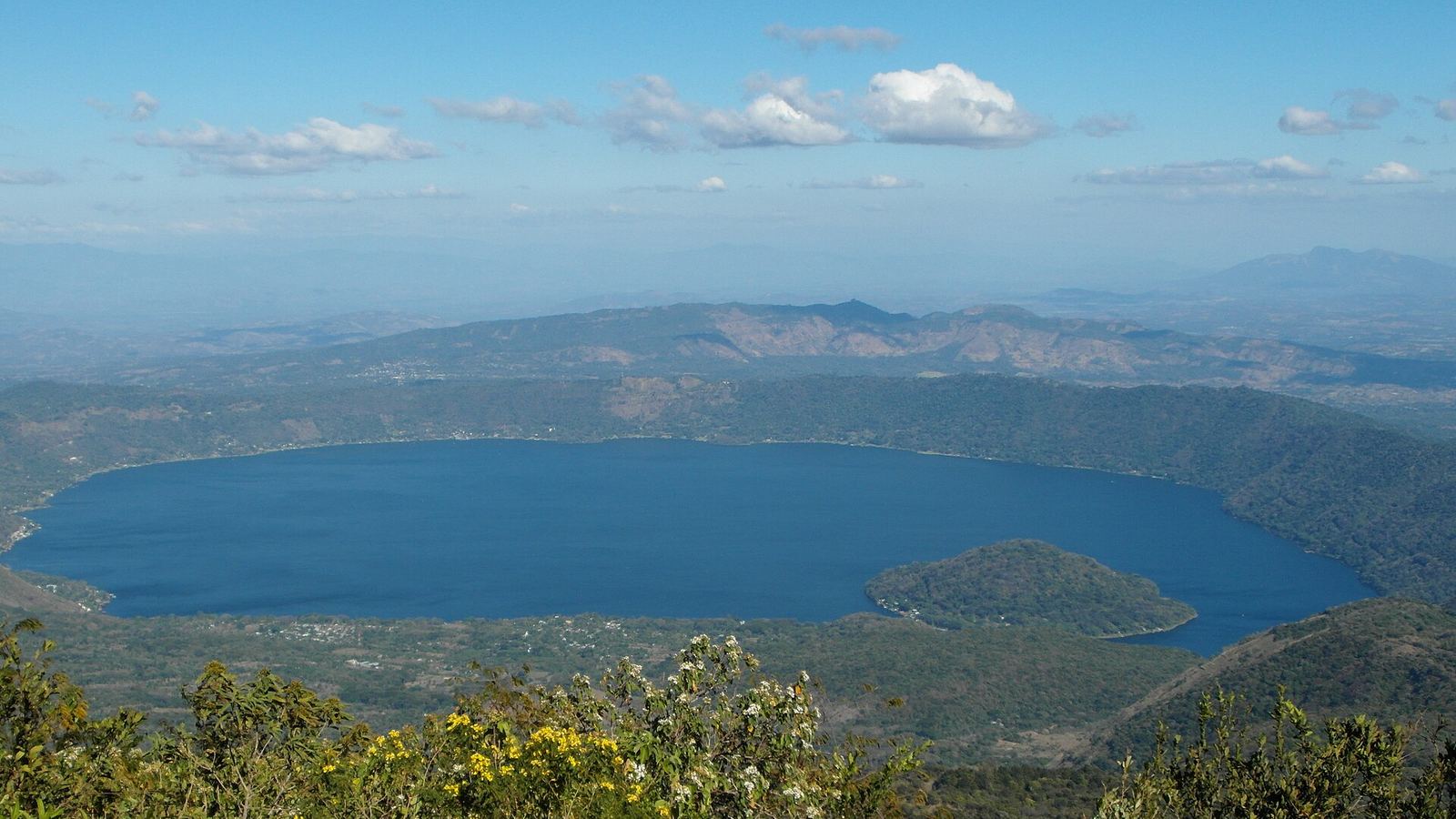
| Santa Ana & Lago de Coatepeque | Good | Reliable in the city and around the lake rim, then dropping on the Cerro Verde ascent and along the Santa Ana volcano crater trail. |
| Eastern beaches (El Cuco, Playa Las Flores) | Variable | Workable at the surf lodges and along the new coastal road, unreliable in the mangroves of the Bahia de Jiquilisco and on the back roads inland. |
| Northern highlands (Perquin, Morazan) | Patchy | Coverage follows the paved routes and the larger villages. Expect long dead stretches on the mountain roads toward the Honduran border. |
How to Choose the Right Plan
Work out first whether you are a coast person or a country person, because that decides the network before it decides the brand. A trip that runs San Salvador, Santa Tecla, the Ruta de las Flores and the Costa del Balsamo stays inside territory where Claro and Tigo are both comfortable, so buy on price: Nomad at 29 dollars for 20 GB, or 21 for 5 GB if you genuinely travel light. A trip that pushes east to Playa Las Flores, El Cuco and the Bahia de Jiquilisco, or north into Morazan, leans the other way, and Holafly at 36.50 dollars for a week is the only travel eSIM whose network list names Tigo. Airalo occupies an awkward middle here: more expensive than Nomad at every metered size and tied to Movistar, worth buying only for that 5.50 dollar single gigabyte to cover arrival day.
Then decide honestly whether you want an eSIM at all beyond the first day. Stays past a fortnight tip the maths decisively toward a local card, because Tigo will sell you 4 GB over sixteen days for seven dollars and Claro does 5 GB over thirty for ten. The combination that actually suits most two-week visitors is a small eSIM installed before departure, used for the airport, the 45 minute drive in and the first evening, then a Tigo pack bought at a shop once you are somewhere with time to queue. That costs under fifteen dollars all in and puts you on two networks at once, which on a coast where the signal comes and goes with the terrain is worth more than either half on its own.
Frequently Asked Questions
Is a local Tigo or Claro SIM genuinely cheaper than an eSIM here?
Yes, and by a wide margin at small sizes. Tigo sells 1 GB over two days for a dollar, 4 GB over eight days for four dollars, and 4 GB over sixteen days for seven. Claro runs the same dollar-a-gigabyte entry ladder and does 5 GB over thirty days, plus a couple of gigabytes ring-fenced for YouTube and TikTok, for ten dollars. The nearest travel eSIM equivalent is Nomad at 21 dollars for 5 GB. Both operators throw the physical card in free when you buy a pack. What you are paying the eSIM for is not data, it is skipping the shop, and whether that is worth fourteen dollars depends on how you feel about your first afternoon.
Do I need my passport to buy a prepaid SIM in El Salvador?
Bring it and assume yes. Sources conflict on whether registration is legally compulsory for visitors, and travellers report both being asked for a passport at a Tigo counter and walking out of a corner shop with an unregistered card in hand. The airport kiosks take the formal route and register you on the spot, which runs about ten to fifteen minutes if nobody is ahead of you. Since your passport is in your bag on arrival day anyway, this is a smaller obstacle than the kiosk opening hours, which are the thing that actually catches late arrivals out.
Can I still pay for things in bitcoin, and does that affect topping up a SIM?
Barely, and no. The Bitcoin Law that made El Salvador famous was amended on 29 January 2025 as a condition of the 1.4 billion dollar arrangement with the IMF agreed the previous December. The amendment removed the obligation on businesses to accept bitcoin, stopped taxes being payable in it, and deleted its description as currency in the statute. Acceptance is now voluntary and, outside El Zonte and a handful of San Salvador venues that lean into the story, uncommon. The US dollar is what you will actually spend. Every carrier top-up channel, every eSIM checkout and every airport kiosk takes dollars or a card, so none of your connectivity depends on any of this.
Will an eSIM work at El Tunco and El Zonte, or do I need a local card for the coast?
An eSIM is fine on the western surf coast. Tigo and Claro both run 20 to 60 Mbps along the La Libertad stretch, which covers video calls, uploads and streaming from most hostel and hotel terraces. The weak spots are hyper-local rather than regional: the sunken access lanes behind the beach, the rocks at El Sunzal at low tide, and the inland ridge road climbing to Tamanique. If your trip pushes east to Playa Las Flores or El Cuco the case for a Tigo-based option gets stronger, because that coast has only recently had roads built to it and Claro's footprint out there is thinner than its national share suggests.
Which provider actually costs least per gigabyte in El Salvador?
Nomad, at every size where the three overlap. Its 20 GB thirty-day plan at 29 dollars works out at about 1.45 dollars a gigabyte, its 10 GB is 25 dollars and its 5 GB is 21. Airalo's Chivo packages are 49, 34 and 24 dollars for those same three sizes, so it runs close at 5 GB and roughly seventy percent more expensive at 20 GB. Holafly sells no metered data here at all, only unlimited by the day, so comparing it per gigabyte only means anything once you know your own consumption. Worth noting too that Airalo's headline global pricing is cheaper than what it charges for El Salvador specifically, which is a good reason to open the country page rather than trust a brand's front door.
Is the connection good enough to work remotely from the beach for a few weeks?
On the western coast, yes, with a caveat about redundancy. El Zonte and El Tunco have unusually good connectivity for villages their size, partly because the Bitcoin Beach period brought money and equipment into a place that would otherwise have sat low on any operator's build list. Plenty of people run ordinary working days from there. What you should do is carry two routes onto the internet rather than one: a Nomad or Airalo profile plus a local Tigo card costs under forty dollars combined and covers you when a single network has a bad afternoon, which does happen. If your work hangs on scheduled calls, book the ones that matter from San Salvador or Santa Tecla rather than from a beach terrace.