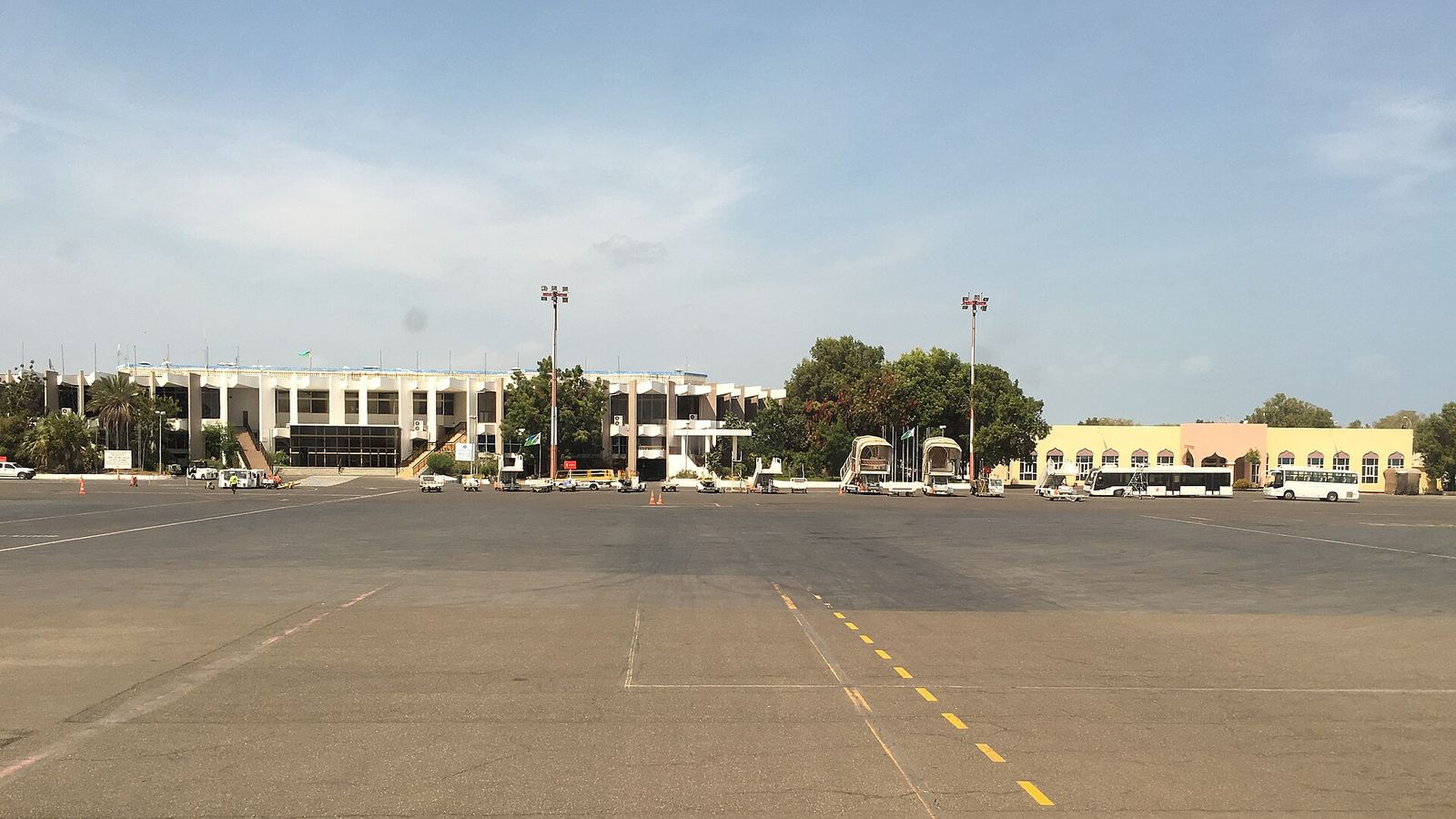
Ambouli is a small civilian terminal bolted onto one of the busiest military airfields in Africa, and it has no phone counter that we could confirm in the arrivals hall. That is the whole reason a travel eSIM earns its keep here, despite costing far more than local data. You walk off the aircraft, wait at the single baggage belt, and step out into a taxi rank where fares are agreed, not metered, about six kilometres from the centre. The nearest Djibouti Telecom agency is on the Route de l'Aéroport and keeps weekday office hours; the one with evening hours is across town in the Bawadi Mall. A Nomad profile installed in Addis Ababa, Istanbul or Dubai means the drive, the hotel check-in and the first evening are covered while the Evatis card waits for the next working day.
What This Guide Covers
Jump to the section most relevant to you
A Civil Terminal on a Military Airfield
Djibouti-Ambouli International Airport, code JIB, sits in Ambouli on the southern edge of the capital, roughly five to six kilometres from the city centre. Its runway runs east to west, so when the wind comes from the west, arriving aircraft fly in low over the city itself. The civilian side is modest: a single terminal building, one departure gate and one baggage carousel. Military traffic is the larger part of the airfield's movements. The French air base, BA 188, has been here since the late 1940s; the US base at Camp Lemonnier occupies the southern side of the field; Japan's Self-Defense Forces have their only overseas base on a site next to the airport; and Italian aircraft operate from it too.
The civilian network is short and regional. Ethiopian Airlines flies in from Addis Ababa, Turkish Airlines from Istanbul, flydubai from Dubai, Air France from Paris Charles de Gaulle, Egyptair from Cairo and flynas from Jeddah, alongside smaller regional carriers linking Djibouti with Hargeisa, Aden and Mogadishu. Most long-haul passengers therefore arrive after a connection in one of those hubs.
Why the hubs matter for your phone
Addis Ababa, Istanbul, Dubai and Paris all have dependable airport WiFi, and the layover there is the natural moment to download and test an eSIM. Ambouli is a small terminal with one belt, and the hour you might spend in it is not when you want to be scanning a QR code on an unfamiliar network.
No Phone Counter in the Hall, an Agency on the Airport Road
Djibouti Telecom's own list of agencies includes one called Aviation, on the Route de l'Aéroport, the road that runs from Ambouli towards the city. It is the nearest place to the terminal where you can buy an Evatis card, but it is an agency on the road, not a counter inside arrivals, and it keeps the company's standard hours of 08:00 to 17:00. A French-language travel guide states plainly that it is not currently possible to buy a SIM card at the airport. Another eSIM seller's page claims that bundles can be bought at the airport. We could not confirm a counter in the terminal from any first-hand 2026 account, so plan as if there is none.
Getting a local card on arrival day
1. Clear immigration and collect your bag from the single carousel.
2. Take a taxi from the rank outside, agreeing the fare in francs first.
3. If you land Sunday to Thursday before about 16:00, ask the driver to stop at the Aviation agency on the airport road, or at the Boulaos agency on Boulevard du Général de Gaulle near the centre.
4. Landing in the evening or on a Friday, head for the Bawadi Mall agency on the Route de Venise, listed as open from 10:00 to 21:30.
5. Show your passport, buy the Evatis card, and have the agent load a data bundle before you leave.
Whichever agency you use, bring the same physical passport you just showed at immigration, and make sure your phone is unlocked. A locked handset is the one thing no Djibouti Telecom agent can solve.
Terminal WiFi, ATMs and the Pegged Franc
Airport guides updated in 2026 say free WiFi is available in the terminal, and one eSIM seller describes public WiFi there as limited. None of the sources we found gives the network name, so we cannot tell you what to look for on the list. Assume you may get a connection good enough for a message home, and nothing you should depend on for installing an eSIM.
Cash before the taxi
ATMs are on the landside of the terminal, after customs. The Djiboutian franc has been pegged to the US dollar since 1973 at about 177.7 francs, so a 2,000-franc note is a little over eleven dollars and the sums are easy. Drivers will often take dollars, but paying in francs removes any argument about the rate. Draw enough for the taxi and a SIM card: around 5,000 francs covers both comfortably.
The terminal is small enough that you will be outside within minutes of collecting your bag, which is good for the queue and bad for anyone hoping to sort out connectivity indoors. There is little in the way of shops or cafés on the arrivals side. If your phone needs data the moment you step into the heat, it needs to be working before you land.
From Ambouli to the Plateau du Serpent
The drive into the centre is short, usually ten to fifteen minutes to the European quarter, the Place Menelik area or the hotels on the Plateau du Serpent, and Djibouti Telecom coverage is solid along the whole route through the city.
| Option | How it works | Time | Roughly |
|---|---|---|---|
| Taxi from the rank | Unmetered, fare agreed before departure | 10 to 15 min | Reported at 1,500 to 2,500 DJF (about $8 to $14) |
| Hotel pickup | Booked ahead with the hotel | 10 to 15 min | Varies; often bundled with business hotels |
| Base or company transport | Arranged by the employer | A few minutes to Camp Lemonnier | Not open to the public |
| Minibus from the main road | Shared, walk out to the road | 20 min or more | A few hundred francs, unsuitable with luggage |
Taxis are not metered and guides warn of overcharging foreigners, so settle the price in francs before the bags go in the boot, and have your hotel's name and district written down. We found no international ride-hail app operating in Djibouti, which is why the phone matters less for booking and more for everything else: messaging the hotel that you have landed, checking the route on a map, and having a number ready if the agreed pickup does not appear.
Landing for the train or the port
If you are heading straight to Nagad station for the railway to Ethiopia, or out to the Doraleh port complex west of the city, the journey is longer than the hop into the centre. Both are worth having a map running for, and neither has an obvious place to buy a card on the way.
Agency Card or eSIM: What Arrival Day Costs
Set the options side by side and the price gap is enormous, which is why the eSIM's case here rests entirely on timing.
| Where | What you get | Price |
|---|---|---|
| Evatis card at an agency | SIM with 500 DJF credit, per one guide | About 1,000 DJF ($5.63) |
| Express bundle | 1 GB, 24 hours | 200 DJF ($1.13) |
| Évasion bundle | 12 GB, 7 days | 1,000 DJF ($5.63) |
| Confort bundle | 20 GB, 30 days | 3,000 DJF ($16.88) |
| Nomad eSIM | 1 GB, 7 days, network listed as 'Default Network' | $35 |
| Taxi into town | For comparison | 1,500 to 2,500 DJF |
A card and a week's bundle together come to about eleven dollars, against thirty-five for a single eSIM gigabyte. Put differently, Nomad's plan costs more than the taxi, the SIM and a week of local data put together. Airalo and Holafly sell nothing for Djibouti, so there is no cheaper eSIM from the big brands to compare with.
What the eSIM buys is the gap between the aircraft door and the next open agency. For a traveller landing at 21:00 on a Thursday and leaving on Saturday, that gap is the whole trip. The Djibouti eSIM guide explains the single-operator market, the Djibouti SIM card guide lists every agency and bundle, and the eSIM Finder will check an itinerary that continues to Ethiopia or the Gulf.
Visa Paperwork and Phone Paperwork Together
Most nationalities need a visa for Djibouti, and the government's recommended route is its eVisa: about US$12 for a transit visa of up to 14 days and about US$23 for a stay of 15 to 90 days. Visa on arrival is listed by the airline database Timatic but not by the government for ordinary passports, and the final word on boarding rests with the airline. Sorting the eVisa and the eSIM in the same evening before departure is the tidy way to arrive.
Landing with Nomad installed
Buying an Evatis card instead
For a stay of more than three or four days, buy the card, and treat any eSIM purely as a landing bridge. For a one or two-night stopover, a transit between flights or a Friday arrival, Nomad's gigabyte is a defensible thirty-five dollars.
Frequently Asked Questions
Is there anywhere inside Ambouli's arrivals hall to buy a Djibouti Telecom card?
Not that we could confirm. One travel guide says it is not currently possible to buy a SIM at the airport, while an eSIM seller claims bundles are sold there, and we found no first-hand 2026 account either way. Djibouti Telecom's nearest listed agency is Aviation, on the Route de l'Aéroport, open 08:00 to 17:00. Plan as if the terminal has no phone counter.
What should a taxi from JIB to a Plateau du Serpent hotel cost?
Guides report 1,500 to 2,500 francs, roughly eight to fourteen dollars, for the ten-to-fifteen-minute ride. Taxis are unmetered, and overcharging foreigners is a known complaint, so agree the fare in francs before loading your bags. Business hotels often arrange pickups, which removes the negotiation altogether.
Can I download my eSIM on the terminal WiFi after landing?
You might, but it is a poor plan. Airport guides list free WiFi, but none names the network, and at least one source calls it limited. Installing a profile needs a stable connection for a few minutes. Do it during your layover in Addis Ababa, Istanbul, Dubai or Paris, then switch the line on once you are on the ground at Ambouli.
I land on a Friday afternoon. Where do I get a local line?
Try the Djibouti Telecom agency in the Bawadi Mall on the Route de Venise, which Djibouti Telecom lists as open from 10:00 to 21:30. The Aviation agency on the airport road and the other town branches follow the Sunday-to-Thursday week. If the mall is out of your way, a Nomad eSIM carries you through to Sunday morning.
Does it matter that the airport is also a military base?
Not for a civilian passenger's phone. The bases share the runway, not the passenger terminal, and you will not pass through them. It does explain who you will meet on board: contractors and service personnel on rotation. For anyone staying weeks rather than days, a Djibouti Telecom Evatis card with a monthly Confort bundle is far cheaper than any eSIM.