Djibouti is the starkest case on this site of a travel eSIM losing on price: Nomad, the only major brand that sells the country, charges US$35 for one gigabyte over seven days, while Djibouti Telecom's published data bundle gives 12 GB for a week at 1,000 Djiboutian francs, roughly US$5.60. Airalo and Holafly have no Djibouti product page at all; both addresses return a 404. The local-card advantage here is not three or four times, as it usually is in Africa, but something closer to seventy times per gigabyte.
That gap does not make the eSIM pointless, it just narrows who should buy it. Djibouti Telecom is the only mobile operator in the country, so a foreign profile and a local Evatis card end up on the same masts, and you are choosing a billing route, not a network. The eSIM is for the traveller who lands at Ambouli on a Friday, when most agencies keep the Sunday-to-Thursday working week, who is on a two-night stopover between Addis Ababa and Dubai, or who is a contractor heading straight through the gate at Camp Lemonnier with no time for a shop. Everyone staying longer than a few days should buy an Evatis card with their passport and keep the eSIM, if at all, as a landing bridge.
Quick Pick: the Best eSIM for Djibouti
Nomad (Djibouti 1 GB / 7 days): The only major travel eSIM on sale for Djibouti. Buy it as an arrival bridge for the taxi from Ambouli and the first day in town, then switch to a Djibouti Telecom Evatis card, which sells 12 GB for about a sixth of the price of this single gigabyte.
Our picks
Best overall: Nomad. Lowest per GB: Nomad. Or use the eSIM Finder.
Djibouti eSIM Plans Compared
Indicative pricing. Tap through for live rates.
| Provider | Plan | Data | Duration | Price | Network |
|---|---|---|---|---|---|
| Nomad | Djibouti 1GB | 1 GB | 7 days | $35 | Djibouti Telecom (Nomad lists only 'Default Network') |
Nomad Djibouti Plans
Nomad: One Plan, One Gigabyte, Thirty-Five Dollars
The only major travel eSIM listed for Djibouti, added in June 2026, with a single data-only package
Nomad's Djibouti page lists exactly one product: 1 GB that lasts seven days, for US$35. There is no 3 GB or 5 GB rung, no thirty-day option and nothing unlimited. Extra data can be bolted onto the same eSIM as an add-on, but only while the plan is still running; once the gigabyte or the week is gone, the profile is dead and you would have to buy and install a fresh one. The plan was created in Nomad's catalogue on 4 June 2026, so this is a new listing, and the plan-detail document says the eSIM is supplied by a partner Nomad calls Lilac.
The network field is the oddity. Where most Nomad country pages name the local operator, the Djibouti listing says only 'Default Network', and nowhere on the page or in its plan-detail document does the name Djibouti Telecom appear. We are not going to guess beyond what is printed. What we can say is that Djibouti has a single licensed mobile operator, so any foreign profile that gets a signal inside the country is, in practice, roaming onto Djibouti Telecom masts. The page's marketing copy mentions 5G in places while the plan itself is listed at 4G speed; we found no evidence that a visitor's roaming profile can reach 5G here, so plan on 4G at best.
Thirty-five dollars for one gigabyte is the single most expensive per-gigabyte price on this site's African pages. It buys you a working connection the moment the aircraft door opens at Ambouli, without a passport photocopy, a shop queue or a hunt for the one agency open on a Friday. That is a real convenience, and for a two-night stopover or an in-and-out port visit it may be the right call. For anything longer, it is the bridge to a local card rather than the plan for the trip.
Strengths
Weaknesses
Mobile Networks in Djibouti
Mobile service in Djibouti comes from one company. Djibouti Telecom SA, the state-owned incumbent founded in 1999, runs the fixed lines, the internet service, the international cable business and the only mobile network in the country. Its prepaid mobile brand is Evatis, which is the name you will see on scratch cards and hear at the counter, and its mobile money service is D-Money. In 2021 the government announced plans to sell a minority stake in the company and to license a second mobile operator, the same liberalisation path Ethiopia was then following. As of October 2026 we found no report that a second licence has been issued or that any rival network has switched on. Treat Djibouti Telecom as the only network you can connect to.
The irony is that Djibouti is one of the best-connected places in Africa at the level of undersea cables. Djibouti Telecom's international arm describes the country as a landing point for 13 submarine systems, ten in service and three under construction, including EASSy, SEACOM, AAE-1, SEA-ME-WE 5 and 2Africa, and much of Ethiopia's international traffic runs through it. None of that capacity shows up as cheap roaming for foreign eSIM sellers. With no second operator to negotiate against, a reseller buys access on Djibouti Telecom's terms, which is the most likely reason the one gigabyte on sale costs what it does.
A note on the network name
Nomad's listing names the network only as 'Default Network'. It does not say Djibouti Telecom anywhere on the product page or in the plan-detail document we checked on 12 October 2026. Because there is no other mobile network in the country to roam onto, we list Djibouti Telecom as the host, but that is our inference from the market structure, not something Nomad states. Ubigi, a smaller eSIM seller outside our usual comparison, does name Djibouti Telecom on its Djibouti plan, and sells 10 GB over thirty days for 88 euros.
Coverage follows the population. Djibouti Telecom launched 3G nationwide in 2013 and 4G+ in 2017, and the capital, Balbala and the airport district are where the network is densest. The company keeps agencies in Tadjourah, Obock, Ali Sabieh and Dikhil, which tells you the regional towns are served, but the country is mostly volcanic desert and the roads between those towns cross long empty stretches. We could not find a 2026 coverage map, so the guidance below is deliberately cautious about the salt lakes and the interior.
Two softer constraints are worth knowing. Press-freedom groups including Reporters Without Borders have described the authorities slowing the internet to restrict social media, and any such measure hits a local card and a roaming eSIM alike, because both sit on the same network. And Djibouti's working week runs Sunday to Thursday, which matters more than it sounds when the only place to buy a card is a government company's shop.
Coverage Across Djibouti
Coverage where travelers actually go:
| Area | Coverage | Notes |
|---|---|---|
| Djibouti City (Plateau du Serpent, Héron, the European quarter) | Good | The core of the Djibouti Telecom network, with 4G across the centre, the port district and the hotel strip on the Plateau du Serpent. |
| Balbala and the PK12 belt | Good | The large suburb west of the capital has its own Djibouti Telecom agencies at Cheikh Moussa and Farahad PK12, and dense coverage to match. |
| Arta and the Gulf of Tadjoura beaches | Fair | Usable along the main road west of the capital; the boat trips out to whale-shark waters and Moucha island lose signal offshore. |
| Tadjourah and Obock | Fair | Both towns have Djibouti Telecom agencies and town coverage. The coast road and the Day Forest hills above Tadjourah are patchier. |
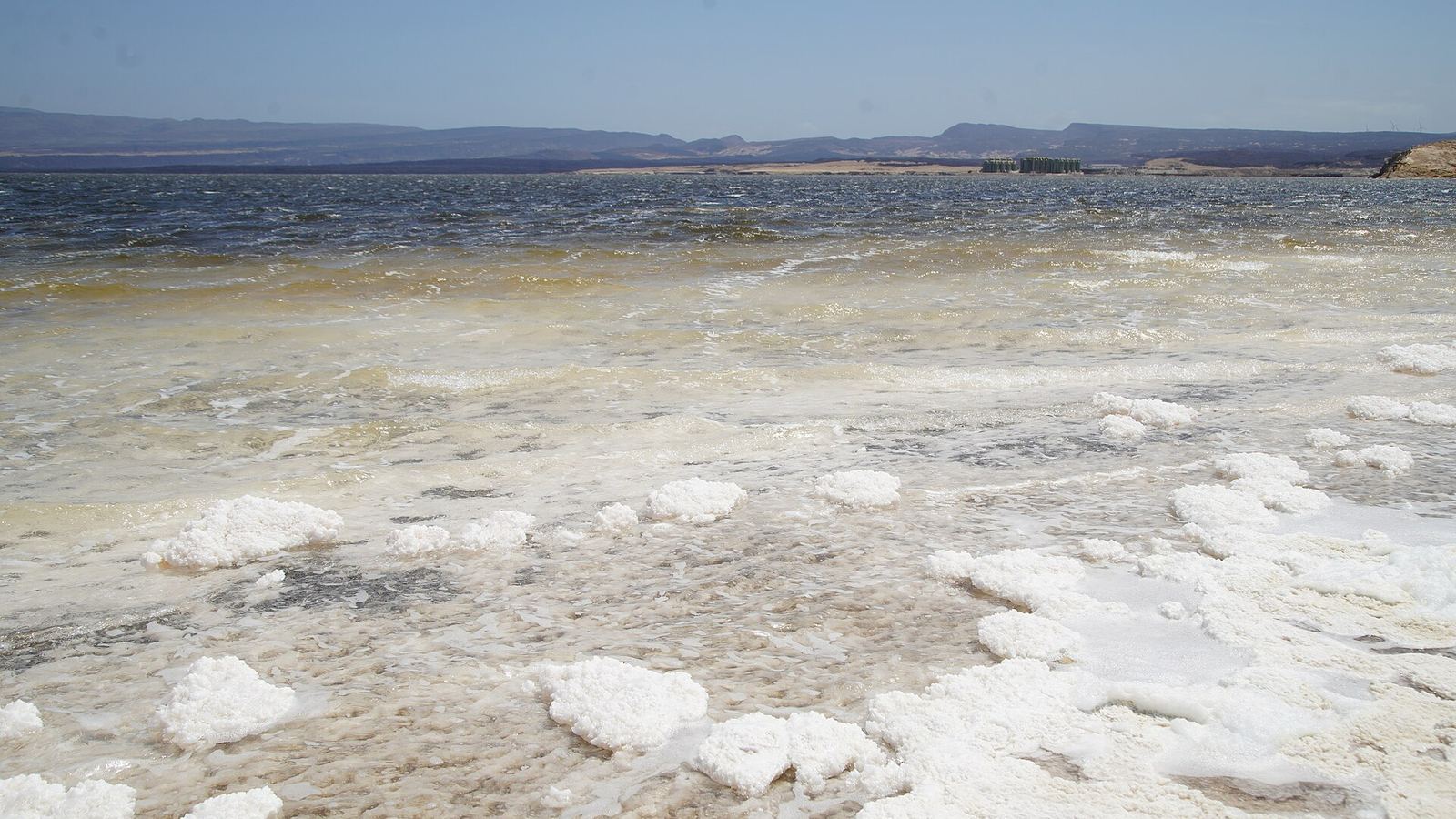
| Lac Assal | Unverified | Roughly two hours west of the capital. We found no 2026 coverage data; plan on gaps at the lake shore and download maps before you leave. |
| Lac Abbé and the Ethiopian border | Poor | Remote and far from any agency town beyond Dikhil. Expect long stretches with no signal, and Ethiopian networks near the frontier. |
How to Choose the Right Plan
Begin with the length of your stay, because the network is the same whatever you buy. If you are in Djibouti for three days or more, go to a Djibouti Telecom agency with your passport and buy an Evatis card, then add the Evasion data bundle, 12 GB for seven days at 1,000 francs, or the thirty-day Confort, 20 GB for 3,000 francs. That is the right plan for a week of diving in the Gulf of Tadjoura, a tour out to Lac Assal and Lac Abbé, or a business rotation at the port. The Bawadi Mall agency on the Route de Venise keeps evening hours and is the easiest one to reach if you land outside the working week.
Buy Nomad instead, or as well, when the hour at the counter is worth more to you than thirty dollars. That covers a stopover of one or two nights, a Friday arrival when the town agencies are shut, a phone with no SIM tray, or a contractor whose first stop after Ambouli is the base gate rather than a shopping mall. Install it before you board in Addis Ababa, Istanbul, Dubai or Paris, switch it on when you land, and treat it as one gigabyte for the first day, not a plan for the week. If you need more than that from abroad, Ubigi's 10 GB thirty-day plan at 88 euros names Djibouti Telecom outright and costs far less per gigabyte than Nomad, though still many times the local rate. Whatever you choose, download offline maps of the route west before setting out for the salt lakes.
Frequently Asked Questions
Why does a single gigabyte for Djibouti cost thirty-five dollars?
Because every foreign data plan has to be carried by one state operator with nobody to compete with it. Djibouti Telecom sets the wholesale terms for roaming, and an eSIM reseller has no second network to play off against it. Local customers are on a completely different price list: the operator's own data bundles run from 200 francs for 1 GB over a day to 3,000 francs for 20 GB over thirty days, which is between about US$1.10 and US$17. The eSIM price reflects what it costs a foreign company to buy access, not what the network costs to run.
Is there any company other than Djibouti Telecom selling mobile service?
Not that we could find. A 2021 plan to licence a second mobile operator and sell part of Djibouti Telecom has not, on any source we could locate, produced a new network by October 2026. Some directory sites list other names, such as a Somcable-branded service, but we could not confirm that any of them sells mobile lines to the public. For a visitor, Djibouti Telecom and its Evatis prepaid brand are the only option, whether you use a local card or a foreign eSIM.
I am on a stopover between Addis Ababa and Dubai. Is the Nomad plan worth it?
For one or two nights, yes, if you would rather not spend your first morning looking for a shop. A gigabyte covers maps, messaging, a few hotel and restaurant lookups and the ride from Ambouli, and you can install it in Addis Ababa or at home before you fly. If your stopover starts on a Sunday-to-Thursday morning and your hotel is near the centre, a Djibouti Telecom card will cost you an hour and about six dollars and give you twelve times the data, so the choice is really about how you value that hour.
Will my phone work on the Djibouti to Addis Ababa railway?
In the Djibouti stretch near Nagad station and the capital, yes; across the border it will not, unless you have something that works in Ethiopia. The line runs from Nagad, on the edge of Djibouti City, into Ethiopia and on to the Addis Ababa area, and once the train crosses the frontier you are on Ethiopian networks. A Nomad Djibouti plan covers Djibouti only. If the train is part of your trip, read our Ethiopia eSIM guide and arrange Ethiopian data as a separate line.
Do I need a local number to pay for things in Djibouti?
Not to get by, but it helps. Djibouti Telecom's D-Money wallet runs on a local line, and taxi drivers, guides and dive operators tend to coordinate by phone call or WhatsApp. The Djiboutian franc is pegged to the US dollar at about 177.7 francs, and cash in francs covers most small purchases. A travel eSIM gives you data only, with no +253 number, so if you are staying long enough to arrange excursions to Lac Assal or the whale sharks off Arta, the local card earns its place for the number alone.
Can I use the eSIM on a boat trip to Moucha island or the whale sharks?
Close to shore, possibly; out in the Gulf of Tadjoura, do not count on it. Whichever line you carry, it is the same Djibouti Telecom network, and coastal masts give out a few kilometres offshore. The whale-shark season off Arta, which local operators run roughly from November to February, takes you into open water where most phones go quiet. Tell whoever is waiting for you that you will be offline for the day, and keep messages and photos for the drive back.