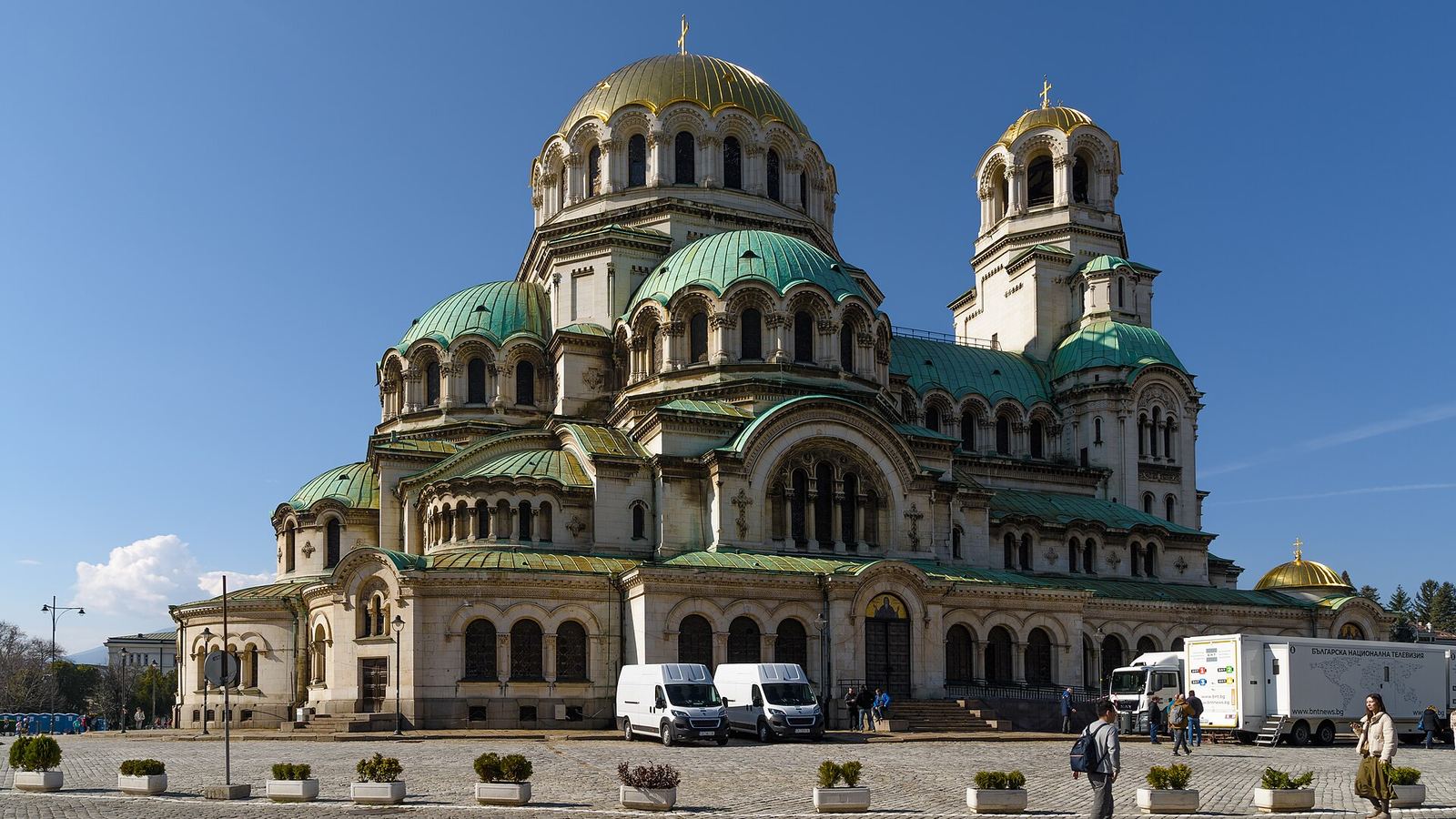
Sofia is easier to be online in than almost anywhere else in southeastern Europe, and the reason is infrastructure that nobody advertises. The metro tunnels were fitted with radiating cable so your signal survives the whole ride rather than dying between platforms. Contactless fares cap themselves at 2 euro a day. Cafe WiFi is fast and given away freely. All three national operators run 5G across the city. The trap is not the capital at all, it is what sits on its southern edge: Vitosha rises to 2,290 metres inside the municipal boundary, the Seven Rila Lakes are a two-hour drive away at 2,300 metres, and a plan sized for a comfortable week of espresso and Roman ruins can look very thin on a foggy plateau. Work out first whether Sofia is the trip or the base camp, then buy accordingly.
What This Guide Covers
Jump to the section most relevant to you
How the Three Networks Behave Inside Sofia
Sofia is comfortable ground for all three Bulgarian operators, and the honest summary is that nobody here will suffer on any of them. A1 is the fastest, with 5G downloads that top the national table around 466 Mbit/s and an all-technology average close to 114 Mbit/s, and its advantage is most obvious in the newer office districts. Vivacom holds the national coverage titles and blankets the awkward edges of the city, the ravines below Vitosha and the older low-rise quarters out past the ring road. Yettel took 5G availability and reliability in the January 2026 round, which in practice means the highest proportion of your day spent actually attached to a 5G cell rather than watching the icon flicker back to 4G.
The city's shape helps. Sofia sits in a basin at around 550 metres with mountains on three sides, and the built-up area is broad and mostly low, so there is little of the urban-canyon shadowing that ruins signal in denser capitals. Where you do notice a difference is inside the heavy Stalinist blocks around the Largo and the ministries, where thick masonry and deep interior courtyards cost you a bar or two, and in the older panel apartment buildings out in the residential belts, where a room at the back of the flat can read noticeably worse than the balcony.
Do not judge Bulgaria by your first afternoon here
Sofia gives you a flattering impression of national coverage. All three operators claim 4G past 99 percent of the population and Vivacom puts 5G in front of about 92 percent, but population coverage is a Sofia, Plovdiv, Varna and Burgas story. The Rila and Pirin trails, the deep Rhodope valleys and the ridge terrain above the ski resorts are where those percentages stop describing anything useful. Choose your plan for the hardest day on your itinerary, not the easiest.
A Metro That Keeps Your Signal, and a Fare System Worth Understanding
Sofia's metro is four lines and 47 stations, which for a city of this size is generous. M1 runs Slivnitsa to Business Park Sofia, M2 Obelya to Vitosha, M3 Hadzhi Dimitar to Gorna Banya, and M4 Obelya to Sofia Airport, sharing thirteen stations with M1 along the way. Serdika is the interchange everything passes through, sitting on top of the excavated Roman street that gives the station its unusual double life as an archaeological site.
The detail that matters for this site is that the tunnels carry mobile signal. Sofia wired the entire network years ago and finished the job on the last three sections, including Mladost 1 out to the airport and James Bourchier down to Vitosha station. Stations use antennas, the stretches in between use radiating cable, and all three operators run on it. That is unusual in this part of Europe and it means a message sent as the doors close will actually go. Free WiFi on the platforms is a bonus rather than a necessity.
The fare structure, and the cap that makes it cheap
A single ride is 0.80 euro and covers the whole metro network including transfers. A 24-hour pass is 3.00 euro and a 72-hour pass 7.60. The genuinely useful trick is contactless: tap a bank card, phone or watch at the metro gates and on the blue readers aboard buses and trams, and after four taps in one day the system caps you at 2.00 euro and the rest of that day rides free. For a visitor doing five or six journeys a day, that beats the 24-hour pass without any planning. Trains run from about 05:26 to 23:49 on weekdays, finishing slightly earlier at weekends.
Above ground the tram and trolleybus network fills in what the metro misses, notably tram 12 and the routes across the older southern districts, and coverage on all of them is straightforward. The one place people fumble is the ticket machine rather than the signal: since 9 August 2026 the machines quote euro only, so an older guidebook telling you a ticket costs 1.60 lev is describing exactly the same fare in retired money.
Where to Stay if Connectivity Matters: Three Districts Compared
The centre, around Vitosha Boulevard and Serdika. This is where most visitors sleep and it is thoroughly covered, with the caveat about heavy older buildings noted above. Vitosha Boulevard itself, the pedestrianised strip running from the courthouse toward the mountain, is dense with cafes that all hand out WiFi passwords without being asked. Alexander Nevsky, the Largo, the Central Market Hall and the ruins of Serdika under the metro station are all within a fifteen-minute walk of each other, so a day here rarely takes you out of range of something.
Lozenets. Southeast of the centre, leafy, full of embassies and the kind of specialty coffee places that assume you have brought a laptop. Newer construction and wider streets mean better indoor signal than the old centre, and it is the district long-stay visitors and remote workers gravitate to. It is also closest to the Vitosha approaches, which matters if you plan to be on the mountain regularly.
Mladost and Business Park Sofia
If your reason for being in Sofia is work rather than sightseeing, the eastern end of M1 is where the city put its office towers, and it is correspondingly the fastest ground for 5G in Bulgaria. Business Park Sofia is the terminus, Mladost the residential sprawl around it, and both are twenty minutes from Serdika on the metro. It is not a charming place to spend an evening, but a video call from here will not drop.
One general note on Bulgarian buildings: the panel blocks that ring every district were built with reinforced concrete and metal window frames, both of which attenuate signal. This is a floor-by-floor and room-by-room phenomenon rather than a district-wide one. If your rental reads badly, try the balcony before you blame your provider.
What Sofia Gives Away for Free, and Where It Stops
Sofia does not run a single branded citywide hotspot network of the kind some capitals advertise. What it has instead is a scattering of free access points across the places you actually wait in: metro platforms, the Central Railway Station and the Central Bus Station next door, the Central Market Hall, both airport terminals, the shopping centres, and several parks including South Park, Zaimov Park and the Doctor's Garden.
The more dependable free layer is commercial. Cafe and restaurant WiFi in Sofia is fast, universal and offered without ceremony, a consequence of a large domestic IT sector and a steady population of remote workers. Along Vitosha Boulevard, through Lozenets and around Graf Ignatiev you will rarely sit down anywhere that cannot support a video call. Hotel and apartment connections are generally excellent by regional standards, because Bulgaria's fixed broadband is genuinely good.
What the free layer handles
Where it leaves you
Bulgaria is cheap enough that treating WiFi as a supplement rather than a strategy costs very little. If you are weighing how much data a Sofia-based week actually needs, the eSIM Finder will size it against your itinerary, and the Bulgaria eSIM guide explains which provider rides which of the three networks.
The 2,290 Metre Mountain Inside the City Limits
No other European capital has anything quite like Vitosha. The mountain rises directly out of the southern suburbs, its summit Cherni Vrah stands at 2,290 metres, and the whole massif is a nature park that sits inside Sofia's municipal boundary. You can be on a metro platform in the centre and standing in alpine meadow ninety minutes later, and this is the single most common way visitors to Sofia discover the limits of their data plan.
Coverage on the Sofia-facing slopes is better than the altitude suggests, because the city's masts are pointed straight at them. The Simeonovo gondola, the Dragalevtsi chairlift and the area around Aleko hut generally hold a usable connection, as does the Boyana Church and waterfall area at the foot of the mountain. What falls away is the far side: drop over the ridge toward Zheleznitsa or head out along the Stone Rivers and the plateau paths, and you move out of the shadow of the city and into a place where one operator having a mast and the others not becomes the whole difference. Vivacom's coverage record is the most useful thing to have up there.
Practical Vitosha advice
Fog on the plateau arrives fast and reduces visibility to a few metres, and the marked trails are easier to lose than the gentle profile suggests. Download the offline map before you get on the lift rather than at the top, note that the gondola and chairlift keep seasonal hours and do not always run midweek, and remember that the last cabin down is earlier than you expect. Winter adds a ski area with its own lifts above Aleko, busy at weekends and quiet on a Tuesday.
Day Trips From Sofia and What Your Signal Does on Each
Sofia's position in the west of the country puts an unusual spread of day trips within reach, from a UNESCO monastery in a mountain gorge to a city older than Rome. They test a data plan very differently.
| Trip | Distance and time | What your phone does |
|---|---|---|
| Boyana Church | 10 km, 30 min by bus | Still inside the city. Full coverage at the church and the waterfall trail above it. |
| Plovdiv | 150 km, about 2 hours | Strong 5G on all three networks through the old town, Kapana and the Roman theatre. The Trakia motorway holds signal the whole way. |
| Rila Monastery | 120 km, about 2 hours | Usable 4G in the courtyard itself. The gorge road in from Kocherinovo has intermittent stretches where the valley walls close in. |
| Seven Rila Lakes | 90 km plus a chairlift | The lake basin sits between roughly 2,100 and 2,500 metres and is unreliable on every operator. Treat the hike as offline. |
| Koprivshtitsa | 110 km, about 2 hours | Fine in the village and along the main approach. The surrounding Sredna Gora hills are patchier on the smaller roads. |
The Seven Rila Lakes is the trip that separates a plan that works from one that merely looked cheap. It is the single most popular full-day excursion from Sofia, the chairlift from Pionerska drops you at around 2,100 metres, and the loop up past the Kidney, the Twin and the Tear climbs from there. Nobody has continuous coverage on that circuit. Load the route, tell somebody where you are going, and treat any bars you find at the top as a pleasant surprise.
Rila Monastery is the opposite kind of warning. People assume a walled monastery in a mountain gorge will be a dead zone and are then surprised to find themselves scrolling in the courtyard. The catch there is the road rather than the destination: the drive up from the E79 loses and regains signal several times, which matters if you are coordinating a pickup or watching a bus timetable. For the return leg to town, the Sofia Airport guide covers the metro that runs straight from Terminal 2, which is the neatest way to end a Bulgarian trip.
Frequently Asked Questions
Will my data keep working while the metro is moving between stations?
Yes, which sets Sofia apart from a lot of comparable systems. The network was fitted with radiating cable along the running tunnels and antennas at the stations, all three Bulgarian operators run on that infrastructure, and the last sections including the airport branch were completed some years ago. A message sent as the train pulls out will go. There is also free WiFi on the platforms if you would rather not use your allowance while waiting.
What is the cheapest way to pay for Sofia public transport as a visitor?
Tap a contactless bank card or phone at the metro gates and on the blue readers aboard buses and trams. A single ride is 0.80 euro, but the system caps your spending at 2.00 euro after four taps in a day and everything after that is free, so heavy sightseeing days cost less than a 24-hour pass at 3.00 euro. If you are here three days and moving constantly, the 72-hour pass at 7.60 euro is the alternative worth comparing against.
Is there signal on Vitosha, and how far up does it go?
On the city-facing side, further than you would expect, because Sofia's masts point straight at the slope. The Simeonovo gondola, the Dragalevtsi chairlift and the ground around Aleko hut usually hold a connection, and so does the Boyana Church area at the foot. Coverage falls away once you cross the ridge or head out onto the plateau and the Stone Rivers, where the city no longer helps you. Download an offline map before you get on the lift, because the fog up there arrives quickly.
Which part of Sofia has the fastest mobile data?
The eastern end of metro line M1, around Mladost and Business Park Sofia, where the office towers are and where A1's 5G advantage is most pronounced. Lozenets is the better compromise if you want both speed and somewhere pleasant to spend an evening, since newer construction there gives noticeably better indoor reception than the heavy older blocks around the Largo. The centre is perfectly fine everywhere at street level.
Should I sort out data before arriving or once I am in the city?
It depends how you value your first hour. Carrier shops along Vitosha Boulevard and in Serdika Center will sell you a cheap Bulgarian pack with no queue and time to ask questions, and Bulgarian prepaid is far cheaper per gigabyte than anything international. Arriving with an eSIM already live buys you a working ride-hailing app at the airport kerb, no passport registration, and the ability to choose which of the three networks you sit on rather than accepting whichever shop was open.