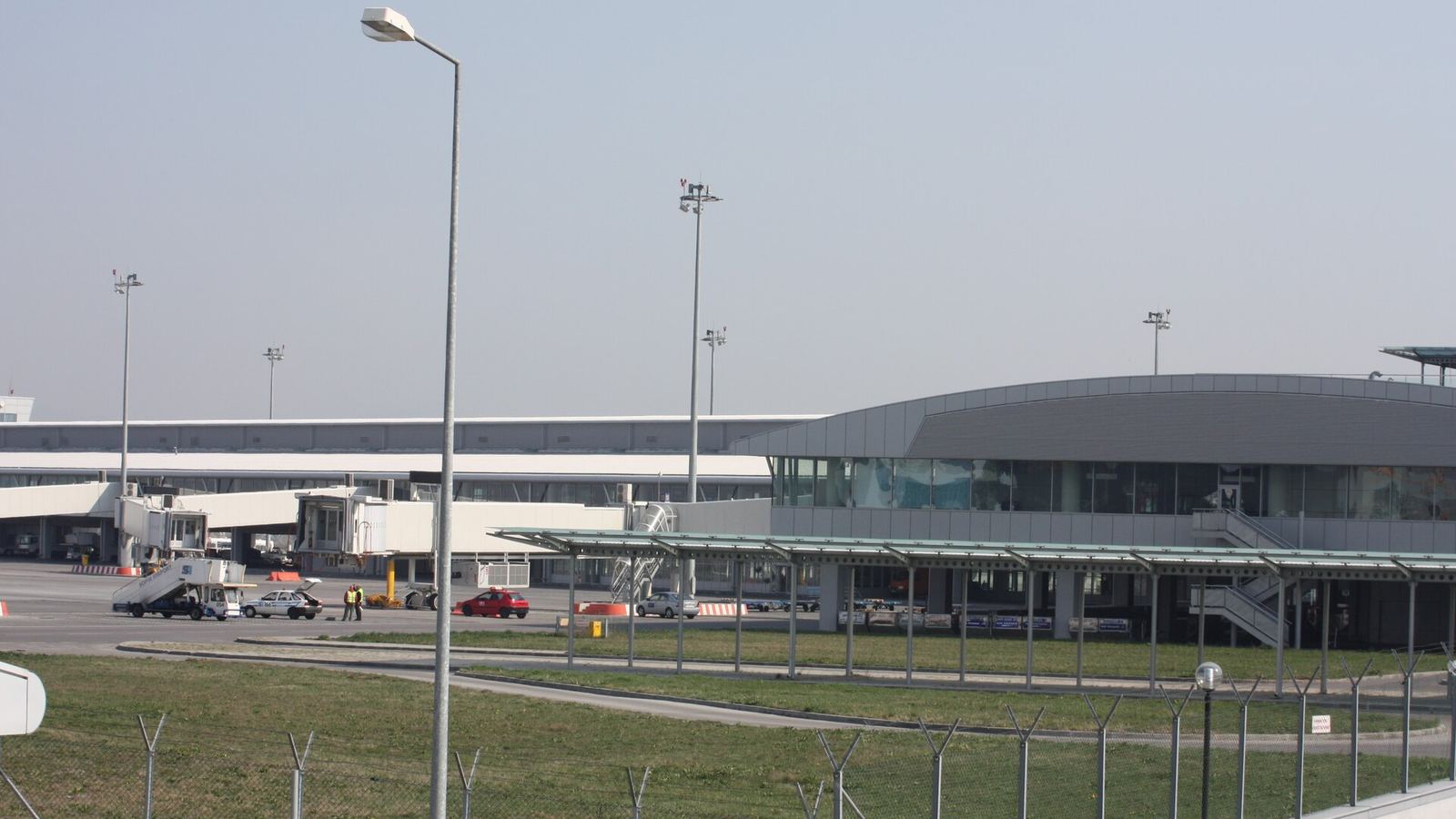
Sofia Airport is a straightforward place to arrive at with one significant catch, and it is geographic rather than technical. The two terminals are separate buildings a shuttle ride apart, and the useful facilities are split awkwardly between them: the metro into town leaves from beside Terminal 2, while the SIM counters that never close belong to Terminal 1. A full-service flight lands you at the terminal with the train and without the shops. A budget flight lands you at the terminal with the shops and without the train. Add in a taxi rank with a long and well-documented history of creative pricing, made livelier this year by a currency that changed in January, and the first twenty minutes at SOF are worth thinking about before you are standing in them.
What This Guide Covers
Jump to the section most relevant to you
Two Terminals, Two Kilometres Apart, and Why It Decides Everything
Sofia Airport is not one building with two wings. Terminal 1 and Terminal 2 are separate facilities at opposite ends of the apron, connected by a free shuttle rather than a corridor, and walking between them is not a realistic option with luggage. Which one you land at is decided by your airline: Terminal 1 handles the low-cost and charter traffic, so Wizz Air and Ryanair passengers end up there, while Terminal 2 takes the full-service carriers and is the newer, larger building.
That split matters more here than at most airports for two separate reasons, and both catch people out. The first is transport: the metro station is at Terminal 2 only, so a Terminal 1 arrival wanting the train has to ride the shuttle first. The second is the SIM counters, which sit the other way round.
Where the carrier shops actually are
Vivacom and Yettel both run shops in Terminal 1 and both are staffed 24 hours, which fits the low-cost schedules that dump passengers there at four in the morning. A1 has counters in both terminals but keeps ordinary retail hours, roughly 06:00 to 22:00. So a Terminal 2 arrival landing at eleven at night has no operator counter open in their building at all, only the Relay convenience store, while the two round-the-clock shops sit a shuttle ride away in a terminal they have no other reason to visit. Hours drift at the margins and weekend staffing is not guaranteed, so do not build a plan around a specific counter being open.
The free inter-terminal shuttle runs roughly every 30 to 40 minutes with marked stops outside both buildings, and the ride takes about five minutes. City bus 84 also links the two if the shuttle timing is against you. Add the shuttle wait, the walk and the queue together and a Terminal 2 arrival chasing a Terminal 1 SIM counter can lose the better part of an hour to save a handful of euro.
The SOF WiFi, What It Is Called and What It Wants
Look for SOF free Wi-Fi on the network list. It is available across both terminals, landside and airside, and it is free without a purchase or a boarding-pass scan. You will be pushed to a registration form before you get through, which asks for basic details rather than a Bulgarian phone number, and reports put the session length at around four hours before you need to sign in again. For a normal arrival that is irrelevant; for a long connection it means one extra tap somewhere around hour four.
Speeds are adequate rather than impressive, which is fine for what most people use it for. The genuinely useful application at SOF is buying and installing an eSIM on the spot if you meant to sort one out before flying and did not. Join the WiFi in the baggage hall, buy a plan, install the profile and walk out with a live line, no counter and no passport scan involved. That takes about the same time as the shuttle to Terminal 1 would.
The bit worth thinking about before you land
The whole reason the airport WiFi is not the answer at SOF is what happens twenty metres past the exit doors. Sofia's specific hazard is not getting lost, it is being quoted a price. Working out whether a fare is reasonable, checking what an app quotes for the same trip, and having a receipt trail all require a connection you are holding while standing at the kerb, not one you left behind at the seating area.
Getting Into Sofia, and the Taxi Problem
Sofia is one of the easiest European capitals to leave an airport in, because the metro runs from the terminal building to the middle of town for less than the price of a coffee. Line M4 starts at the station beside Terminal 2 and runs through Sofia University to Serdika, the central interchange, for a flat 0.80 euro. The ride is around twenty minutes and trains come every six to twelve minutes from about 05:25 to 23:50. There are no transfers to buy and no zones to work out.
| Route | Cost | Time | Notes |
|---|---|---|---|
| Metro M4 | 0.80 EUR | About 20 min to Serdika | Station next to Terminal 2. Terminal 1 arrivals need the free shuttle first. |
| Bus 84 | 0.80 EUR by card on board, about 1.02 from the driver | 35 to 50 min | Serves both terminals and runs to General Gurko Street in the centre. Roughly every 30 to 40 minutes, 05:20 to 23:16. |
| Inter-terminal shuttle | Free | About 5 min | Every 30 to 40 minutes between T1 and T2, marked stops outside both. |
| Metered taxi | Roughly 10 to 15 EUR | 20 to 35 min | Book at the official desk inside arrivals, never with someone who approaches you. |
| TaxiMe or Yellow Taxi app | Similar to metered, quoted up front | 20 to 35 min | Needs working data at the kerb. The price is agreed before the car arrives. |
Sofia Airport's oldest and most profitable trick
Only one taxi company is officially authorised to work the airport ranks, and the desks are inside the arrivals halls. The scam is not that company so much as the people around it: unmarked cars, lookalike liveries and drivers who approach you before you reach the desk, then quote a flat 20 to 40 euro for a trip the meter would price at ten. A legitimate daytime rate is roughly 0.40 to 0.56 euro per kilometre. If the sticker on the window reads much above 0.77, or the driver proposes a fixed fare without starting the meter, walk away and use the desk or an app.
The euro changeover has given this an extra edge. The Bulgarian lev was retired in January 2026 at 1.95583 to the euro, so any number that used to be a lev price is now worth roughly double if you quietly treat it as a euro price. Sofia already has a documented case of a passenger being charged 84 euro for a ride that should have been 84 lev, a little over 40. Knowing what the trip actually costs, and being able to show an app quote, is the practical defence.
The Case for Landing With a Line That Already Works
Nobody should pretend a travel eSIM is the cheap option in Bulgaria. Yettel will sell you fifteen gigabytes and a thousand minutes for under eight euro, which no international provider can match. What buying ahead actually purchases is a first hour without decisions, at an airport where the first hour is where the money gets lost.
Arguments for sorting it out at home
Arguments against
Most people who come back to Bulgaria settle on the same compromise: fly in with an eSIM live, then pick up a local card in a city shop if the trip turns out to be long or rural. The Bulgaria eSIM guide sets out which travel provider rides A1, which rides Yettel and which can move between all three, and the eSIM Finder will size the plan once you know which way you are going.
The Airport Counter Against a Travel eSIM
Laid out side by side, the local pack wins comfortably on money and loses on everything that is not money. Which side that lands on depends on how long you are here and how tired you are when you arrive.
| SIM bought at SOF | Travel eSIM | |
|---|---|---|
| Typical cost | About 6 to 14 EUR for a tourist pack of 8 to 25 GB | Roughly 11 to 16 USD for 10 GB, or from about 3.90 a day unlimited |
| Working when | After the shuttle, the queue and the passport scan | As soon as you switch the phone out of flight mode |
| Passport needed | Yes, registration is required by law | No |
| Availability at 1am | Only at Terminal 1, where Vivacom and Yettel run 24 hours | Always |
| Network choice | Whichever counter is open in your terminal | Chosen when you buy, before you fly |
| Bulgarian number | Yes, and calls are usually bundled in | Normally not, data only |
| Home number stays live | Only on a dual-SIM handset | Yes, the physical SIM is untouched |
| Best for | Long stays, ski seasons, rural driving, anyone wanting a local number | Short trips, late landings, Balkan routes crossing several borders |
One comparison puts the whole thing in proportion. The eight or nine euro you save by queueing at a counter instead of arriving connected is roughly a third of what you lose on a single overpriced ride into town. Get the fare right and the metro from Terminal 2 costs 0.80, which is less than a bottle of water airside. The Sofia city guide picks up from Serdika, including why the metro tunnels here keep your signal all the way through.
Frequently Asked Questions
Which Sofia Airport terminal has a SIM shop open in the middle of the night?
Terminal 1, where both Vivacom and Yettel run counters staffed around the clock. A1 has a presence in both terminals but works roughly 06:00 to 22:00. The awkward part is that most full-service international flights land at Terminal 2, so a late arrival there finds no operator counter open in their own building and has to take the free shuttle across to Terminal 1. Hours are not guaranteed at weekends either, so treat a specific counter being open as luck rather than a plan.
Can I take the metro straight from the plane into Sofia?
From Terminal 2, effectively yes. The M4 station sits right beside the terminal, a ticket is 0.80 euro flat, and the train reaches Serdika in the city centre in about twenty minutes with departures every six to twelve minutes from roughly 05:25 to 23:50. Terminal 1 has no station, so a low-cost arrival needs the free inter-terminal shuttle first, which runs every 30 to 40 minutes and takes around five minutes.
How do I avoid being overcharged by a Sofia airport taxi?
Book at the official desk inside the arrivals hall or order through TaxiMe or Yellow Taxi on your phone, and never accept a ride from someone who approaches you before you reach either. A fair daytime rate is around 0.40 to 0.56 euro per kilometre and a metered trip into the centre generally lands between ten and fifteen euro. If the window sticker reads far above 0.77 per kilometre, or the driver offers a flat twenty or thirty euro without starting the meter, that is the scam.
What is the airport WiFi called and is it any good?
It broadcasts as SOF free Wi-Fi across both terminals, landside and airside, and it costs nothing. You go through a short registration form to get through the portal, and sessions run around four hours before you sign in again. Speeds suit messaging, boarding passes and buying an eSIM on the spot rather than heavy work. It is a perfectly reasonable fallback if you arrive without data and want to fix that before leaving the building.
Everything is priced in euro now, so do I need cash for the bus or metro?
Not really. Bulgaria joined the euro on 1 January 2026 and dropped dual price displays on 8 August, so machines and validators quote euro alone. The metro and the buses both take contactless bank cards and phones directly at the gate or the reader, and the city caps your daily transport spending at 2.00 euro after four taps. Buying a bus ticket from the driver costs more than tapping a card on board, which is a small but pointless penalty for carrying cash.