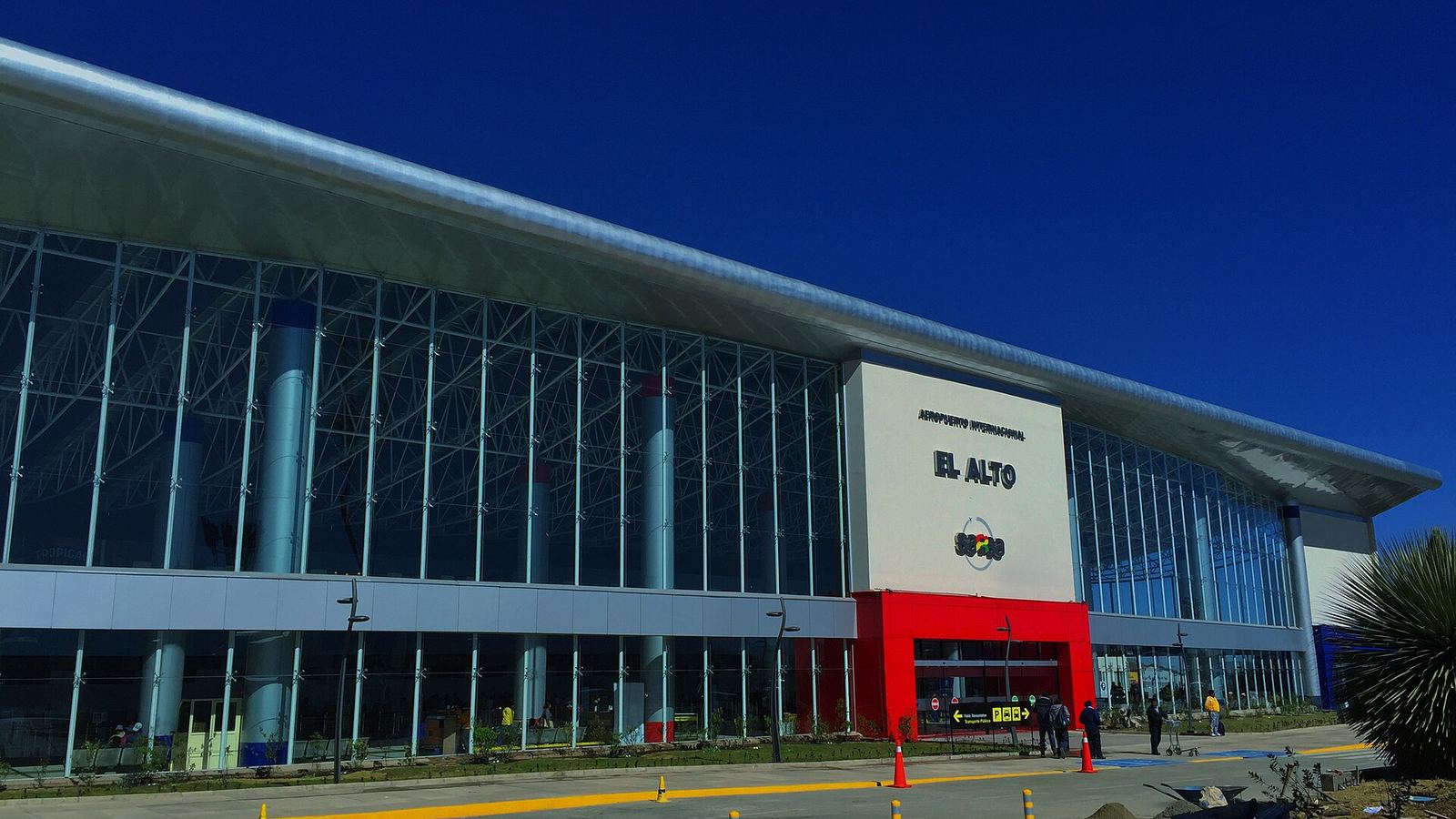
El Alto International is the one arrivals hall on this site where being offline is more than an inconvenience. LPB sits at 4,061.5 metres on the plateau above La Paz, higher than any other international airport in the world, and the transition from a pressurised cabin to that is abrupt. A meaningful proportion of arrivals spend the first twenty minutes moving very slowly, breathing carefully and thinking less clearly than usual. That is not the moment to be queuing at a phone counter with your passport out, working out which pack to buy in a currency you have not yet acquired. There are counters, they sell Entel, Tigo and Viva, and they will register your handset properly. But almost everything about this specific airport argues for having the connection question already answered when the doors open.
What This Guide Covers
Jump to the section most relevant to you
SIM and eSIM Options in the Arrivals Hall
El Alto works from a single passenger terminal, which keeps things simple: whatever is on offer is on offer in one place, and there is no risk of landing in the wrong building.
What is actually there
Phone counters in the arrivals area sell prepaid SIMs for all three Bolivian networks, Entel, Tigo and Viva. They handle the passport and handset registration on the spot, which is the part that matters, because a Bolivian prepaid line has to be tied to an identified holder and a foreign phone needs its IMEI recorded. There are ATMs in arrivals that reliably pay out bolivianos, and exchange booths that will take your dollars at rates noticeably worse than the casas de cambio on Calle Camacho down in the city.
Buying a local SIM at the counter
This is a legitimate option and it produces a line that works properly, unlike the market stalls up in the Ceja. The trade-offs are the ones you would expect at any airport: the packs pushed at a tourist-facing desk are rarely the sharpest on the operator's tariff, and counter hours do not stretch to cover every arrival, so a late-night landing may find nothing open. You will also need bolivianos in hand or a working ATM before you can pay, which is one more thing to solve while your head is adjusting.
Buying an eSIM
Nobody sells eSIM profiles from a physical desk at LPB, and there would be little point if they did. An eSIM is bought and installed over the internet, so the useful version of this is to have done it before departure and simply switch the line on after landing. The three brands that sell Bolivia are Airalo, running through Viva, and Nomad and Holafly, both of which connect via Tigo. All three work at the airport, since El Alto is one of the best covered places in the country.
The third option: do nothing yet
Worth stating plainly, because it suits some travellers. If your accommodation has arranged a transfer and the driver will be holding a sign, you do not strictly need data for the first hour. In that case the sensible plan is to get down into La Paz, sleep, and buy an Entel card at a Multicentro on El Prado the next morning at proper city prices. It costs you a connected arrival and saves you a few dollars.
Airport WiFi at LPB and What to Expect From It
There is free wireless at El Alto and it is not something to build a plan around. Travellers report it inconsistently: sometimes it connects immediately, sometimes the portal will not load, sometimes it authenticates and then delivers nothing usable. Unlike the major Asian and European hubs, there is no well-publicised, consistently named network here that you can look up in advance and rely on finding.
Try it, but give it two minutes and no more
Open your WiFi list in the arrivals area and connect to whatever open airport network appears. If a portal page loads and lets you through, use it. If it stalls, stop trying; the failure mode is a slow one and it will eat your patience at exactly the wrong altitude.
Use it for one job only
If it does work, the single most valuable thing to do with it is confirm that your eSIM line has attached to a Bolivian network and that you can load a map. Everything else can wait until you are in a hotel.
Have a fallback that does not need it
Screenshot your accommodation address in Spanish, including the district, before you fly. A driver at LPB will get you to a written street address in Sopocachi or Calacoto far more reliably than to a place name you are trying to pronounce while short of breath.
Do not plan to activate an eSIM here
Some providers need a working internet connection at the moment you install the profile, and LPB is a poor place to discover that. Install at home. Landing with a profile already sitting in your settings, ready to be switched on, turns arrivals into a ten-second operation rather than a troubleshooting session in an unfamiliar terminal at 4,000 metres.
The Altitude Factor, and Why It Changes the Calculation
Every airport guide on this site makes a case for sorting connectivity before you land. At El Alto the case is different in kind rather than in degree, because the variable is you.
The airport sits roughly 400 metres above central La Paz and around 800 above the Zona Sur, and it is the point of maximum altitude on most people's Bolivian itinerary. Coming from sea level, the standard experience is a headache within the hour, breathlessness on any staircase, and a distinct fuzziness that makes small decisions harder than they should be. Symptoms typically ease over 24 to 48 hours. The received local wisdom is to move deliberately, drink water, skip alcohol on the first day, and accept a cup of coca tea if it is offered. Some travellers take acetazolamide starting the day before, which is a conversation for a doctor rather than a website.
Arriving with data already working
Sorting it out after you land
The compromise most people land on is a small eSIM covering the arrival and the first day or two, then a properly registered local card once the trip is underway and your body has stopped complaining. That is a genuinely better plan here than at almost any other airport, and it exists purely because of the elevation.
Getting Down Into La Paz, and Staying Online On the Way
The airport is 13 km from central La Paz, but the distance matters far less than the drop. The road leaves the plateau, comes over the lip of the canyon and descends around 400 metres into the city, which is one of the more dramatic pieces of urban approach anywhere. Coverage holds the entire way on all three networks.
| Option | Where it takes you | Time | Cost |
|---|---|---|---|
| Radio taxi | Door to door, anywhere in the city | 30 to 40 min, nearer 25 late at night | Bs 80 to 120 |
| Pre-booked hotel transfer | Door to door, driver waiting | Same as a taxi | Slightly above taxi rates |
| Minibus plus Mi Teleferico | Into El Alto, then down by cable car | An hour or more with transfers | A few bolivianos, then Bs 3 plus Bs 2 per line |
Take the taxi on arrival. Fares are negotiated rather than metered, so agree the number before the bags go in the boot, and expect a scrum of drivers immediately past the doors that mixes official operators with freelancers. Bs 80 to 120 is the going band, roughly seven to ten dollars at the September 2026 exchange rate, and there is no reason to pay much beyond it.
The cable car is not an airport link
Mi Teleferico is superb and it does connect El Alto to central La Paz on the Red and Yellow lines, but no station sits at the terminal. You would need a minibus or a taxi to reach the Ceja or 16 de Julio first, then ride down with your luggage. It is a fine way to travel once you are acclimatised and travelling light. It is a poor way to arrive from an overnight flight, and worth saving for a day when you are doing it for the view.
Having your own data on the descent is worth more than it sounds. It lets you follow the route on a map, confirm the driver is heading for the autopista rather than a scenic detour, and message ahead if the traffic at the Ceja is heavy, which it often is.
Airport Counter Prices Against an eSIM
Bolivia inverts the usual arithmetic. In most countries the airport SIM counter is the expensive option and the eSIM undercuts it. Here the local card is dramatically cheaper even at airport markup, and the eSIM is buying you something other than savings.
| Where | Typical purchase | Price | Approx USD |
|---|---|---|---|
| LPB arrivals counter | Chip plus a tourist data pack | Bs 50 to 150 | $4 to $12 |
| Entel Multicentro in the city | 15,000 MB for 30 days, MEGAS PRO 50 | Bs 50 plus chip | About $5 all in |
| Entel Multicentro in the city | Unlimited for 30 days, ILIM PRO 120 | Bs 120 plus chip | About $11 all in |
| Travel eSIM, metered | 10 GB over 30 days, cheapest brand | USD 39 | $39 |
| Travel eSIM, unlimited | 7 days unlimited | USD 39.50 | $39.50 |
Read that table honestly and the conclusion is not that the eSIM is a rip-off, it is that the two products are not really competing. A month of unlimited local data costs about the same as one week of unlimited eSIM data, and that gap has widened sharply since the boliviano came off its peg in June 2026 and settled near 12.26 to the dollar. What you cannot buy at any price in a Bolivian store is the thing the eSIM does best: being live before you have spoken to anyone.
The sensible split
A small eSIM plan covering three to seven days handles the landing, the taxi and the first couple of days while you acclimatise. An Entel pack bought at a city Multicentro handles everything after that, on the network with the best chance of following you to Uyuni or Copacabana. Total outlay is under fifteen dollars for a three week trip, which is less than a single week of any unlimited plan sold for this country. If you want help sizing the eSIM half of that, the eSIM Finder will do it quickly.
Frequently Asked Questions
Can I buy a working local SIM in the LPB arrivals hall?
Yes. Phone counters in the arrivals area sell Entel, Tigo and Viva, and because they are official points of sale they will carry out the passport and handset registration that Bolivian rules require, which is what keeps the line alive past the first week. Two caveats: the packs offered at an airport desk are usually not the best value on the operator's tariff, and the counters are not staffed around the clock, so a very early or very late arrival may find them shut.
How dependable is the wireless at El Alto Airport?
Not very. Free wireless exists in the terminal but travellers report it as inconsistent, with connections that either fail to authenticate or authenticate and then carry almost nothing. There is no well-known network name to look for in advance the way there is at larger international hubs. Treat it as a bonus rather than a step in your plan, and do anything that genuinely requires a connection, including installing an eSIM profile, before you fly.
What should I expect from the altitude when I land at LPB?
El Alto is 4,061.5 metres above sea level, the highest international airport anywhere, and coming from sea level you will feel it within minutes. The usual pattern is breathlessness on stairs, a headache building over the first hour, and noticeably slower thinking, all of which typically settles across 24 to 48 hours. Move slowly through the terminal, drink water, avoid alcohol on the first day, and keep the number of decisions you have to make in arrivals as low as possible. That last point is the practical reason to sort your data beforehand.
What is a fair taxi fare from the airport into La Paz?
Bs 80 to 120 for a radio taxi into the centre, which at September 2026 rates is roughly seven to ten dollars, covering 13 km and 30 to 40 minutes on the autopista. Fares are agreed rather than metered, so settle the number before you load your luggage. The taxi rank is immediately outside the doors and mixes official operators with freelancers, so it is worth picking a marked vehicle. A hotel transfer costs a little more and removes the negotiation entirely.
Does my eSIM work at the airport itself, before I get to La Paz?
Yes. El Alto and the plateau around the airport are among the better covered places in Bolivia, so an Airalo profile on Viva or a Nomad or Holafly profile on Tigo will attach within a minute or two of you enabling the line. Switch it on while you are still inside the terminal and open a map to confirm before you head for the taxis. Coverage then holds continuously on the descent into the city, so you can navigate the whole way down.