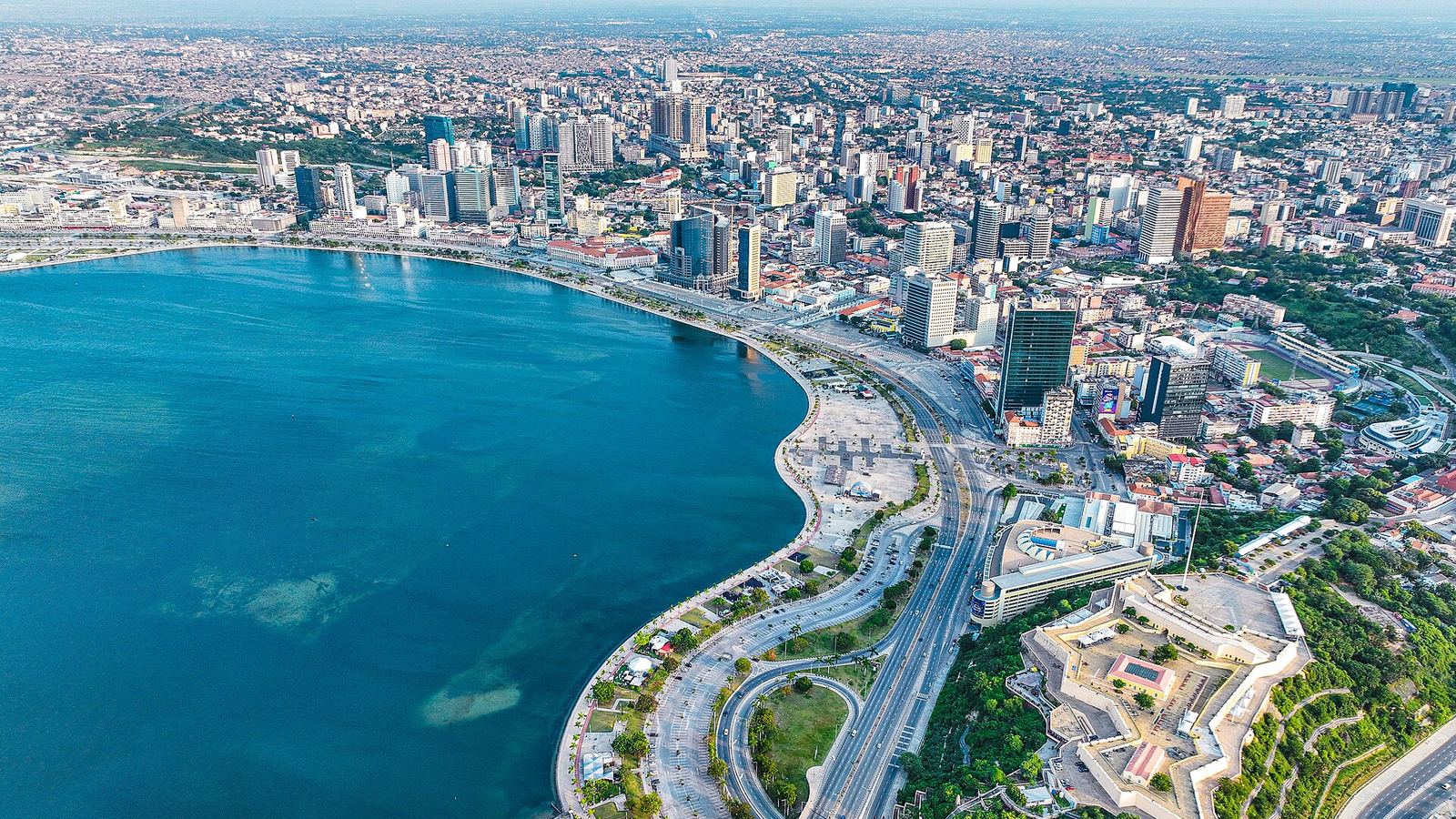
Only Nomad sells a travel eSIM for Angola in October 2026, and its plans run on Africell rather than on Unitel, the operator that holds nearly three in four of the country's mobile lines. Airalo has no Angola product, and Holafly's Angola address returns a 404. Nomad charges US$9 for 1 GB over a week and US$49 for 10 GB over a month. That is a fair bridge for a business trip to Luanda, where Africell is quick, but a poor deal next to the operators' own kwanza prices: Unitel's 15 GB month costs 10,000 kwanzas and Africell's 10 GB local eSIM 6,600, both around US$7 to US$11. The other thing to know before you land is that every international flight now uses the new Dr Antonio Agostinho Neto airport, roughly 40 km east of the city, so the first hour in Angola is a long transfer rather than a short hop from the old 4 de Fevereiro terminal.
Quick Pick: the Best eSIM for Angola
Nomad (Angola 3 GB / 30 days): The only major travel eSIM on sale for Angola, on Africell 4G with hotspot allowed. At US$19 it covers the airport transfer and a week or two of maps and messaging around Luanda, and it is the sensible size whether you later add a local card or not.
Our picks
Best overall: Nomad. Lowest per GB: Nomad. Or use the eSIM Finder.
Angola eSIM Plans Compared
Indicative pricing. Tap through for live rates.
| Provider | Plan | Data | Duration | Price | Network |
|---|---|---|---|---|---|
| Nomad | Angola 1GB | 1 GB | 7 days | $9 | Africell |
| Nomad | Angola 3GB | 3 GB | 30 days | $19 | Africell |
| Nomad | Angola 5GB | 5 GB | 30 days | $29 | Africell |
| Nomad | Angola 10GB | 10 GB | 30 days | $49 | Africell |
Nomad Angola Plans
Nomad: The Only Travel Brand Selling Angola, and It Rides Africell
Four metered plans from US$9, all listed on Africell 4G, with a 60-day window to start them
Nomad's Angola page lists four regular plans: 1 GB over seven days for US$9, 3 GB over thirty days for US$19, 5 GB over thirty days for US$29 and 10 GB over thirty days for US$49. Per gigabyte that slides from nine dollars to just under five, so the bigger packs are clearly better value, and none of them is unlimited. Every plan names a single host network, Africell, which matters more in Angola than the price does. Airalo and Holafly both return a 404 for Angola, so there is no rival travel eSIM to compare against, only the local operators.
Africell is a good network to land on in the places it has built. It arrived in April 2022 as the first new mobile operator to launch since the early 2000s, won a quarter of all subscriptions by the end of 2025, and topped Unitel on Speedtest results over the twelve months reported by the business weekly Expansao in April 2026. The catch is reach. That same report says Africell operates in only 6 of Angola's 21 provinces, concentrating on cities and economic corridors. Nomad's listing does not mention Unitel as a fallback and we could not confirm that it roams onto one, so plan as if the eSIM stops where Africell's towers stop.
The real comparison is with Africell's own retail prices. Africell sells its own local eSIM in stores with 10 GB over thirty days for 6,600 kwanzas, roughly US$7 at about 920 kwanzas to the dollar, against US$49 for the same allowance from Nomad on the same network. What the extra money buys is time and paperwork: Nomad is installed at home before you fly, working when the aircraft reaches the stand at the new airport 40 km out of town, and it needs no passport at a shop counter that keeps office hours.
Strengths
Weaknesses
Mobile Networks in Angola
Angola's mobile market has three licensed operators, but in practice it is a two-horse race with a very uneven split. According to the regulator INACOM's figures as reported by Expansao, the country had about 28.4 million mobile subscriptions at the end of 2025: 73 in every 100 were Unitel, 26 were Africell, and just 1 was Movicel. Unitel is the incumbent with towers in every province and the network most Angolans mean when they talk about signal. Its weakness, in the same reporting, is congestion: subscriber growth has outpaced investment, and Luanda users complain of slow evenings.
Africell is the newcomer, a Lebanese-founded group with American capital that launched in Angola in April 2022 with free on-net calls and cheap data. It grew fast in the cities and in April 2026 Expansao reported it had overtaken Unitel on Speedtest performance over twelve months. It also reported that Africell is present in only 6 of the 21 provinces created by the 2025 administrative reform, by design, focusing on urban centres and economic corridors. Movicel, the original mobile operator from the late 1990s, is now majority owned by the state social security institute INSS and has shrunk to around 300,000 customers; it is not a card to buy.
That split shapes the eSIM decision. Nomad's only listed host is Africell, so in Luanda, Talatona and the other places Africell has built you get one of the quicker connections in the country, and outside them you may get nothing. Unitel is the network for road trips to Kalandula, the Serra da Leba or the Namibe desert, and no travel eSIM sells access to it.
The airport moved, and so did the arrival routine
Luanda's old 4 de Fevereiro airport (LAD) sat inside the city. TAAG moved to the new Dr Antonio Agostinho Neto International Airport (NBJ) on 19 October 2025, the foreign carriers followed through the winter, and Airlink's move on 1 March 2026 completed the transfer, with 4 de Fevereiro closing to commercial traffic the next day. NBJ is in the new Icolo e Bengo province, around 40 km from the Marginal, so arriving with data working matters more than it did. Our Luanda airport guide covers the transfer in detail.
Coverage Across Angola
Coverage where travelers actually go:
| Area | Coverage | Notes |
|---|---|---|
| Central Luanda (Baixa, Ingombota, the Marginal) | Good | Both big networks are present. Africell is the quicker of the two in recent Speedtest data; Unitel slows in the evening peak. |
| Talatona, Belas and the southern suburbs | Good | The business and expatriate district where most oil-company offices and hotels sit. Solid 4G on both networks, with 5G from Unitel in parts of the city. |
| NBJ airport and the Icolo e Bengo road | Fair | Signal at the terminal and along the main roads into the city; we could not confirm Africell's strength on every stretch of the 40 km run. |
| Benguela, Lobito and Lubango | Fair | Unitel covers all three cities. Africell's six provinces focus on urban centres, but it does not publish which, so check before relying on the eSIM here. |
| Kalandula Falls and Malanje | Variable | Unitel signal in Malanje town and patchy near the falls. Treat the eSIM as unlikely to work outside the city. |
| Namibe desert, Iona and the far south | Poor | Long stretches with no service on any network. Download maps and carry a satellite messenger for remote trips. |
How to Choose the Right Plan
There is only one travel eSIM to choose, so the real decision is how much of your trip it should carry. For a business visit of a few days centred on Luanda and Talatona, Nomad alone is enough: the 3 GB month at US$19 covers the 40 km transfer from the new airport, a week of messaging and maps, and some hotspot use when the hotel WiFi stalls. Take the 5 GB or 10 GB plan only if you cannot face a shop visit at all. For anything longer than about two weeks, or any trip that leaves the main cities, add a local line on your first weekday: Unitel if you are travelling to Malanje, Lubango, Namibe or anywhere rural, because it is the only network with a national footprint, or Africell if you are staying in Luanda and want its own eSIM at 6,600 kwanzas for 10 GB. Bring your passport and arrive within shop hours. Business travellers on oil-sector rotations to Soyo or Cabinda should ask their employer what network the site uses before buying anything, and everyone heading south of Benguela should download offline maps, because outside the towns no plan of any kind will help.
Frequently Asked Questions
Which Angolan network does the Nomad eSIM use?
Africell. It is the only network named on every one of Nomad's four Angola plans. Africell is fast where it is built, but Expansao reported in April 2026 that it operates in only 6 of Angola's 21 provinces, so the eSIM is a city tool. Nomad does not list Unitel as a backup and we could not confirm any fallback, so do not plan an inland road trip around it.
Can a foreign visitor buy a Unitel or Africell line?
Yes, in person. Africell's own instructions for its eSIM say to bring a valid identity document, and they name the passport, the Angolan identity card or a driving licence. Unitel sells SIM and eSIM lines through its branded shops, whose published hours are mostly 08:00 to 17:00 on weekdays and 08:30 to 12:30 on Saturdays. Plan the visit around those hours. Our Angola SIM card guide has the prices.
How much cheaper are local bundles than the eSIM?
Several times cheaper. Unitel's Net Mensal gives 7 GB for 5,000 kwanzas or 15 GB for 10,000 kwanzas over 31 days, and Africell's Afrinet month gives 18 GB for 10,000. At about 920 kwanzas to the dollar, 10,000 kwanzas is just under US$11. Nomad's largest plan is 10 GB for US$49.
Do I still land at 4 de Fevereiro airport?
No. Since early March 2026 all commercial flights to Luanda use the new Dr Antonio Agostinho Neto International Airport (NBJ) in Icolo e Bengo, about 40 km from the centre. The old 4 de Fevereiro airport closed to commercial traffic on 2 March 2026 after Airlink, the last carrier, moved across. Older blog posts about a quick taxi from the airport to the Marginal describe the old terminal.
Do I need a visa for Angola as a tourist?
Many nationalities do not. Presidential Decree 189/23 exempted citizens of 98 countries from tourist visas, for up to 30 days per entry and 90 days a year. The exemption is written for tourism, so anyone going for oil-sector work, meetings with contracts attached or a rotation offshore should confirm the right visa with an Angolan consulate rather than rely on it.
Is the US$9 plan enough for a short business trip to Luanda?
For two or three days of email, maps and messaging, yes. For a working week with video calls from a Talatona hotel, the 3 GB month at US$19 is the safer floor, because hotel WiFi in Luanda can be slow at peak times and you will want the phone as a backup hotspot. If you stay longer than a fortnight, pick up a local line as well.