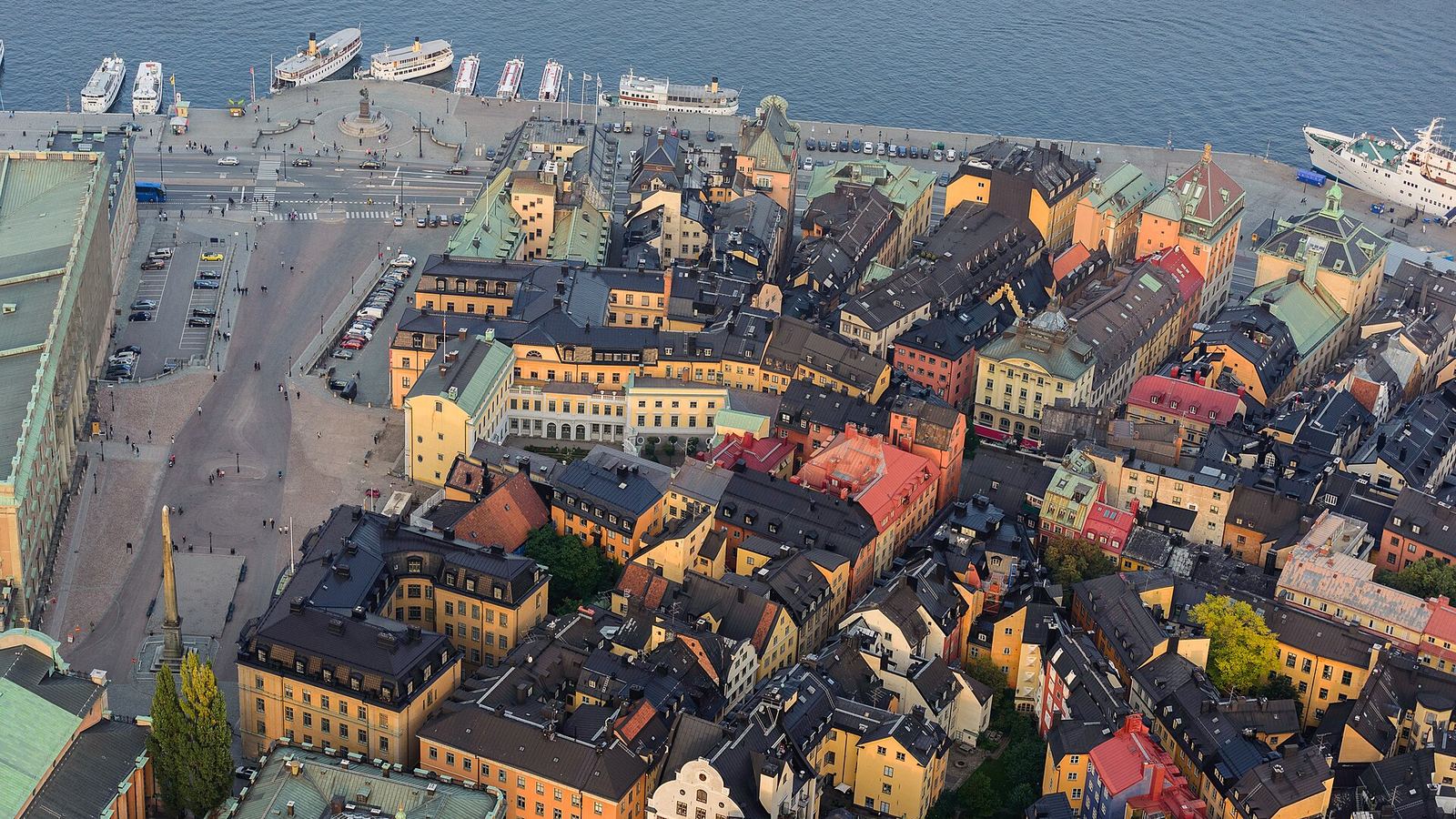
For nearly every visitor, a travel eSIM is the easiest way to stay connected in Stockholm. You set it up before you fly, and your phone is online the second you land at Arlanda, with no kiosk queue and no card to swap. Stockholm is one of the best-connected cities in Europe: four carriers (Telia, Tele2, Telenor, and Tre) run dense 5G across the fourteen islands that make up the city, and the signal holds up even underground on the Tunnelbana, so you can book an SL ferry to the archipelago while your train rattles between Slussen and T-Centralen. Because Sweden sits inside the EU roaming zone, a Europe regional eSIM also covers Stockholm on the same profile you would use anywhere else on the continent, which makes it an easy call for a wider Nordic trip.
What This Guide Covers
Jump to the section most relevant to you
Stockholm Mobile Coverage
Stockholm is among the best-connected capitals in Europe. Four operators run the networks: Telia (the widest-reaching), Tele2 (very strong in the urban core and behind the popular Comviq brand), Telenor (a 5G leader), and Tre, which is branded 3. All four deliver comprehensive 5G across the central islands and the inner suburbs, so whichever network your eSIM rides, you get fast, stable data across the city.
In practice that means real-world speeds that comfortably handle maps, SL transit tickets in the app, ride-hailing, video calls, and streaming, with 5G pushing well past what you will ever need for travel. Notably, signal penetrates the thick stone walls of Gamla Stan's medieval lanes, a spot where you might expect a drop but rarely get one. You will not have to think about which carrier you are on for everyday city use.
Which network does my eSIM use?
Most Sweden and Europe travel eSIMs ride Telia or Tele2. For a Stockholm-only trip, either is excellent and you will not notice a difference. A Telia-backed plan only pulls ahead if you tack on a day trip well out of the city or head much further north later in the trip.
Tunnelbana and Commuter Train Data
Here is the part that reassures first-time visitors: your data keeps working underground on the Tunnelbana. Stockholm's metro has three lines and around 100 stations, roughly half of them below ground, and the carriers have built cellular coverage into the stations and tunnels. You can keep navigating, messaging, and checking departure times while the train runs between stops like T-Centralen, Slussen, and Gamla Stan.
The Tunnelbana doubles as the world's longest art gallery, with painted bedrock caverns at stations such as Kungstradgarden and Solna Centrum, so you will actually want data down there to photograph and share them on the spot. Above ground, the SL pendeltag commuter trains that reach the suburbs and Arlanda hold a strong, near-continuous signal along the tracks, dropping only briefly in the odd cutting or tunnel.
Buy transit tickets in the app
Stockholm's SL network runs on tickets bought in the SL app rather than cash, and the same app shows live departures for the metro, buses, commuter trains, and archipelago-linked ferries. A working data connection makes buying and showing tickets effortless as you move, which is one more reason to arrive already online.
Neighborhood Notes: Gamla Stan, Sodermalm, Ostermalm
Coverage is strong across the whole city, but here is how the main visitor districts feel in practice.
Gamla Stan
The medieval old town on its own island, all narrow cobbled lanes, the Royal Palace, and the cafes of Stortorget square. Despite the tight, thick-walled buildings, 5G reaches into the alleys and courtyards, so navigating the maze to Marten Trotzigs Grand or finding a lunch spot never leaves you guessing.
Sodermalm
The hip island to the south, known for the Monteliusvagen viewpoint, vintage shops, and the Fotografiska museum. Coverage here is excellent across all networks, whether you are lining up a skyline photo along the cliffs or checking opening hours in the SoFo boutiques.
Ostermalm and Norrmalm
The upscale grid of Ostermalm, with its food hall Saluhall and grand avenues, plus the retail heart of Norrmalm around Drottninggatan and the Hotorget market. This is the densest network build-out in the city, so speeds are consistently high even amid the crowds around Sergels Torg.
The short version: there is no coverage dead zone in any district a visitor is likely to explore, from the waterfront of Djurgarden to the island cafes of Kungsholmen. Even the busy summer crowds around Stureplan and the ferry quays hold up fine.
Free Public WiFi in Stockholm
Stockholm has plenty of free WiFi, but it is best treated as a backup rather than your main connection. Many cafes, museums, department stores, and hotels offer it, and the city is dotted with hotspots, but the signal ends the moment you step back onto the street.
Where you will reliably find free WiFi:
- Cafes: Stockholm's fika culture means espresso bars and bakeries almost all offer WiFi, usually with a code on the receipt.
- Museums and galleries: the big draws like the Vasa Museum, Fotografiska, and the ABBA Museum have visitor WiFi.
- Department stores and malls: NK, Ahlens, and the Gallerian arcade offer free connections while you shop.
- Libraries and public buildings: the Stadsbiblioteket and many public spaces provide open access.
Why WiFi alone falls short
The trouble with relying on hotspots is that they leave gaps exactly when you need data most: navigating between islands, catching a ferry, or checking a museum's last entry while standing outside it. Public WiFi is also less secure for logging into anything sensitive. A working eSIM keeps you online continuously across the whole city, which is why most travelers keep WiFi as a fallback only.
Getting Connected on Arrival (Arlanda and Bromma)
The smoothest plan is to buy and set up your eSIM at home a day or two before you fly, then switch it on when you land. Most plans only start counting their validity from activation, so you will not waste a day on travel time.
Add the eSIM at home
While you still have your home internet, scan your provider's QR code to add the eSIM profile. Keep your usual SIM in place so your home number stays reachable for texts.
Land and switch it on
Most visitors arrive at Arlanda (ARN), about 40 km north of the city, while a few land at the smaller Bromma (BMA) closer in. When you touch down, set the eSIM as your data line and turn on data roaming if your provider says to. Within a minute you should see a carrier name and signal.
Confirm before the platform
Open a map or the SL app to check you are online, then head for the Arlanda Express or the commuter train. You will be pricing your ride into the city while other arrivals are still queuing at a SIM kiosk.
For a deeper breakdown of the kiosks, the free airport WiFi, and every transit option into town, see our Stockholm Arlanda airport guide.
Day-Trip Coverage: Uppsala, Drottningholm, Archipelago
Stockholm coverage is uniformly strong, but the classic day trips reach into water and countryside where the experience varies a little.
| Destination | Coverage | Notes |
|---|---|---|
| Uppsala | Excellent | A 40-minute commuter or SJ train north; the university city has full 5G, and the line there keeps a steady signal the whole way. |
| Drottningholm | Very good | The royal palace on Lake Malaren, reached by Stromma boat from Stadshusbron; solid data at the palace, occasional dips mid-lake. |
| Stockholm archipelago | Variable | Strong around Vaxholm and Fjaderholmarna; expect it to fade on the outer islands and mid-channel on the longer Waxholmsbolaget ferries. |
If your day trip stays on the mainland, like Uppsala or the Viking sites at Sigtuna and Birka's landing points, any Stockholm eSIM keeps you connected the whole way. Out in the archipelago, coverage is reliable on the inner islands but thins as you sail toward the open Baltic, so download your ferry times and any offline maps before you leave the quay at Stromkajen. For a longer boat day to the outer skerries, treat mid-channel data as a bonus rather than a given.
Frequently Asked Questions
Does mobile data work in the Stockholm Tunnelbana tunnels?
Yes. The metro has cellular coverage built into its stations and tunnels, so your eSIM keeps working while the train runs underground between stops like T-Centralen, Slussen, and Gamla Stan. That is handy both for navigation and for photographing the painted rock cave stations. The above-ground commuter trains to the suburbs and Arlanda also hold a strong signal along the tracks.
Is Stockholm's free public WiFi good enough to skip mobile data?
It works as a backup but not as your only plan. Cafes, museums, department stores, and libraries across the city offer free WiFi, but the signal ends the moment you step outside, which is exactly when you need maps or ferry times between the islands. Public hotspots are also weaker for secure logins. Most visitors keep an eSIM as their main connection and use WiFi only as a fallback.
How much data do I need for a few days in Stockholm?
For a typical city break of maps, SL tickets in the app, messaging, photos, and some streaming, most travelers do fine on 3 to 7 GB, since hotels, cafes, and museums all carry WiFi. If you plan to stream a lot, tether a laptop, or upload plenty of archipelago and old-town photos, size up to 10 GB or more, or pick an unlimited plan so you never have to ration.
Will my eSIM keep a signal on an archipelago boat trip?
On the inner routes, mostly yes. Coverage is reliable around Vaxholm and Fjaderholmarna and on the shorter ferry hops, but it fades as you sail toward the outer skerries and the open Baltic, and it can drop mid-channel on the longer Waxholmsbolaget runs. Download your ferry schedule and any offline maps before you leave Stromkajen so a coverage gap out on the water never strands you.
Can one eSIM cover Stockholm plus a hop to Oslo or Copenhagen?
Yes. Because Sweden is in the EU roaming zone, a Europe regional eSIM covers Stockholm and continues working across Norway, Denmark, and the rest of Europe on the same profile. That makes a regional plan the natural pick for a Nordic loop. If you are only visiting Stockholm and staying in Sweden, a single-country plan is usually cheaper per gigabyte.