Romania is the rare European country where the local prepaid card is not merely cheaper than a travel eSIM, it is cheaper by a factor most visitors refuse to believe. A 5 euro Orange PrePay top-up, roughly 26 lei at mid-2026 rates, currently loads 250 GB of national data for 28 days, and Digi will hand you 100 GB a month for 2.5 euros before tax. No travel eSIM brand on earth competes with that on volume. The catch sits in EU fair-use law: your roaming allowance is pegged to what you paid for the plan, so a rock-bottom Romanian bundle gives you a mountain of data inside the country and close to nothing the instant you cross into Bulgaria or Hungary. That one rule decides everything below. If Romania is the entire trip and you are staying a fortnight or more, the shop visit is worth your time. If Romania is one leg of a wider route, or you would rather land already working, take Airalo on Orange for the deepest reach into the Carpathians, Nomad on Vodafone and Digi for the lowest metered price, or Holafly if you want an uncapped line for a week of driving between Brasov, Sibiu and Sighisoara.
Quick Pick: the Best eSIM for Romania
Airalo (Romania 5 GB / 30 days): Rides Orange, which holds Romania's strongest low-band spectrum and the best measured coverage score, exactly what you want on the DN1 through the Prahova Valley and on the mountain roads beyond Brasov.
Our picks
Best overall: Airalo. Lowest per GB: Nomad. Unlimited: Holafly. Or use the eSIM Finder.
Romania eSIM Plans Compared
Indicative pricing. Tap through for live rates.
| Provider | Plan | Data | Duration | Price | Network |
|---|---|---|---|---|---|
| Airalo | Romania 1GB | 1 GB | 7 days | $5 | Orange Romania |
| Airalo | Romania 3GB | 3 GB | 30 days | $11 | Orange Romania |
| Airalo | Romania 5GB | 5 GB | 30 days | $16 | Orange Romania |
| Airalo | Romania 10GB | 10 GB | 30 days | $26 | Orange Romania |
| Airalo | Romania 20GB | 20 GB | 30 days | $37 | Orange Romania |
| Nomad | Romania 1GB | 1 GB | 7 days | $4 | Vodafone / Digi |
| Nomad | Romania 5GB | 5 GB | 30 days | $14 | Vodafone / Digi |
| Nomad | Romania 10GB | 10 GB | 30 days | $22 | Vodafone / Digi |
| Nomad | Romania 20GB | 20 GB | 30 days | $32 | Vodafone / Digi |
| Holafly | Unlimited 5-day | Unlimited | 5 days | $19 | Digi / Vodafone / Orange |
| Holafly | Unlimited 7-day | Unlimited | 7 days | $27 | Digi / Vodafone / Orange |
| Holafly | Unlimited 10-day | Unlimited | 10 days | $34 | Digi / Vodafone / Orange |
| Holafly | Unlimited 15-day | Unlimited | 15 days | $47 | Digi / Vodafone / Orange |
| Holafly | Unlimited 30-day | Unlimited | 30 days | $69 | Digi / Vodafone / Orange |
Airalo Romania Plans
Airalo: The Orange Route, and the Right Call for the Mountains
The mainstream eSIM that puts you on Romania's best-covering network
Airalo takes the top slot in Romania for a reason that has nothing to do with its interface. Its Romania plan connects through Orange, and Orange is the operator with the low-band spectrum and the coverage score that decide whether your phone works on a mountain road. On an itinerary that leaves Bucharest for Brasov, Sibiu, the Apuseni or the Delta, that is the whole ballgame. Airalo also sells a regional Eurolink profile that covers Romania alongside the rest of the bloc, which is the version to buy if Sofia, Belgrade or Budapest are on the same ticket.
Sizing is easy because Romania is a WiFi-rich country. A 5GB plan carries a fortnight of maps, messages, Bolt and moderate photo uploading without drama, and top-ups happen in the app rather than at a counter, which matters when the nearest Orange shop is an hour of switchbacks away. The honest weakness is price per gigabyte: Airalo is not the cheapest eSIM for Romania and it is not remotely close to what a local card costs. You are paying for the network and for landing connected.
Strengths
Weaknesses
Holafly Romania Plans
Holafly: Uncapped Data for a Week Behind the Wheel
Flat-rate unlimited across all three Romanian networks
Holafly's argument in Romania is a driving one. A week that runs Bucharest to Sinaia to Brasov to Sighisoara to Sibiu means navigation running for six hours a day, live traffic checks on the DN1, and hotel searches made from a lay-by, and none of that pairs well with watching a counter. Because Holafly can attach to any of the three Romanian networks rather than a single one, it also tends to reconnect faster after the coverage holes you will meet on the Fagaras approaches, which is a genuine advantage on this particular terrain.
Where it loses is the shape of a typical Romanian trip. Most visitors stay in Bucharest and a couple of Transylvanian towns, use hotel WiFi at night, and finish the fortnight under 8 GB. Paying 73.90 dollars for a month of uncapped data to consume six gigabytes of it is an expensive way to avoid arithmetic. The daily hotspot ceiling of 1 GB also makes it a poor choice if you intended to run a laptop off the phone all day.
Strengths
Weaknesses
Nomad Romania Plans
Nomad eSIM: Cheapest Metered Data for a City-Led Trip
Vodafone and Digi access at the keenest per-gigabyte prices
Nomad is the value pick for a Romania trip that stays on tarmac. Twenty gigabytes for 20 dollars is the standout line on its Romania menu and it undercuts Airalo comfortably at every tier above one gigabyte. Riding both Vodafone and Digi is a sensible combination for a visitor who is mostly in Bucharest, Cluj, Timisoara, Iasi or Constanta, since Vodafone brings the fastest 5G in the country and Digi brings the highest 4G availability and the lowest latency. Tethering is unrestricted, which makes it the better of the two unlimited-adjacent options for anyone working from a laptop.
The caveat is the same one that runs through this page. Neither Vodafone nor Digi matches Orange for low-band reach, so a Nomad plan is a weaker companion on the Transfagarasan, in the Apuseni or on the back roads of Maramures. Buy it for a Romania of cities and trains, not a Romania of mountain passes.
Strengths
Weaknesses
Mobile Networks in Romania
Romania's mobile market went through the biggest reshuffle in its history during the year before this guide was written, and the map of who owns which masts is no longer the one older travel articles describe. On 1 October 2025 the Greek-owned Telekom Romania Mobile business was carved up and sold for 70 million euros. Vodafone Romania paid 30 million for the postpaid and business base, the retail estate and most of the technical infrastructure. Digi paid 40 million for the prepaid customers, the spectrum and the towers. The legal merger of Telekom Romania Mobile into Vodafone completed at the end of June 2026. Four networks became three, and a Telekom-branded SIM handed to you in 2026 is really a Vodafone or Digi line wearing an old logo.
Orange Romania is the operator to pick when geography is the thing you are worried about. It holds the strongest low-band position in the country, which is the spectrum that carries furthest over ridges and down into valleys, and it took the coverage measure in the most recent national assessment with 7.3 points out of 10 alongside roughly 57 percent 5G availability. On a Carpathian itinerary that is the practical gap between one bar and none. Vodafone Romania now runs the fastest 5G in the country by a wide margin, with median downloads near 180 Mbit/s in early 2026, close to double its own figure twelve months earlier, a jump it owes almost entirely to the Telekom spectrum it swallowed. Digi, the mobile arm of RCS and RDS, is the network Romanians themselves overwhelmingly carry, and its edge is consistency rather than headline speed: it leads the country on 4G availability at nearly 98 percent and records the lowest latency and quickest page loads of the three. It is also, by a distance that borders on absurd, the cheapest place in Europe to buy a gigabyte.
Romania's genuine weakness is 5G reach, not 4G. National 5G availability sat around 39 percent in early 2026, among the lowest figures in Central and Eastern Europe, and the cause is spectrum policy rather than operator neglect. The 2022 auction released only 30 MHz of the valuable 700 MHz band nationally, roughly half what comparable markets assigned, which starves the layer that would otherwise push 5G into the countryside. The upshot for a visitor is excellent 4G almost everywhere, thinner 5G once you leave the big cities, and everyday speeds that still outrun what most travelers get at home.
Why a bargain Romanian bundle stops working at the border
European roaming rules do not give every subscriber an identical allowance. Operators may cap roaming data using a formula tied to the pre-tax price of the plan, which is precisely why a Romanian bundle costing a few euros can carry hundreds of gigabytes at home and a token amount abroad. Orange's cheapest PrePay top-ups include no European roaming data whatsoever, and it takes the 9 euro tier before a usable 17 GB roaming pot appears. Digi sells the allowance as a separate line item, around 2.5 euros for 4.55 GB across fourteen days, bolted on top of whichever national option you already bought. The result is that a local card is spectacular value inside Romania and close to useless if your fortnight also takes in Sofia, Budapest or Chisinau. Travel eSIMs have the mirror-image shape: far less raw data, but the same allowance in every country on the list.
Coverage Across Romania
Coverage where travelers actually go:
| Area | Coverage | Notes |
|---|---|---|
| Bucharest | Excellent | Dense 4G and common 5G across all six sectors, and the metro carries signal inside the running tunnels rather than only on the platforms. |
| Prahova Valley & Brasov | Very good | Steady along the DN1 through Sinaia, Busteni and Predeal and across Brasov's old town; short drops where the valley narrows above Comarnic. |
| Transfagarasan & the Fagaras ridge | Patchy to none | Workable near the Vidraru dam and Balea Cascada, unreliable on the switchbacks, and frequently absent at Balea Lac at 2,034 m. Plan the crossing as an offline day. |
| Sibiu, Sighisoara & Cluj-Napoca | Excellent | All three networks are strong through the Saxon towns and Cluj, with 5G widespread in Cluj-Napoca and central Sibiu. |
| Danube Delta | Variable | Orange holds up around Tulcea, Crisan and Sulina; the reed channels and the smaller lakes between villages fall silent on every operator. |
| Maramures & the rural north | Good | Dependable in Sighetu Marmatiei, Baia Mare and along the main roads to the wooden churches; thinner in the side valleys, where Orange's low-band reach shows. |
How to Choose the Right Plan
Answer two questions and the choice falls out. First, does your trip leave the main roads? If the Transfagarasan, the Apuseni, Maramures or the Delta are on the list, take Airalo on Orange, because low-band coverage is the only thing you are really buying and Orange has the most of it. If you are staying between Bucharest, Cluj, Brasov and the coast, Nomad gives you two networks and the lowest price per gigabyte, and Holafly makes sense only if navigation will be running all day for a week. Second, do you cross a border? If yes, buy a regional Europe plan rather than a Romania one, because the local card's headline value evaporates the moment you leave. And if the answer to both is no, Romania is one of the few EU countries where walking into an Orange or Digi shop with your passport genuinely beats every eSIM on this page, which our Romania SIM card guide works through in lei.
Frequently Asked Questions
Is a Romanian prepaid card genuinely cheaper than a travel eSIM?
Not just cheaper, but on a different scale entirely. Orange's 5 euro PrePay top-up loads 250 GB of national data for 28 days, its 6 euro tier goes uncapped, and Digi's entry prepaid option is 100 GB a month for 2.5 euros before VAT. Converted at mid-2026 rates that is roughly 26 to 31 lei. A comparable travel eSIM runs 12 to 20 US dollars for 5 or 10 GB. What you buy with the extra money is a plan that works in every country on your route, no shop visit, and data the moment your plane lands.
Which network should I be on for a Carpathian driving trip?
Orange. It carries the strongest low-band spectrum in Romania and won the national coverage measure with 7.3 out of 10, and low-band is exactly what reaches over a ridge or into a valley floor. That matters on the roads above Brasov, on the approach to the Transfagarasan and in the Apuseni. Airalo's Romania plan runs on Orange, which is why it is the pick here. Vodafone is faster where it reaches and Digi is more consistent in towns, but neither is the one you want on a mountain pass.
Will my cheap Romanian bundle keep working in Bulgaria or Hungary?
Probably not, and this trips up more visitors than anything else about Romanian mobile. EU rules let operators scale the roaming allowance to the pre-tax price of the plan, so the bargain options that make Romania famous carry little or no European data. Orange's low tiers include none at all and the 9 euro option unlocks 17 GB; Digi sells roaming as a separate add-on from about 2.5 euros for 4.55 GB over fourteen days. If your route crosses a border, buy a regional Europe eSIM instead and stop thinking about it.
Does the old Telekom Romania network still exist?
Not as a network of its own. Telekom Romania Mobile was split in October 2025, with Vodafone taking the postpaid base and most of the physical infrastructure and Digi taking the prepaid customers, spectrum and towers, and the legal merger into Vodafone completed at the end of June 2026. Any Telekom-branded product still circulating is served by one of those two. Ignore guides that still list Romania as a four-network market, and ignore eSIM listings that claim to ride Telekom.
How much data does a fortnight in Romania actually burn?
Around 5 to 10 GB for a normal two weeks split between Bucharest, Brasov and a couple of Saxon towns, covering maps, Bolt rides, translation and photo uploads. Romanian cafes, guesthouses and even long-distance trains lean heavily on free WiFi, which takes the edge off. Push toward unlimited if you are driving the country with navigation running all day, tethering a laptop from a Cluj apartment, or uploading video from the Delta. Rationing data is rarely the constraint here; coverage in the mountains is.
Should I expect signal on the Transfagarasan or at Bran Castle?
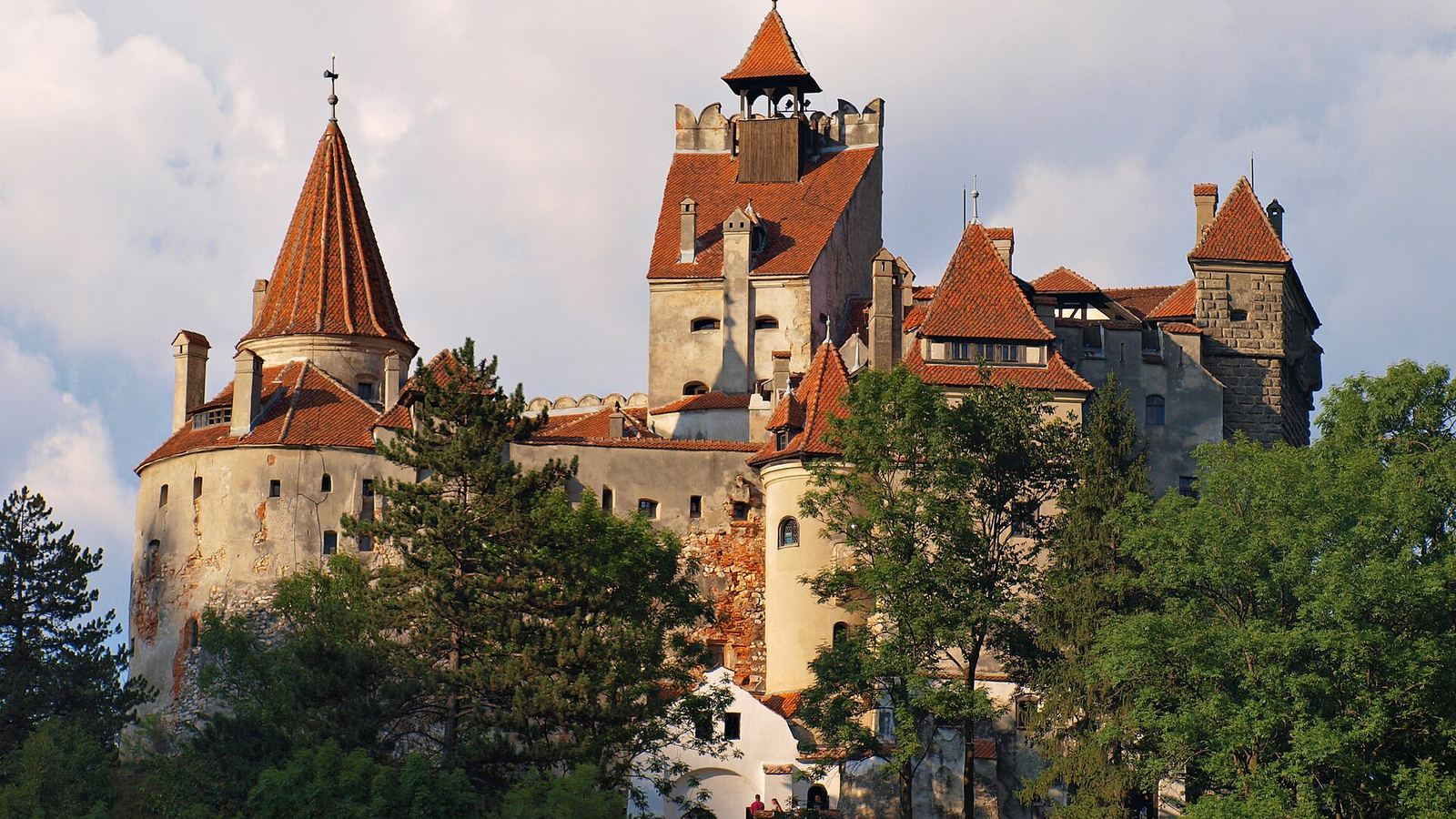
Bran is fine. It sits in a populated valley thirty kilometres from Brasov and all three networks reach it, so you can book tickets and call a taxi without trouble. The Transfagarasan is the opposite. You will find usable data near the Vidraru dam and around Balea Cascada, then lose it repeatedly on the hairpins, and Balea Lac at 2,034 m is often dead on every operator. Download the route offline in Brasov or Sibiu before you set off, and tell someone your plan for the day.