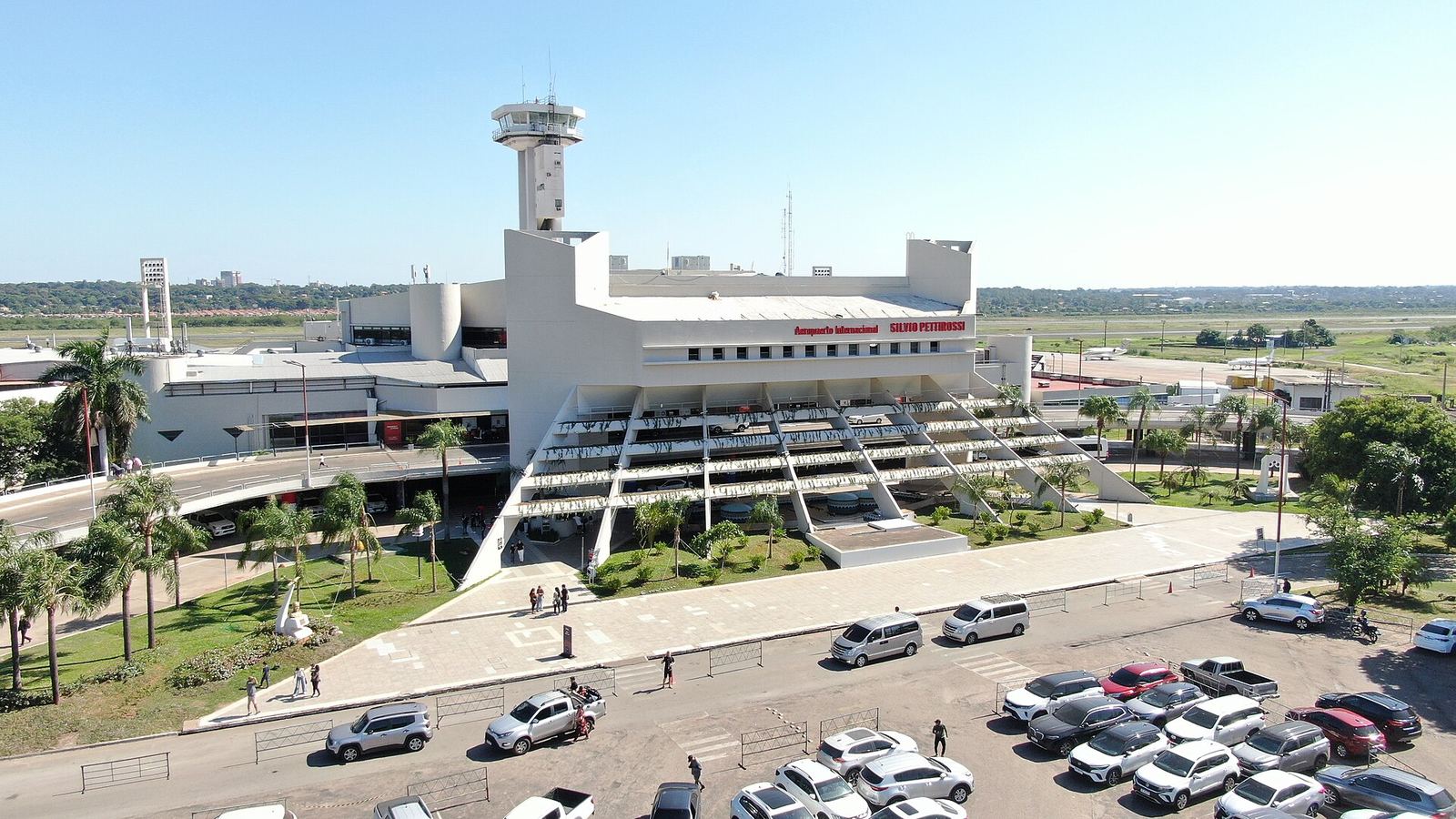
The specific problem at Silvio Pettirossi is timing, not availability. There are SIM kiosks in the arrivals area past customs and there are convenience outlets in the terminal that sell cards, so it is perfectly possible to walk out of ASU with a Paraguayan line in your phone. It is also perfectly possible to walk out at 23:15 on a Tuesday to find every one of them shut, because they run on retail hours rather than the flight board and Asuncion takes a substantial share of its international arrivals in the evening. Add the Paraguayan registration rule, which needs a staffed counter, a passport, a Conatel form and a fingerprint, and the airport becomes the least convenient place in the country to buy a SIM even when it is open. An eSIM activated before departure sidesteps the whole question for about the price of two airport coffees, and if you want a local card you can buy a better one in Villa Morra the next morning.
What This Guide Covers
Jump to the section most relevant to you
What Is Actually Available in the Arrivals Hall
ASU is a single-terminal airport in Luque handling a modest international schedule, so there is no per-terminal decision to make and nothing resembling the wall of competing counters you get at a major Latin American hub. What exists is a small number of kiosks in the arrivals area immediately past customs and baggage reclaim, with travellers reporting a Personal presence and a Vox outlet among them, plus general convenience shops on both sides of customs that stock starter cards for the three national operators.
Prices at the airport reflect what airport prices always reflect. Reported starter bundles hover around 5 dollars for a small allowance on Claro or Tigo, and a Personal traveller pack around 15 dollars for 2 GB across thirty days. Compare that to buying the same thing in the city, where a starter SIM is roughly 10,000 guaranies and Personal will sell you 3 GB over three days for about 11,000, and the airport premium is obvious. You are paying for convenience, which is a fair trade only if the kiosk happens to be open.
| Option | Typical cost | Available when | Registration |
|---|---|---|---|
| Airport kiosk SIM | 5 to 15 USD | Retail hours only | Passport, form, fingerprint |
| City operator store | Under 2 USD for the SIM | Business hours, next day | Passport, form, fingerprint |
| Travel eSIM, metered | 6 USD for 1 GB, 19 for 5 GB | Any time, before you fly | None locally |
| Travel eSIM, unlimited | 19.50 to 39.50 USD | Any time, before you fly | None locally |
| Home carrier roaming | Usually 10 to 15 USD a day | On landing | None |
One practical note if you do buy at the airport. Ask the assistant to confirm the line is registered and active before you walk away, and check you can load a web page while you are still standing at the kiosk. An unregistered card sold across a counter is a piece of plastic, and sorting that out from a hotel later is a wasted morning.
The Airport WiFi and What It Is Good For
Silvio Pettirossi does offer free wireless in the terminal, and there are charging points scattered through the public areas. Coverage is reported as adequate rather than good, and descriptions of it range from free WiFi throughout the terminal to limited free WiFi depending on who is writing and, probably, on which part of the building they were sitting in. It is not a network to plan a working session around.
What it is genuinely useful for is a short, specific list of tasks in the twenty minutes between clearing customs and getting into a vehicle. Use it to activate an eSIM if you forgot to install it at home, to confirm your accommodation, to tell someone you landed, and to load your ride-hailing app once so it has your account state cached. Do not use it to download anything, and do not assume it will still be with you on the kerb.
Fine for
Not fine for
Worth saying plainly: an eSIM profile can be bought anywhere but has to be installed over an internet connection. If you plan to rely on airport WiFi to do that installation, you are betting your arrival on a network you have never used, in a building you have never been in, after a long flight. Do it at home the night before instead.
ASU into Asuncion: Fares, Times and Signal En Route
The airport is in Luque, about three kilometres from Luque's own centre and roughly fifteen from central Asuncion. Journey time into the city runs twenty five to forty minutes depending on traffic on Avenida Aviadores del Chaco, which is the main artery and gets genuinely busy at rush hour. Signal is continuous the whole way on every operator, so whatever you have working when you leave the terminal will keep working.
The airport taxis operate on a fixed fare rather than a meter, around 103,000 guaranies to the city centre, which at the September 2026 rate of roughly 5,950 to the dollar is about 17 dollars. There is a surcharge of around 32,000 guaranies after 22:00 and on Sundays, taking the total to about 135,000 or 23 dollars. Drivers frequently want cash in guaranies, so hit an ATM or an exchange counter in the arrivals hall before you commit.
Linea 30-A, the yellow airport bus, is the cheap option and runs to the Terminal de Omnibus. The fare is a couple of thousand guaranies, well under half a dollar, and it operates roughly 05:00 to 20:00 at intervals of twenty to thirty minutes. It is slower than a taxi and it drops you at the bus terminal rather than at your hotel, which makes it a good choice with light luggage in daylight and a poor one at 22:00 with two suitcases.
Ride-hailing through Uber, Bolt, MUV or inDriver typically undercuts the flat taxi fare, sometimes substantially. This is the option that most obviously requires you to already have data, because you have to hail, track and pay through an app before you have met anyone. It is also the argument for having an eSIM live on landing rather than intending to buy a SIM: the saving on one airport transfer can cover a good chunk of what the eSIM cost.
Rough cost of getting to the centre
Bus 30-A about 2,400 guaranies, call it 40 US cents. Ride-hailing typically somewhere between 50,000 and 90,000 guaranies depending on time and destination, so roughly 8 to 15 dollars. Fixed-fare airport taxi about 103,000 guaranies, roughly 17 dollars, rising to about 135,000 late at night and on Sundays. Everything here is quoted for the city centre, and Villa Morra or Carmelitas will be a little more.
Sorting Your Connection Before Wheels Down
The case for arriving already connected is stronger at ASU than at most airports, and it has nothing to do with queues. It is that the kiosks here close, that Paraguayan law makes a physical SIM a counter transaction rather than a rack purchase, and that a large share of Asuncion's international flights arrive in the evening. Those three facts combine into a specific and avoidable bad night.
Buy the right size, not the biggest
A few nights in the capital needs almost nothing. Nomad's 1 GB week at 6 dollars is genuinely enough for maps, messaging and rides, and its 5 GB month at 19 covers a normal week comfortably.
Install the profile on your home WiFi
Add it the night before you fly. Installation needs a connection; activation does not, and the profile will sit inactive in your settings until you switch it on.
Switch it on as the aircraft doors open
Enable the Paraguay line, set it as your data line, and turn data roaming on for that profile specifically. It should attach to Tigo or Claro within a minute or two of the cabin doors opening.
Turn your home line to calls only
Leave your usual number active for SMS codes if you need them, but with its data switched off. That is what stops a roaming bill appearing behind your back while you sleep.
Decide about the local SIM later, in daylight
If you are here for more than a week, buy a Tigo or Personal card at a mall the next morning with your passport. You will pay a fraction of the airport price and get a better pack for it.
Kiosk Price Against eSIM Price, With the Numbers
This is the comparison that decides it for most people, and Paraguay makes it more interesting than usual because the local product is so cheap that the airport markup still leaves it competitive. Here is a four night stay in Asuncion, priced honestly, at about 5,950 guaranies to the dollar.
| What you buy | Price | Data | Catch |
|---|---|---|---|
| Tigo or Claro starter at ASU | about 5 USD | 500 MB to 1 GB, 7 days | Kiosk must be open; small allowance |
| Personal traveller pack at ASU | about 15 USD | 2 GB, 30 days | Poor value against city pricing |
| Tigo pack bought in the city | about 3.50 USD | SIM plus 2 GB over 4 days | Costs you a morning and a passport |
| Nomad 1 GB | 6 USD | 1 GB, 7 days | Runs out if you stream |
| Nomad 5 GB | 19 USD | 5 GB, 30 days | More than four nights needs |
| Airalo 3 day unlimited | 19.50 USD | 3 GB a day, then 1 Mbps | Expires before a four night trip ends |
| Holafly 5 day unlimited | 30.90 USD | Unlimited, limited tethering | The most expensive way to do this |
Read that table honestly and the airport kiosk is not a rip-off in the way airport SIM counters usually are. Five dollars for a working line is a reasonable price. The problem is availability and paperwork rather than money, and the eSIM is not buying you a lower price so much as buying you certainty about the hour you land.
For a short city break the sensible answer is Nomad's 1 GB week at 6 dollars, installed before you fly. For a longer trip, buy an eSIM to cover the arrival and then get a proper local pack in Villa Morra the next day, which for a fortnight will run around 90,000 to 110,000 guaranies all in. Only take one of the unlimited passes if you genuinely refuse to think about data allowances at all, because in Paraguay that preference costs several times what it does anywhere else on the continent. The full provider breakdown lives on the Paraguay eSIM guide, with local pack detail on the Paraguay SIM card page.
Frequently Asked Questions
Can I count on a SIM kiosk being open when my flight lands at ASU?
No, and this is the main thing to know about the airport. The kiosks past customs run on ordinary retail hours rather than tracking the flight schedule, and Asuncion takes a meaningful share of its international arrivals in the evening and late at night. Convenience outlets in the terminal sometimes have stock, but a Paraguayan line has to be registered against your passport at a staffed counter to work at all, so an unstaffed shop cannot help you. If your arrival is after dark, assume you will be walking out without a local SIM and make sure something else is already working on your phone.
How much is a taxi from Silvio Pettirossi into Asuncion?
The airport taxis charge a flat fare rather than running a meter, around 103,000 guaranies to the city centre, which is roughly 17 dollars at the September 2026 rate. After 22:00 and on Sundays there is a surcharge of about 32,000 guaranies, taking it to around 135,000 or 23 dollars. Drivers often want cash in guaranies, so use an ATM or one of the exchange counters in arrivals first. Ride-hailing through Uber, Bolt, MUV or inDriver usually comes in below the flat fare, but only if your phone is already online when you walk out.
Is the 30-A airport bus worth taking?
It depends entirely on your luggage and the time. The Linea 30-A runs between the airport and the Terminal de Omnibus for a couple of thousand guaranies, well under half a dollar, operating roughly 05:00 to 20:00 every twenty to thirty minutes. That is an excellent deal if you are travelling light in daylight and heading somewhere near the bus terminal. It is a poor one if you land at night, which it does not cover at all, or if your hotel is in Villa Morra, since you will need a second leg from the terminal anyway.
Do I need mobile data before I can leave the airport building?
Not strictly, because the fixed-fare taxi rank works without a phone, but you will pay for the privilege. Every alternative to that flat fare depends on an app: hailing a car, comparing what it costs, tracking it and paying for it. The gap between a ride-hailing fare and the flat taxi fare on one airport transfer is often five to nine dollars, which is close to the entire cost of a small travel eSIM. That single arithmetic is the strongest practical argument for landing already connected rather than intending to sort it out afterwards.
Where should I buy a Paraguayan SIM if not at the airport?
The malls in the eastern part of the city are the easiest place by a distance. Shopping del Sol and Mariscal Lopez Shopping both carry all three operators under one roof, which lets you compare packs in ten minutes instead of walking between shops, and both are a short ride from the airport road. Bring your passport, expect a short regulator form and a fingerprint scan, and have the assistant load the pack you want before you leave the counter. You will pay well under half the airport price for a considerably better allowance.