Airalo and Nomad both sell a Nauru eSIM, both of them run on Digicel, and Holafly does not sell the country at all. Among the plans actually labelled Nauru, Airalo is the cheaper of the two at 9.50 dollars for 1 GB against Nomad's 15 dollars, and those are the prices in the table below. There is also a side door worth knowing about before you buy: Airalo's Oceania regional package lists Nauru among its eight countries and sells 3 GB for 10.50 dollars, where the Nauru-labelled version of the same 3 GB costs 28 dollars. That is a regional pack against a single-country pack rather than a like-for-like swap, but since almost every itinerary here transits Brisbane or Nadi, the regional plan usually covers more of the trip for less money.
Quick Pick: the Best eSIM for Nauru
Airalo (Nauru 1 GB / 3 days): At 9.50 dollars this is the cheapest thing anyone sells with Nauru on the label, it runs on Digicel, and three days is a realistic length for a trip whose dates the airline decides. Read the Airalo section before you pay, though. If your route touches Brisbane, Nadi or the island hopper, the Oceania regional pack covers Nauru at roughly a third of the price per gigabyte.
Our picks
Best overall: Airalo. Lowest per GB: Airalo. Or use the eSIM Finder.
Nauru eSIM Plans Compared
Indicative pricing. Tap through for live rates.
| Provider | Plan | Data | Duration | Price | Network |
|---|---|---|---|---|---|
| Airalo | Nauru 1GB | 1 GB | 3 days | $9.50 | Digicel Nauru |
| Airalo | Nauru 3GB | 3 GB | 3 days | $27 | Digicel Nauru |
| Airalo | Nauru 3GB | 3 GB | 7 days | $28 | Digicel Nauru |
| Nomad | Nauru 1GB | 1 GB | 7 days | $15 | Digicel Nauru |
| Nomad | Nauru 3GB | 3 GB | 30 days | $40 | Digicel Nauru |
| Nomad | Nauru 5GB | 5 GB | 30 days | $55 | Digicel Nauru |
Airalo Nauru Plans
Airalo: Two Ways To Buy Nauru, And They Are Not The Same Price
A local Digicel pack with Nauru on the label, or the Oceania regional pack that quietly costs a third as much
Airalo lists Nauru as its own destination and the packages are genuinely thin: 1 GB over three days at 9.50 dollars, 3 GB over three days at 27 dollars, and 3 GB over seven days at 28 dollars. That is the whole catalogue. Nothing in it runs longer than a week, which happens to suit a country where the airline dictates trip length, but at better than nine dollars a gigabyte it is one of the steepest local price points anywhere on this site.
The interesting part is on the same page. Airalo's own Nauru listing points visitors at its Oceania regional package, sold as Oceanlink, and Nauru is one of the eight countries that package covers alongside Australia, Fiji, New Zealand, Papua New Guinea, Samoa, Tonga and Vanuatu. These prices are not in the table above, because that table lists what each provider sells under the name Nauru. Oceanlink opens at 4.50 dollars for 1 GB over three days, runs 10.50 dollars for 3 GB over a week and 15.50 dollars for 5 GB over a month, and there are 3 GB-a-day unlimited tiers from 11.50 dollars upward. Set 10.50 dollars for 3 GB against 28 dollars for the identical allowance on the identical Digicel network and the regional pack wins by a distance.
Be clear about what that comparison is, though. A regional pack covering eight markets and a pack sold for one country are different products, and the regional one is cheap because it is priced for the Australia and New Zealand traffic rather than for Nauru. It is not a loophole and Airalo is not hiding it; the country page recommends it. The reason to buy the local pack anyway is narrow but real. If Nauru is the only stop, if you want the plan whose name matches the country in case you ever have to raise it with support, or if you would rather the receipt say Nauru, the 1 GB pack at 9.50 dollars will get a short work trip done. For anyone routing through Brisbane or Nadi, or riding the island hopper on to Tarawa and Majuro, the regional plan is already covering the rest of the itinerary and Nauru rides along inside it.
Strengths
Weaknesses
Nomad Nauru Plans
Nomad: The Same Digicel Signal, With Longer Validity And A Worse Rate
Three Nauru packages, the only ones on this page that stretch to thirty days
Nomad usually turns up on this site as the cheap option and Nauru is not one of those countries. Its three packages are 1 GB over seven days at 15 dollars, 3 GB over thirty days at 40 dollars, and 5 GB over thirty days at 55 dollars. Work the arithmetic and that is 15, 13.33 and 11 dollars a gigabyte respectively, on the same Digicel radio network that Airalo's regional pack reaches for a third of the money.
What Nomad does have, uniquely here, is a thirty-day window. Airalo's Nauru catalogue tops out at a week and Oceanlink's cheapest tiers expire in three days, so if you are one of the contractors, auditors or medical staff who ends up on the island for a month because that is how the flight pattern worked out, Nomad's 5 GB plan is the only single purchase on this page that covers the whole stay without a top-up. Whether that convenience is worth 55 dollars when 5 GB on Airalo's regional Oceania pack over thirty days costs 15.50 dollars is a question most readers will answer quickly.
One practical note in Nomad's favour: it is the seller whose Nauru page is easiest to find and buy from without hunting through a regional catalogue, and its prices include tax at checkout rather than adding it later. If you are expensing the trip and want a clean receipt with the destination named on it, that is a real if unglamorous advantage.
Strengths
Weaknesses
Mobile Networks in Nauru
For years the honest summary of Nauru was that Digicel was the island and the island was Digicel. Digicel Nauru has been running here since 2009, it is celebrating seventeen years of trading in its 2026 promotions, and since Telstra completed its 1.6 billion dollar purchase of Digicel Pacific in 2022, with backing from the Australian government, the brand has been Australian owned even though the shopfront in Aiwo still says Digicel. It runs 4G/LTE across the whole populated ring, and it is the network every travel eSIM sold for Nauru connects to.
It is no longer the only network, though. On 30 January 2025 Telikom Nauru Corporation, trading as Neotel and set up as a joint venture involving the state-owned Cenpac, switched on a network it markets as 5G Plus, opened by President David Adeang and built with Nokia radios on a Blue Arcus core. Neotel claims it is the first nationwide 5G network in Oceania, which on an island this size is a lower bar than it sounds, and it backhauls over Starlink rather than over anything terrestrial. For a visitor the practical position is unchanged: Neotel sells to residents, no international eSIM seller has plugged into it, and if you land with an eSIM you will be on Digicel. It is still worth knowing that the competitive picture changed, because pricing and speeds on the island have been moving since.
The bigger change came from under the sea. Nauru spent its entire connected history on satellite, through an Intelsat earth station, until the East Micronesia Cable System came ashore in August 2025. That is the first submarine cable ever to land on Nauru. It is a 2,250 km system running from Tarawa in Kiribati to Nauru and on through Kosrae to Pohnpei, where it meets the existing route to Guam, and it was funded by Australia, Japan and the United States. NEC finished and handed over the whole system on 15 May 2026, with Nauru's segment held by the Nauru Fibre Cable Corporation. Digicel's local chief executive called it a game changer, and by any measure it is, but the important caveat for a traveller is that a landing station improves the international leg, not the radio bars on your phone. Expect better latency and fewer of the satellite-era outages, not European speeds.
Buying a local SIM. Digicel's shop sits in the Civic Centre in Aiwo and keeps ordinary weekday hours with a short Saturday morning. A prepaid starter costs next to nothing and arrives with a few dollars of credit on it; monthly bundles have historically run around 5 Australian dollars for 100 MB, 15 for 500 MB and 30 for 2 GB, and the current shopfront promotion is a 30 dollar Super Magmein bundle with doubled data. Prices move, and the shop counter is the only source of truth. Convert those figures, though, and you land somewhere near ten US dollars a gigabyte, which is worse than Airalo's regional plan and no better than its local one. Nauru is one of the few countries on this site where the eSIM genuinely wins on price as well as on convenience, so the local SIM is worth buying only if you need a Nauruan number for work.
Things that catch people out
There is no SIM desk you can rely on at the airport; stock appears when it appears. The Australian dollar is the currency, so budget in it. Nauru blocked Facebook between 2015 and 2018 and that block was lifted years ago, so ignore any guide still repeating it: WhatsApp calling and the rest of the usual apps work normally. And do not expect to buy anything on a Sunday.
Coverage Across Nauru
Coverage where travelers actually go:
| Area | Coverage | Notes |
|---|---|---|
| Yaren and the airport | Good | The seat of government and the terminal sit side by side on the south coast. Reliable 4G, and the busiest patch of the network for the hour either side of a flight. |
| Aiwo and Denigomodu | Good | The west coast strip with the harbour, the Civic Centre, the Digicel office and most of the shops. This is where you go to fix anything phone related. |
| Anibare Bay and the east coast | Good | The beach and harbour side of the ring road, plus the Menen Hotel. Signal holds along the road; it thins under the pinnacles at the back of the beach. |
| Buada Lagoon | Usable | The inland depression with the freshwater lagoon and the palms. Coverage is a little softer than on the coast road but perfectly workable. |
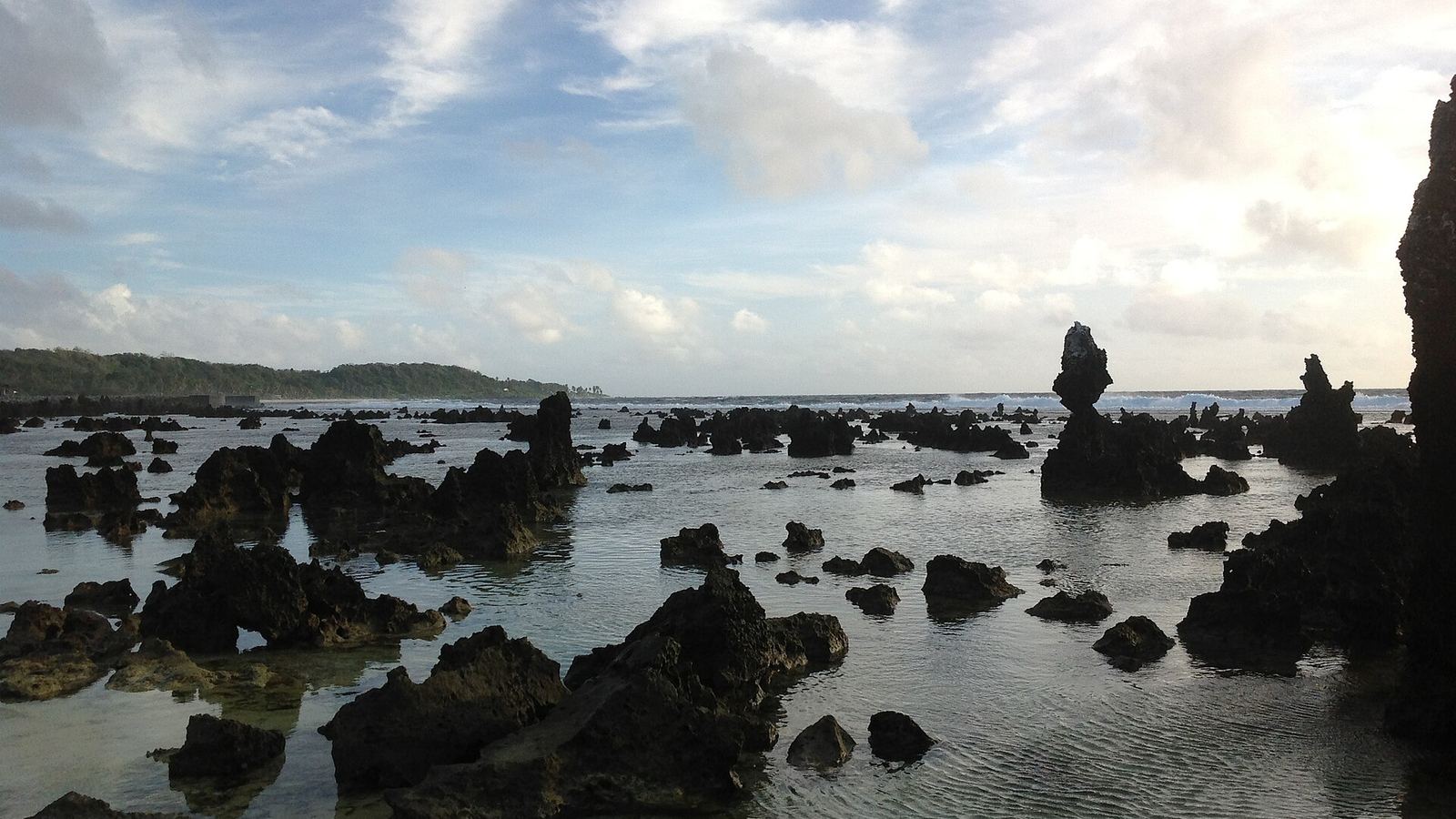
| Topside and Command Ridge | Variable | The mined-out plateau, the highest ground at 65 metres, and the site of the Starlink gateway. Signal is fine near the tracks and drops in the coral pinnacle fields. |
| Offshore and the boat channel | Fading fast | There is no lagoon here and the shelf falls away within metres of the reef. Take a boat out and you lose the network quickly, which matters for fishing charters. |
How to Choose the Right Plan
Nauru simplifies the usual decision because the coverage question has no answer to give. The island is 21 square kilometres, the ring road is about 19 kilometres end to end, everyone lives within a few hundred metres of it, and one network carries every visitor. So you are not choosing coverage. You are choosing a price and a validity window.
Work out your dates from the flight schedule, not from your calendar. Nauru Airlines is the only scheduled carrier into the island, with roughly three flights a week from Brisbane, two from Nadi and two from Tarawa, plus the Friday and Monday island hopper that threads Tarawa, Majuro, Pohnpei and Koror. That pattern, rather than your preference, sets the length of the trip, and it is why so many stays land on three, four or seven nights. Buy validity to match the flight you can actually get out on, and add a day of slack: the Australian-funded runway resurfacing at Yaren has already slipped once and is now pending rescheduling into early 2027, with schedule changes possible when it starts.
For a short work visit, start with Airalo. If you want the plan sold as Nauru, the 1 GB pack at 9.50 dollars covers three days of messages, maps and email, and it is the cheapest Nauru-labelled plan on the market. If your ticket routes through Brisbane or Nadi, which almost all of them do, price the Oceania regional package against it first: 10.50 dollars buys 3 GB over seven days there, and it keeps working at both ends of the journey. That is a regional product against a country product, so it is a judgement about your whole itinerary rather than a straight price fight. Only take the unlimited Oceania tiers if you are uploading site photographs or video daily, since the full-speed portion is 3 GB a day and it drops to about 1 Mbps after that.
Take Nomad if you need one purchase to last a month. It is the only seller here with thirty-day Nauru plans, and 5 GB at 55 dollars is the single transaction that covers a long posting. You are paying for that convenience rather than getting a good rate, so know that going in. Holafly does not sell Nauru in any form, and its regional products do not reach it either, so do not go looking.
Add a local SIM only for a local number. If your work involves ministries, the port, the hospital or contractors who will need to ring you back, spend the twenty minutes in the Civic Centre in Aiwo on a weekday and get a Digicel prepaid. For data alone it is not the cheaper option, which is unusual and worth saying plainly.
Do the eSIM install at home. Getting into Nauru requires a visa arranged weeks ahead rather than on arrival, and check-in staff in Brisbane will want to see onward travel and accommodation before they board you. Adding your data plan to that pre-departure list costs nothing and removes the one variable you can still control once you are standing at the terminal.
Frequently Asked Questions
Do the Airalo and Nomad Nauru eSIMs actually work when you land?
Yes. Both sell Nauru as a listed destination and both route onto Digicel Nauru, which is the network with towers on the island. Install the profile before you fly, because the Brisbane and Nadi departure gates are far easier places to fix a problem than a terminal on Nauru with one flight a day at most. The only genuine failure mode we hear about is people buying a three-day Airalo pack, activating it on the outbound leg, and finding it expired halfway through the stay.
Why does the Oceania plan cost so much less than the Nauru one?
Because volume, not distance, sets these prices. The Oceania package is sold to everyone flying to Australia, New Zealand and Fiji, so it is priced against a busy market, and Nauru is bundled into its country list almost as a footnote. A plan sold only for Nauru is sold to a few hundred buyers a year and is priced accordingly. Nothing about the connection differs, since both land on the same Digicel network. Do keep in mind that you are comparing an eight-country pack with a one-country pack, so they are not the same product even though the signal is identical. Our plans table lists what each provider sells under the name Nauru; the Oceania option is covered in the Airalo section.
Has the new undersea cable made the internet noticeably faster?
It has changed the ceiling more than the day to day. The East Micronesia Cable System came ashore in August 2025 and the full system was handed over in May 2026, replacing a satellite-only international link that had served the island since the Intelsat era. What that fixes is latency and reliability on the international hop, which is exactly what made video calls painful before. What it does not do is upgrade Digicel's radio network, so mobile speeds still sit in the low single-digit megabits in most conditions. Judge it on stability rather than raw throughput.
Is a Digicel prepaid SIM cheaper than buying an eSIM?
Not for data, which is the reverse of what we usually find. Digicel's Nauru bundles have run roughly 15 Australian dollars for 500 MB and 30 for 2 GB, and even with the current doubled-data promotion that lands near the price of Airalo's local pack and well above its regional one. The reason to buy local is a Nauruan number: if government offices, the hospital or contractors need to call you back, a plus 674 number is worth the trip to the Digicel shop at the Civic Centre in Aiwo. Weekday hours, and take cash.
Where does the signal genuinely drop out on the island?
Very few places, which is the honest answer for somewhere 21 square kilometres in size. Coverage follows the ring road because the population does. The soft spots are Topside, the mined-out interior plateau where the coral pinnacles block line of sight between the tracks, and the water: the reef shelf drops away almost immediately offshore, so a fishing charter loses the network within a couple of kilometres. Buada Lagoon in the interior is fine. Inside the older concrete buildings, including parts of the government offices at Yaren, expect a bar or two less.
Does Nauru's new 5G network help a visitor at all?
Not yet. Neotel, the Telikom Nauru operation launched in January 2025 with Starlink backhaul, sells to residents and has no eSIM partnership with any international seller, so a travel eSIM cannot register on it. Nor is it a network you can casually walk into a shop and join for three days without paperwork. Treat it as background: it ended Digicel's monopoly and it is putting pressure on prices, but for the length of your trip Digicel is the network you are on.