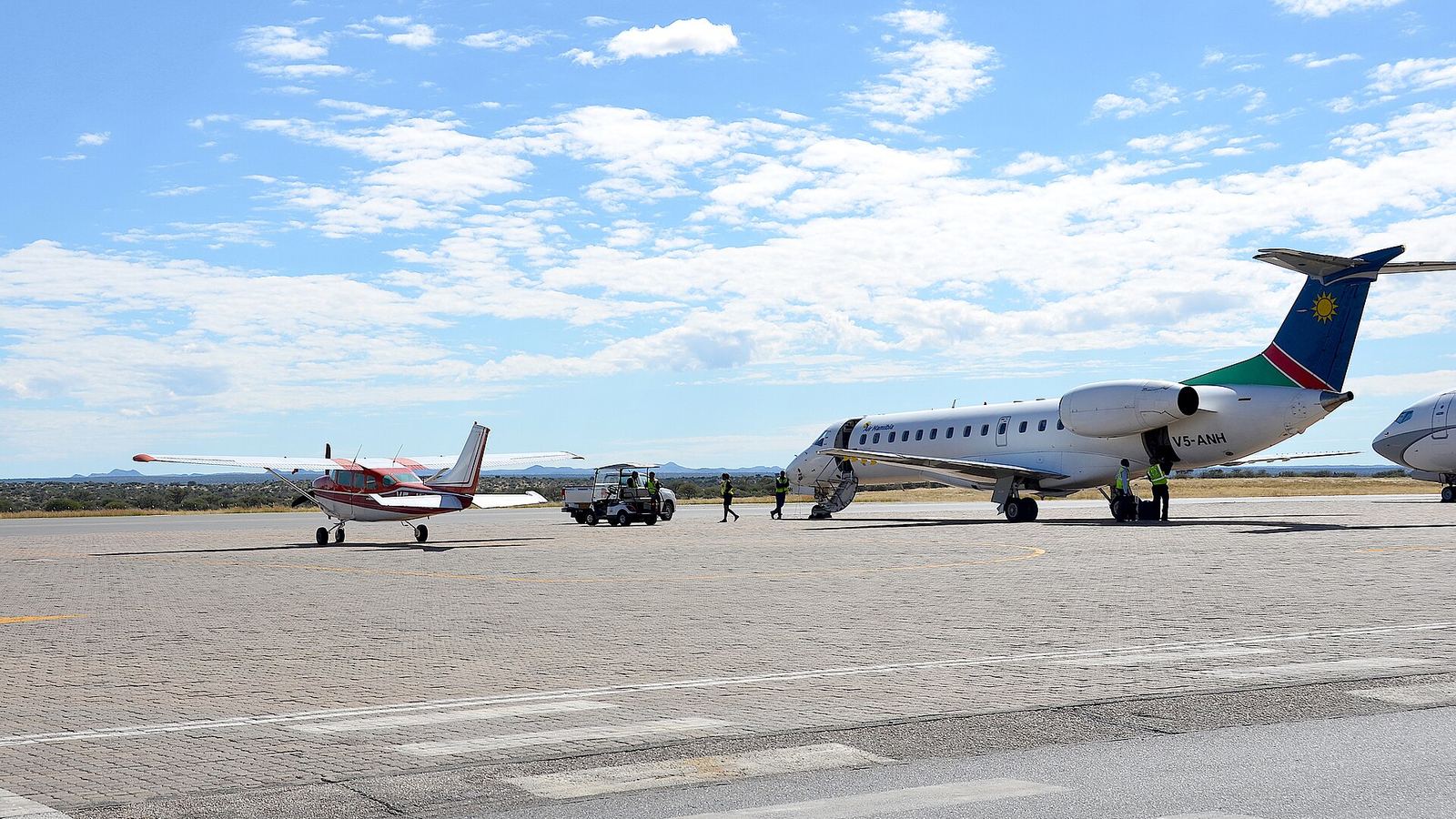
Hosea Kutako International is a calm, modern, strikingly small airport for a country this size, and it has one characteristic that shapes every connectivity decision made inside it: the carrier counters close in the early evening. There is no round-the-clock SIM shop, no all-night kiosk, and no second chance forty-five kilometres down the B6 once you have driven away. Add the fact that most arrivals here walk straight from baggage reclaim to a car rental desk and are behind the wheel of an unfamiliar 4x4 within the hour, and the case for landing already connected is stronger at WDH than at almost any airport on this site. This is not about saving a queue. It is about not starting a long drive across empty country with a dead handset.
What This Guide Covers
Jump to the section most relevant to you
The Carrier Counters, and the Hours Nobody Warns You About
Both national operators keep a presence in the arrivals area of Terminal 2. MTC has generally run from about 07:00 to 19:00 and TN Mobile, Telecom Namibia's mobile brand, from roughly 06:30 to 18:00. Those are the published shapes; in practice the MTC kiosk has been known to shut before the last evening arrivals are through immigration. Plan on nothing being staffed after about nine in the evening and treat anything later as a bonus.
Bring your passport if you intend to buy. Every prepaid line in Namibia is registered against an identity document under the Communications Act regulations that took effect at the start of 2023, so the assistant records your name, an address, which a lodge booking satisfies, and your passport number before the line activates. Fingerprinting was dropped from the process in 2023 and is voluntary at most. Budget ten to fifteen minutes if there is a queue behind a wide-body arrival.
What the counters charge
Namibian prepaid pricing is low and the airport does not gouge. MTC tourist packs have run around N$50 for 2 GB with 60 minutes and 60 SMS over a week, N$100 for 5 GB with 100 minutes and 100 SMS, and about N$290 for 18 GB valid a month, with a registration fee near N$10 and 15 percent VAT on top. TN Mobile has pitched unlimited data packs at roughly N$300 for a week and N$1,000 for a month, with a registration fee around N$7. At about N$18 to the US dollar, the 5 GB MTC week is a shade under six dollars. South African rand are accepted at par if that is what you are carrying.
Which one to take is not a close call for a self-drive trip. MTC's 4G reaches roughly 88 percent of the population against about 49 percent for TN Mobile, and the difference shows up precisely where you are going: the Etosha rest camps, the long B1 stretches, the Erongo towns. TN Mobile's unlimited weekly pack is genuinely attractive if your Namibia is Windhoek and Swakopmund, and close to useless on the D826. Buy for the route, not for the allowance.
The WiFi, the Two Terminals and the Other Windhoek Airport
WDH does provide free wireless internet across the passenger areas as part of the upgrades that came with the current international terminal, and it is complimentary rather than voucher-gated. It is also the one part of this page that resists precision: the airport operator does not publish a network name or a session limit, so join whichever open network carries the airport's own branding and expect a connection adequate for messaging, a booking confirmation and an eSIM installation, rather than anything you would want to work on. If you plan to buy and activate a travel eSIM on the spot as a fallback, it will do the job, but give yourself a margin rather than doing it while a driver waits.
The terminal arrangement is simple and occasionally confuses people reading old sources. Terminal 1 handles VIP and state movements. Terminal 2, opened in 2021 and run by the Namibia Airports Company, takes everything else including both international and domestic services. Arrivals is compact: immigration, baggage reclaim, then a single hall holding the carrier counters, ATMs and currency exchange, a handful of car rental desks and the taxi and transfer operators, all within sight of each other.
Do not confuse WDH with Eros
Windhoek has a second airport. Eros Airport (ERS) sits about five kilometres south of the city centre and handles domestic and short regional flying, including the light-aircraft services that reach the fly-in lodges of the Namib, Damaraland and the Kunene. It has car rental, an ATM and a coffee shop, and that is roughly the extent of it. There is no SIM counter there worth planning around. If your itinerary involves a scenic flight or a fly-in safari leg, the transfer between Hosea Kutako and Eros crosses the whole city and takes the better part of an hour, so sort your connectivity out at the international airport rather than assuming Eros will have an equivalent.
One quirk of the arrivals timetable is worth knowing. The long-haul services from Europe and the Gulf tend to put passengers into the hall in the morning, when everything is staffed and cheerful, while the regional hops from Johannesburg and Cape Town spread through the afternoon and into the evening, which is exactly when the SIM counters start closing. The second group is the one that needs an eSIM already installed.
Forty-Five Kilometres of Nothing, and What It Costs
Hosea Kutako lies about 45 kilometres east of Windhoek on the B6, the Gobabis road, and there is no public bus, no shuttle train and no municipal service of any kind connecting the two. Every option is private, every option costs money, and the coverage along the route is fine the whole way because the B6 is a main highway corridor.
| Option | Cost | Time | Notes |
|---|---|---|---|
| Shared shuttle | N$300 to N$400 per person | 50 to 70 min | Pre-booked, may wait to collect other passengers or drop at several hotels. |
| Airport taxi | N$500 to N$700 | 40 to 50 min | Unmetered. Agree the fare before loading. Some drivers quote fixed rates nearer N$350. |
| Private transfer | N$500 to N$800 for a sedan | 40 to 50 min | Roughly 28 to 45 US dollars. More for a minibus or a late-night pickup. |
| LEFA | App-quoted | 40 to 50 min | The Namibian ride-hailing service, which covers airport runs. Needs a live data connection to book. |
| Hire car | Rental rate | 40 to 50 min | What most visitors actually do. Desks are in the arrivals hall. |
Two things follow from that table. The first is that Uber and Bolt do not operate anywhere in Namibia, so the apps on your phone from home will show an empty map. LEFA is the local equivalent, a Windhoek company running since 2018 with driver details and live tracking, and it needs data at the kerb to be any use at all. The second is that peak season, roughly June to October, and after-hours arrivals both push prices up, so the spread in that table is real rather than decorative.
The car hire handover is the real reason to arrive online
Most people who land here are collecting a 4x4, and the handover is not a thirty-second transaction. It involves paperwork, a slow walk around the vehicle photographing every existing stone chip in the paint, an explanation of the second spare wheel and the long-range tank, and a briefing on gravel-road speeds and tyre pressures. You will want to photograph documents, check a booking reference, message whoever is expecting you and quite possibly look up the lodge coordinates that arrived as a chat pin. Doing all of that on a phone that is already connected is a materially better first hour than doing it after a registration queue.
Buying Ahead Versus Buying at the Counter
A travel eSIM is several times more expensive per gigabyte than an MTC bundle and this guide is not going to dress that up. What it buys at this particular airport is insurance against a specific, common failure: landing after the counters have shut, at a terminal in open country, with a rental agreement to sign and a drive ahead.
Reasons to have it live before you land
Reasons the counter still has a case
Which is why the recommendation for Namibia is a pairing rather than a choice. Fly in on an eSIM so the first hour works, then buy an MTC card, either at the counter if it is open or at a Windhoek mall branch the following morning, so the rest of the country works. Neither product alone covers both halves of the problem. The Namibia eSIM guide sets out which provider connects to which network, and the Namibia SIM card guide has the full local price list.
Counter Bundle Against a Travel eSIM
Laid out honestly, the local card wins comfortably on money and on coverage, and the eSIM wins on timing and on hassle. Because those are different axes, the sensible reading of this table is not which column to pick but which column solves the problem you actually have at the moment you land.
| Local SIM at WDH | Travel eSIM | |
|---|---|---|
| Typical cost | About N$100 for 5 GB over a week, or N$290 for 18 GB over a month | Roughly 9.50 US dollars and up for small metered plans |
| Available when | Counter hours only, broadly 06:30 to 19:00 | Any hour, including after the shutters come down |
| Passport needed | Yes, registration is mandatory | No |
| Network | MTC or TN Mobile, your choice | TN Mobile on both providers that sell Namibia |
| Coverage in Etosha and the Namib | Best available if you pick MTC | Weaker, and absent in the remote northwest either way |
| Namibian number | Yes | Usually not |
| Best for | Anyone driving beyond the tar, longer stays, groups sharing a hotspot | Evening landings, short town-based trips, multi-country routes |
One last note that has nothing to do with money. Namibia is not among the roughly twenty countries where the satellite emergency features built into recent phones will activate, so neither column in that table gives you a way to call for help from a track with no towers. If your route runs into Kaokoland, the Skeleton Coast concessions or remote Damaraland, the item that matters most is a dedicated satellite messenger hired before you fly, and the Windhoek city guide covers the rest of the preparation you should do before the tar runs out.
Frequently Asked Questions
Will there be anyone selling SIM cards if I land in the evening?
Probably not. The MTC counter has generally worked to roughly 07:00 to 19:00 and TN Mobile from about 06:30 to 18:00, and the MTC kiosk in particular has a reputation for closing before the last evening arrivals reach the hall. There is no all-night alternative, no vending machine and no shop forty-five kilometres of open road later. If your flight arrives after dark, either have an eSIM installed before you fly or accept that you will sort a local card out in a Windhoek shopping centre the following morning.
Is there free internet in the terminal?
Yes, the airport provides complimentary wireless across the passenger areas following the terminal upgrade, with no voucher purchase involved. What it does not do is publish a network name or a stated session limit, so look for the open network carrying the airport's own branding and expect something adequate for messages, a booking confirmation or installing a travel eSIM rather than for real work. It also stops at the building, which matters more here than usual given how far the terminal sits from anywhere else.
How do I get from Hosea Kutako into Windhoek and what will it cost?
There is no bus or train, so it is a private vehicle either way across 45 kilometres of the B6. Shared shuttles have run N$300 to N$400 per person, airport taxis N$500 to N$700 with the fare agreed in advance because they are unmetered, and pre-booked private transfers roughly N$500 to N$800 for a sedan, which is around 28 to 45 US dollars. Allow 40 to 50 minutes. Prices climb in the June to October high season and for late-night pickups, and most visitors skip all of it by collecting a hire car in arrivals.
Can I order an Uber outside the terminal?
No. Neither Uber nor Bolt operates in Namibia at all, so the apps you already have will show nothing available. The local service is LEFA, a Windhoek company running since 2018 that covers airport transfers along with city and lodge trips, showing driver and vehicle details before the ride and taking either cash or card. Yango also operates in the capital. Install whichever you prefer at home, because doing it on terminal WiFi after a long-haul flight is exactly the sort of small task that goes wrong.
Is this the airport for domestic flights and fly-in safaris?
Mostly not. Hosea Kutako handles international traffic and some domestic services, but the light-aircraft flying that reaches the fly-in lodges of the Namib, Damaraland and the Kunene largely runs out of Eros Airport, which sits about five kilometres south of the Windhoek city centre. Eros has car rental, an ATM and a coffee shop and little else, with no meaningful SIM presence, so if your trip involves a connection between the two, buy your connectivity at Hosea Kutako or in town rather than expecting to sort it at Eros.