Start with the disambiguation, because it changes what you are shopping for. Micronesia is the name of a country and also the name of the region around it, and this page is about the country: the Federated States of Micronesia, four island states spread across roughly 2,700 km of the western Pacific, dialling code +691, the government that owns the .fm domain. The wider region called Micronesia also holds Palau, Guam, the Northern Marianas, the Marshall Islands, Nauru and Kiribati, each with its own carrier and its own answer. If your ticket says Koror or Saipan, this is not your page. For the FSM itself the situation is simple and worth stating plainly: no travel eSIM seller has a product here. We opened the Airalo, Holafly and Nomad country pages in September 2026 and none of the three exists, and no Asia-Pacific regional bundle we track lists the FSM among its countries, so there is nothing to line up in a table and no recommendation to make. The replacement is unusually good rather than a compromise. FSM Telecom, the sole operator, sells prepaid data in US dollars at prices that undercut nearly every travel eSIM on this site, over a counter you can walk to from the airport. What you are really buying is not a better price, it is a signal footprint, and the footprint changes completely depending on which of the four states you are standing in. For the parts of the Pacific where a travel eSIM does have something to sell, run the eSIM Finder.
What This Guide Covers
Jump to the section most relevant to you
Getting Online in Micronesia
No travel eSIM provider currently sells a plan for Micronesia, so the realistic options are a local SIM on arrival, roaming from your home carrier, or satellite.
A local SIM on arrival
FSM Telecom sells prepaid SIMs on the main islands.
Coverage varies sharply between Pohnpei, Chuuk, Kosrae and Yap.
Satellite, if you need to stay reachable
Cellular coverage in Micronesia stops well short of where visitors go. A satellite communicator is the only thing that works everywhere, and it is what most people who travel here regularly carry.
Garmin inReach Mini 2
Two-way messaging and SOS over Iridium, which reaches the whole Pacific including atolls with no cellular network of any kind.
Visit Garmin inReach Mini 2 →ZOLEO
Cheaper hardware than the Garmin, pairs to your phone, and hands back over to WiFi or cell automatically wherever either one exists.
Visit ZOLEO →Mobile Networks in Micronesia
FSM Telecommunications Corporation, which everyone calls FSM Telecom or FSMTC, is the country's only mobile network. The national regulator's public register carries a single mobile cellular licence and FSMTC holds it. Three newer names have appeared in the market over the past few years, but none of them changes what goes into your phone: iBoom in Yap and Kacific across the country sell satellite broadband, Starlink terminals have spread through hotels and dive shops, and a government-backed operation in Chuuk has been working toward its own mobile and internet service without yet putting a SIM on sale to visitors. So the question this site normally asks, which local carrier does your plan ride on, has exactly one possible answer here.
What the network is. FSMTC runs 4G LTE in the four state centres, meaning Kolonia on Pohnpei, Weno in Chuuk, Colonia on Yap and Tofol on Kosrae, with 3G filling in around the main road on each island and 2G or nothing beyond it. The operator puts population coverage at around 80 percent, which is credible and also misleading, because the population is concentrated in those four towns while the itinerary of an average visitor is not. Only the four main islands have terrestrial mobile service at all; the outer atolls, of which there are many and some of which take a day or more by ship, are reached by satellite telephony rather than by anything your handset will register on. In town, expect roughly 5 to 15 Mbps down on a good afternoon and considerably less upstream. Evening congestion is real and predictable: travellers consistently report the network slowing between about 7pm and 10pm, when the whole island is online at once. Uploading video from a dive day is the single thing most likely to defeat it.
Four states, four different realities. The reason coverage varies so much is the cable map, and it took the FSM sixteen years to finish it. Pohnpei was first, connected in 2010 by a spur off the HANTRU-1 cable that runs between Guam and Kwajalein, which is why the capital state has always had the steadiest connection. Yap came next, on a branch off the trans-Pacific SEA-US system that entered service in mid-2018, though it sat as dark fibre at the landing station for a while before anyone on the island felt the difference. Chuuk was linked to Pohnpei by its own cable that went live on 27 April 2019, which is what turned Weno from a satellite backwater into somewhere you can hold a video call. Kosrae, the smallest state and the smallest tourism market, waited longest: the East Micronesia Cable landed there in August 2025, NEC finished building the 2,250 km system in May 2026, and the FSM government held its countdown-to-service ceremony in January 2026, marking the first time in the country's history that all four states sit on submarine fibre. If you visited Kosrae before that and remember the internet being unusable, the reason has now been fixed at the international end, although the last mile on the island is still catching up.
What it costs. Everything here is priced in US dollars, which is the one genuinely easy part of travelling in the FSM and makes the comparison with a travel eSIM immediate rather than approximate. A SIM card is about $10 and comes with no airtime on it. Credit goes on through FSM TelCards sold in $5, $10 and $20 denominations at shops and hotels, and data plans are ordered from the handset by dialling *000# and choosing the order-a-plan menu. Recent visitor reports put the bundles at roughly $5 for 5 GB over five days, $10 for 12 GB over five days, and $40 for 40 GB with unlimited local calls and texts over thirty days. Treat those as the shape of the pricing rather than a quote, since FSMTC publishes its plan sheet as an image and revises it without much announcement, but even at double those numbers a local SIM beats what a travel eSIM charges in comparable Pacific markets, where $20 to $75 per gigabyte is normal. There is no meaningful argument for anything else here, which is convenient, because there is nothing else.
eSIM here: the short version
FSMTC does now issue eSIMs, and that fact has confused a few travellers into thinking they can buy one before departure. They cannot. The profile is provisioned in person at an FSMTC counter, the same errand as buying a plastic SIM and with the same opening hours, so it saves you a tray tool and nothing else. Nothing you can download from abroad will connect to this network. If a comparison site offers you a Micronesia eSIM, check whether it means this country or Guam before you pay.
Coverage Across Micronesia
Coverage where travelers actually go:
| Area | Coverage | Notes |
|---|---|---|
| Kolonia, Pohnpei | Good | The best connection in the country. 4G across the town, the FSMTC office on Kaselehlie Street, and the hotel strip, slowing noticeably after 7pm. |
| Palikir & the Pohnpei ring road | Usable | The national capital sits outside Kolonia. Signal holds along the paved circuit but thins on the interior tracks toward the waterfalls. |
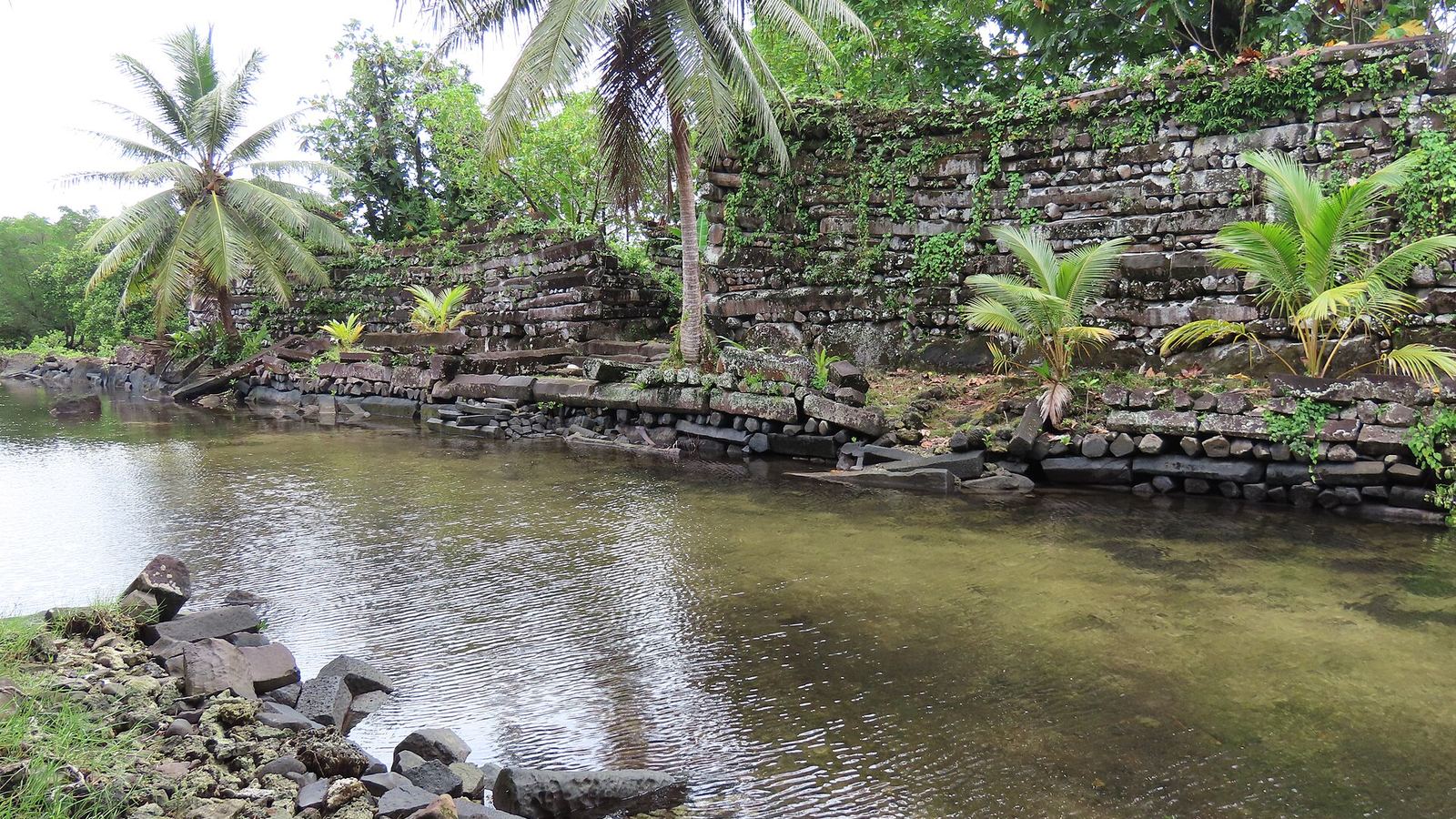
| Nan Madol | Patchy to none | The basalt city on Temwen Island is about an hour from Kolonia by road and then a walk or a boat in. Assume you arrive offline. |
| Weno, Chuuk | Usable | Cabled since 2019 and the main base for lagoon diving. Fine at the dive resorts on the south of the island, ragged on the back roads. |
| Chuuk Lagoon dive sites | None to marginal | The wrecks lie kilometres offshore. A Weno tower reaches some anchorages and nothing at others, and crews run radio rather than phones. |
| Colonia, Yap | Usable | 4G around the town and the harbour dive shops. The most traditional of the four states and the quickest to drop away once you leave the centre. |
| Yap outer islands | None | Ulithi, Woleai and the rest sit outside terrestrial coverage entirely and are served, if at all, by satellite links at the village level. |
| Tofol, Kosrae | Basic to usable | The smallest tourism market and the last state onto submarine fibre, in 2026. Better than it was, still the thinnest of the four. |
How to Prepare
With nothing to buy in advance, preparation is the whole job. Work through it in this order.
Plan the SIM errand into your first morning, not your arrival. There is no SIM counter at Pohnpei International, so the purchase happens in town. On Pohnpei that means the FSMTC office on Kaselehlie Street in Kolonia, ten to fifteen minutes from the airport by taxi. On Weno the store sits directly across from the airport and is walkable. Hours are roughly 8am to 5pm on weekdays and 8am to 1pm on Saturday, closed Sunday, so a Saturday afternoon arrival costs you a day. Cash and cards are both taken and visitors generally report no identity paperwork being demanded, though carrying your passport costs nothing.
Do not rely on the Compact of Free Association to solve this. The FSM is in free association with the United States, uses the US dollar, and sends its citizens to work and study there without a visa, so Americans reasonably assume their phone plan comes along too. It does not. We checked the carriers directly in September 2026: Verizon's published TravelPass country list does not include Micronesia, and neither does AT&T's International Day Pass destination list, which puts you on pay-as-you-go rates rather than a flat daily fee if anything connects at all. T-Mobile's own destination checker is the only reliable way to confirm your particular plan, and it is worth ten minutes before you fly. The Compact governs defence, aid and migration. It has never governed roaming agreements, and the FSM is a foreign country to every US carrier's billing system.
Decide by state, because the trips are not alike. A Chuuk diving week is spent on a boat over the lagoon, which is the one place people most want their phone to work and the one place it reliably will not; buy the SIM for evenings on Weno and treat the rest as offline. A Pohnpei trip for Nan Madol and the waterfalls is the closest thing to normal connectivity in the country. Yap rewards you for putting the phone away and will enforce that whether or not you agree. Kosrae is quiet enough that a single bundle covers the week.
Download before the Island Hopper. Most visitors arrive on United's Honolulu to Guam service through Majuro, Kwajalein, Kosrae, Pohnpei and Chuuk, a sixteen-hour day of short hops and brief ground stops. Load offline maps for each island you land on, your accommodation confirmations and dive bookings as files rather than links, and enough reading for the legs. Ground time is not long enough to fix anything you forgot.
Expect WiFi to carry most of what you actually do. Dive resorts, hotels and the better restaurants in all four state centres have connections, increasingly over Starlink rather than the local line, and that is where your photo backups and video calls belong. Ask about it when you book rather than on arrival, because the difference between a resort with a working link and one without is the difference between an easy week and a frustrating one. Then tell people at home that a day on the water means silence, and agree in advance that silence is normal.
Frequently Asked Questions
Is this guide about the country or the whole Micronesian region?
The country. The Federated States of Micronesia is a sovereign nation of four states, Pohnpei, Chuuk, Yap and Kosrae, with the +691 dialling code. Micronesia is also a geographic region covering Palau, Guam, the Northern Marianas, the Marshall Islands, Nauru and Kiribati, and those are separate places with separate carriers and, in Guam's case, a completely different answer about your US phone plan. Booking sites and eSIM sellers blur the two constantly. If a product page says Micronesia, check which network it claims to use before assuming it covers where you are going.
Can I buy any travel eSIM that works in the FSM?
Not as of September 2026. The three sellers we track have no country page for the FSM at all, and its absence is not a listing error, it is that no wholesale roaming deal exists to sell against. Regional Asia and Oceania bundles do not include it either, so buying one on the assumption that a Pacific pack covers Pacific islands will leave you with a profile that never attaches. The only line that works in the FSM is an FSM Telecom line bought inside the country.
Does the Compact of Free Association mean my US carrier plan works?
No, and this is the most common expensive misunderstanding about the country. Free association covers defence, economic assistance and the right of FSM citizens to live and work in the United States. It says nothing about telecoms. Verizon's TravelPass list excludes Micronesia and AT&T's International Day Pass destinations do not include it either, so there is no flat daily rate to opt into, and any connection you do get bills at per-use international rates. Confirm your own plan on your carrier's destination tool before departure, then buy a local SIM anyway.
Will I have signal on a Truk Lagoon dive boat?
Usually not, and you should plan the trip around that rather than hoping. The wrecks that people come to Chuuk for sit well out in the lagoon, kilometres from the towers on Weno. Some anchorages catch a bar and many catch nothing, and it changes with the site and the weather rather than following any pattern you can predict. Boats communicate by marine radio because that is what works. Get your surface interval photos, accept that the group chat waits until you are back at the dock, and use the resort connection in the evening.
Which of the four states has the best connection?
Pohnpei, and it is not close. Kolonia has had a submarine cable landing since 2010, the largest population and the most infrastructure, so 4G there is the closest the country comes to routine. Chuuk has been cabled since 2019 and Weno is fine in town. Yap has fibre too but is the most traditional of the states and the quickest to lose you once you leave Colonia. Kosrae only joined the cable network in 2026 through the East Micronesia project, so it is improving from the lowest base of the four.
Is a local SIM worth it for a five-day trip?
Yes, because it is cheap enough that the maths barely matters. A card is around $10 and a small data bundle adds a few dollars more, so the whole exercise costs less than one day of roaming would anywhere it is offered. Everything is priced in US dollars, so there is no exchange rate to work out and no local currency to acquire first. The only reason to skip it is a trip that runs entirely between a dive shop and a resort with good WiFi, which in Chuuk and Kosrae is a genuine possibility.