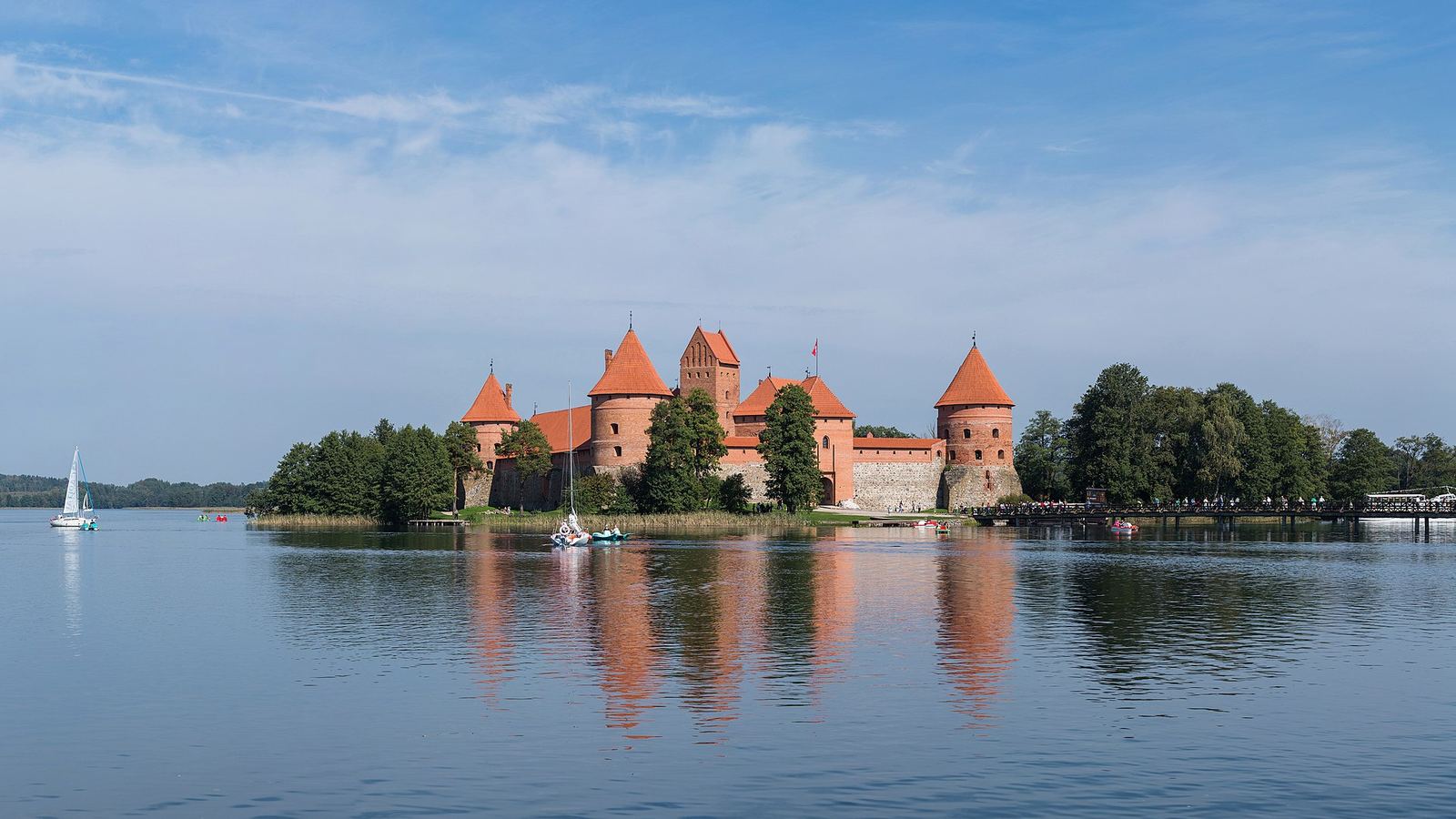
This is one of the few pages on this site where the local card has a real argument, and it is not the one you would expect. Lithuanian prepaid bundles are cheap by any European measure, but cheapness is not the point. The point is that a card bought for a euro in a Vilnius supermarket keeps working when you cross into Latvia, Poland or Estonia, because roam-like-at-home travels with it, while a Lithuania-only travel eSIM simply stops at the frontier. On a Baltic itinerary that is a genuine functional difference rather than a few dollars either way. Working against the local card are three things: the bundles are built around call minutes and domestic unlimited data that visitors do not use, the EU portion is capped at a number buried in the small print, and none of it saves you from the border radio problem at Nida or south of the capital. Here is what each brand charges this summer, what the paperwork does and does not involve, and where the honest line sits.
What This Guide Covers
Jump to the section most relevant to you
The Names on the Cheap Cards Are Not the Names on the Shops
Lithuania has three mobile networks and roughly six names for them, which is where most of the confusion starts. Telia Lietuva, Bite Lietuva and Tele2 run the masts and sell the contracts. The prepaid business, though, sits under separate discount brands that share the same towers and charge noticeably less: Ezys is Telia's, Pildyk is Bite's, and Labas is Tele2's. Ask a Lithuanian which prepaid card to buy and you will hear one of those three words, not the operator names.
That matters because the coverage question and the price question have different answers. Buying Ezys puts you on Telia radio, which is the network with the best reputation on forest roads, lake tracks and the sandbar out to Nida. Buying Pildyk puts you on Bite, quickest in Vilnius and Kaunas. Labas rides Tele2, which claims 4G across 99.9 percent of national territory and has pushed 5G past 90 percent of the population. There is no bad choice among them for a visitor, but the choice is not arbitrary either.
How the market got this cheap
Three operators competing hard for a market of about 2.8 million people has driven Lithuanian mobile pricing to among the lowest levels in the European Union, and the discount brands are where that competition shows. A month of domestic unlimited data here costs roughly what a single week of tourist data costs in southern Europe. The catch, for a visitor, is that the word unlimited applies to Lithuanian use, and the allowance that follows you across a border is a separate and much smaller number.
What Each Brand Charges This Summer
The card itself is close to free. Ezys and Labas both sit at about a euro, Pildyk at 99 cents, and the price on an airport rack tends to be a little higher than the same card in a supermarket. Everything meaningful is in the bundle you load on top.
The three bundles a visitor would actually consider
Pildyk, roughly 5.99 euros for a week, with unlimited domestic data plus unlimited calls and texts. The shortest commitment on the market and the obvious pick for a long weekend.
Labas, roughly 7.50 euros for a month, unlimited domestic data with 200 minutes and 200 texts. The best value per day if you are staying two weeks or longer.
Ezys, roughly 16.90 euros for a month, unlimited domestic data, 200 minutes, 200 texts, and around 21.5 GB usable elsewhere in the EU. That last figure is the one worth paying attention to, and it is explained in full further down this page.
Compare those against what a fortnight of travel eSIM data costs and the local bundles look strong on paper. They are strong, with one asterisk: you are paying for voice minutes. A visitor who books accommodation through an app, orders rides through Bolt and messages everyone on WhatsApp will end a two-week trip having used none of the 200 minutes. Strip the calls out and the data-only comparison narrows considerably.
Both Ezys and Pildyk have sold prepaid eSIM profiles since March 2026, which quietly removes the main reason travellers used to skip local cards. A modern handset with no physical tray is no longer locked out of the Lithuanian prepaid shelf, although you still have to buy the profile in-country or through a Lithuanian payment method, which is the part that keeps international eSIMs easier for most arrivals.
Buying One: Almost No Paperwork, and Where the Racks Are
Lithuania does not operate a compulsory prepaid registration scheme of the kind you meet across the Balkans and much of Asia, so a card lifted off a supermarket shelf generally works out of the packet once it is topped up. Some staffed counters, the airport ones especially, will still ask to see a passport as their own house policy, and anything involving a contract, a number transfer or a billing account will certainly want identification. For a tourist buying a starter pack with cash, the transaction is usually as short as buying a coffee.
The five-minute version
1. Pick a brand based on where you are going rather than on the price difference, which is small. Ezys for the coast and the back roads, Pildyk for city speed, Labas for the longest month per euro.
2. Buy the starter card at a supermarket till, a kiosk or an operator store. Cards are around a euro.
3. Load a bundle. This is done in the brand's app, on its website, or with a top-up voucher bought at the same counter.
4. Put the card in, wait for the network name to appear, and load something data-heavy before you leave the shop.
5. If your route leaves the country, check the EU allowance on your specific bundle before you rely on it.
Where to find them, in rough order of convenience. Supermarkets are the easiest: Maxima, Iki and Rimi all keep prepaid cards and top-up vouchers at the checkout, and there is a branch of at least one within a few minutes of anywhere a visitor stays. Kiosks such as Narvesen and Lietuvos spauda carry the same stock in train stations and on busy streets. Post offices under Lietuvos pastas sell them too, including the branch at the airport. Operator stores cluster on Gedimino prospektas in Vilnius and inside the Akropolis and Ozas shopping centres, and are the place to go if something needs explaining in English.
The Allowance That Travels, and the One That Does Not
Here is the part that makes this page different from the equivalent page for most countries. Because Lithuania is in the European Union, a Lithuanian prepaid card falls under roam-like-at-home rules, so it keeps working in Latvia, Estonia, Poland and everywhere else in the bloc at domestic prices. For anyone doing the Vilnius to Riga to Tallinn run by coach, or driving south through the Suwalki corridor toward Warsaw, that is genuinely useful in a way that a national travel eSIM is not.
The catch is fair use. Domestic unlimited does not become EU unlimited. Operators are permitted to apply a data cap on the roaming portion, calculated from what you paid, and they all do. That is exactly what the 21.5 GB figure attached to the Ezys monthly bundle represents: unlimited at home, a fixed and finite bucket the moment you cross a border. Cheaper bundles carry proportionally smaller roaming allowances, sometimes only a couple of gigabytes, which is the number to check before you assume the card will carry you through three countries.
| Where you are | Lithuanian prepaid card | Lithuania-only travel eSIM |
|---|---|---|
| Vilnius, Kaunas, Klaipeda | Works, domestic allowance | Works, full plan |
| Riga, Tallinn, Warsaw | Works within the EU fair-use cap | No service at all |
| Aboard a Baltic ferry offshore | Maritime rates, outside EU rules | No service |
| Across the Belarusian border | Full international roaming rates | No service |
| Kaliningrad radio reaching Nida | Full international roaming rates | Usually no service, which is the safer failure |
Read that table twice if you are driving. The last two rows are why a travel eSIM's inability to roam outside its country list is sometimes a feature rather than a limitation: a profile that refuses to connect to a Belarusian mast cannot run up a bill on one.
Lithuanian Bundles Against Travel eSIM Pricing
Converted at roughly 1.10 dollars to the euro, so the two columns can be read against each other honestly.
| What you buy | Contents | Cost | Best suited to |
|---|---|---|---|
| Pildyk weekly | Unlimited domestic data, unlimited calls and texts, 7 days | About 5.99 EUR, near 6.60 USD | A long weekend that stays in one country |
| Labas monthly | Unlimited domestic data, 200 minutes, 200 texts, 30 days | About 7.50 EUR, near 8.25 USD | The cheapest month on the market |
| Ezys monthly | Unlimited at home plus about 21.5 GB across the EU, 30 days | About 16.90 EUR, near 18.60 USD | A multi-country Baltic loop on Telia radio |
| Travel eSIM, 5 GB | Data only, 30 days, Lithuania | 14 USD, near 12.70 EUR | A week of city sightseeing |
| Travel eSIM, 10 GB | Data only, 30 days, Lithuania | 22 USD, near 20 EUR | A fortnight with real driving in it |
| Travel eSIM, unlimited | Uncapped days, 30 days | 69 USD, near 62.70 EUR | Working remotely from the road |
The arithmetic is not subtle. On raw price the Lithuanian shelf beats every travel eSIM here, and beats it comfortably: a month with Labas costs less than a five-gigabyte eSIM plan. What the eSIM buys instead is the removal of every step between landing and being online, and a profile that cannot accidentally roam onto a network you did not intend to use. Decide which of those you are actually paying for.
Who Should Buy Local, and Who Should Not Bother
The local card makes sense when
The eSIM makes sense when
A hybrid works well for longer stays and costs very little. Land with a travel eSIM already active so the first day needs no thought, then pick up a Labas or Ezys card once you have found your feet and let the eSIM lapse. Two lines on one handset is normal now, and the total is still less than most people spend on airport coffee across a fortnight.
One last practical note that applies whichever card ends up in the phone. Top-ups, papildymas in Lithuanian, are sold as vouchers at supermarket tills, kiosks and petrol stations right across the country, and every brand takes a card in its own app. Running out of credit in Nida or Druskininkai is not a problem that requires finding a city. Detailed provider comparisons live on the Lithuania eSIM guide, and if you want a size rather than a brand, the eSIM Finder asks four questions and gives you a number.
Frequently Asked Questions
Do I have to show a passport to buy a prepaid card in Lithuania?
Usually not. There is no compulsory prepaid registration scheme here, so a starter pack bought at a Maxima or Rimi till generally activates without anyone recording who you are. Staffed counters set their own rules, and the ones at the airport will often ask for a passport anyway, so carry it if that is where you plan to buy. Anything involving a contract, keeping an existing number or setting up billing will always require identification.
Pildyk, Ezys or Labas, and does the difference matter?
It matters a little. Ezys runs on Telia and is the one to buy if the itinerary includes the Curonian Spit, the Dzukija forest roads or the lanes around the Trakai lakes, where Telia holds a signal best. Pildyk rides Bite, which tends to be quickest in Vilnius and Kaunas. Labas uses Tele2 and offers the cheapest month at around 7.50 euros. For a city-based trip any of the three is fine and price should decide it.
Will a Lithuanian card still work when I get to Riga or Warsaw?
Yes, within limits. EU roaming rules mean it keeps working at domestic prices anywhere in the bloc, which is the main advantage it holds over a single-country travel eSIM. What changes is that unlimited stops being unlimited: operators apply a fair-use cap to the roaming portion, and on the Ezys monthly bundle that cap is roughly 21.5 GB. Cheaper bundles carry smaller allowances, so check yours before you set off across the border.
What does unlimited actually mean on these bundles?
Inside Lithuania it means what it says, and the tariffs here are cheap enough that operators genuinely do not ration domestic use. Outside Lithuania it converts into a fixed gigabyte figure derived from what you paid. There is also the usual background provision allowing an operator to manage the network during congestion, which in practice almost no visitor ever notices. The number that catches people out is the roaming cap, not the domestic one.
Can I get a Lithuanian prepaid plan on a phone with no SIM tray?
Yes, as of March 2026. Ezys and Pildyk both sell prepaid eSIM profiles, which is a fairly recent change and one that many older guides have not caught up with. The practical friction is buying it: you generally need to complete the purchase in-country or with a Lithuanian payment method, and the setup is documented in Lithuanian first. An international travel eSIM remains the simpler route for most short visits, even though the local option now technically exists.