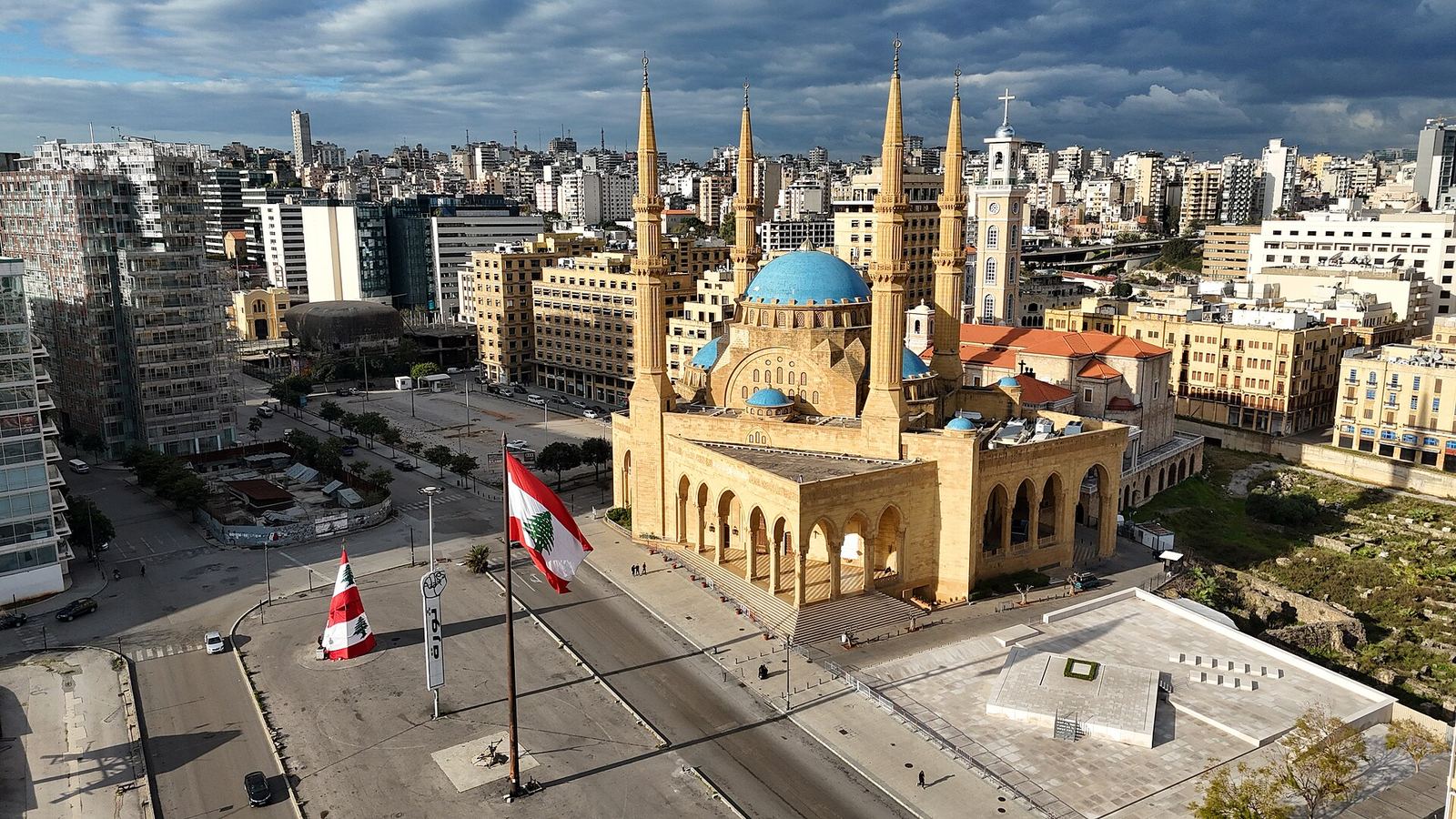
Beirut is easier to stay online in than its reputation suggests, and harder in one particular way that nobody warns you about. The easy part is cellular: 4G runs across the whole city at roughly 20 to 40 Mbps, both operators cover every district a visitor uses, and 5G has been live in the central district since 2025. The hard part is everything that plugs into a wall. The state supplies a few hours of electricity a day, buildings switch across to neighbourhood generators for the rest, and every changeover reboots the routers behind the cafe WiFi you were relying on. That is the case for arriving with your own data rather than counting on other people's connections. Be clear-eyed about what it costs, though: Lebanon is one of the few places where the local counter is the cheap option and the travel eSIM is the convenience purchase, so a lot of visitors buy a small eSIM to land on and a touch Visitor Line once they are settled.
What This Guide Covers
Jump to the section most relevant to you
Beirut Mobile Coverage and the Two Networks
Two operators serve the city and nowhere else does the choice matter less than in Beirut itself. Alfa and touch both cover the built-up area comprehensively, from Ras Beirut in the west to Bourj Hammoud in the east, down through Achrafieh and Badaro and out along the airport road. Typical 4G throughput in the central districts sits in the 20 to 40 Mbps band, which is unremarkable by regional standards and entirely sufficient for maps, ride-hailing, voice notes and uploading a day's photographs.
5G is the newer story and it remains a narrow one. Commercial service launched in Beirut during August 2025, and Alfa's 5G footprint now takes in the downtown area, Antelias, Dekwaneh, the port district and the Baabda area near the Presidential Palace, including sites permanently restored after they were first activated for the papal visit in late November 2025. touch has been switching on capital sites through August 2026, with a bigger tranche scheduled between September and November that reaches across Greater Beirut and the airport vicinity. You may catch 5G on a walk through the Beirut Souks. You will not have it in Hamra as a matter of course.
Which network your eSIM lands on
Only one of the three travel eSIM brands this site tracks sells a Lebanon plan, and it runs on Alfa. That removes the usual decision, and as it happens it lands you on the network with the marginally better reputation for holding steady in the middle of the city. If you want touch instead, that means a local card and a passport at the counter, which is also the cheaper route by a wide margin: Lebanese counter data undercuts every travel eSIM sold for the country. The Lebanon SIM card guide lays out what each operator charges.
Generators, Power Cuts and What They Do to Your Connection
This is the section that makes Beirut different from any comparable Mediterranean city, and it deserves to be understood rather than worried about. Electricite du Liban supplies most areas roughly two to four hours a day, with a notably better run of seven to ten hours reported in February 2026. The rest of the day runs on private neighbourhood generators, the diesel units you can hear from every balcony, sold as metered monthly subscriptions.
Those subscriptions are priced by ampere. The Energy Ministry publishes rates monthly, and the fixed component has been sitting near LL 385,000 for a 5 ampere subscription, around $4.30, and LL 685,000 for 10 amperes, around $7.65, with roughly LL 300,000 more per additional 5 amperes and a separate per-kilowatt-hour charge set near LL 40,580, about $0.45, on recent bills. Ask your Airbnb host which tier the flat is on. A 5 ampere subscription runs lights, a fridge and a router, and stops well short of running an air conditioner in August.
What this means for your phone, practically
Cellular is the resilient layer. Cell sites have their own generators and battery banks, so the network stays up through cuts, though individual masts do not all last equally deep into a long one. Expect the occasional district where you drop to a weaker signal for twenty minutes rather than a city-wide outage.
WiFi is the fragile layer. Every changeover between grid and generator drops the router in a cafe, a hotel or an apartment for anything from a few seconds to a few minutes. If you are on a video call from a co-working desk in Mar Mikhael, your own mobile data is the thing that keeps the call alive.
Charge opportunistically. Keep a power bank in the day bag and top the phone up whenever you are somewhere with power. It is a habit every resident already has.
District Notes: Hamra, Gemmayzeh and Mar Mikhael, Achrafieh
Coverage is good across the whole city, but the districts feel different in ways worth knowing before you pick a base.
Hamra
The west-side student and cafe quarter wrapped around the American University of Beirut, and the district most visitors sleep in. Dense 4G throughout, no 5G to speak of, and the highest concentration of cafes handing out WiFi passwords in the country. Bliss Street and the streets running off it are where the freelancer crowd works, which also means the local routers are on generator power for most of the working day.
Gemmayzeh and Mar Mikhael
The nightlife spine east of downtown, running along Rue Gouraud into Armenia Street, both rebuilt after the port explosion of August 2020 and now busier than ever after dark. Signal holds up well on the street, including in the crowds outside the bars on a Friday. The buildings here are old and thick-walled, so indoor coverage in a ground-floor bar can be noticeably weaker than the pavement outside it. The port area immediately north is one of the pockets where Alfa 5G is live.
Achrafieh and Badaro
The eastern hill around Sassine Square, and the leafier grid below it near the National Museum. Residential, quieter, and reliably covered on both networks. Badaro has become the calmer alternative to Mar Mikhael for eating and drinking, and it is where a lot of longer-stay visitors rent. Nothing here needs special planning beyond the usual generator caveat.
One more stretch worth naming: the Corniche, the seafront promenade running from Ain el Mreisseh past the Manara lighthouse to the Raouche cliffs and Pigeon Rocks. Wide open sky, nothing to block a signal, and the single most reliable strip of data in Beirut. If you need a video call to go smoothly and the apartment is between power sources, walk down and take it on the sea wall like everyone else does.
Getting Around Beirut Without a Metro
Beirut has no metro, no tram and no urban rail of any kind. Lebanon's railways stopped carrying passengers during the civil war and never restarted, so every journey inside the city happens on the road. That makes your phone the transport system: there is no route map on a station wall to fall back on.
The four ways people actually move
Service taxis. Shared cars running loose fixed routes. You flag one, say your destination, and the driver either nods or drives on. Fares are per seat and small, quoted in lira or dollars depending on the driver, and paid in cash. Saying the word service matters: without it you have hired the whole car at private-taxi rates.
Bolt. The ride-hailing app most Beirutis use, with fares shown in advance and no negotiation. It needs live data, which is the single most persuasive reason to have a working plan before you leave the airport.
Private taxis. Agreed before you get in, always. There is no meter culture here worth relying on.
Buses. Public and private minibus routes cover the city and the coast road cheaply, but they are unsigned and unscheduled, so they suit the confident rather than the newly arrived.
Walking is better than the traffic makes it look, particularly across the compact west side between Hamra, the Corniche and Downtown, and along the Gemmayzeh to Mar Mikhael axis. Coverage on foot is continuous across all of it. What you will not find is pedestrian signage worth the name, which again puts the burden on live maps rather than on a paper plan.
Free WiFi Around the City, and Why It Is a Backup
Beirut has no meaningful municipal WiFi network. What it has instead is a culture of cafes, restaurants and hotels handing over a password without being asked, and in Hamra, Badaro and Mar Mikhael that gets you a long way. Hotel connections are generally solid, and the better co-working spaces run their routers off proper backup so they survive the switchovers.
The two catches
The first is the one you already know from the power section: a cafe router restarts every time the building changes power source, and it will happen mid-upload at least once. The second is that the connection behind it is often a fixed line whose own capacity is shared generously across a full room. Speeds in a busy Hamra cafe at four in the afternoon can be worse than the 4G in your pocket, which is not the usual relationship between the two. Treat cafe WiFi as a bonus for heavy downloads when it happens to be fast, and keep your own data as the connection you actually depend on. The eSIM Finder will size that plan against how long you are staying.
Day Trips: Byblos, Baalbek, Jeita and the Chouf
Almost nobody spends a whole week inside the city, and the moment you leave it the coverage picture starts to vary. Here is how the standard excursions behave.
| Trip | Distance from Beirut | Coverage | Notes |
|---|---|---|---|
| Byblos (Jbeil) | About 40 km north | Very good | Strong the whole way up the coastal highway and around the crusader castle, the souk and the harbour. touch has Jbeil on its 5G list. |
| Jeita Grotto and Harissa | About 20 to 25 km north | Good above ground | Fine on the approach roads and on the Jounieh cable car. No signal at all inside the caverns, where phones are not permitted anyway. |
| Baalbek | About 85 km east | Patchy en route, fine on arrival | Reliable in Zahle and around the temple complex; the climb over the Dahr el Baidar pass through the Mount Lebanon range drops in and out on both networks. |
| Beiteddine and the Chouf | About 45 km southeast | Variable | Solid in Deir el Qamar and Beiteddine village; the switchback roads and the cedar reserve above them are where you will want the map already downloaded. |
| Sidon and Tyre | About 45 and 85 km south | Good in the cities | Both centres and the coast road between them hold a signal; further south toward the border it becomes inconsistent and some sites remain out of service. |
The rule of thumb is altitude rather than distance. The coast road north is effectively an extension of the city as far as your phone is concerned, while anything that climbs into the Mount Lebanon range loses and regains signal repeatedly. Download the offline map for the Bekaa and the Chouf before you set off, particularly if the driver is following your directions rather than his own. A hotspot-capable plan helps here too, because on a shared day trip one working connection can carry the whole car. The Lebanon eSIM guide covers which plans allow tethering.
Frequently Asked Questions
Do the power cuts mean my mobile data stops working in Beirut?
No, not as a rule. Cell towers run on their own generators and batteries, so the mobile network keeps going through the daily cuts in a way the fixed infrastructure does not. What you will notice instead is WiFi: a cafe or apartment router restarts each time the building swaps between the state supply and the neighbourhood generator. Your own data is the connection that stays up, which is exactly backwards from how most cities work.
Is there 5G in Beirut yet, and will I actually see it?
There is, since August 2025, but only in pockets. Alfa's 5G reaches the downtown area, Antelias, Dekwaneh, the port district and the Baabda area, while touch has been lighting capital sites through August 2026 with more due before December. Around Hamra or the Corniche you will be on 4G, running roughly 20 to 40 Mbps, which is fast enough that you are unlikely to feel the difference on a phone.
How do I get around Beirut if there is no metro?
By road, every time. Shared service taxis run loose fixed routes for a small per-seat fare paid in cash, and saying the word service as you get in is what stops the driver charging you for the whole car. Bolt is the app most people use and shows the fare upfront. Buses exist but are unsigned and unscheduled. All of it assumes a live map on your phone, since Lebanon has had no passenger rail since the civil war.
Is cafe WiFi in Hamra good enough to work from?
For email and messaging, usually. For a video call you would not stake anything on it. The shared fixed line behind a busy Hamra cafe can be slower than the 4G in your pocket by mid-afternoon, and the router will restart at least once during a long session when the building changes power source. Freelancers here tether from mobile data and treat the cafe password as a fallback rather than the other way round.
Will I keep a signal on the drive up to Baalbek?
Not continuously. Zahle and the temple site itself are fine on both networks, but the road climbs over the Dahr el Baidar pass through the Mount Lebanon range to get there, and the signal comes and goes across the top on the way over and back. Save the route offline before you leave the city. The same advice applies to the switchbacks up into the Chouf, where the villages are covered and the roads between them are not.