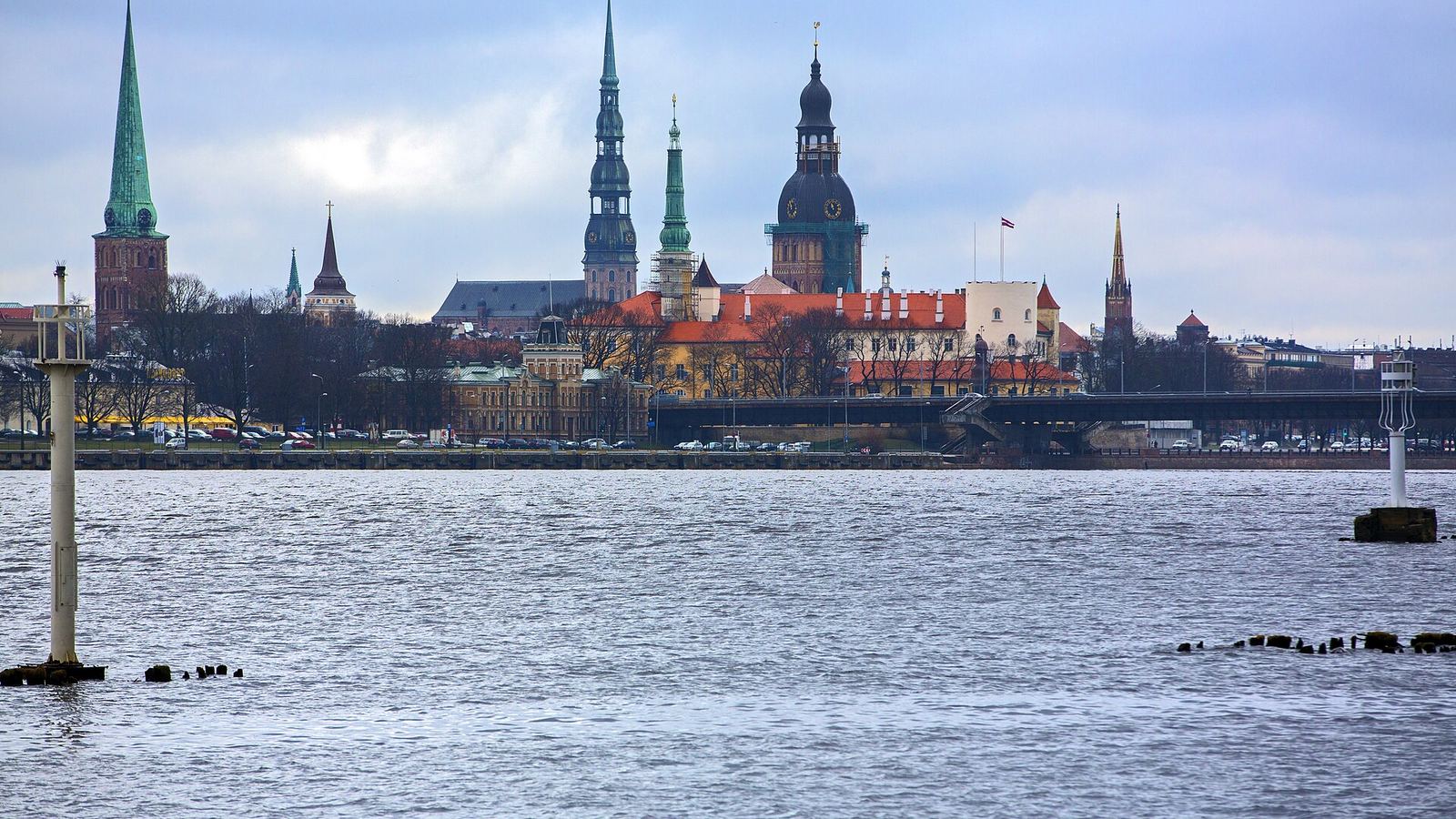
Vilnius quietly overtook Riga in 2025 to become the largest city in the Baltic states, ending a run that had lasted for as long as anyone had been counting. Riga did not particularly notice, because the statistic that shapes a visit here is a different one: roughly one in three Latvians lives in this city, which gives Riga a density of shops, trams, markets and mast sites that the rest of the country cannot match. Connectivity follows that concentration. You will not find a coverage problem anywhere a visitor is plausibly going, on any of the networks, and the interesting questions are all about what you need data for rather than whether you will have it.
The answer, increasingly, is everything. Tram and trolleybus fares are cheapest through an app, the vehicle pass for the beach at Jurmala is sold through an app, parking is an app, and the ride you take home at one in the morning is an app. Riga has quietly become a city where being offline is less an inconvenience than a series of small extra charges.
What This Guide Covers
Jump to the section most relevant to you
What the Two Networks Do Across the City
Latvia has three mobile brands and two radio networks, and Riga is the one place where that distinction genuinely does not matter. LMT runs its own infrastructure; Tele2 and Bite have shared a single jointly owned grid here since their network merge completed at the end of 2023. In a compact capital with heavy mast density, both are comprehensive: continuous 4G everywhere from Vecriga to the far end of Pardaugava, and 5G across the centre and the main approach roads on all three brands.
Expect the practical experience rather than the marketing one. Speeds around the Freedom Monument, along Brivibas iela and through the Central Station concourse are more than enough for maps, video calls and uploading a phone full of Art Nouveau facades. The tram network is above ground throughout, so there are no tunnel dropouts to plan around, and the long bridges across the Daugava hold service end to end.
The one place signal genuinely struggles
Vecriga is a medieval town centre and it behaves like one. The cellar bars and vaulted restaurants tucked under Meistaru iela, Skarnu iela and the lanes behind St Peter's sit beneath a lot of very old brick, and a phone that showed four bars on the street will often show one or none downstairs. This is masonry, not network quality, and it affects every operator equally. If you are meeting someone in a cellar, agree the plan before you go down the steps.
Trams, Trolleybuses and the Fares You Pay With a Phone
Rigas satiksme runs the trams, trolleybuses and buses, and unusually for a European capital it has kept the whole network flat-fare and simple. What it has not kept simple is pricing, because how much a ride costs depends entirely on how you pay for it.
The three ways to pay, cheapest first
1. An e-talons bought in advance, either from a Narvesen kiosk or inside the Rigas satiksme app, works out at around 1.15 euro per trip. This is the resident's price and the one worth having.
2. A contactless bank card tapped on the yellow validator by the door costs about 1.50 euro. It needs no app, no kiosk and no forward planning, and Visa, Mastercard, Apple Pay and Google Pay all work. For a two-day visit this is the sensible default.
3. Buying from the driver, which applies on the airport routes, is the most expensive option of all and on bus 22 is card-only at 1.81 euro. Nobody should end up here on purpose.
The app route is the one that needs your data plan working. Buying and activating an e-talons in the app happens on the spot, usually while the tram is pulling away, and a phone with no connection is a phone paying the contactless price instead. That is a small penalty on one ride and an irritating one across a week. The same logic applies to Bolt, which dominates the Riga ride market and is how most visitors get home from Miera iela at night.
Trams 1, 3, 5, 6, 7, 9, 10 and 11 cover most of what a visitor wants, including the run out to the beach-adjacent suburbs and across the Daugava into Pardaugava. All of it is above ground and all of it holds signal.
Vecriga, Klusais Centrs, Miera Iela and Agenskalns
Riga is walkable in a way its size does not suggest, and the four districts most visitors move between each behave slightly differently once you are holding a phone.
Vecriga, the Old Town
Cobbles, the House of the Blackheads, St Peter's spire and a UNESCO listing. Street-level coverage is excellent and the crowd load in July never noticeably dents it. The caveat is downward: cellars, vaults and the thicker church interiors swallow signal on every network. Free WiFi is abundant here, since practically every cafe and restaurant offers it.
Klusais centrs and Alberta iela
The Quiet Centre, north of the old ramparts, holds the densest concentration of Art Nouveau architecture in Europe, most famously along Alberta iela and Elizabetes iela. Wide streets, low crowds, strong signal, and the place where you will actually use data, because the facades are covered in detail that is much better with a search engine open.
Miera iela
The bohemian strip running north past the Laima chocolate factory, half-jokingly called the Miera Street Republic. Coffee roasters, second-hand shops, small bars and the best concentration of independent cafes in the city, nearly all of them with WiFi and none of them needing it, since coverage along the whole street is solid. Worth walking rather than riding.
Agenskalns and Kalnciema
Across the Daugava in Pardaugava, this is the wooden-architecture side of Riga: the restored Agenskalns market hall, the Kalnciema quarter and its Saturday market, and streets of nineteenth-century timber houses. Coverage is good throughout, and the tram ride over the river is the part where a working ticket app earns its keep.
One more landmark worth knowing about for orientation rather than sightseeing: the Riga TV Tower on Zakusala island in the middle of the Daugava, at 368 metres the tallest structure in the European Union, and visible from most of the city. If you can see it, you know roughly which way the river runs.
Free WiFi, and Why the Central Market Is the Test Case
Riga made a genuine push on free public WiFi years ago and it is still one of the better-served capitals in the region. Tet, the national operator formerly known as Lattelecom, runs a large network of free hotspots across the city, and the practical density is such that a walk through the centre rarely leaves you without something to join. Cafes, restaurants, hotels, the Origo complex at Central Station and the larger shopping centres all offer their own.
Where free WiFi quietly fails you
The Central Market is the honest test. Five converted Zeppelin hangars plus the sprawling outdoor stalls behind them make up one of the largest markets in Europe, listed by UNESCO along with the historic centre, and it is where visitors most want their phone: translating the name of a fish, converting a price, checking whether the vendor takes cards, working out which hangar sells the smoked meat. Signal on the cellular networks is fine in there. Public WiFi is not, because you are moving constantly between halls and outdoor rows and no hotspot follows you. Riga's free WiFi is a good backstop in a cafe and close to useless while you are walking, which describes most of a day here.
The security point applies as it does anywhere: open hotspots are a poor place to log into a bank, and a data plan of your own removes the temptation entirely. Treat the free network as the thing you use to download a map in a hotel lobby, not as the plan.
Jurmala: the Train, the Beach and the Pass You Buy on Your Phone
Jurmala is the beach that Riga runs on, thirty kilometres of white sand and pine forest along the Gulf, and it is a genuinely easy half-day. Vivi trains leave Riga Central Station on the Tukums line roughly every half hour and reach Majori, the main resort station, in about thirty minutes for around 1.50 euro. Dubulti, Dzintari and Bulduri are stops either side of it. Coverage along the entire line and across every beach and boardwalk is excellent, on both networks, which is more than you can say for most seaside day trips in Europe.
The five euro detail that catches drivers out
Jurmala charges vehicles for entering its special-regime zone, and as of the first of January 2026 that fee is 5 euro per day, up from 3. The pass covers unlimited entries until 23:59 on the day you buy it. The two things that trip people up are both connectivity problems in disguise. First, the entry-permit machines no longer take cash at all, so it is card or contactless only. Second, the easiest way to buy the pass is through the Mobilly app, the same app Latvians use for parking, which requires a live data connection at the moment you need it. You can buy after entering as well as before, but only until midnight. Take the train and none of this applies to you.
If you are driving anyway, sort the pass before you leave Riga rather than at the barrier. If you are not, the train is cheaper than the pass alone and drops you three minutes from the sand at Majori.
Into the Gauja Valley: Sigulda, Turaida and Cesis
The other classic day trip runs inland to the Gauja valley, Latvia's oldest and largest national park, where the river has cut sandstone ravines through what is otherwise a very flat country. It is the closest thing Latvia has to dramatic terrain, and it is the first place on a Riga itinerary where the choice of network starts to show.
| Destination | Getting there | Coverage |
|---|---|---|
| Sigulda | Vivi train from Riga Central, about 1 hour 8 minutes, around 2.80 EUR, roughly hourly | Strong in town and at the station. The cable car crossing the 1,025 metre span to Krimulda holds signal for the whole ride. |
| Turaida and Gutmanis Cave | Bus or a 3 km walk down from Sigulda station | Good on the castle hill, thinner on the paths dropping into the ravine and along the river below. |
| Cesis | Same line, about 1 hour 20 minutes from Riga, or 28 minutes on from Sigulda | Reliable across the medieval castle grounds and the old town. LMT holds up best on the forest trails outside. |
The pattern to remember is vertical. Up on the plateau where the towns, castles and the railway sit, everything works on every network. Down in the ravines, on the riverside trails below Turaida and on the sandstone paths near Gutmanis Cave, the valley walls do what valley walls do. An LMT-based profile is the one most likely to keep a bar down there, which is one of the few genuine coverage arguments anywhere near Riga. Download the trail map before you descend either way.
Both day trips share one useful trait: the train is fully covered, so the hour each way is time you can actually use. That is a reasonable argument for a slightly larger data allowance than a pure city break would need. Our Latvia eSIM guide sets out which provider rides which network, and the eSIM Finder will size the plan if you would rather not guess.
Frequently Asked Questions
Do I need mobile data just to ride a tram in Riga?
Not strictly, but you pay for the privilege of doing without it. Tapping a contactless bank card on the yellow validator by the door costs about 1.50 euro a trip and works with no connection at all. Buying an e-talons in advance, either through the Rigas satiksme app or at a Narvesen kiosk, brings that down to around 1.15 euro, and the app route obviously needs you to be online at the moment you board. Over a week of trams and trolleybuses the gap is real money.
Why does my signal collapse in Old Town restaurants?
Because you are usually underground and behind several centuries of brick. A lot of Vecriga's best bars and restaurants occupy vaulted cellars beneath buildings that predate mobile telephony by roughly six hundred years, and those walls block signal regardless of which Latvian network you are on. Street level is excellent. If you are meeting people in a cellar, sort out the table and the timing before you go down the stairs, and expect messages to arrive in a clump when you come back up.
Is Riga's free public WiFi good enough to skip a data plan?
Only if you plan to sit still. Tet runs a large free hotspot network across the city and almost every cafe and hotel adds its own, so finding a connection indoors is easy. The problem is movement: the Central Market alone is five hangars plus outdoor rows, and no hotspot follows you between them. Riga is a walking city where the phone gets used on the street, at the tram stop and in the market, which is exactly where public WiFi is not.
What is the cheapest way to reach the beach at Jurmala?
The train, by a wide margin. Vivi runs from Riga Central Station on the Tukums line every half hour or so and reaches Majori in about thirty minutes for around 1.50 euro, with the beach a few minutes from the platform. Driving means paying Jurmala's vehicle entry charge, which rose to 5 euro a day on the first of January 2026 and can no longer be paid in cash at the machines. Coverage on the line and across the beaches is excellent throughout.
Will my phone work on a day trip to Sigulda and the Gauja valley?
In the towns, yes, comfortably. Sigulda and Cesis both have solid service, the train from Riga is covered end to end, and the cable car across the valley to Krimulda keeps a signal for the full 1,025 metre crossing. What changes is elevation: the trails dropping into the sandstone ravines below Turaida and around Gutmanis Cave lose service on every network, with an LMT-based profile the most likely to hang on. Save the trail map to your phone before you walk down.