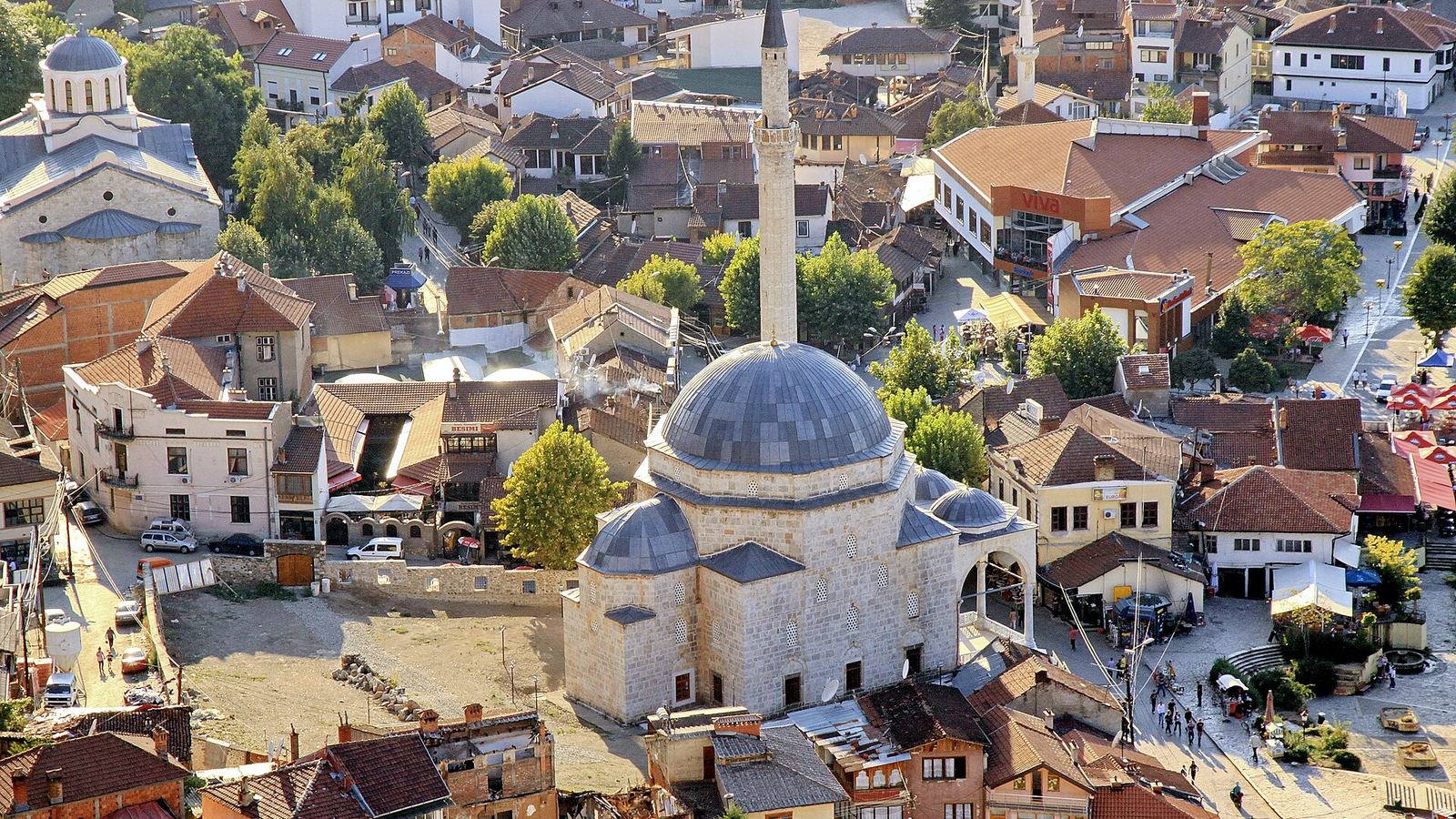
In Kosovo the first question is not which travel eSIM is best, it is which ones genuinely exist. Ordinary Europe regional plans stop dead at this border, at least one familiar brand lists the country and then shows it as unavailable, and almost every plan that does work rides the same network. That makes Airalo the sensible default: its Kosovo-only plan, sold under the name Plisi after the white felt cap men wear here, has stayed on sale through 2026 and connects to IPKO, the quicker of the two national networks. Nomad sells a Kosovo-only plan on the same IPKO network, but prices it well above Airalo at every tier, so it is the choice only if you already use Nomad elsewhere. Holafly sells unlimited days through a partner listing that still names Monaco Telecom, a fossil from the years when Kosovar mobile numbers were technically Monegasque. Because stays here are short, usually two to four nights bolted onto a wider Balkans trip, sizing the plan matters more than the headline price. The eSIM Finder will do that arithmetic for you.
Quick Pick: the Best eSIM for Kosovo
Airalo (Kosovo 5 GB / 30 days, $16): The only Kosovo-specific plan of the three that has stayed dependably in stock this year, riding IPKO, the network with the best measured speeds in Pristina and Prizren, with tethering and in-app top-ups if you extend the trip.
Our picks
Best overall: Airalo. Lowest per GB: Nomad. Or use the eSIM Finder.
Kosovo eSIM Plans Compared
Indicative pricing. Tap through for live rates.
| Provider | Plan | Data | Duration | Price | Network |
|---|---|---|---|---|---|
| Airalo | Kosovo 1GB | 1 GB | 7 days | $5 | IPKO |
| Airalo | Kosovo 3GB | 3 GB | 30 days | $11 | IPKO |
| Airalo | Kosovo 5GB | 5 GB | 30 days | $16 | IPKO |
| Airalo | Kosovo 10GB | 10 GB | 30 days | $26 | IPKO |
| Airalo | Kosovo 20GB | 20 GB | 30 days | $37 | IPKO |
| Nomad | Kosovo 1GB | 1 GB | 7 days | $4 | IPKO |
| Nomad | Kosovo 5GB | 5 GB | 30 days | $14 | IPKO |
| Nomad | Kosovo 10GB | 10 GB | 30 days | $22 | IPKO |
| Nomad | Kosovo 20GB | 20 GB | 30 days | $32 | IPKO |
Airalo Kosovo Plans
Airalo: The Kosovo-Specific Plan, Riding IPKO
Sold as Plisi, named for the white felt cap, and dependably in stock all year
Airalo is the pick here mainly because it treats Kosovo as a destination in its own right rather than a line item in a regional bundle. The Plisi plan is a single-country product on IPKO, and single-country products are what stay purchasable when wholesale deals get renegotiated. Through 2026 this has been the one Kosovo plan we have not seen greyed out.
Riding IPKO also matches the way most people see the country. Speed testing puts IPKO ahead in Pristina and Prizren, which is where a three-night trip spends nearly all of its time, and the 5G that exists in central Pristina sits on both networks anyway. The 3 GB plan at $11 is the honest recommendation for a long weekend; 5 GB at $16 covers a week with navigation running on a rented car.
Strengths
Weaknesses
Nomad Kosovo Plans
Nomad: The Cheapest Gigabytes, Bought Through the Region
Lowest per-GB pricing for Kosovo, reached via the Balkans catalogue
Nomad prices Kosovo lower than anyone else, roughly $2.80 per gigabyte at the 5 GB tier against Airalo's $3.20, and its tethering has no daily ceiling, which quietly makes it the better hotspot plan of the three despite Holafly's unlimited billing. If the number on the receipt is what you are optimising, this is the answer.
The wrinkle is how you get there. Nomad reaches Kosovo largely through its Balkans regional listing rather than a standalone country product, and regional listings are the ones that go temporarily unavailable when a wholesale agreement is being reworked. That is exactly what has been reported at points this year. It also means you must not assume the Europe plan covers you: it does not, and the mistake is common enough that it is worth checking the country list on the plan page before paying. For an actual multi-country Balkans loop, though, the regional plan is a feature rather than a compromise.
Strengths
Weaknesses
Mobile Networks in Kosovo
Kosovo has exactly two mobile networks, and their histories explain most of the oddities a visitor runs into. Vala is the mobile arm of Telekomi i Kosovës, the state-owned incumbent, launched in the aftermath of the war and still the network with the most small-town shopfronts. IPKO started life in 1999 as an internet project funded through international aid, grew into a cable and mobile operator, and was bought by Telekom Slovenije, which is why its engineering culture and its numbering both leaned Slovenian for years.
That leaning was literal. Until the International Telecommunication Union assigned Kosovo the code +383 in 2017, the country had no dialling code of its own: Vala issued numbers under Monaco's +377, IPKO under Slovenia's +386, and fixed lines still ran on Serbia's +381. Migration to +383 did not complete until 2019. The residue is still visible in places a traveller might actually look. Holafly, for instance, names its Kosovo coverage partner as IPKO Telecommunications LLC and Monaco Telecom S.A.M. in the same breath. If you see a Monaco reference attached to a Kosovo plan, it is history rather than an error.
On coverage the two networks are closer than their market shares suggest. IPKO claims roughly 99.7 percent of the population and about 98.5 percent of the territory, and independent testing gives it the edge on download speed in Pristina and Prizren. Vala tends to have slightly broader reach in the villages and up the smaller valleys, which is the classic incumbent pattern. In a country of 10,900 square kilometres with a median age around thirty, the youngest in Europe, network build-out has been driven hard by demand: smartphone penetration is very high and cafes assume everyone is online.
What 5G actually means here in 2026
5G went live first in central Pristina and has since reached Prizren and parts of Peja, but it is a downtown feature rather than a national layer. Everywhere else you are on 4G, and in the cities that reliably delivers 30 to 80 Mbps, which is well past what maps, translation and video calls need. Do not pay a premium for a 5G badge on a Kosovo plan. Do pay attention to which network sits underneath it, because with only two operators the choice is unusually consequential.
Coverage Across Kosovo
Coverage where travelers actually go:
| Area | Coverage | Notes |
|---|---|---|
| Pristina | Excellent | Dense 4G across Bulevardi Nënë Tereza, Pejton and Dardania, with 5G in the central blocks on both networks. |
| Prizren | Excellent | Strong signal through the old town, over the Stone Bridge and up as far as the Kaljaja fortress path; IPKO is measurably faster. |
| Peja and the Rugova Gorge | Good in town, thin in the canyon | Peja itself is fully covered, but the gorge road west toward Bogë drops signal between the rock walls. |
| Gjakova, Gjilan, Mitrovica | Very good | Full 4G in all three centres. North Mitrovica also picks up Serbian networks, so watch for accidental roaming. |
| Sharr Mountains and Brezovica | Variable | The resort base and main road are covered; the ridge hikes toward the North Macedonian border are not. |
| The R7 motorway and the airport highway | Good | Continuous data along the run to the Albanian border at Vërmicë and on the 15 km hop between PRN and the capital. |
How to Choose the Right Plan
Decide first whether Kosovo is the whole trip or one stop on a Balkans run, because that single fact settles most of it. For a Kosovo-only visit, buy Airalo: the Plisi plan is country-specific, it rides IPKO, and it has been available every time we have checked. For a route that also takes in Albania, Montenegro or North Macedonia, buy Nomad's Balkans plan and save both money and the hassle of juggling profiles at each border, but confirm Kosovo is listed on the plan page first. Reach for Holafly only if you are staying a week or more and genuinely want unlimited, and check its Kosovo listing is live before you build a plan around it. One last consideration that has nothing to do with providers: if you are here longer than about ten days, a Vala or IPKO card at the counter costs a fraction of any of them, and the passport registration takes fifteen minutes.
Frequently Asked Questions
Why do so many Europe eSIM plans leave Kosovo out?
Because Kosovo is not in the European Union and sits outside the roam-like-at-home rules that make a single Europe plan economic for the seller. Wholesale roaming here is negotiated deal by deal, and with only two host networks there is little competitive pressure to bring the rate down. The practical effect is that a Europe eSIM which behaved perfectly across Croatia and Greece will show no service in Pristina. Check the covered-country list rather than the marketing map, and if Kosovo is not named in it, assume it is not included.
Does a Kosovo plan keep working in Albania or North Macedonia?
A local Vala or IPKO prepaid card does, because Kosovo belongs to the Western Balkans regional roaming arrangement that has let the six partners use their home allowances across the region since 2021. A travel eSIM sold as a Kosovo plan does not: it is provisioned for one country and stops at the crossing. If your route runs Pristina to Prizren to Tirana, or up to Skopje, buy a Balkans regional eSIM rather than a Kosovo one. The EU is separately negotiating to extend its own roaming zone to the region, but nothing in that process is in force yet.
Vala or IPKO, if I get to choose the network?
IPKO for a trip built around Pristina, Prizren and the motorway between them, since it is the faster network in exactly those places and it is what Airalo and Nomad use. Vala if you are heading into the smaller valleys, the villages around Deçan, or the back roads of the Dukagjin plain, where the incumbent's older tower footprint still shows. Neither choice will strand you: the gap between them is speed and marginal rural reach, not presence or absence.
Is a travel eSIM actually cheaper than a Kosovar prepaid card?
No, and this page is not going to pretend otherwise. Kosovar prepaid data is among the cheapest in Europe: Vala sells 5 GB over 31 days for about 6 euros and IPKO does 6 GB over 30 days for about 6 euros, against 14 to 16 dollars for a comparable eSIM. What the eSIM buys you is the absence of a passport registration queue, working data before you reach the taxi rank, and no dependency on whether the airport kiosk happens to be staffed at 23:40. For a two or three night stay that trade is usually worth it. For two weeks it is not.
How much data does a long weekend in Kosovo really need?
Very little. Pristina and Prizren are compact walking cities where cafe WiFi is universal and nobody asks you to buy anything to use it, so most visitors spend under 2 GB across three or four days on maps, messaging and photo uploads. A 3 GB plan is comfortable, 5 GB is generous, and 10 GB only makes sense if you are working remotely, tethering a laptop, or driving a long loop through Peja and Brezovica with navigation running all day.
Will my phone show a strange country code on a Kosovo network?
Occasionally, yes, and it is harmless. Kosovo only received +383 from the ITU in 2017 and the switchover from Monaco's +377 and Slovenia's +386 ran into 2019, so older handsets, some billing systems and a few provider coverage listings still surface those legacy references. You may also see a Serbian network appear in northern Mitrovica, which is a genuine roaming risk rather than a display quirk. Lock your line to the network your plan names if you are spending time up there.