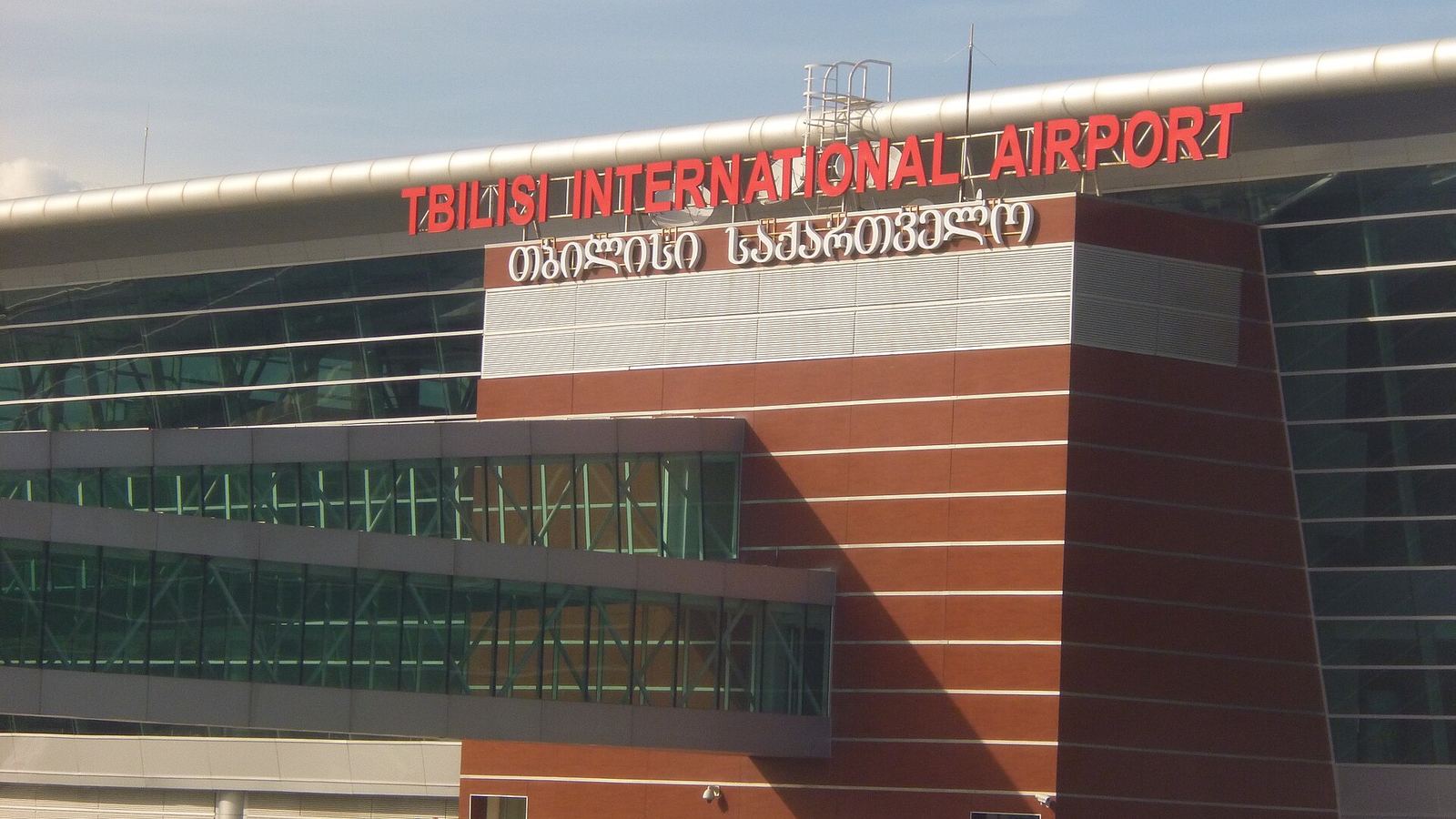
Tbilisi International is a refreshingly low-drama airport to arrive at without a connection. It is a single compact terminal, the three national carriers all keep staffed shops in the arrivals hall that never close, and the free WiFi does not want a phone number or an email address in exchange. If you land at four in the morning with a dead SIM and no plan, Georgia will sort you out inside fifteen minutes. What the airport cannot do is make the right decision for you, because the cheap tourist bundle a shop hands you in arrivals is priced for a city break and a good number of the people buying it are about to drive up the Georgian Military Highway on it.
What This Guide Covers
Jump to the section most relevant to you
The Carrier Shops in Arrivals, and What They Charge
Clear passport control and baggage reclaim at TBS and you walk straight into a compact arrivals hall that has essentially everything at once: Magti, Silknet and Cellfie shops, ATMs, currency exchange, car rental desks and taxi booking counters, all within about thirty seconds of each other. The carrier shops are official branches rather than franchised concessions, they are staffed 24 hours a day to match the run of night arrivals from the Gulf and Europe, and the staff speak enough English to sell you a package without difficulty.
Bring your passport. Georgia registers prepaid mobile lines against an identity document, so the assistant will scan it and enter your details before the number activates. It adds a couple of minutes rather than an ordeal, but it does mean the whole party cannot wait outside while one person buys four SIMs.
What the packages actually cost
Georgian prepaid pricing is among the best value anywhere in the region, and the airport does not mark it up. Magti sells thirty-day data bundles roughly as follows: 1 GB near 1.77 dollars, 3 GB near 3.20, 5 GB near 4.28, 20 GB near 10.68, and an unlimited package around 11.39. Silknet pitches a tourist package at about 10 lari for three days of unlimited data with SMS and 30 minutes of local calls, plus standard bundles such as 15 days with 4 GB for 15 lari. Nothing in the international eSIM market comes near those numbers on cost per gigabyte.
The catch is the one the price list will not tell you. If your Georgia is Tbilisi, Kakheti and Batumi, any of the three is fine and you should buy on price. If it involves Kazbegi, Svaneti or Tusheti, the network matters far more than the bundle size, and Magti is the one with towers in the high valleys. Buying a bargain Cellfie package at the airport and then discovering that on the Jvari Pass is an expensive way to save eight dollars.
The Airport WiFi, and What It Is Called
The network you are looking for is Tbilisi Loves You Airport Free Wi-Fi. Join it and you are online. There is no registration form, no SMS code sent to a number you do not yet have, and no time limit gate of the kind that makes airport WiFi in much of the region so tedious. It covers most seating and public areas across both the departures and arrivals sides of the terminal.
That makes TBS one of the easier airports to handle a genuine connectivity emergency in. You can join the WiFi, buy an eSIM on the spot, install it and walk out with a working line without ever visiting a counter, which is a reasonable fallback if you meant to sort this out before flying and forgot. Download speeds are adequate for that and for messaging rather than impressive.
Useful arrivals-hall detail
Left luggage sits in the arrivals hall and runs 24 hours, charging around 10 lari for a standard bag and 20 for oversized items. Worth knowing if you have landed early for a mountain trip and want to walk into the city unencumbered before your guesthouse check-in, or if you are pausing in Tbilisi between a Kutaisi flight and an onward one.
The one thing the WiFi cannot do is follow you out of the door, and at TBS that gap is more consequential than at most airports because the airport sits roughly 17 kilometres east of the centre with no rail link. The stretch where you most want a live connection, standing at the kerb deciding between the bus and a ride app, is the exact stretch where the terminal WiFi has stopped.
Getting Into Tbilisi, and Staying Online En Route
There is no metro to the airport and no functioning airport rail service, so every route into town is on the road. The good news is that all of them are cheap by European standards and the mobile coverage along the eastern approach is solid the whole way.
| Route | Cost | Time | Notes |
|---|---|---|---|
| Bus 337 | 1 GEL | 40 to 50 min | Runs to the Central Railway Station via Freedom Square and Rustaveli. Every 15 to 20 minutes in the day, less often overnight. Bay is in front of the departures hall. |
| Night bus 137 | 1 GEL | 40 to 50 min | Covers the small hours if the 337 gap is too long. |
| Bolt | 15 to 25 GEL | 20 to 30 min | The default for most visitors. Needs a working data connection to book. |
| Official airport taxi | 40 to 70 GEL | 20 to 30 min | Booked at the counter in arrivals. No app needed, roughly triple the Bolt fare. |
| Private transfer | 60 to 100 GEL | 20 to 30 min | Pre-booked, sensible for groups with luggage or a very late landing. |
The bus is the bargain and it is genuinely usable: one lari buys the ride and 90 minutes of onward transfers on the city network, so if your guesthouse is a metro hop past Freedom Square the whole journey costs about 35 cents. Pay with a contactless bank card or a Metromoney card on board.
Why the Bolt gap matters
The single biggest practical argument for arriving connected at TBS is the price spread between a Bolt at 15 to 25 lari and an official taxi at 40 to 70. That gap only exists if you can open the app at the kerb, and the app needs data the terminal WiFi no longer reaches. Landing with a live line pays for a chunk of the eSIM before you have left the car park.
Landing With a Line That Already Works
An eSIM bought before departure is not the cheapest way to get data in Georgia and this guide is not going to pretend otherwise. Magti will sell you unlimited for eleven dollars. What buying ahead purchases is a smoother first hour and one fewer decision made while tired, plus the freedom to choose your network for the whole itinerary rather than for whichever shop had the shortest queue.
The case for setting it up beforehand
The case against
The reasonable middle position, and the one most repeat visitors to Georgia end up at, is to fly in on an eSIM and add a local Magti card later if the trip turns out to be long or mountainous. The Georgia eSIM guide sets out which provider rides which network, which is the part of the decision that actually matters here.
Airport Counter Against a Travel eSIM
Put the two side by side honestly and the local product wins on money by a wide margin, while the eSIM wins on everything else. Which one is right depends almost entirely on how long you are staying and how high you are going.
| Local SIM at TBS | Travel eSIM | |
|---|---|---|
| Typical cost | Around 10 to 15 GEL for a tourist bundle, or roughly 11 USD for Magti unlimited | Roughly 5 to 10 USD for a metered week, more for unlimited |
| Ready when | After the queue and the passport scan | Before the aircraft doors open |
| Passport needed | Yes, mandatory registration | No |
| Network choice | All three available, Magti included | Depends on provider, only some ride Magti |
| Georgian number | Yes | Usually not, though some plans now issue one |
| Keeps your home number active | Only if your phone takes two SIMs | Yes, the physical SIM stays in place |
| Best for | Stays past three weeks, deep mountain travel, anyone wanting a local number | Short trips, late arrivals, travellers crossing straight to Armenia or Turkey |
One number puts the whole comparison in perspective: the money you save by queueing for a local SIM instead of arriving connected is roughly the same as the money you lose by taking the airport taxi counter instead of a Bolt. Get both decisions right and Georgia is astonishingly cheap to move around. Not sure how much data your route needs before you choose? The eSIM Finder will size it, and the Tbilisi city guide covers what happens to your signal once you are underground.
Frequently Asked Questions
Are the carrier shops at TBS open when I land at three in the morning?
Yes. Magti, Silknet and Cellfie all run staffed branches in the arrivals hall on a 24-hour basis, which is a deliberate response to how many flights reach Tbilisi in the small hours from the Gulf and from Europe. You will not find a shuttered counter and a note about opening at nine. Bring your passport, because Georgian law requires prepaid lines to be registered to an identity document and there is no way around that step at any hour.
What is the airport WiFi called and does it want anything from me?
It broadcasts as Tbilisi Loves You Airport Free Wi-Fi and it asks for nothing at all. No registration form, no SMS verification to a number you do not have yet, no email harvest. It reaches most public and seating areas in both the arrivals and departures parts of the terminal. That makes it a viable way to buy and install an eSIM on the spot if you forgot to sort one out before flying.
What is the cheapest way from the airport into the centre?
Bus 337 at 1 lari, which runs to the Central Railway Station by way of Freedom Square and Rustaveli Avenue and takes 40 to 50 minutes depending on traffic. It leaves from a marked bay in front of the departures hall every 15 to 20 minutes during the day and less frequently overnight, with bus 137 covering the late hours. That single lari also buys 90 minutes of transfers onto the metro and city buses, so a connecting hop costs nothing extra.
Is it worth taking a Bolt rather than the taxi desk?
Financially, very much so. A Bolt into central Tbilisi generally runs 15 to 25 lari against 40 to 70 for an official airport taxi booked at the counter, for the same 20 to 30 minute journey. The catch is that booking one requires a working data connection at the kerb, outside the reach of the terminal WiFi. That single price gap is the most concrete argument for having a line live before you land.
Can I fly into Tbilisi and use the same plan in Armenia?
Only if you deliberately bought a plan that covers both. Georgia-only eSIMs and Georgian local SIMs both stop working at the border, and there is no regional roaming arrangement that quietly saves you. If your trip runs on to Yerevan, buy a regional or global plan naming both countries before you leave home. Expect a dead patch around the Sadakhlo crossing itself while you are between two networks.