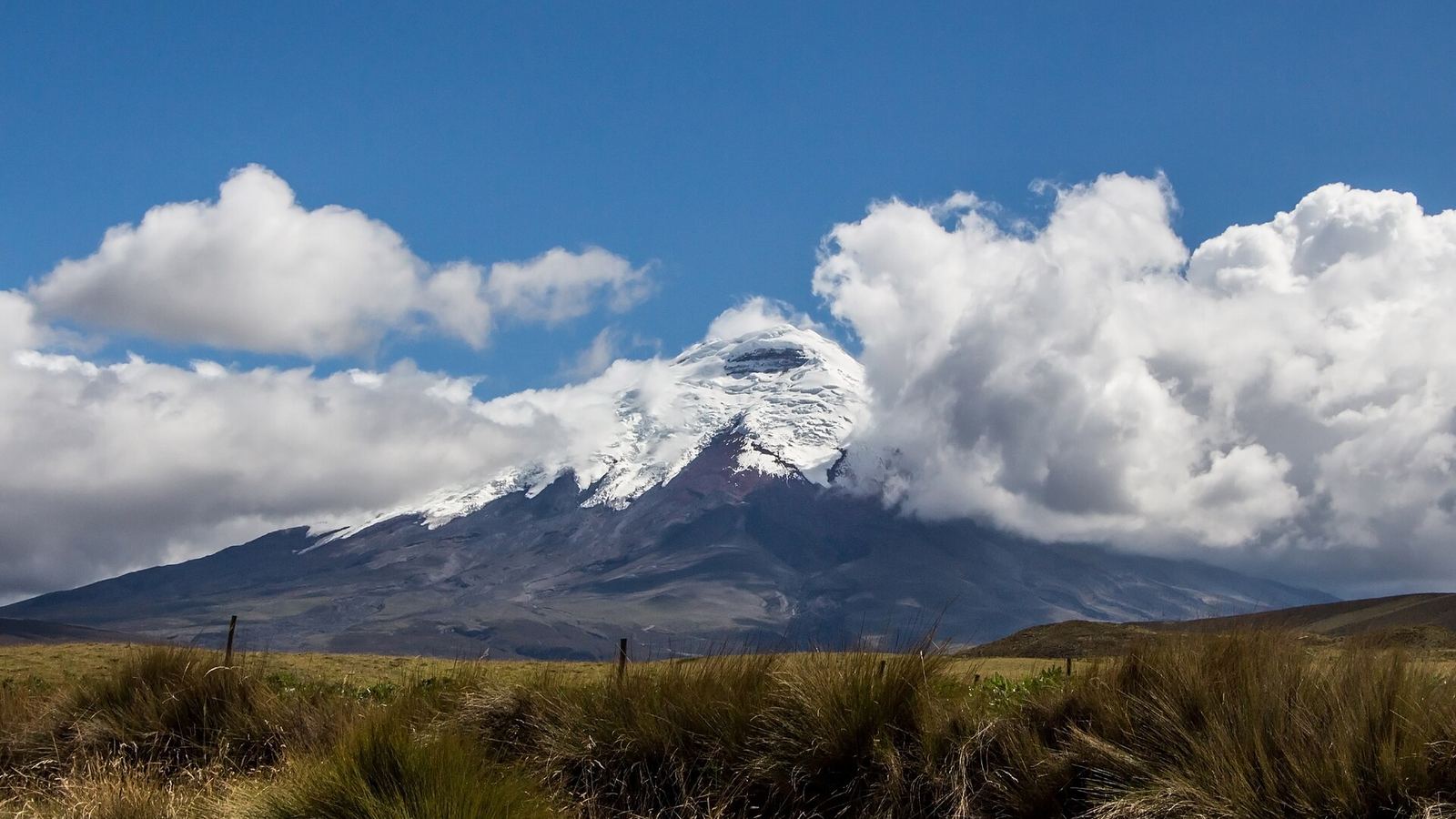
Ecuador is the unusual case where the network is not the variable, so buy on plan shape and Airalo is the balanced default. All three major travel eSIMs here, Airalo, Holafly and Nomad, ride Otecel, the network sold under the Movistar name and currently being rebranded to Tigo after Millicom bought it. That means none of them ride Claro, which holds 52.9 percent of the market and runs around 11,800 base stations. It sounds alarming and mostly is not: Movistar has posted the highest measured service quality in the country and covers everywhere a normal itinerary goes. It matters at the edges, in the Oriente and on the outer Galapagos islands, where Claro built and Movistar did not. Size the plan with the eSIM Finder and read the coverage table below before you assume the islands are connected.
Quick Pick: the Best eSIM for Ecuador
Airalo (Ecuador 5 GB / 30 days): Rides Otecel, the Movistar network with the highest measured service quality in Ecuador, and a metered 5 GB plan is the right size for a country where several of the best days have no signal to spend data on.
Our picks
Best overall: Airalo. Lowest per GB: Nomad. Unlimited: Holafly. Or use the eSIM Finder.
Ecuador eSIM Plans Compared
Indicative pricing. Tap through for live rates.
| Provider | Plan | Data | Duration | Price | Network |
|---|---|---|---|---|---|
| Airalo | Ecuador 1GB | 1 GB | 7 days | $5 | Movistar / Otecel |
| Airalo | Ecuador 3GB | 3 GB | 30 days | $11 | Movistar / Otecel |
| Airalo | Ecuador 5GB | 5 GB | 30 days | $16 | Movistar / Otecel |
| Airalo | Ecuador 10GB | 10 GB | 30 days | $26 | Movistar / Otecel |
| Airalo | Ecuador 20GB | 20 GB | 30 days | $37 | Movistar / Otecel |
| Nomad | Ecuador 1GB | 1 GB | 7 days | $4 | Movistar |
| Nomad | Ecuador 5GB | 5 GB | 30 days | $14 | Movistar |
| Nomad | Ecuador 10GB | 10 GB | 30 days | $22 | Movistar |
| Nomad | Ecuador 20GB | 20 GB | 30 days | $32 | Movistar |
| Holafly | Unlimited 5-day | Unlimited | 5 days | $19 | Movistar |
| Holafly | Unlimited 7-day | Unlimited | 7 days | $27 | Movistar |
| Holafly | Unlimited 10-day | Unlimited | 10 days | $34 | Movistar |
| Holafly | Unlimited 15-day | Unlimited | 15 days | $47 | Movistar |
| Holafly | Unlimited 30-day | Unlimited | 30 days | $69 | Movistar |
Airalo Ecuador Plans
Airalo: Best Balanced Pick for a Mixed Ecuador Itinerary
Ecuador plans on the Otecel network with hotspot support and in-app top-ups
Airalo names Otecel as the primary network for its Ecuador eSIM, which is the operator most travellers know as Movistar and which is currently being rebranded to Tigo following Millicom's 380 million dollar purchase. Whatever it is called by the time you land, it is the network with the highest measured service quality in Ecuador, and it covers Quito, Guayaquil, the highland corridor and the main Galapagos towns without difficulty.
A 5 GB plan over 30 days suits most Ecuador trips, and that is a smaller allowance than the trip length implies for a good reason: days on a Galapagos boat, on the paramo or up a river in the Oriente consume almost nothing because there is no signal to consume it on. The 10 GB tier makes sense if you are staying put in Quito and working. Full tethering is included, which matters in guesthouses where the WiFi struggles at altitude.
Strengths
Weaknesses
Holafly Ecuador Plans
Holafly: Best for a City-Heavy Trip With Constant Data Use
Unlimited data on Movistar with day-count pricing
Holafly partnered with Movistar for Ecuador, so the coverage story is the same as Airalo's and Nomad's and the differentiator is entirely the plan structure. Unlimited data with no counter is genuinely useful in Quito, where ride apps, translation and navigation between the Centro Historico and the northern business districts add up faster than people expect.
The trap is buying it for a trip that does not suit it. An Ecuador itinerary with a Galapagos cruise, a couple of Amazon lodge nights and a Quilotoa hike contains a lot of days with no usable signal, and unlimited-by-the-day means paying full price for those days. If your Ecuador is mostly Quito, Guayaquil, Cuenca and the highland towns, the arithmetic works. If it is mostly boats and mountains, it does not. Tethering is capped daily, so groups sharing one connection should look at the metered options.
Strengths
Weaknesses
Nomad Ecuador Plans
Nomad eSIM: Best Value Per Gigabyte
Cheaper Movistar plans for travellers who can estimate their usage
Nomad lists Movistar as its Ecuador network and generally undercuts Airalo per gigabyte on identical coverage, which makes it the straightforward value pick. Since network choice is not a real variable in the Ecuadorian travel eSIM market, price and plan sizing are what is left to decide on, and Nomad wins the first of those.
It suits a planned itinerary where you know roughly what you will use: a Quito base with day trips, a highland loop by bus, a Galapagos week where the boat days cost you nothing. The larger tiers are priced well enough for a month of remote work from Quito or Cuenca, both of which have a growing long-stay population and reliable urban coverage. Full tethering is included on all plans.
Strengths
Weaknesses
Mobile Networks in Ecuador
Ecuador has three networks and a fourth name arriving. Claro, the America Movil operator, is the giant: 52.9 percent of the market as of early 2026, roughly 11,800 base stations, and a 597 million dollar commitment from its parent to defend that lead with 5G. Movistar holds about 29.5 percent, and CNT, the state operator, has 17.6 percent. The change to know about is that Telefonica sold its Ecuadorian unit, Otecel, to Millicom for 380 million dollars, so Movistar and Tuenti are on their way out and Tigo is replacing them, with 3.7 million subscribers already migrating to Millicom's billing platform and stores being rebranded.
That transition matters to a visitor for one specific reason: the mainstream travel eSIMs all connect to Otecel, which is the Movistar network becoming Tigo. Airalo lists Otecel as its Ecuador network, Nomad names Movistar, and Holafly partnered with Movistar too. So the eSIM you buy will not be riding the country's largest network. In practice Movistar performs well, and it posted the highest service quality of the Ecuadorian operators in mid-2026 measurements, but the coverage gap shows up in the remote places where Claro's larger base-station count is the whole difference.
5G in Ecuador is new and geographically odd
Ecuador entered the 5G era recently and the map is not the one you would guess. CNT leads on deployment with 422 base stations by 2026 and 5G live in Quito and Guayaquil, targeting national coverage by the end of the year. Claro had deployed 99 antennas in the 3.3 GHz band by the end of 2025, with service in Guayaquil, Quito, Coca and, notably, Puerto Ayora in the Galapagos. Claro and Movistar began wider 5G rollout in the first quarter of 2026. Since travel eSIMs here ride Movistar, treat 5G as something you may occasionally catch rather than something you are buying.
Coverage Across Ecuador
Coverage where travelers actually go:
| Area | Coverage | Notes |
|---|---|---|
| Quito & the valleys | Excellent | Dense 4G across the city, Cumbaya and Tumbaco, with 5G from CNT and Claro in the newer districts. |
| Guayaquil & the coast | Excellent | The largest city has the strongest build-out on every network, including early 5G. |
| Pan-American highlands | Very Good | Reliable through Otavalo, Latacunga, Ambato, Banos and Riobamba and along the highway between them. |
| Cotopaxi, Quilotoa & the paramo | Mixed | Signal in the villages and at trailheads, and long dead stretches on the high moorland and the crater rim. |
| The Oriente & Amazon lodges | Patchy | Coca and Tena have service, Claro even has 5G in Coca. River lodges downstream generally have none. |
| Galapagos | Mixed | Good in Puerto Ayora and Puerto Baquerizo Moreno, thinner inland, and nothing at all on the water between islands. |
How to Choose the Right Plan
Because all three providers ride the same network, the decision here is unusually simple: pick the plan shape that matches your trip. A classic Ecuador itinerary of Quito, the highlands and a Galapagos week has a surprising number of genuinely offline days, on the water between islands, on the paramo, in the Amazon, so a metered plan goes further than the calendar suggests. Airalo at 5 GB over 30 days is the sensible default for that shape. Nomad undercuts it per gigabyte and is the pick if you are confident estimating usage. Holafly unlimited earns its price only on a dense, city-heavy trip where you are hailing rides and translating constantly, and is poor value if half your days are on a boat. The one case for skipping all three is a serious Amazon leg, where a local Claro SIM buys you coverage that no travel eSIM in this market currently sells.
Frequently Asked Questions
Why do all the Ecuador eSIMs use the same network?
Because Otecel, sold as Movistar, has been the wholesale partner of choice for the travel eSIM market here. Airalo names Otecel as its Ecuador network, Nomad lists Movistar and Holafly partnered with Movistar as well. Claro, which holds 52.9 percent of the market and has by far the largest base-station count, is not in the mix. For Quito, Guayaquil, the highland corridor and the main Galapagos towns this makes little practical difference, and Movistar has actually recorded the highest service quality of the Ecuadorian operators. It matters if you are heading deep into the Oriente, where Claro's reach is the differentiator, and there a local Claro SIM is the honest recommendation.
Will my phone work in the Galapagos?
In the towns, yes. Puerto Ayora on Santa Cruz and Puerto Baquerizo Moreno on San Cristobal both have workable 4G from the Ecuadorian carriers, strongest in the central grid around Avenida Charles Darwin and the malecon and dropping to 3G as you move inland. Puerto Villamil on Isabela has service too. What you will not have is anything on the water. Every liveaboard cruise, most day tours between islands and the fast public ferries between Santa Cruz, Isabela and San Cristobal are entirely offline, so a cruise-based Galapagos trip needs almost no data at all.
Is a local Ecuadorian SIM better value than a travel eSIM?
On price per gigabyte, yes, as almost everywhere. The difference in Ecuador is that buying local also lets you choose Claro, which no mainstream travel eSIM offers, and that is a genuine functional gain if your route includes the Amazon or the outer islands. Ecuador uses the US dollar, so the comparison is direct with no conversion to work through. For a two-week trip around Quito, the highlands and a Galapagos week, an eSIM is simpler and the price gap is small in absolute terms.
Does altitude affect mobile coverage in the Andes?
Altitude itself does not, but terrain does, and Ecuador has a lot of it. Quito sits at around 2,850 metres and has excellent coverage because it is a large city in a valley with plenty of towers. The problem is the geography between towns: deep valleys, cloud cover and long climbs over passes where nobody built. The Quilotoa loop, the high paramo around Cotopaxi and the switchbacks on the way to the Oriente all have real dead stretches. Download offline maps before any driving day that leaves the Pan-American Highway.
Should I bother with 5G in Ecuador?
No, not as a purchase criterion. Ecuador's 5G is genuinely new: CNT leads with 422 base stations and coverage in Quito and Guayaquil, and Claro had 99 antennas live by the end of 2025 in Guayaquil, Quito, Coca and Puerto Ayora. Since every mainstream travel eSIM here rides Movistar, you are unlikely to be on 5G much regardless. Buy for reliable 4G, which is what covers the country and is entirely sufficient for maps, ride apps and video calls.
Can one plan cover Ecuador and Peru or Colombia?
Only on a regional plan you choose deliberately. Ecuador-only eSIMs stop at the border and so does a local SIM. Both Airalo and Nomad sell Latin America regional plans that include Ecuador along with its neighbours, which is the sensible purchase for anyone doing the Andean overland route. Read the country list rather than the plan name, because regional coverage varies between providers more than the marketing implies, and check whether the Galapagos are included since they are sometimes handled separately.