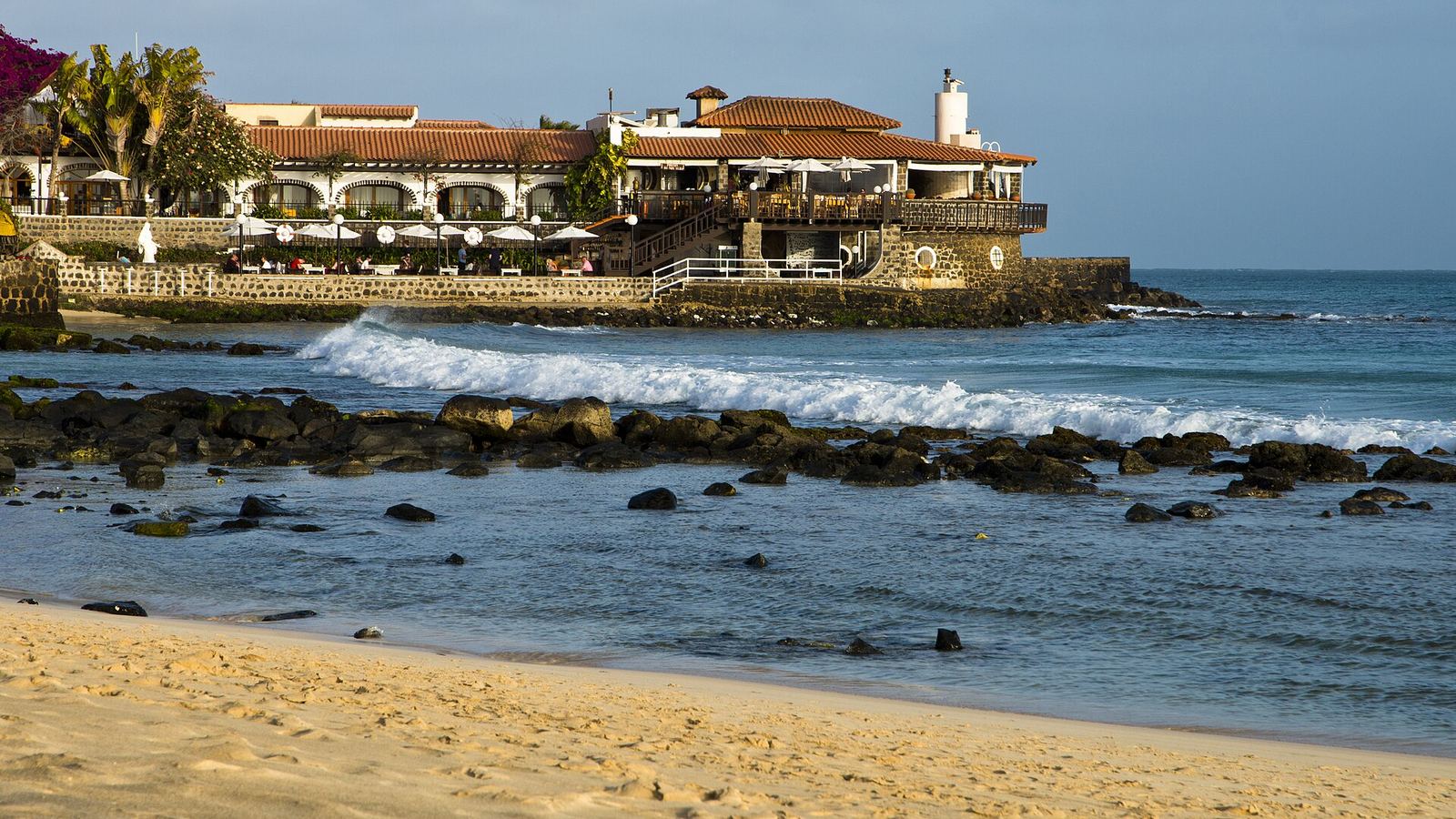
Sal is where most visitors to Cape Verde land and many never leave, and it is the easiest island in the country to stay connected on. The island is flat, its people live along a single road, and both Cape Verdean networks, Unitel T+ and Alou, cover Santa Maria, Espargos and Palmeira well. Every travel eSIM sold for the country rides Unitel T+, and so does the Morabeza eSIM Unitel sells directly at 10 euros for 10 GB.
What makes Sal distinctive for your phone is not the signal but the way the island works. There is no ride-hailing to book, taxis are agreed in cash, excursions are arranged over WhatsApp, and the big resorts' WiFi slows to a crawl when everyone comes back from the beach. The few places where signal does thin out, Buracona, Shark Bay and the empty north-east, are exactly the ones you will visit on a quad or an island tour.
What This Guide Covers
Jump to the section most relevant to you
How a Flat Desert Island Treats Your Signal
Sal is the opposite of the islands that make Cape Verde famous with hikers. It is about 30 kilometres long, mostly flat gravel plain and dune, and its highest point, Monte Grande, is barely 400 metres. For a phone that is good news. There are no ribeiras to swallow a signal, and the population is packed into a few places along one main road: Espargos in the middle, the airport just beside it, Santa Maria at the southern tip, and the port of Palmeira on the west coast.
Both Cape Verdean networks cover all of those well. Unitel T+, the network behind Airalo, Nomad and Unitel's own Morabeza eSIM, is perfectly adequate in Santa Maria and Espargos. Alou, the larger operator that used to trade as CVMovel, has the same towns covered and is the network most locals in the resort economy carry. In the hotel zone the bigger constraint is not coverage but load: when a few thousand guests return from the beach at sunset and start uploading, cells around the larger resorts slow down noticeably.
What your eSIM rides on Sal
Every travel eSIM sold for Cape Verde, and Unitel's Morabeza plans, run on Unitel T+. On Sal that is a non-issue in the towns. The places where we would not promise a signal are the empty north and east coasts, around Buracona and the long beach north of Kite Beach, where there is little reason for an operator to build.
We found no official coverage map from either operator. The assessments on this page combine the operators' claims of nationwide 4G with 2026 traveller reports, so treat the edges with some caution.
Aluguers, Taxis and the EN1
Nearly everything on Sal happens along a single road, the EN1, which runs from Palmeira through Espargos and past the airport to Santa Maria. Getting around is simple, but it is not app-driven, and that shapes how much data you actually need.
| How | Typical cost | Where your phone helps |
|---|---|---|
| Aluguer minibus | A small fixed fare in escudos, agree it before boarding | Little; they run the EN1 between Espargos and Santa Maria and leave when full |
| Taxi, airport to Santa Maria | Reported at 15 to 20 euros, more after midnight | Calling the hotel if the driver cannot find it |
| Taxi, airport to Espargos | A few euros | Minimal |
| Quad or buggy hire | Day rates from Santa Maria agencies | Offline maps for the dirt tracks to Shark Bay and Buracona |
| Hotel transfer | Often in the package price | WhatsApp with the rep if your flight is late |
We found no international ride-hailing app operating on Sal, so the habit of opening Uber at the kerb does not apply. Taxis wait outside the airport and at ranks in Santa Maria, fares are usually agreed rather than metered, and drivers take escudos or euros in cash. That means your data use in town is mostly maps, messaging, restaurant searches and the WhatsApp threads that every kite school, dive centre and excursion operator on the island runs on.
Save the island before you hire a quad
The tracks to Shark Bay, Buracona and the Terra Boa plain are unsigned dirt, and mobile signal on the east side is unreliable. Download Sal for offline use in your maps app while you are still on hotel WiFi.
Santa Maria, Espargos and Palmeira
Most visitors only meet Santa Maria, but Sal's three settlements have different personalities, and each gives your phone a slightly different job.
Santa Maria grew from a salt-exporting village into the island's resort town, and the old wooden pier, the pontao, where fishermen land tuna in the late morning, is still its centre. Hotels run west along Santa Maria beach toward Ponta Preta, the big-wave kitesurf spot, and east toward Kite Beach and the newer all-inclusives. Coverage is dense here on both networks; the bars around the main square have their own WiFi of varying quality.
Espargos, the island capital, sits on a low rise in the middle of Sal beside the airport. It is where Cape Verdeans who work in the resorts actually live, where the operators' town shops are, and where the aluguers start. If you need a physical SIM, a top-up with a specific pack, or a phone repair, Espargos usually has better stock and shorter queues than Santa Maria.
Palmeira, on the west coast, is the port and fuel terminal, and the place to watch fishing boats come in away from the tourist strip. It has normal town coverage. Inter-island ferries call here on some routes, though sailings are infrequent, so check with CV Interilhas before planning around one.
Murdeira and the in-between
The holiday villages at Murdeira bay, between Palmeira and Santa Maria, are close to the EN1 and generally covered. If you are renting a villa outside the towns, ask the owner which network works best inside the house, because thick walls matter more than distance on Sal.
Resort WiFi and the Rest
On a package holiday to Sal you will spend a lot of time on hotel WiFi, and its quality varies more than the brochures suggest. Large all-inclusive resorts usually include it, but it is shared by hundreds of rooms and travellers in 2026 report it congesting in the evenings, exactly when everyone wants to video call home or stream. Smaller hotels and apartment rentals in Santa Maria are hit and miss. When a whole building's line slows down, mobile data is often the faster connection.
| Where | What to expect |
|---|---|
| All-inclusive resorts | Free, fine by day, slow at sunset and after dinner |
| Santa Maria cafes and bars | Usually free with a purchase; ask for the password |
| Beach clubs and kite schools | Some have WiFi for customers; do not count on it on the sand |
| Town squares | Free public WiFi points exist in some Cape Verdean squares; we could not confirm which work on Sal |
| Apartment rentals | Varies from good fibre to nothing; ask before booking if you work remotely |
For a remote worker the practical answer is a decent mobile allowance used as a hotspot. Nomad allows tethering, and Morabeza says hotspot is supported. Open café and square networks are unencrypted, so use HTTPS sites and a VPN for anything sensitive.
Landing on Sal With a Plan
Most visitors arrive at Amilcar Cabral International, 2 kilometres outside Espargos and roughly 17 kilometres by road from Santa Maria. Many land on charter flights from northern Europe in the afternoon or evening, which matters because the operator desks near the arrivals exit are reported to close for late flights. Arriving with a working eSIM means you can message the transfer rep, check the taxi fare against what you have read and send the reassuring text home before the minibus leaves the car park. Our Amilcar Cabral Airport guide covers the terminal, desks and fares in detail.
Arrive with an eSIM
Buy locally instead
A simple plan for a week on Sal: buy a small eSIM or a Morabeza plan before leaving, use it from the moment the plane stops, and only bother with a shop if you find you want a local number for bookings.
Day Trips: Pedra de Lume, Buracona and Shark Bay
Sal's day trips are short drives, but several head to the empty east and north of the island, and that is where signal thins.
| Trip | From Santa Maria | Signal | Note |
|---|---|---|---|
| Pedra de Lume salt crater | About 25 km, beyond Espargos | Generally usable | The flooded crater of an extinct volcano where you float in brine. Lockers by the pans; leave the phone in a dry bag. |
| Shark Bay (Baia da Parda) | A short drive up the east coast | Patchy | Wade among young lemon sharks in the shallows. Tracks are rough; go with a guide or offline maps. |
| Buracona and the Blue Eye | Roughly 30 km, north-west coast | Weak or none | Lava pools and a cave where the sun lights the water blue around midday. Agree a return time with your driver beforehand. |
| Terra Boa mirage | Inland, north of Espargos | Variable | A flat plain famous for heat mirages. Mostly a stop on island tours. |
| Palmeira and Murdeira | 15 to 20 km, west coast | Good | The port, fishing boats and a quieter bay. Easy by aluguer. |
Most visitors do these on a half-day or full-day island tour, so the guide handles navigation and timing. If you go independently by quad or rental car, the practical rule is to set your meeting point and time while you still have signal, and to carry offline maps for the east side.
Heading to another island?
Boa Vista has its own international airport (BVC), and Praia (RAI) is the gateway for Santiago and Fogo. Inter-island flights and ferries change at short notice, so keep your line active through the transfer day. The Cape Verde guide covers coverage island by island.
Frequently Asked Questions
How much data does a week in Santa Maria actually take?
Less than many expect if your hotel WiFi works, and more if it does not. Maps, messaging, a few restaurant searches and photo sharing typically land around 2 to 4 GB for a week. If you plan to video call on mobile data because the resort WiFi slows in the evening, budget 5 GB or more. Unitel's Morabeza 10 GB plan at 10 euros covers almost anyone for ten days.
Is there Uber or Bolt on Sal?
We found no international ride-hailing service operating on Sal. Taxis wait at the airport and at ranks in Santa Maria and Espargos, fares are generally agreed before you set off, and cash in escudos or euros is normal. Your phone is useful for calling the hotel or the taxi driver, not for booking.
Will my phone work at the Pedra de Lume salt pans?
Usually, yes. The crater is close enough to Espargos and Pedra de Lume village to pick up a signal on most visits. The bigger risk is the brine, which is extremely salty and harsh on electronics. Leave the phone in a locker or a sealed dry bag while you float.
Can I buy a SIM in Santa Maria, or do I need to go to Espargos?
Top-ups are sold all over Santa Maria in grocery shops and pharmacies. For a new card, where you need to show your passport and have the line registered, the operators' shops in Espargos are generally the more reliable option. If you would rather skip shops entirely, both Alou and Unitel sell eSIMs online.
Does a Sal eSIM also work on Boa Vista and the other islands?
Yes. Every Cape Verde plan, travel brand or local, covers the whole country rather than a single island. Coverage quality is what changes: Boa Vista's towns are well served, while the hiking islands of Santo Antao and Fogo have long gaps away from the coast.