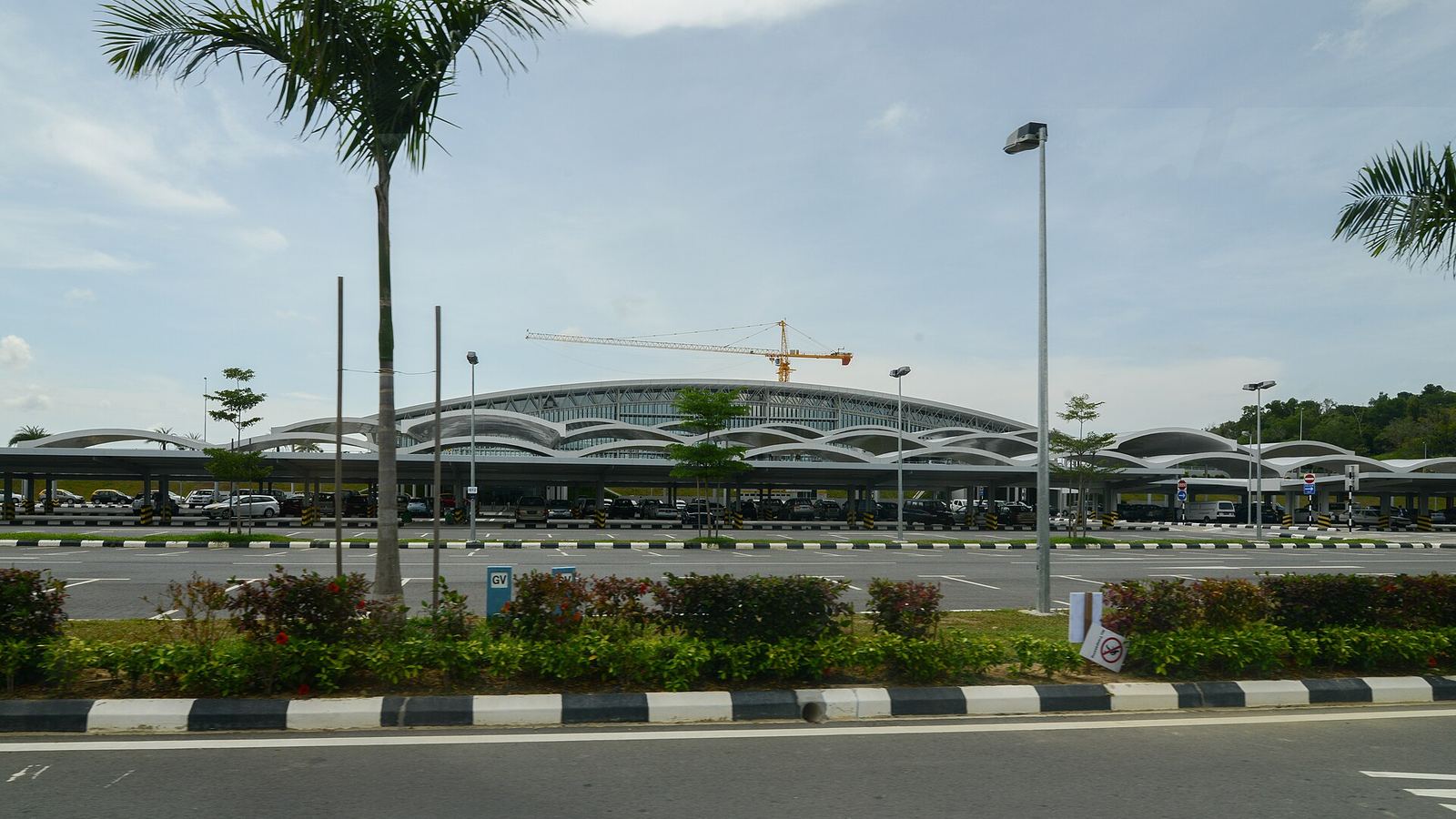
Brunei International handles a fraction of the traffic its regional neighbours do, and the arrivals experience is shaped accordingly: one terminal, a short walk from the aircraft to the kerb, and telecom counters that operate like shops rather than like airport concessions. That last detail is the one to plan around. The SIM desks here keep ordinary business hours, they thin out during Friday midday prayers, and a good number of Royal Brunei arrivals land outside those windows. There is a free WiFi network to fall back on, though it wants a registration form and hands you a fixed session rather than an open-ended one. None of this is a crisis in a country where the taxi rank is fifty metres away, but it does mean the standard advice applies with more force than usual: sort your connection out before you get here, because the alternative is a shuttered counter and a form-filling exercise on airport WiFi at nine in the evening.
What This Guide Covers
Jump to the section most relevant to you
The Telecom Counters in Arrivals, and When They Are Open
BWN is a single passenger terminal with arrivals on the ground floor, and the walk from immigration through baggage reclaim to the public concourse is short enough that you will pass everything the airport offers in under a minute. Counters for DST and Progresif sit in that arrivals area, with imagine also represented, alongside ATMs, currency exchange and the car rental desks.
All three sell the same connection, because Brunei has one physical network. Unified National Networks owns every base station in the country and wholesales access to the three retail brands, so the only thing being sold at those counters is a tariff and a phone number. There is no coverage comparison to make while you stand there deciding.
Hours are the thing to check, not the packages
Unlike the round-the-clock carrier shops you find at bigger Asian hubs, the desks here follow business hours. Late evening arrivals can find them closed, and Friday brings a nationwide midday pause between roughly noon and 2pm when shops and offices shut for prayers. Brunei's official weekend also falls on Friday and Sunday rather than the pattern most visitors assume, so a Sunday landing deserves a second look at the clock. If your flight arrives outside those windows, the counter is not a plan.
When they are open, the transaction is quick and the pricing is not marked up for the airport. DST's Easi tourist pack has run around 15 Brunei dollars for 3GB across seven days with a small call credit, Progresif's tourist plans sit in the 15 to 30 dollar band with larger allowances, and imagine's cheap starter SIM has gone for about 8 dollars with 2GB. Bring your physical passport: registration against an identity document has been mandatory since the regulator's code took effect in September 2024, and a photograph of the passport will not do.
BWN Free Wi-Fi and the 240-Minute Clock
Look for the network broadcast as BWN free Wi-Fi. Some devices also pick up a second airport SSID along the lines of Wifi@Airport, and reports differ on which is live in which part of the building, so if the first one refuses to load a page, try the other before assuming the service is broken.
Connecting is not instant. Join the network, open a browser, and a registration page appears asking for your details. Submit it and you get a free session of about 240 minutes, which is generous by airport standards and considerably more than you will need in a terminal this size. Speeds are adequate for messaging, checking a booking and getting a map loaded, rather than for anything demanding.
Using it as an emergency escape hatch
That four-hour session is long enough to buy and install a travel eSIM on the spot, which is the fallback worth remembering if you land at an hour when the telecom counters have closed. You need an unlocked handset with eSIM support, a payment card and about ten minutes. It is not the elegant way to do this, but it beats standing at the kerb without a way to book a car, and it costs the same as buying the plan at home would have.
The obvious limitation is that the connection has a perimeter. Brunei's airport sits roughly eight kilometres from the middle of Bandar Seri Begawan, and the stretch where a visitor most needs a working line is the one immediately after the sliding doors, deciding between a bus that may have finished for the day and an app that needs data to open. Sort the connection out inside the building, not outside it.
Getting Into Bandar Seri Begawan and Staying Online
The journey is short. Eight kilometres separate the terminal from the downtown waterfront, and outside peak hours it is a fifteen minute drive. What complicates it is that Brunei has near-universal car ownership and correspondingly thin public transport, so the cheap option runs on a schedule that ends early and the convenient option needs your phone.
| Route | Cost | Time | Notes |
|---|---|---|---|
| Purple bus (routes 23, 24, 34, 36, 38) | 1 BND, cash to the driver | 25 to 40 min | Runs to the BSB bus terminal downtown. Roughly one or two an hour, from about 6am, with the last airport departures around 6.30 to 7pm. |
| Dart ride-hailing | Around 11 to 12.50 BND, plus an airport surcharge near 3 BND | 13 to 20 min | Brunei's own app and the only ride-hailing service here. Pickup from a designated area outside arrivals. Needs data to book. |
| Metered taxi | Roughly 13 BND by meter, more at night | 13 to 20 min | Rank outside arrivals. Meter starts near 3.50 BND then adds about 0.20 per 250 metres, with a surcharge overnight. |
| Flat-rate airport taxi | 25 to 35 BND quoted | 13 to 20 min | Drivers frequently quote a flat fare rather than running the meter. Agree the number before getting in. |
| Rental car | Desks in arrivals | Immediate | The way most residents move. Sensible if you plan on Temburong, Tutong or the Belait coast under your own steam. |
The bus at one Brunei dollar is remarkable value and completely usable in daylight. The problem is the timetable: services wind down in the early evening, which rules them out for a large share of arrivals, and there is no late alternative on the public network.
The gap that pays for your eSIM
A Dart car into town lands somewhere around 11 to 15 Brunei dollars all in, while a flat-rate airport taxi quote can reach 35. That spread is roughly 20 Brunei dollars, about 15 US, on a single fifteen-minute ride, and it only exists if you can open an app on the kerb. Since a 3GB travel eSIM for Brunei costs about 13 dollars, arriving connected can pay for itself before you have left the car park. Coverage along the airport road is solid the whole way, so the connection you land with will hold.
The Stopover Problem Nobody Warns You About
A meaningful share of the people reading this are not visiting Brunei so much as passing through it. Royal Brunei Airlines uses BWN as a connecting point between Southeast Asia, Australasia and Europe, and it has actively encouraged travellers to break the journey here rather than sit in the terminal. Its stopover arrangement has offered hotel accommodation to passengers holding qualifying tickets with layovers beyond eight hours on selected routes, and a complimentary transit tour has been offered to long-haul passengers with layovers of more than five hours on services from cities including London, Brisbane, Perth and Auckland.
Both of those turn an airport wait into a short visit to the country, and both create the same connectivity problem. You clear immigration on a schedule you did not choose, at an hour you did not pick, with a fixed window before you must be back. That is precisely the situation in which a closed SIM counter costs you real time.
What a transit visitor should actually do
1. Install a Brunei or regional Asia eSIM at home and leave it dormant until you land. A short-duration plan is enough for a layover.
2. Cache offline maps of the capital and the airport road before you fly, because the transit window is too tight to spend twenty minutes downloading anything.
3. Note that the terminal is eight kilometres from downtown, so a five-hour layover realistically gives you three hours in the city.
4. Check whether your stopover falls across Friday midday, when the country pauses for two hours and most of what you came to see is shut.
The alternative, buying at the counter, is fine when it is open and useless when it is not. For a layover you cannot reschedule, that asymmetry is the whole argument.
Landing With a Line That Is Already Live
Brunei narrows the usual trade-off in an interesting way. In most countries you weigh a cheap local SIM on a good network against a pricier eSIM that may ride a weaker one. Here there is no weaker one. Every product available to you, local or international, connects to the same UNN infrastructure, so the entire comparison is about convenience and cost rather than signal quality.
Arguments for setting it up beforehand
Arguments against
The middle path that suits most people is to land on a travel eSIM and decide about a local number later, once you know whether your itinerary includes a guided Temburong day where somebody might need to ring you. The Brunei eSIM guide covers which international plans exist and what each one costs, and the Brunei SIM card guide covers the counter side in detail.
The Arrivals Counter Against a Travel eSIM
Brunei produces an unusually close contest, because the local product is not the bargain it would be elsewhere in the region and the eSIM is not riding an inferior network. Here is the comparison without a thumb on the scale.
| SIM bought at BWN | Travel eSIM | |
|---|---|---|
| Typical cost | About 15 BND for a tourist pack, near 11.70 USD | Around 13 USD for 3GB over 30 days, more for unlimited |
| Network | UNN, the only one there is | UNN, the only one there is |
| Available when you land | Only during counter hours, not Friday midday | Always, the moment the doors open |
| Passport required | Yes, the physical document | No |
| Brunei phone number | Yes | No, data only |
| Validity | Tourist packs often 7 days, SIM dies at 30 | Commonly 30 days on a metered plan |
| Keeps your home number live | Only on a dual-SIM handset | Yes, the physical SIM stays put |
| Best for | Longer stays, anyone needing a local number for tours | Stopovers, late or Friday arrivals, onward Borneo travel |
Read the second row again, because it is the whole story of connectivity in this country. The two columns are the same network. What you are choosing between is a counter that may be shut and a profile that is already installed, for a price difference of a dollar or two. Add the taxi arithmetic on top and the case for landing connected is stronger here than the small savings on paper suggest. If your route continues into Sarawak or Sabah, a regional plan naming both countries beats buying twice, and the Bandar Seri Begawan guide covers what your signal does once you reach the capital.
Frequently Asked Questions
Will the telecom desks be staffed when my flight lands at night?
Probably not. The DST, Progresif and imagine counters in the BWN arrivals area work business hours rather than operating around the clock, which is a reasonable choice at an airport this size but an awkward one if your Royal Brunei connection arrives in the evening. Friday adds a second gap, since the country pauses between roughly noon and 2pm for prayers, and Brunei's weekend falls on Friday and Sunday. Check your landing time against those windows, and if it falls outside them, arrive with a plan already installed.
What is the terminal WiFi called and how long does it last?
Connect to BWN free Wi-Fi, and if that will not load, try the second airport network some devices see as Wifi@Airport. Either way you open a browser, fill in a short registration form and get a free session of about 240 minutes. That is four hours, far more than anyone needs in a terminal you can cross in a couple of minutes, and long enough to purchase and install a travel eSIM on the spot if the counters have closed. Speeds suit messaging and maps rather than anything heavy.
What is the cheapest way to reach the capital from the terminal?
The purple bus, at one Brunei dollar paid in cash to the driver. Routes 23, 24, 34, 36 and 38 connect the airport with the BSB bus terminal downtown, taking 25 to 40 minutes with stops. The limitation is frequency and hours: expect one or two services an hour, starting around six in the morning, with the last departures from the airport somewhere between 6.30 and 7pm. Outside that window the only options are Dart or a taxi, both of which cost roughly ten times as much.
Is Dart cheaper than taking a taxi from the rank?
Usually yes, and predictably so. A Dart ride into Bandar Seri Begawan tends to land around 11 to 12.50 Brunei dollars with an airport surcharge near 3 dollars on top, while airport taxi drivers commonly quote a flat 25 to 35 rather than running the meter. That is a spread of roughly 20 Brunei dollars on a fifteen-minute journey, and it exists only if you can open the app outside the terminal. Dart is Brunei's own service, launched in 2017, and neither Uber nor Grab operates in the country.
Is there any point buying a Brunei plan for a short layover?
For a transit stop of five hours or more, yes. Royal Brunei has encouraged travellers to break their journey here, offering hotel accommodation on qualifying long layovers and complimentary transit tours to long-haul passengers, and both leave you clearing immigration on somebody else's schedule with a fixed window to be back. The city is eight kilometres away, the buses may have stopped, and the counters may be shut. A short-duration eSIM installed at home removes every one of those variables for the price of a couple of coffees.