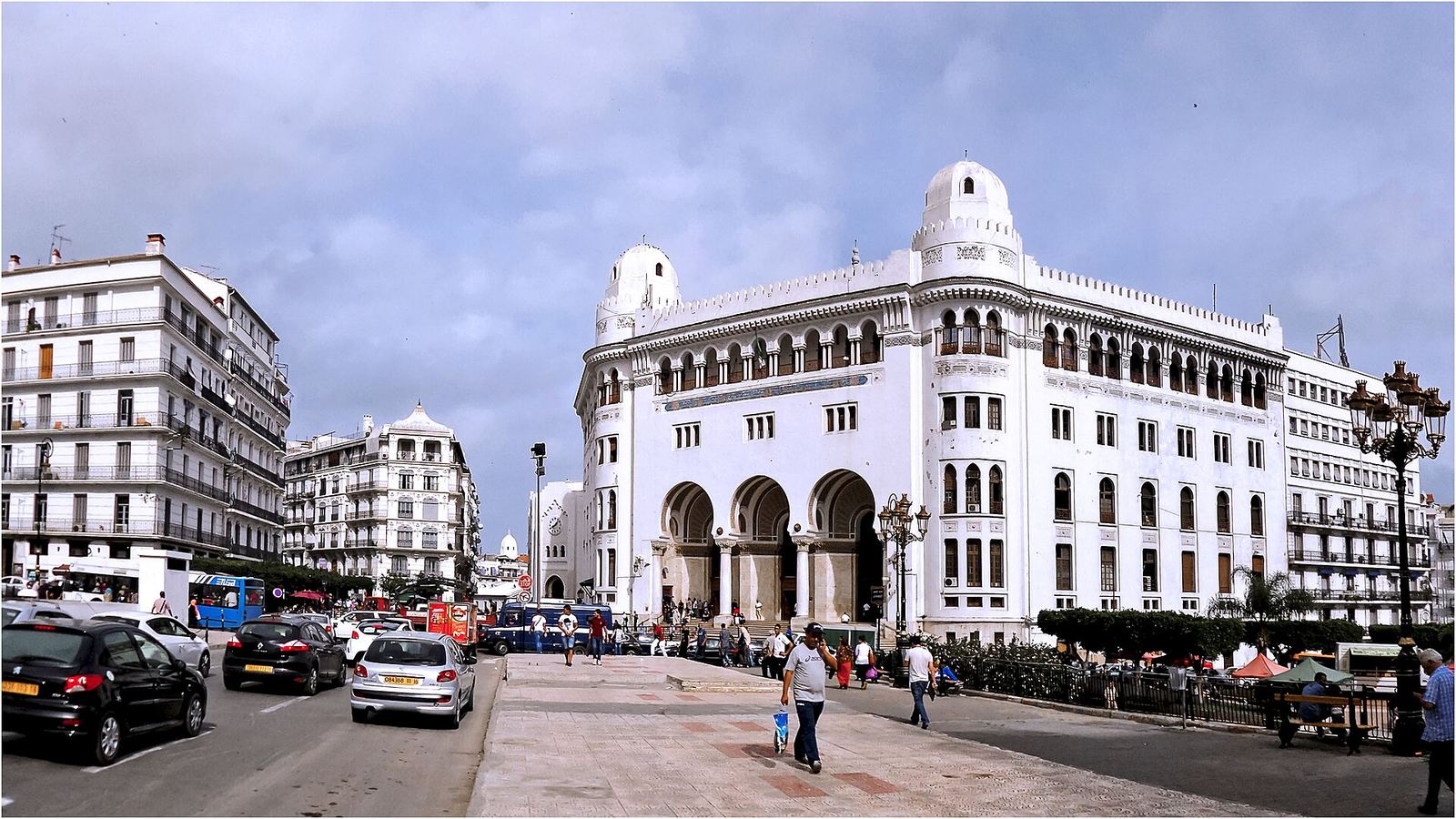
Algiers is the easy part of an Algeria trip for your phone: Ooredoo, Djezzy and Mobilis all blanket the city with 4G, and the first 5G sites are in the centre. Most visitors here are on business, visiting family or passing through on the way to the Sahara, and the city is not set up for tourists in the way Tunis or Marrakech are. Signs are in Arabic and French, taxi drivers rarely speak English, and the ride-hail app Yassir is the simplest way to get across town without a long negotiation. A working data connection does a lot of the translation for you.
Any of the three travel eSIMs is fine within the capital, and Nomad on Ooredoo is the cheapest. The things to plan around are the dead spots in the deep Casbah, the absence of public WiFi on the street, and the possibility of exam-day cuts if you are visiting in June.
What This Guide Covers
Jump to the section most relevant to you
A City Built on a Hillside, and What That Does to Signal
Algiers climbs straight up from its port. The white arcades of the colonial centre sit on a narrow strip by the water, the Casbah tumbles down the slope above them, and the residential heights of El Biar, Hydra and Ben Aknoun sit two to three hundred metres higher on the plateau behind. All three operators cover the whole of the wilaya with 4G, and in practice the hills help more than they hurt: masts on the heights see a long way across the bay.
Where signal does suffer is in the folds. The ravines that cut down from the plateau, the road tunnels on the expressways and the stone alleys of the lower Casbah all produce short dead spots. They are seconds, not minutes, but they are enough to break a ride-hail pickup pin or a video call.
| Network | Who uses it in Algiers | Travel eSIM access |
|---|---|---|
| Ooredoo | Strong in the centre and the eastern business districts, early 5G sites | Nomad, Airalo and Holafly |
| Djezzy | The biggest consumer network, everywhere in the city | Holafly only |
| Mobilis | Ministries, public bodies and many older residents | Airalo only |
For a stay in the capital, any of the three travel eSIMs will do the job, and the cheapest, Nomad on Ooredoo, is a perfectly good choice. The network question only becomes interesting once you head south.
Metro, Tram, Cable Cars and Yassir
Algiers has more rail transit than most visitors expect, and a phone with live data makes stitching it together far easier. Tickets cost a few dozen dinars and are bought at station counters in cash.
Metro Line 1
Opened in 2011, it runs from Place des Martyrs at the foot of the Casbah through Tafourah-Grande Poste and the Hamma district to El Harrach Centre, with a branch to Ain Naadja. Underground stations have mobile coverage on the platforms. The extension from El Harrach to the airport is still under construction.
The tramway
Runs east along the bay through the suburbs toward Bab Ezzouar and Bordj El Kiffan. It is on the surface throughout, so coverage is continuous, and it is the easiest way out to the eastern business district.
The cable cars
Several short teleferique lines climb from the lower city to the heights, including one up to the basilica of Notre-Dame d'Afrique above Bab El Oued. They are a cheap way to see the bay, and the ride is short enough that signal never becomes a concern.
SNTF suburban trains
Leave from Agha station, close to the centre, for El Harrach, Bab Ezzouar, the airport and further out along the Mitidja. Useful for the airport and for Blida.
For door-to-door trips, Yassir is the home-grown ride-hailing app that most Algerians use. It quotes a fare up front and matches you with a driver by GPS, so it needs a working data connection at the pickup point. Many riders pay in cash. Ordinary yellow taxis also work the city, but drivers rarely speak English, and showing a pinned location on a map on your phone is often the quickest way to agree where you are going.
Districts: the Casbah, the Centre, Hydra and Bab Ezzouar
The Casbah. The old Ottoman citadel quarter has been a UNESCO World Heritage site since 1992, and it is a maze of stepped lanes, arches and covered passages. Coverage is good at the top near the citadel and along the edges, but in the deepest alleys the stone walls can push you down to one bar or none for a stretch. Download an offline map of the quarter before you go in, and if you are with a local guide, which is the sensible way to visit, agree a meeting point in case you are separated.
Alger-Centre. The arcaded streets around the Grande Poste, Rue Didouche Mourad and Rue Larbi Ben M'hidi are where you will find the operators' main agencies, banks, cafes and most mid-range hotels. Signal is excellent and this is the most convenient place to buy a local SIM if you decide you want one.
Hydra and El Biar. The leafy heights are home to embassies, international company offices and the newer business hotels. Most visitors on a work trip end up here. Coverage is uniformly good, and the hotels have reliable fibre WiFi.
Bab Ezzouar. The modern business district out toward the airport, next to the large university campus, has glass towers, conference hotels and the big shopping centres. It is ten minutes from the terminals by road and fully covered by all three networks.
Photography and your phone
Algerian police are sensitive about photographs of government buildings, security installations and the port. Keep the camera down near ministries and checkpoints. This is a matter of local custom rather than connectivity, but your phone is what you will be holding.
WiFi in Algiers: Hotels Yes, Streets No
Fixed broadband in Algiers has improved quickly as Algerie Telecom has laid fibre, and hotels in the business districts generally offer decent WiFi. The large international hotels, such as the El Aurassi on the heights above the centre and the Sofitel by the Jardin d'Essai, have it throughout the building. Smaller hotels in the centre vary more, and evening speeds can drop when every room is streaming.
Cafes and pastry shops often have a password-protected network, and staff will usually share it if you ask. Public outdoor WiFi in squares and parks is rare, and the Casbah has essentially none.
Why the hotel WiFi is not a full answer
Algiers is a city where you will spend a lot of time moving between appointments in taxis and on foot, and where many arrangements are made by WhatsApp on the day. Hotel WiFi covers the evening; a mobile line covers everything else. During the June baccalaureate disruptions, fixed lines have sometimes been throttled along with mobile, so having both does not guarantee you will be online during exam hours.
If you rely on a VPN for work, test it on your hotel connection on the first evening rather than discovering a problem before an important call.
Day Trips: Tipaza, the Royal Mausoleum and the Chrea Cedars
The countryside around Algiers is green, hilly and well served by the road network, and the classic day trips all keep a usable signal for most of the way.
| Trip | Distance from Algiers | Coverage |
|---|---|---|
| Tipaza | About 70 km west along the coast | Good throughout the Roman ruins, a UNESCO site on the cliffs above the sea, and in the town |
| Royal Mausoleum of Mauretania | On the hills on the way to Tipaza | Good; the monument is on high ground with a clear view to the masts |
| Cherchell | About 90 km west, beyond Tipaza | Good in town; patchy on some of the coast road bends past Mount Chenoua |
| Chrea national park | About 50 km south, above Blida | Reliable in Blida, intermittent up the switchbacks and among the Atlas cedars near the summit |
Tipaza is the easy one: a fast coastal road, constant signal and a ruined Roman city that rewards a full morning. The Chrea trip climbs into the Blidean Atlas, where snow falls most winters and the cedar forest is the attraction; expect to lose coverage on parts of the mountain road and to regain it at the top. For any of these, check traffic on a map before you set out, because the westbound coast road out of Algiers is notorious for weekend jams.
Frequently Asked Questions
What does a working week in Algiers burn through in data?
For maps, Yassir rides, WhatsApp and some browsing, plan on about 3 to 5 GB a week, more if you make video calls away from the hotel. Nomad's 5 GB plan at 11 dollars covers most business trips; take the 10 GB plan if you will tether a laptop between meetings.
Can I use Yassir without an Algerian phone number?
The app registers you with a phone number and sends a verification code by SMS, so a data-only eSIM alone may not be enough to sign up. Registering with your home number before you leave, while it can still receive texts, usually solves this. Drivers commonly take cash, so you do not need a local wallet.
Is the signal good enough in the Casbah to navigate by phone?
Mostly, but not everywhere. The upper Casbah near the citadel and its edges have good coverage, while the narrowest stepped alleys lower down can drop to nothing for short stretches. Download an offline map of the quarter, and go with a local guide, which is how most visitors see it.
Where in central Algiers can I buy a local SIM if I change my mind?
The operators' agencies are concentrated around the Grande Poste, Rue Didouche Mourad and the other main streets of Alger-Centre, and there are more in Bab Ezzouar and the shopping centres. Bring your passport, your hotel address and cash in dinars.
Does the metro go to the airport yet?
Not yet. The Line 1 extension from El Harrach to the airport, with nine new stations, is still being built. For now the airport is reached by the SNTF train from Agha, ETUSA buses, taxis or Yassir.