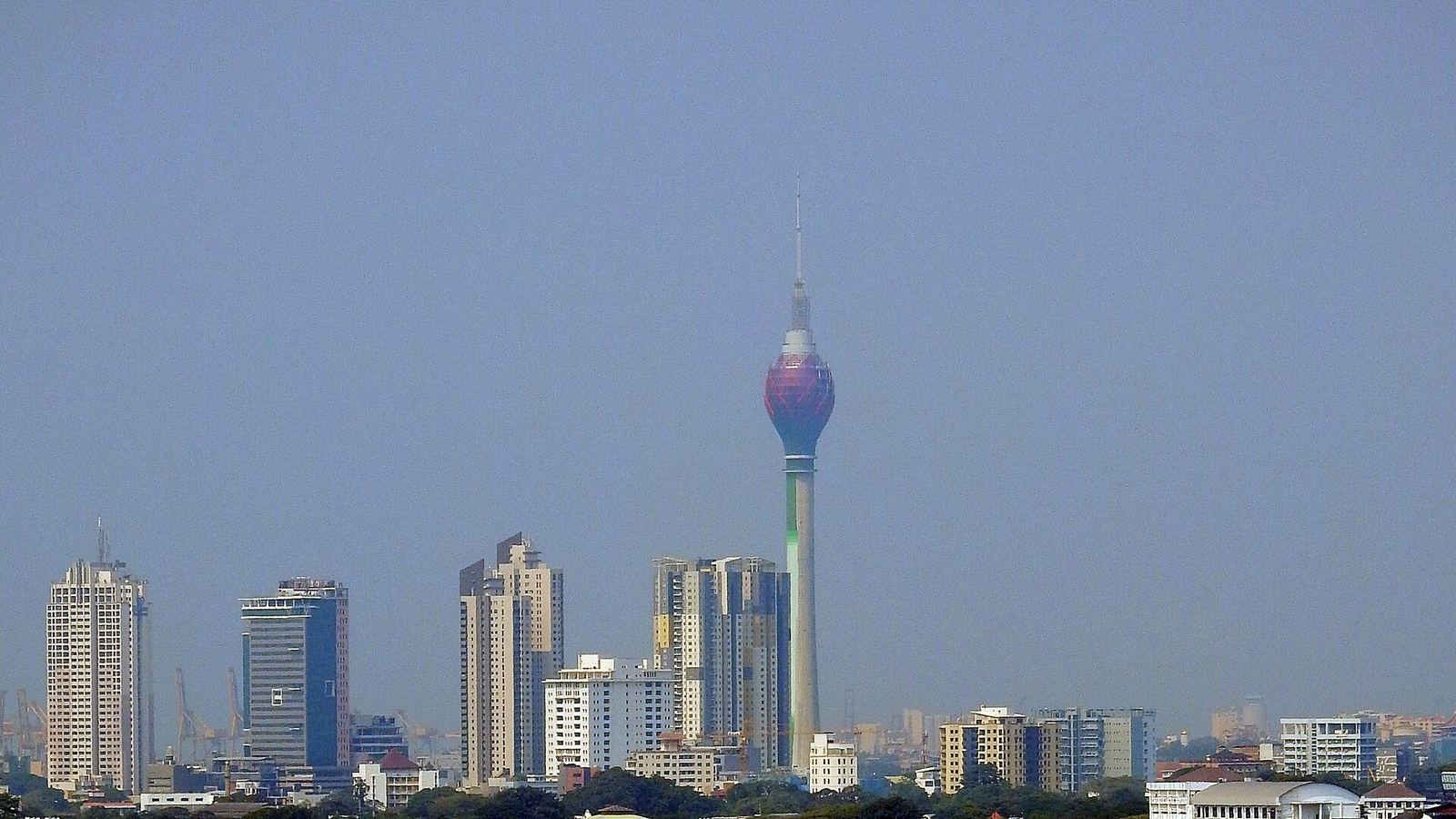
Colombo is where Sri Lanka feels most modern, and a travel eSIM is the simplest way to plug into it. You buy it before you fly, scan a QR code, and your phone is online the moment you clear the airport at Katunayake, ready to summon a PickMe, check the Airport Express timetable, or message your guesthouse in Fort. The capital runs on Dialog, Mobitel, and Hutch, with Dialog and Mobitel giving the strongest signal across the commercial heart of the city, so any reputable eSIM riding one of them keeps you connected through the traffic, the markets, and the seafront.
What This Guide Covers
Jump to the section most relevant to you
Colombo Mobile Coverage
Colombo is comfortably the best-connected city in Sri Lanka. Three carriers serve it: Dialog (the largest, and the one that tops the island's coverage and reliability testing), Mobitel (the SLT-Mobitel network, rated highest for download and upload speed island-wide), and Hutch (the budget operator, fine in the city core). Across Fort, Kollupitiya, Cinnamon Gardens, and the Galle Face seafront you get dependable 4G, and pockets of 5G have come online with Dialog and Mobitel in parts of the capital.
In day-to-day use, an eSIM in Colombo delivers smooth speeds for maps, PickMe, WhatsApp, translation, and video calls, with 5G adding extra headroom where you happen to catch it downtown. You will not notice which network your eSIM rides for ordinary city tasks. The one place to think harder about the carrier is the moment you leave the capital for the hills or the deep south, where Dialog and Mobitel pull ahead of Hutch.
Which network does my eSIM use?
Most Sri Lanka travel eSIMs ride Dialog or Mobitel. For a Colombo-only stay any of them is excellent. If your trip continues up to Kandy and Ella or down the coast to Galle, a Dialog-based plan such as Airalo has the edge once you are out of the city.
Getting Around Colombo: PickMe, Tuk-Tuks, and Trains
Colombo has no metro or subway, so staying connected matters more here than in cities with underground rail: your data is what gets you a ride and gets you to the right platform.
PickMe is the dominant local ride-hailing app and generally more reliable than Uber across the city, covering both metered cars and metered tuk-tuks. Both run on your mobile data, so a working eSIM lets you book, track, and pay without haggling a street fare. Hailing a tuk-tuk on the street still works fine, but the app keeps the price honest.
For longer hops, the rail network fans out from Colombo Fort station, the hub for coastal trains south toward Galle and the famous up-country line toward Kandy and Ella. Coverage along the busy coastal corridor and around the station itself is strong, so you can check live platforms and buy or show e-tickets on your phone. City buses are dense and cheap but crowded, and again your data is what makes the route apps usable.
Make PickMe your default
Set up the PickMe app and add a payment card while you are still on hotel or airport WiFi. With a live eSIM you can then order a car or tuk-tuk from anywhere in the city, see the fare before you accept, and avoid the tourist markup that comes with flagging a ride cold on the street.
Neighborhood Notes: Fort, Kollupitiya, Cinnamon Gardens
Colombo coverage is strong across the board, but here is how the main visitor districts feel in practice.
Fort (Colombo 1)
The old colonial core and financial heart, home to the port, the Old Dutch Hospital dining precinct, and Fort station. Signal is excellent here on Dialog and Mobitel, even among the high-rises and the crowds around the station, so checking train times and ordering a ride works without a hitch.
Kollupitiya (Colombo 3)
The commercial-and-residential strip running alongside Galle Face Green and the seafront promenade, packed with malls, hotels, and cafes. Coverage is consistently fast right along the waterfront, which is handy for evening strolls and street-food stops at Galle Face.
Cinnamon Gardens (Colombo 7)
The leafy upscale district of embassies, museums, and Viharamahadevi Park. It is quieter and lower-rise than Fort, and coverage holds up well throughout, so you stay online walking the park or hopping between the galleries and colonial mansions.
One district worth a separate note is Pettah, the dense bazaar quarter next to Fort, a warren of narrow lanes and hundreds of stalls selling textiles, spices, and electronics. The crowds are intense but the signal stays usable, which helps when you are navigating the maze or looking up a price mid-haggle. Across every tourist-facing part of Colombo you will struggle to find a true dead zone.
Free Public WiFi in Colombo
Colombo has a fair amount of free WiFi, but treat it as a backup rather than your main connection. Coverage is patchy once you step away from a venue, and the registration screens can be fiddly.
Where you will reliably find free WiFi:
- Hotels and guesthouses: nearly all offer free WiFi for guests, usually the most dependable connection you will use day to day.
- Cafes and restaurants: chains and independents around Fort, Kollupitiya, and Cinnamon Gardens commonly provide WiFi, sometimes with a code from the counter.
- Malls: the larger shopping centers along the Kollupitiya strip have free WiFi zones.
- Some public spaces: pockets of free municipal WiFi exist around the city, though sign-in can require a local mobile number.
Why WiFi alone is not enough
The gap shows the second you leave the cafe table. Out on the Galle Face promenade, in a tuk-tuk through Pettah, or at a roadside stop, the WiFi is simply gone, which is exactly when you need maps or PickMe. Public networks are also weaker for anything sensitive, so keep banking and passwords off them. A live eSIM keeps you online continuously, which is why most travelers use Colombo WiFi only as a fallback.
Getting Connected on Arrival
The smoothest plan is to buy and install your eSIM at home a day or two before you fly, then switch it on after you land at Bandaranaike (CMB). Most plans only start counting their validity from activation, so you will not waste a day on travel time.
Install before you fly
While you still have home internet, scan your provider's QR code to load the eSIM profile. Keep your usual SIM in place so your home number stays active for messages.
Use the airport WiFi if you need it
Bandaranaike offers free terminal WiFi if you still need to finish anything after landing, though with a pre-installed eSIM you usually will not. The airport sits about 35 km north of the city in Katunayake, so you want data sorted before the expressway ride in.
Switch over and confirm
After landing, turn on your eSIM line, set it as your data line, and enable data roaming if your provider says to. Within a minute or two you should see a carrier name and a signal. Open maps or PickMe to confirm you are online before you head for the taxi rank or the Airport Express bus.
This skips the SIM counter queue entirely. By the time other arrivals are lining up at the Dialog desk, you are already pricing a ride into Fort or Kollupitiya.
Day-Trip and Onward Coverage: Kandy, Galle, Sigiriya
Colombo coverage is uniformly strong, but the trips most visitors take next reach into terrain where the gap between carriers starts to matter.
| Destination | Coverage | Notes |
|---|---|---|
| Galle & the south coast | Very good | The coastal train and the towns of Galle, Unawatuna, and Mirissa are well covered on Dialog and Mobitel. |
| Kandy & the hill gateway | Good | Reliable around the lake and town center; signal fades on the climbing roads and the up-country line's tunnels. |
| Sigiriya & the cultural triangle | Variable | Fine in the towns and at the rock base, but patchier on rural approach roads through the dry zone. |
If your itinerary leans into the hills or the cultural triangle, choose an eSIM that rides Dialog, which keeps the strongest grip outside the cities, and download offline maps for the gaps. For the south-coast run, almost any well-reviewed Sri Lanka eSIM will keep you connected the whole way. Either way, a few minutes of offline-map prep before you leave Colombo saves a lot of guesswork on the road.
Frequently Asked Questions
Does my data work on the train from Colombo Fort?
Mostly yes on the busy lines out of Fort. The coastal corridor south toward Galle and the first stretch up toward Kandy have strong, near-continuous coverage on Dialog and Mobitel, so you can track stops and show e-tickets. The signal only really starts dropping once the up-country line climbs into the hill tunnels well beyond the city, so for Colombo departures and the coast you stay connected.
Is PickMe or Uber better for getting around Colombo?
PickMe is the dominant local app and usually the more reliable of the two in Colombo, covering both metered cars and tuk-tuks. Uber also operates, but PickMe tends to have more drivers and better tuk-tuk coverage. Either way you need working mobile data to book and track a ride, so set up the app on WiFi and keep your eSIM live to order from anywhere in the city.
Is the free public WiFi in Colombo any good?
It is fine as a backup but not as your only plan. Hotels, cafes, and malls around Fort, Kollupitiya, and Cinnamon Gardens offer free WiFi, and there are pockets of public WiFi too, though sign-in can want a local number. The signal vanishes the moment you step out to the street or into a tuk-tuk, exactly when you need maps, so most travelers rely on an eSIM and use WiFi only as a fallback.
How much data do I need for a few days in Colombo?
For a typical few days of sightseeing, with maps, PickMe, messaging, translation, and some social posting, most travelers do well on a 3 to 5 GB plan. If you stream video, make frequent video calls, or share a hotspot with a travel companion, lean toward a larger bucket or an unlimited plan so you are not watching the counter while you explore.
Will one eSIM cover Colombo and the rest of my Sri Lanka trip?
Yes. A Sri Lanka eSIM works nationwide, so the same plan that connects you in Colombo carries on to Kandy, Ella, the tea country, and the south coast. For trips heavy on the hill country or safari, pick a Dialog-based plan for the best reach outside the city, and size the data for the whole island loop rather than just your days in the capital.