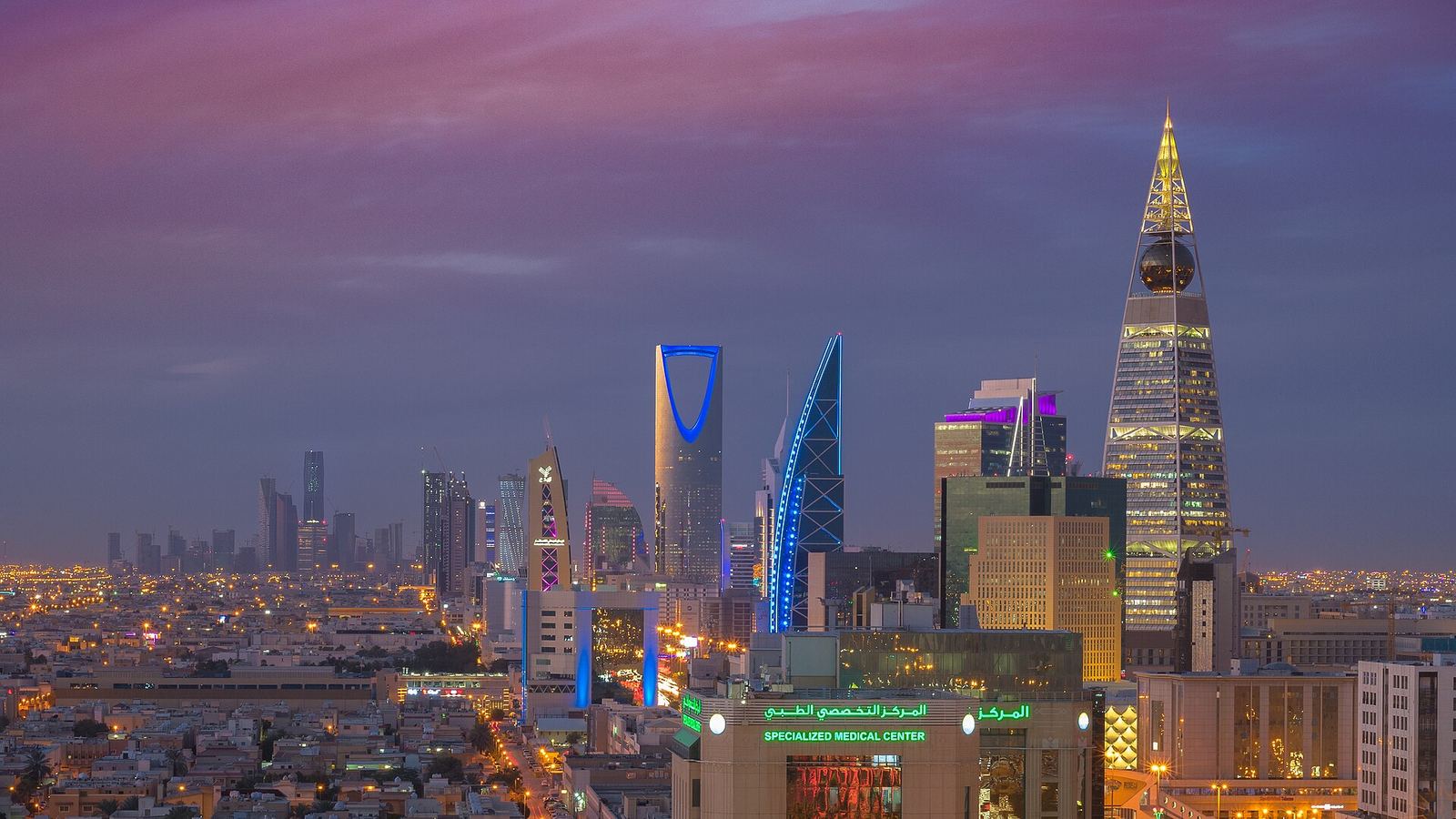
For almost every visitor, a travel eSIM is the easiest way to stay connected in Riyadh. You buy it before you fly, scan a QR code, and your phone is online the moment you land at King Khalid, with no counter and none of the biometric fingerprint registration that every physical Saudi SIM requires. Riyadh runs on three excellent networks (STC, Mobily, and Zain), 5G blankets the city, and any reputable eSIM rides one of them, so you get fast data across Olaya, the Diplomatic Quarter, and Diriyah, and continuous signal on all six lines of the new driverless metro that opened at the end of 2024.
What This Guide Covers
Jump to the section most relevant to you
Riyadh Mobile Coverage
Riyadh is one of the best-connected capitals in the region. Three carriers run the networks: STC (the former state operator and the largest, with the deepest reach), Mobily (fast and dense across the city), and Zain (strong in the urban core and the network most travel eSIMs use). All three deliver near-universal 5G across the capital, and Saudi Arabia consistently ranks among the top countries in the world for 5G availability.
In practice, a travel eSIM in Riyadh connects at 5G across most of the city, with STC posting the fastest download tests around 250 Mbps and everyday speeds comfortably in the tens to low hundreds of Mbps. You will not notice which carrier your eSIM uses for normal travel tasks: Google Maps, Careem and Uber, translation apps, video calls, and social media all run smoothly. The one coverage difference that matters is on the city's edges and out toward the desert, where STC keeps the strongest signal.
Which network does my eSIM use?
Most Saudi Arabia travel eSIMs ride Zain, which is excellent across Riyadh. For a city-only trip, any of the three networks is more than enough. If your plans reach out to the Edge of the World, a desert camp, or the long highways, a Holafly eSIM on STC has the edge once you leave the built-up area.
Riyadh Metro Data Coverage
This is the headline change for anyone who visited Riyadh a few years ago: the city now has a fully driverless metro, and your mobile data works throughout it. Opened from December 2024, the network runs six color-coded lines (Blue, Red, Orange, Yellow, Green, and Purple) across 176 kilometers and 85 stations, and in January 2025 Guinness World Records certified it as the longest driverless metro system on the planet. The carriers have built cellular coverage into the stations and tunnels, so you can keep navigating and messaging while the train moves between stops, above ground and below.
The system that ties it together is the Darb card and app. A reusable Darb card costs about 10 SAR and is topped up for both metro and bus; the Darb app handles trip planning, QR tickets, card reloading, and live network info, and you will want mobile data to run it on the move. A standard two-hour pass is around 4 SAR, a three-day pass about 20 SAR, and a seven-day pass roughly 40 SAR, which makes the metro a genuine bargain for getting around a sprawling city.
The station worth seeing in its own right
The King Abdullah Financial District (KAFD) station, a six-platform interchange for the Yellow and Purple lines designed by Zaha Hadid Architects, has become an architectural landmark in its own right. Coverage there is strong, so you can photograph the sweeping concourse and upload it on the spot. The Yellow Line also runs all the way to King Khalid airport, so you can ride the metro between the terminals and the city.
Neighborhood Notes: Olaya, the Diplomatic Quarter, Diriyah
Riyadh coverage is excellent citywide, but here is how the main visitor districts feel in practice.
Olaya and the city center
The high-rise heart of Riyadh, home to the Kingdom Centre with its sky bridge and the Al Faisaliah tower, plus Tahlia Street's cafes and shopping. This is the densest 5G in the city and speeds are consistently high, so streaming, ride-hailing, and posting from the observation deck all run without a hitch even when the district is busy.
The Diplomatic Quarter (DQ)
A leafy, low-rise enclave of embassies, walking trails, and newer cafes on the western side of the city. Coverage is solid throughout, and it is one of the more relaxed places to walk in Riyadh with your phone out for navigation. Signal holds well along the wadi paths and around the district's public art.
Diriyah and Al Bujairi
The restored mud-brick birthplace of the Saudi state, where the UNESCO-listed At-Turaif district and the buzzing Al Bujairi Terrace dining quarter draw big evening crowds. Networks here are well built out for the visitor numbers, so you will have data for tickets, maps, and photos, though signal can dip slightly inside the older heritage passages of At-Turaif.
The short version: you will not find a coverage dead zone in any district a tourist is likely to visit. The heritage sites at Diriyah and the walking areas of the DQ are as well covered as the high-rise center, and the metro links most of them.
Free Public WiFi in Riyadh
Riyadh has plenty of free WiFi, but it should be a backup, not your main plan. The big malls, hotels, and cafe chains all offer it, and the metro system is adding connectivity too, yet none of it follows you out onto the street where you need maps and a ride app.
Where you will find reliable free WiFi:
- Shopping malls: the Kingdom Centre, Panorama Mall, Riyadh Park, and the Granada and Nakheel malls all have free guest WiFi, sometimes after a quick SMS or number verification.
- Cafe chains: Starbucks, Dunkin', and the many Saudi specialty coffee shops offer dependable connections for the price of a drink.
- Hotels: essentially every hotel includes free WiFi, and it is usually fast.
- Some public and cultural venues: newer attractions, museums, and parts of the metro network provide guest access.
Why WiFi alone is not enough
Many Saudi WiFi portals ask for a local mobile number to send a verification code, which a visitor may not have, and the signal vanishes the second you leave the building, exactly when you need directions to a Diriyah entrance or a Careem pickup point. Public WiFi is also less secure for logins. An eSIM keeps you online continuously across the whole city, which is why most travelers treat WiFi only as a fallback.
Getting Connected on Arrival at King Khalid
The smoothest plan is to buy and install your eSIM at home a day or two before you fly, then activate it when you land at King Khalid International. Most plans only start counting their validity from activation rather than purchase, so you will not lose a day to transit time, and you arrive on the e-visa already connected.
Install before you fly
While you still have your home internet, scan your provider's QR code to add the eSIM profile. Keep your home SIM in place so your usual number stays reachable for messages and bank codes.
Use free airport WiFi if you need it
King Khalid has free WiFi across the terminals if you still need to activate or download anything after landing. Look for the airport network in your WiFi list; the SSID has changed over time, so confirm the current name on the signage or an information desk.
Activate and confirm
After landing, turn on your eSIM line, set it as your data line, and enable data roaming if your provider instructs. Within a minute or two you should see the carrier name and a data signal. Open maps to confirm you are online before you head for the taxi rank or the Yellow Line metro.
This skips the SIM counters entirely, along with the fingerprint registration they require. By the time other arrivals are queuing at the STC or Zain desk, you are already booking a Careem or tapping into the metro.
Day-Trip Coverage: Edge of the World, Diriyah, the Desert
Riyadh coverage is uniformly excellent, but the popular escapes reach into open desert where the gap between carriers starts to matter.
| Destination | Coverage | Notes |
|---|---|---|
| Edge of the World (Jebel Fihrayn) | Patchy near the cliffs | About 90 minutes northwest of the city on rough desert track; STC holds longest, but expect dead zones at the escarpment itself, so download offline maps. |
| Diriyah | Excellent | Within the city and heavily built out for visitors; full data across At-Turaif and Al Bujairi, with only slight dips in the old heritage passages. |
| Red Sand Dunes / desert camps | Variable | The nearer dune areas southeast of Riyadh have signal on the main roads; it thins out on the sand, and STC is the most reliable of the three. |
If your itinerary leans on desert trips like the Edge of the World, an STC-based eSIM has the strongest reach once you leave the paved roads. For those excursions specifically, download offline maps before you set out, because no carrier guarantees a signal at the escarpment or deep in the dunes. For a city-focused stay with the odd excursion, any well-reviewed Saudi Arabia eSIM will serve you well, and AlUla, the marquee heritage site, is a domestic flight rather than a day trip.
Frequently Asked Questions
Does my data work on the new Riyadh Metro?
Yes. The six driverless metro lines have cellular coverage in the stations and through the tunnels, so your eSIM keeps working while the train moves between stops, above ground and below. You will have data to run the Darb app for tickets and trip planning, and the KAFD interchange and the Yellow Line out to the airport are all well covered. There is no need to rely on station WiFi.
Do I need a local SIM to use the metro and buses in Riyadh?
No. You pay with a Darb card, which costs about 10 SAR and is topped up at station machines or through the Darb app, and it works for both metro and bus. A working data connection makes the app much easier to use for reloading and route planning, and a travel eSIM covers that without the fingerprint registration a local SIM would require. A two-hour metro pass is around 4 SAR.
Is the free WiFi in Riyadh good enough on its own?
It is fine as a backup but not as your only plan. Malls, hotels, and cafes across Riyadh offer free WiFi, but many portals ask for a local mobile number to send a verification code, and the signal disappears the moment you step outside, exactly when you need maps or a ride app. Public WiFi is also less secure for sensitive logins, so most travelers keep a working eSIM and use WiFi only as a fallback.
How much data do I need for a few days in Riyadh?
For a typical few days of sightseeing (maps, Careem and Uber, the Darb metro app, social media, and messaging), most travelers do well with a 3 GB to 5 GB plan. If you stream a lot of video, tether a laptop, or post many photos and reels from Diriyah and the Kingdom Centre sky bridge, consider 10 GB or an unlimited plan so you never have to ration data on a longer stay.
Will my eSIM work on a trip to the Edge of the World?
Mostly on the way, but not guaranteed at the cliffs. The Edge of the World sits about 90 minutes northwest of Riyadh down rough desert track, and coverage thins as you approach the escarpment. STC holds a signal longest of the three networks, so an STC-based eSIM like Holafly is the safer choice for desert day trips, but you should download offline maps before you leave the city because there are dead zones at the viewpoint itself.