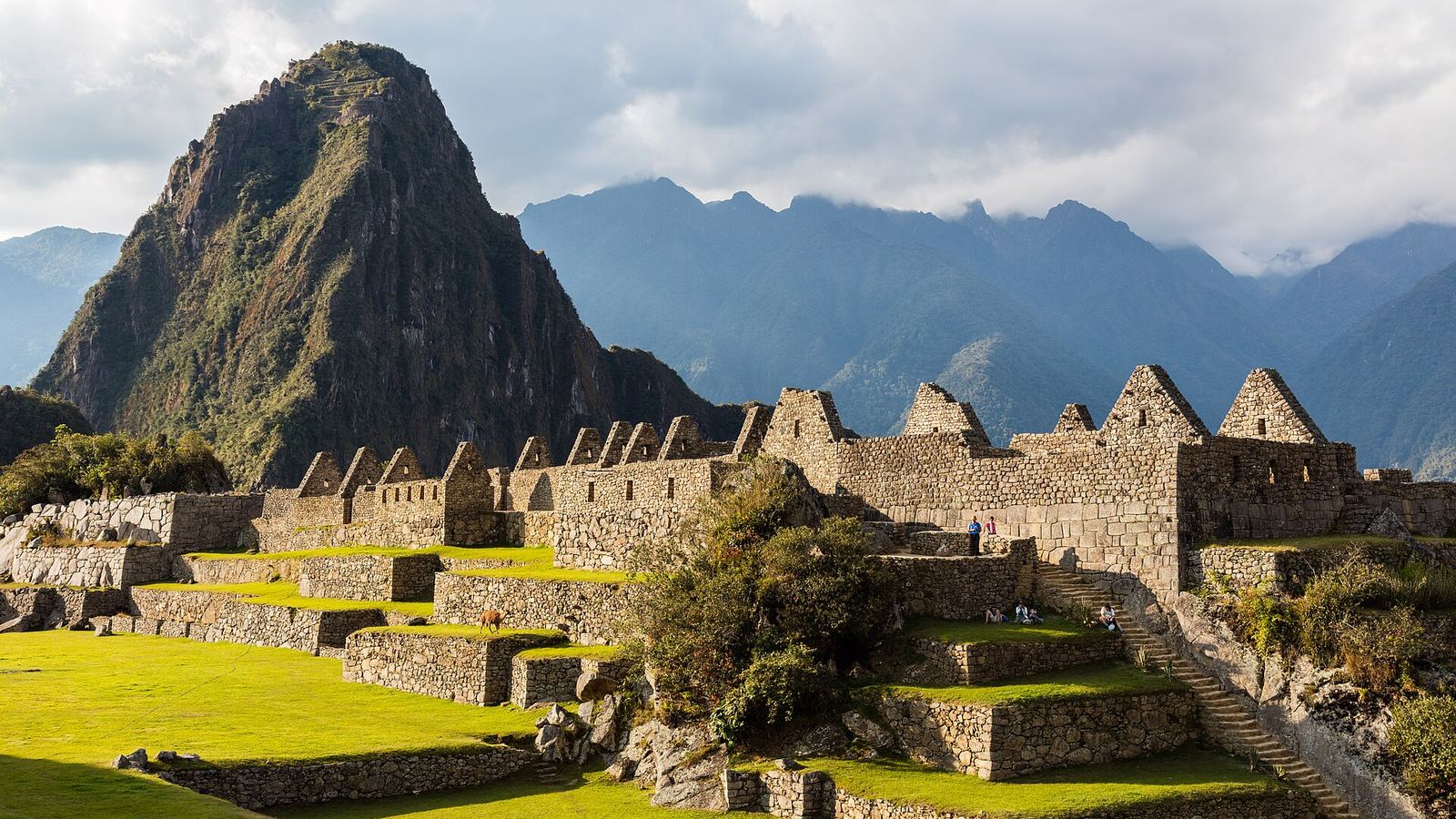
For most travelers stringing together Lima, Cusco, and Machu Picchu, Airalo is the smartest default eSIM in Peru, because its plan rides the Claro network that has the widest reach into the Andes and along the highland routes, and it will roam onto Movistar or Entel when Claro fades, which is exactly the flexibility you want climbing from the coast to 3,400 meters. A second reason matters more in 2026: Peru tightened prepaid SIM registration, so a foreign passport alone no longer reliably gets you a local chip, and a travel eSIM sidesteps that mess entirely. If you would rather never watch a data counter on a long Sacred Valley day, Holafly sells unlimited data and runs on both Claro and Movistar so your phone grabs whichever is stronger. Budget travelers who can estimate usage pay the least with Nomad, though it rides Entel only, the thinnest network for the mountains. Not sure how much data a Machu Picchu trip really burns? Run the eSIM Finder.
Quick Pick: the Best eSIM for Peru
Airalo (Peru 5 GB / 30 days): Connects on Claro, the network with the deepest highland and rural reach, and falls back to Movistar or Entel when Claro drops, with full hotspot support and in-app top-ups for a longer Cusco and Sacred Valley loop.
Our picks
Best overall: Airalo. Lowest per GB: Nomad. Unlimited: Holafly. Or use the eSIM Finder.
Peru eSIM Plans Compared
Indicative pricing. Tap through for live rates.
| Provider | Plan | Data | Duration | Price | Network |
|---|---|---|---|---|---|
| Airalo | Peru 1GB | 1 GB | 7 days | $5 | Claro / Movistar |
| Airalo | Peru 3GB | 3 GB | 30 days | $11 | Claro / Movistar |
| Airalo | Peru 5GB | 5 GB | 30 days | $16 | Claro / Movistar |
| Airalo | Peru 10GB | 10 GB | 30 days | $26 | Claro / Movistar |
| Airalo | Peru 20GB | 20 GB | 30 days | $37 | Claro / Movistar |
| Nomad | Peru 1GB | 1 GB | 7 days | $4 | Entel |
| Nomad | Peru 5GB | 5 GB | 30 days | $14 | Entel |
| Nomad | Peru 10GB | 10 GB | 30 days | $22 | Entel |
| Nomad | Peru 20GB | 20 GB | 30 days | $32 | Entel |
| Holafly | Unlimited 5-day | Unlimited | 5 days | $19 | Claro / Movistar |
| Holafly | Unlimited 7-day | Unlimited | 7 days | $27 | Claro / Movistar |
| Holafly | Unlimited 10-day | Unlimited | 10 days | $34 | Claro / Movistar |
| Holafly | Unlimited 15-day | Unlimited | 15 days | $47 | Claro / Movistar |
| Holafly | Unlimited 30-day | Unlimited | 30 days | $69 | Claro / Movistar |
Airalo Peru Plans
Airalo: Best All-Round Pick for a Lima-to-Machu-Picchu Trip
Peru plans on Claro with roaming onto Movistar and Entel, plus hotspot and easy top-ups
Airalo's Peru eSIM connects to Claro, the network with the broadest reach across the cities, the coast, and the highland routes, and travelers report it hopping onto Movistar and occasionally Entel when Claro weakens. That roaming flexibility is genuinely useful on a trip that runs from Lima up through the Sacred Valley, because the strongest carrier changes as you gain altitude, and an eSIM that can switch quietly beats a single-network local SIM on the mountain roads.
The 1GB plan suits a short Lima city break where hotel WiFi does the heavy lifting and you just want data for maps and messaging between neighborhoods. For a two-week Lima, Cusco, and Machu Picchu loop, the 5GB or 10GB plan leaves comfortable headroom, and in-app top-ups mean a long stretch in the mountains with no easy shop never strands you. Full hotspot support helps when you want to share one connection across a group on a long overnight bus.
Strengths
Weaknesses
Holafly Peru Plans
Holafly: Best for Unlimited Data and Dual-Network Reach
Flat-rate unlimited data across both the Claro and Movistar networks
Holafly's Peru plan is the rare travel eSIM that draws on two networks, Claro and Movistar, which is a real advantage on the highland routes where a single carrier can lose signal for a ten to thirty minute stretch. When one network drops on a Sacred Valley switchback, your phone latches onto the other, so the dual footprint plus unlimited data makes Holafly the choice for anyone who would rather never think about coverage or a usage counter.
Unlimited also earns its keep on Peru's long-distance days: stream on an eight-hour Lima-to-Paracas coach, video call family from a Cusco balcony, or back up a day of Machu Picchu photos without rationing a gigabyte. Plans run from 1 to 90 days, so it fits both a quick Lima layover and a months-long South America stint. As with every unlimited eSIM, a fair-usage policy can ease speeds after very heavy consumption, and it will not manufacture a signal where no tower exists on the trekking trails.
Strengths
Weaknesses
Nomad Peru Plans
Nomad eSIM: Best Value Per Gigabyte
Among the lowest per-GB prices for Peru, with the trade-off of an Entel-only network
Nomad usually posts the lowest headline prices for Peru, with small plans starting cheap and a 5GB bucket that tends to undercut Airalo. If your trip stays mostly around Lima and the larger cities, where Entel is perfectly capable, and you have a realistic read on your data needs, Nomad squeezes the most out of your budget. It also lists an unlimited option, though that plan carries a 2 GB per day fair-usage cap, so it is not truly bottomless.
The honest catch is the network. Nomad's Peru plans run on Entel, which is fine in the capital but the thinnest of the four carriers once you head into the Andes, the Sacred Valley, and the Machu Picchu corridor, precisely where a traveler most wants a signal. For a Lima-focused or business trip that rarely matters, and the price is hard to beat. For a classic mountain itinerary, an Airalo or Holafly plan on Claro or Movistar is the safer companion even at a higher price.
Strengths
Weaknesses
Mobile Networks in Peru
Peru has four mobile networks, and the difference between them is not academic once your trip climbs off the coast and into the mountains, because a great deal of what a visitor comes to see sits above 3,000 meters on ridgelines and in narrow valleys where towers are scarce and terrain blocks the signal.
Claro is the market leader, holding roughly 30 percent of subscribers, and it offers the strongest all-round coverage in the country: the cities, the main highways, and a lot of the rural Andes that the smaller carriers skip. Regulator testing regularly puts Claro on top in more regions than any rival, which is why it is the network most travelers should want under their eSIM for a Lima-to-Cusco itinerary. Movistar, the old Telefonica operation that changed hands to a new owner in 2025, remains the second-largest network by lines and is the carrier trekkers most often single out for the Machu Picchu and Inca Trail corridor, where its towers reach a touch further than the others. Entel sits in the middle of the pack on speed and coverage, perfectly good in Lima and the larger towns but thinner in the deep highlands. Bitel, owned by Vietnam's Viettel, is the rural specialist: it has quietly wired up remote districts with single-tower LTE sites backhauled over satellite, so it sometimes surprises you with a bar of signal in a village where the others show nothing. The practical takeaway for eSIM buyers: the plans that ride Claro or a Claro-plus-Movistar mix give you the best odds across the tourist route, while an Entel-only eSIM is the weakest fit for the mountains.
5G in Peru
5G is live but concentrated. Operators picked up mid-band spectrum in late 2025 and switched on commercial 5G across Lima, Callao, and the larger provincial cities, so you will see it in the capital and maybe in central Cusco. Almost everywhere else, and certainly on the highland routes, you are on 4G/LTE, which typically delivers 10 to 40 Mbps, plenty for maps, WhatsApp, ride apps, and video calls. Treat 5G as a Lima bonus, not something you will lean on at 3,400 meters.
Coverage Across Peru
Coverage where travelers actually go:
| Area | Coverage | Notes |
|---|---|---|
| Lima & the coast | Excellent | Full 4G/5G across Miraflores, Barranco, San Isidro, the airport corridor, and the Panamericana on all four networks. |
| Cusco city | Very good | Strong 4G around the Plaza de Armas, San Blas, and the main streets despite the 3,400 meter altitude; Claro and Movistar lead. |
| Sacred Valley (Pisac, Urubamba, Ollantaytambo) | Variable | Usable in the town centers and the Ollantaytambo train hub; weak or gone on the switchback roads and ridge viewpoints between them. |
| Machu Picchu & Aguas Calientes | Variable | Aguas Calientes has reliable 4G on Claro and Movistar; inside the ruins signal is patchy, strongest near the entrance and fading deeper in. |
| Inca Trail & Salkantay trek | Patchy | Signal at the day-one trailhead and near the final campsite, then long dead stretches for hours between; download offline maps first. |
| Rainbow Mountain & high passes | Patchy | A bar at the Vinicunca trailhead on a good day, nothing at the 5,000 meter summit; treat any signal above the treeline as luck. |
How to Choose the Right Plan
Start with where your trip actually goes. For the classic circuit that runs Lima, Cusco, the Sacred Valley, and Machu Picchu, you want a network with real highland reach, which points to Airalo on Claro for balanced metered data, or Holafly if you would rather pay one flat rate for unlimited across both Claro and Movistar and never ration. Then size your data: 5 to 10 GB covers most two-week trips given how much hotel WiFi you will use, while heavy streamers and frequent tetherers are happier on Holafly's unlimited plan. Nomad is the value pick, and it is genuinely fine for a Lima-centered or coastal trip, but its Entel-only network is the weakest of the four in the mountains, so think twice before relying on it for a Cusco itinerary. One thing no plan can fix: the long dead zones on the Inca Trail, Salkantay, and the 5,000 meter passes, where you should carry offline maps regardless of provider.
Frequently Asked Questions
Will a travel eSIM actually hold a signal at Machu Picchu and in the Sacred Valley?
In the towns, mostly yes. Aguas Calientes, the village below Machu Picchu, has reliable 4G on Claro and Movistar, and the Sacred Valley towns of Pisac, Urubamba, and Ollantaytambo have usable coverage in their centers. Inside the Machu Picchu ruins the signal is inconsistent, best near the entrance and weaker as you walk deeper, and on the switchback roads between valley towns it drops out entirely. Pick a Claro-based eSIM for the best odds and download offline maps for the citadel itself.
Which eSIM network is best for the climb from Lima up to Cusco?
Claro has the widest highland and rural footprint, so an eSIM that rides Claro, or a Claro-plus-Movistar mix, gives you the best coverage as you go from sea level to Cusco at 3,400 meters. Airalo runs primarily on Claro and roams to Movistar and Entel when needed, which is handy on the mountain routes. Nomad rides Entel only, the thinnest network for the Andes, so it is the weakest choice if your trip leaves Lima for the mountains.
Can I still just buy a local SIM at the counter in Peru in 2026?
It got harder. Peru tightened prepaid registration in late 2025, and the rules now lean on Peruvian ID and biometrics, so a foreign passport alone no longer reliably registers a chip at a regular carrier store. Tourist-focused sellers like the PeruSIM stand at Lima airport still register passports, but at marked-up prices. A travel eSIM avoids the registration question completely, which is a bigger deal in Peru now than it was a year ago.
Is there any phone signal on the Inca Trail or the Salkantay trek?
Only in patches. There is usually signal at the day-one trailhead and near the last campsite before Machu Picchu, but the classic Inca Trail and the Salkantay route both run through long dead zones that can last for hours, and service drops to 3G or nothing at the high passes. No eSIM or local SIM changes that, since it is a tower-coverage problem, not a plan problem. Download offline maps in Cusco before you set off and treat any bar of signal on the trail as a bonus.
How much data should I budget for a two-week Peru trip?
Most travelers use around 5 to 10 GB over two weeks for maps, WhatsApp, ride apps, tour and train bookings, and social media, since almost every hotel and hostel has WiFi. If you plan to stream on long bus rides, video call home from Cusco, or tether a laptop, size up to 15 or 20 GB, or take an unlimited Holafly plan so you never ration data in a spot where topping up is awkward.
Can one eSIM cover Peru plus Bolivia or Chile on the same trip?
Yes. Airalo and Holafly both sell regional South America plans that bundle Peru with neighbors like Bolivia, Chile, and Ecuador on a single eSIM, which suits an overland loop toward Lake Titicaca and beyond. For a Peru-only itinerary, a single-country plan is almost always cheaper per gigabyte, so only reach for the regional plan if you are genuinely crossing borders.