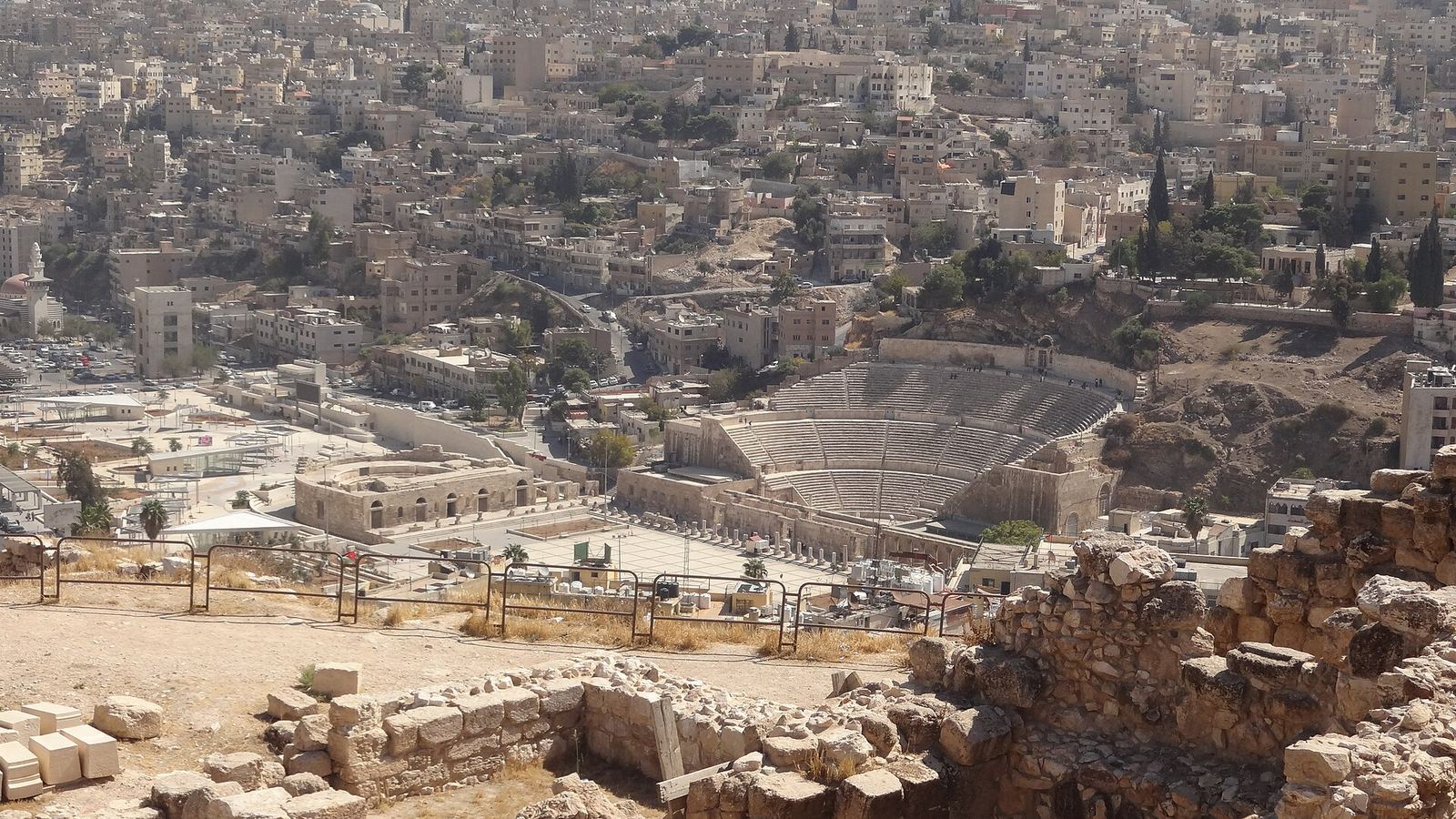
For nearly every visitor, a travel eSIM is the simplest way to stay online in Amman. You buy it before you fly, scan a QR code, and your phone connects the moment you land at Queen Alia, so you can order a Careem from the curb instead of hunting for a carrier booth. Amman runs on three solid networks (Zain, Orange, and Umniah), and any reputable eSIM rides one of them for fast 4G and growing 5G across the city's famous seven hills, from Downtown up to the embassies of Abdoun.
What This Guide Covers
Jump to the section most relevant to you
Amman Mobile Coverage
Amman is one of the best-connected cities in the Middle East. Three carriers run the networks: Zain (the largest, with the deepest national reach), Orange (very strong in the capital, with fast 5G), and Umniah (the budget option, perfectly capable inside the city). All three blanket the built-up areas with 4G/LTE, and 5G is now live across central Amman on Zain and Orange.
In day-to-day use a travel eSIM in Amman delivers a comfortable 20 to 60 Mbps on 4G, and considerably more where 5G reaches. The city's hilly layout, those seven jebels with valleys between them, occasionally weakens a signal in a deep wadi or a stone-walled basement cafe, but you will not find a coverage dead zone anywhere a visitor is likely to go. Maps, translation apps, Careem, video calls, and uploading photos from the Citadel all run without fuss.
Which network should my eSIM use in Amman?
For an Amman-only stay, any of the three networks is fine. The moment your plans include day trips or onward travel south to Petra and Wadi Rum, choose an eSIM that lists Zain, which holds its signal far better outside the capital than Umniah does.
Getting Around Amman Without a Metro
Here is the thing first-timers need to know: Amman has no metro, tram, or train. The city moves on roads, and as a visitor you will lean on a phone-based mix of ride-hailing and taxis, which makes a working data connection close to essential rather than a nice-to-have.
Careem, the locally dominant ride-hailing app, is the easiest way to get around, with Uber also operating in the city. Both let you set a destination, see the fare up front, and pay by card, which sidesteps the haggling that can come with street taxis. The official yellow taxis are metered and a touch cheaper than the apps if the meter is actually used; the white service taxis run fixed shared routes between set points for tiny fares.
Why data matters more than usual here
Amman addresses lean on circles (First through Eighth Circle) and landmarks rather than tidy street numbers, so pinning your exact spot in Careem and following the live map is how you actually arrive where you mean to. Without data you are explaining a hilltop address to a driver in halting Arabic. A working eSIM turns every ride into a tap.
For the budget-minded, public buses and the growing Bus Rapid Transit (BRT) network cover the main corridors for a fraction of a dinar per ride, with BRT buses even carrying free onboard WiFi. They are handy but not intuitive for short visits, so most travelers stick with Careem and save the buses for set journeys.
District Notes: Downtown, Abdali, Abdoun
Coverage is strong citywide, but here is how the main visitor districts feel on the ground.
Downtown (Al-Balad)
The old heart of the city, packed with souks, the Roman Theatre, and stepped alleys climbing the hills above. Signal is reliable throughout the bustle, though the densest covered markets and a few stone-walled basements can dip briefly. Plenty of cafes here offer WiFi, but your eSIM is faster for pulling up the next sight as you wander.
Abdali
Amman's newest district, built around the pedestrian Boulevard with glass towers, hotels, and chain cafes. This is prime 5G territory on Zain and Orange, with the fastest speeds you will find in the city. Easy to stay connected here while you work from a cafe or book onward travel.
Abdoun and Jabal Amman
Upscale Abdoun holds the embassies and rooftop restaurants, while leafy Jabal Amman runs along Rainbow Street with its converted villas, cafes, and valley views. Coverage across both is excellent and steady, ideal for hopping between dinner spots and calling a Careem home after dark.
The short version: every district a visitor frequents, from gritty Al-Balad to polished Abdoun, has dependable data. The hills create the odd momentary dip in a deep valley, but nothing that interrupts navigation or messaging for long.
Free Public WiFi in Amman
Amman has plenty of free WiFi, but treat it as a backup rather than your main connection. The most dependable hotspots cluster in the places visitors already spend time.
- Cafes and restaurants: Amman's strong cafe culture means most places on Rainbow Street, in Jabal Al-Weibdeh, and across Abdali offer free WiFi with a password from the staff.
- Hotels: nearly every hotel and hostel includes free WiFi, usually solid in the lobby and rooms.
- Malls: large malls such as those in Abdali and Abdoun provide free guest WiFi.
- BRT buses: the newer Bus Rapid Transit buses carry free onboard WiFi for the length of the trip.
Why WiFi alone falls short in Amman
The catch is the gaps between hotspots. The instant you step out of the cafe to flag a ride or climb to a viewpoint, the WiFi is gone, which is exactly when you need a map or Careem on a hilly, circle-based road network. Public WiFi is also less safe for logins. An eSIM keeps you online continuously across the city, so WiFi becomes a convenience rather than a lifeline.
Getting Connected on Arrival in Amman
The cleanest plan is to buy and install your eSIM at home a day or two before you fly, then switch it on after you land at Queen Alia. Most plans only begin counting their validity from activation, not purchase, so you will not waste a day on the flight over.
Install while you still have home internet
Scan your provider's QR code to load the eSIM profile before you leave. Keep your usual physical SIM in place so your home number stays active for two-factor codes and messages.
Connect to airport WiFi if you need it
Queen Alia has free WiFi across the terminal under the network Airport-Free-WIFI, useful if you still need to download or finish activating anything after landing.
Switch on the eSIM and order your ride
After landing, turn on the eSIM line, set it as your data line, and enable roaming if your provider says to. Within a minute or two you will see the carrier name and a signal. Open Careem to price your ride into Amman before you reach the curb.
Done this way, you walk past the carrier booths in arrivals already connected, with your transfer or Careem sorted while other travelers are still queuing for a SIM.
Day-Trip Coverage: Jerash, Dead Sea, Madaba
Amman makes a natural base for day trips, and coverage on the popular ones is mostly good, though it varies by direction and carrier.
| Destination | Coverage | Notes |
|---|---|---|
| Jerash | Excellent | The Roman ruins lie north in well-covered territory; all three carriers are reliable, even Umniah. |
| Dead Sea | Good | Solid along the resort strip and the Dead Sea Highway on Zain and Orange; patchier on the steep descent road and the quieter southern shore. |
| Madaba & Mount Nebo | Very good | Strong in Madaba town and at the Mount Nebo viewpoint over the Jordan Valley on Zain and Orange. |
If your day trips push toward the Dead Sea or you plan to continue south afterward to Petra and Wadi Rum, favor an eSIM on Zain, which keeps its signal best as you leave the capital. For the northern run to Jerash any network is fine. Either way, save an offline map before you set out, so a brief dip on a descent road or in a valley never leaves you guessing the route.
Frequently Asked Questions
Is there a metro or train in Amman for getting around?
No. Amman has no metro, tram, or train. Visitors get around mainly with the Careem ride-hailing app, Uber, metered yellow taxis, and shared white service taxis, plus public buses and a growing Bus Rapid Transit network on the main corridors. Because the city runs on roads with a circle-and-landmark address system, a working data connection to use Careem and live maps makes getting around far easier.
Does mobile data work well across Amman's hilly districts?
Yes. Coverage is strong across all the districts a visitor frequents, from Downtown (Al-Balad) up to Abdali, Abdoun, and Jabal Amman, with fast 5G on Zain and Orange in the central areas. The city's hills can cause a brief dip deep in a valley or a stone-walled basement, but there are no real dead zones in the visitor areas, and maps, Careem, and messaging keep working throughout.
Should I rely on free WiFi or get an eSIM in Amman?
Get an eSIM and treat WiFi as a backup. Amman's cafes, hotels, and malls offer plenty of free WiFi, and the newer BRT buses even have it onboard. The problem is the gaps: the moment you step outside to flag a ride or climb to a viewpoint, the WiFi is gone, exactly when you need a map or Careem. An eSIM keeps you online continuously across the hilly, road-based city.
How much data do I need for a few days in Amman?
For a typical three to four days of sightseeing, with maps, Careem rides, messaging, translation, and posting photos, most travelers do well on 3 to 5 GB. Hotels and cafes offer WiFi that takes pressure off your data. If you stream a lot of video or plan to share a hotspot, step up to a larger bucket or an unlimited plan so you are not rationing data on the move.
Will my eSIM keep working on a day trip to the Dead Sea or Jerash?
Mostly yes, with some variation. Jerash to the north has excellent coverage on every carrier. The Dead Sea is good along the resort strip and the highway on Zain and Orange, though it can get patchy on the steep descent road and the quieter southern shore. Madaba and Mount Nebo are well covered too. Pick a Zain-based eSIM if you are continuing south afterward, and save an offline map for the descents.