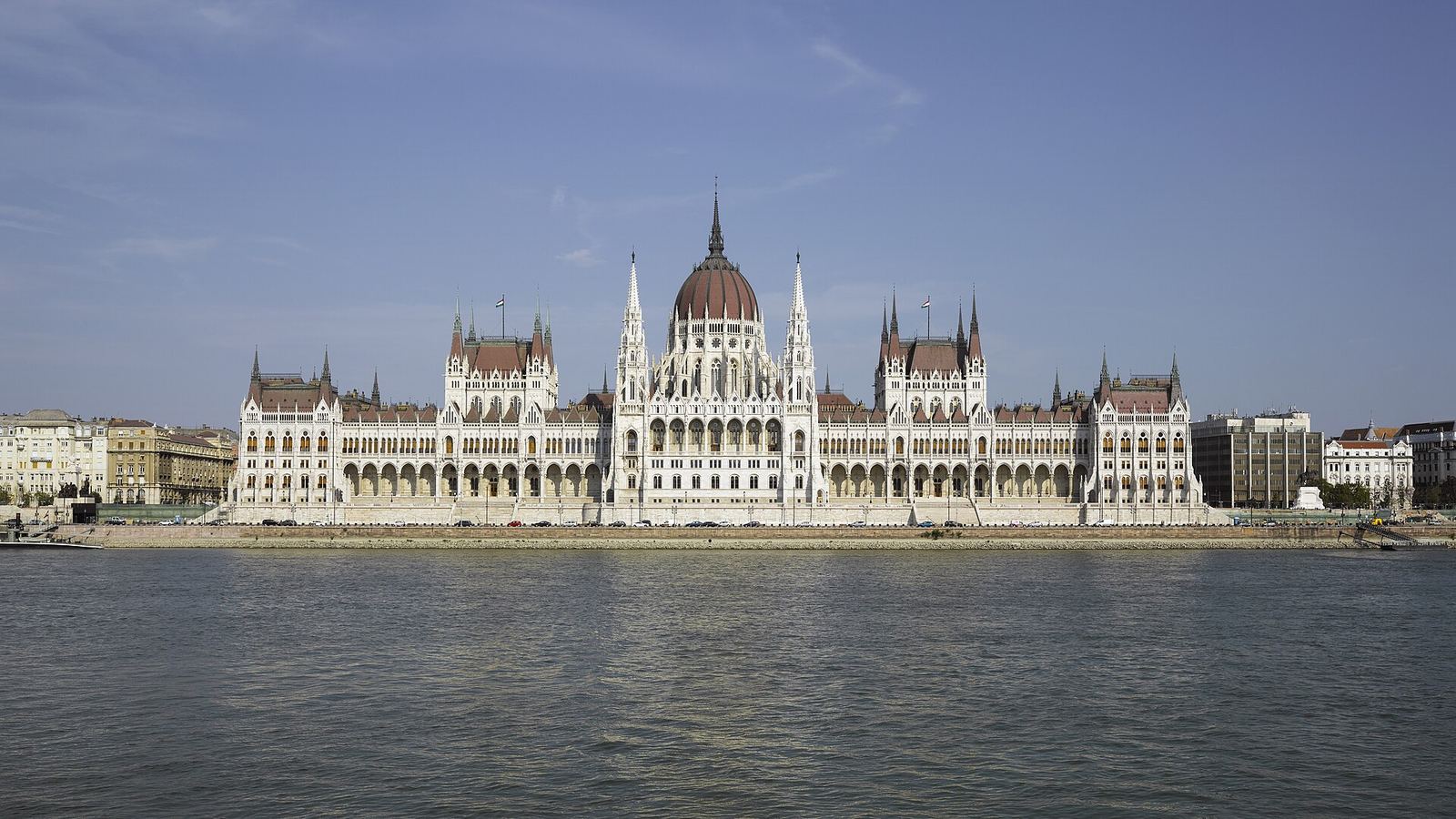
For almost every visitor, a travel eSIM is the easiest way to stay connected in Budapest. You buy it before you fly, scan a QR code, and your phone is online the moment you land at Ferenc Liszt Airport, with no SIM counter and no paperwork. Budapest runs on three strong networks (Yettel, Magyar Telekom, and One, the former Vodafone Hungary), and any reputable eSIM rides one of them, so you get fast 4G and 5G across both Buda and Pest, and, unusually for a city with a metro this old, continuous signal underground through all four lines. Because Hungary is in the EU, a Europe-wide regional eSIM covers the city with no roaming surcharge, which is handy if Budapest is one stop on a wider Central European trip.
What This Guide Covers
Jump to the section most relevant to you
Budapest Mobile Coverage
Budapest is one of the better-connected capitals in Central Europe. Three carriers run the networks: Yettel (the former Telenor), Magyar Telekom (the largest, part of Deutsche Telekom), and One (what Vodafone Hungary became after its early-2025 rebrand). All three deliver near-total 4G coverage across the metropolitan area, with 5G now common across the inner districts on both banks of the Danube.
In practice, a travel eSIM in Budapest gives you dependable 30 to 80 Mbps on 4G in everyday use, and far higher where 5G is live. Yettel is the speed leader nationally, having topped the regulator's testing with average 5G downloads near 280 Mbps, and it is the network most Hungary eSIMs connect to. You will not notice which carrier your eSIM rides for normal travel tasks: maps, the BudapestGO transit app, translation, ride-hailing, and video calls all run smoothly from the Castle District to the Pest ring roads.
Which network does my eSIM use?
Most Hungary travel eSIMs ride Yettel, with some also using One. For a Budapest-focused trip any of them is excellent. If your itinerary reaches deep into the rural Great Plain or the Bukk hills, Magyar Telekom has a slight edge outside the cities, though few visitor eSIMs use it.
Metro, Tram, and HEV Data Coverage
This is the part that surprises first-time visitors: your mobile data keeps working underground. All four Budapest metro lines carry cellular coverage in the stations and through the running tunnels, so you can keep navigating and messaging while the train moves. That includes the M1, the little yellow line under Andrassy Avenue that opened in 1896 and is the oldest electrified underground on continental Europe, as well as the deeper M2, M3, and M4. Magyar Telekom completed a 5G rollout across the whole network through 2024, switching it on line by line.
Above ground, the tram network (including the scenic 2 line that runs along the Pest embankment past the Parliament) has strong continuous coverage, as do the HEV suburban railways that fan out toward Szentendre and the edges of the city. Your eSIM will stay connected as you ride between Deak Ferenc ter, Kalvin ter, and Szell Kalman ter without dropouts.
Get the BudapestGO app
The official BKK app, BudapestGO, sells and stores digital tickets and passes and plans routes across metro, tram, bus, and the HEV. A single ticket is 500 HUF and a 24-hour Budapest travelcard is 2,750 HUF as of 2026. With a working eSIM you can buy a ticket on the platform seconds before boarding, no queue at the machine.
Neighborhood Notes: District V, District VII, and Castle Hill
Coverage is excellent across central Budapest, but here is how the main visitor districts feel in practice, and where the thermal baths fit in.
District V (Belvaros-Lipotvaros)
The heart of Pest and the political and commercial center, wrapped around the Parliament, the Danube promenade, and the shopping streets off Vorosmarty ter. Coverage is as good as anywhere in the country, with 5G common and no trouble holding signal in the crowds along the river or inside the Central Market Hall.
District VII (Erzsebetvaros)
The old Jewish Quarter and the birthplace of the ruin-bar scene, home to Szimpla Kert and the Dohany Street Synagogue, the largest in Europe. It is dense and busy at night, but data holds up well, so you can split a bill, call a cab, or post from a courtyard bar without dropping out. Many ruin bars also offer WiFi.
District I (Var, Castle Hill)
The historic Buda side around the Castle, Matthias Church, and the Fisherman's Bastion, quieter and higher than Pest. Coverage is solid across the hill and on the funicular up from the Chain Bridge, only marginally slower than the hyper-central Pest districts, and fine for maps and photos at the viewpoints over the river.
The thermal baths are a Budapest signature, and connectivity is good at all of them: the vast Szechenyi baths in City Park (Pest), the art-nouveau Gellert on the Buda side, and the Ottoman-era Rudas below Gellert Hill. You will have signal in the courtyards to book a massage slot or check your ride home, though it is wise to lock your phone away rather than carry it into the pools.
Free Public WiFi in Budapest
Budapest has plenty of free WiFi, but it is best treated as a backup rather than your main connection. The city and BKK offer hotspots at some transport hubs, and cafes and restaurants across the center are generous with it.
Where you will find reliable free WiFi:
- Cafes and bakeries: chains and independents across Districts V, VI, and VII almost all offer free WiFi with a simple connection.
- Ruin bars and restaurants: many in the Jewish Quarter post a network and password on the table or wall.
- Shopping centers: Westend, Arena Mall, and the Central Market Hall area have free access points.
- Major stations: Keleti, Nyugati, and Deli railway stations and some metro hubs offer free connections.
Why WiFi alone is not enough
The trouble with public WiFi is that it evaporates the moment you leave the cafe or station, which is exactly when you need a map on the street, a tram ticket, or a translation of a menu. It is also less secure, so avoid banking or entering passwords on it. An eSIM keeps you online continuously across both banks and underground, which is why most travelers use WiFi only as a fallback.
Getting Connected on Arrival (Ferenc Liszt Airport)
The smoothest plan is to buy and install your eSIM at home a day or two before you fly, then activate it when you land at Budapest Ferenc Liszt Airport (BUD). Most plans only start their validity clock from activation rather than purchase, so you do not burn a day on transit.
Install before you fly
While you still have home internet, scan your provider's QR code to add the eSIM profile. Keep your home SIM in place so your usual number stays active for messages. Check our Hungary eSIM guide to compare plans first.
Use free airport WiFi if you need it
Budapest Airport has free WiFi across Terminal 2. Connect to the network named bud:free wifi and register with an email to get a four-hour session, handy if you still need to activate anything after landing.
Activate and head into town
After landing, turn on your eSIM line, set it as your data line, and enable data roaming if your provider instructs you. Within a minute or two you should see the carrier name and a signal. Open maps to confirm you are online, then catch the 100E Airport Express to Deak Ferenc ter in the center.
This skips the airport SIM options entirely. By the time other arrivals are figuring out kiosks, you are already checking bus times into the city with working data.
Day-Trip Coverage: Danube Bend, Eger, and Lake Balaton
Budapest coverage is uniformly excellent, but the popular day trips reach into towns and countryside where the picture is very good rather than flawless. All hold up well for a traveler on any of the main networks.
| Destination | Coverage | Notes |
|---|---|---|
| Szentendre & the Danube Bend | Very good | Continuous data on the HEV H5 from Batthyany ter (about 40 minutes) and around the riverside towns of Visegrad and Esztergom. |
| Eger | Very good | Reliable on the roughly two-hour train and around the castle and basilica; a little thinner up in the Valley of the Beautiful Women wine cellars. |
| Lake Balaton | Very good | Strong along the shore at Balatonfured and Siofok, with 5G in the larger resorts and solid data the whole train ride down. |
One practical note on tickets: the Budapest 24-hour and multi-day travelcards cover BKK transport within the city, including the HEV as far as the city boundary, but they do not cover MAV intercity trains to Eger or Balaton or the Volanbusz coaches around the Danube Bend, so buy those separately. For any of these trips your own eSIM data is more reliable than patchy onboard WiFi, and it keeps your maps and connections working the whole way. For a route that continues over a border to Vienna or Bratislava, a Europe regional plan keeps you online there too under EU roaming.
Frequently Asked Questions
Does mobile data work in the Budapest metro tunnels?
Yes. All four Budapest metro lines carry cellular coverage in the stations and through the tunnels between them, so your eSIM keeps working while the train moves. That includes the historic M1 yellow line under Andrassy Avenue and the deeper M2, M3, and M4. Magyar Telekom completed a 5G rollout across the network through 2024. You can navigate, message, and stream underground without relying on station WiFi.
Is a Europe eSIM enough for Budapest, or do I need a Hungary-only plan?
A Europe regional eSIM is plenty, because Hungary is in the EU and a Europe-wide plan roams here with no surcharge under the Roam Like at Home rules. That is the better buy if Budapest is one stop on a trip that also takes in Vienna, Bratislava, or Croatia. If Hungary is your only destination, a country-specific plan usually costs a little less per gigabyte, but both work identically on the same fast networks.
How do I pay for the metro and trams once I am online?
Download the official BKK app, BudapestGO, which sells and stores digital tickets and passes and plans routes. A single ticket is 500 HUF and a 24-hour Budapest travelcard is 2,750 HUF as of 2026. With a working eSIM you can buy a ticket on the platform right before you board, which is far quicker than queuing at a machine. The travelcard pays off once you take more than about five rides in a day.
How much data do I need for a few days in Budapest?
For a typical long weekend of sightseeing, maps, the BudapestGO app, translation, messaging, and social media, most travelers do fine with 3 to 5 GB. Push toward 7 to 10 GB if you stream on the train to Balaton, make frequent video calls, or share a hotspot. If you would rather not track it at all, an unlimited Holafly plan removes the question, though its hotspot is capped at around 500 MB a day.
Will my eSIM keep signal on a Danube Bend or Eger day trip?
Yes, coverage on the popular day trips is very good. You stay connected on the HEV to Szentendre, around Visegrad and Esztergom, on the train to Eger and its castle, and along the Balaton shore. Expect only minor weak patches in the forested castle climbs or the deeper wine cellars. Remember the Budapest travelcard does not cover MAV intercity trains or Volanbusz coaches, so buy those tickets separately.