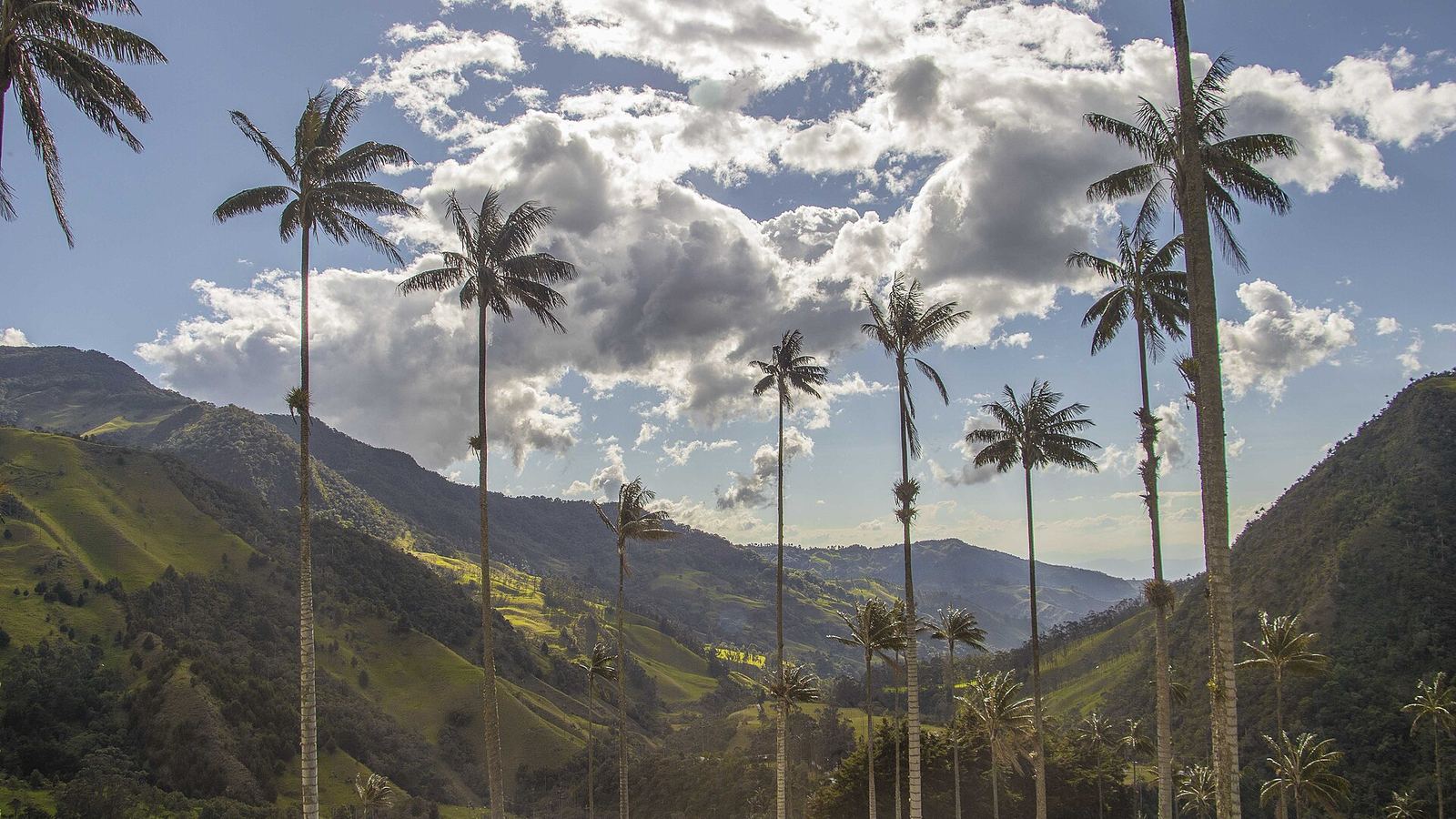
Claro is the local SIM most travelers should reach for in Colombia, because it carries just over half the country's mobile lines and posts the widest coverage of any network, which is what you want if your trip leaves the cities for the coffee region, the Cocora Valley, or the small towns up the Caribbean coast. A Claro SIM costs about 5,000 pesos and a tourist data pack runs roughly 25,000 to 75,000 pesos depending on size, so the raw price is genuinely low. Movistar and Tigo are quick in Bogota, Medellin, and Cartagena but thinner in the countryside. The real friction is the counter: every prepaid line is registered to your identity document at purchase, which is why plenty of visitors skip the shop and use a travel eSIM instead. See our Colombia eSIM guide to compare, or let the eSIM Finder match you to a plan.
What This Guide Covers
Jump to the section most relevant to you
How Colombia's Networks Actually Differ
Colombia runs on three big operators plus a value challenger: Claro (America Movil), Movistar (Telefonica), Tigo, and the newer WOM. All of them advertise nationwide 4G and 5G in the big cities, and in Bogota, Medellin, or Cartagena you genuinely cannot go wrong. The difference that decides a real trip is how far each one reaches once you leave the metros, because a huge share of what visitors come for sits in the mountains and small towns where towers are sparse.
Claro is the clear leader on coverage, holding just over 50 percent of the country's lines and topping the independent coverage rankings by a wide margin, which makes it the safe pick for the coffee region, the fincas, and the coastal backcountry. Movistar sits second with about a quarter of the market and consistently wins the 5G experience awards, so it is fast and modern in the cities though thinner in the countryside. Tigo is a solid urban network, strong in Bogota and decent through the coffee zone, but it fades faster than Claro in remote areas, and in 2026 Tigo and Movistar are mid-merger into a combined group that would rival Claro's scale. WOM is the budget challenger, sharp on price and city latency but with the least rural reach. If you buy one local chip for a trip that ventures beyond the cities, Claro is the one.
The ID-Registration Step at the Counter
Colombian prepaid SIMs must be registered to an identity document when you buy them, and a shop assistant logs your passport into the carrier's system before the line works. It is quicker and less fussy than the tax-ID hurdle you hit in some neighboring countries, but it still means a counter visit, your passport in hand, and a few minutes of paperwork. A travel eSIM skips the registration entirely, which is the main reason many visitors never bother with a local chip.
Claro
Claro: The Nationwide Coverage Leader
The widest reach into the coffee region and the coast, at a low local price
If you are buying a single local SIM for a trip that goes beyond the big cities, make it Claro. It is routinely the only network with a usable bar on the winding roads up to a coffee finca, on the drive out to the Cocora Valley trailheads, and in the small pueblos strung along the Caribbean coast past Santa Marta. In the cities it is quick too, with 5G across Bogota, Medellin, and Cartagena and the largest 5G footprint of any carrier, even if Movistar edges it on pure 5G speed tests.
You can top up a Claro line with a recarga at tiendas, pharmacies, and supermarkets almost everywhere in the country by adding credit through a short code or an app, which keeps you going on a long loop without hunting for a carrier store. The catch is the same one every network has here: the line must be registered to your passport at purchase, so buy at a staffed Claro store or the airport stand rather than expecting a corner shop to handle the paperwork.
Strengths
Weaknesses
Movistar
Movistar: The 5G Speed Leader in the Cities
Fastest modern data in the metros, thinner once you head for the hills
Movistar posts the strongest 5G experience in the country's testing, so if your trip is city-heavy and your phone supports 5G, it delivers the fastest modern data of the three. Coverage across Bogota, Medellin, and the coast is excellent, and prepaid data packs are priced sensibly. The weakness is the same rural gap Tigo has: below the metros and out in the coffee farms and coastal villages, Movistar's map thins out faster than Claro's, so it is not the pick for a countryside-heavy route. In 2026 it is also mid-merger with Tigo, though for now the network behaves as its own footprint.
Strengths
Weaknesses
Tigo
Tigo: The Solid Urban All-Rounder
Dependable in the cities, and the network some travel eSIMs quietly use
Tigo is the comfortable middle option for a city trip: quick and dependable across Bogota, Medellin, and the larger coffee-region towns, priced in line with the others. It rarely tops a coverage chart and it does not match Claro out in the countryside, but for a metro-focused itinerary it is perfectly capable. Worth knowing: Tigo is the network that Airalo's Colombia travel eSIM connects to, so if you go the eSIM route with Airalo you are very likely riding Tigo without ever visiting a shop. As a physical SIM it is a downtown or mall purchase, and like every carrier here the line is registered to your passport when you buy it.
Colombia SIM Plans Compared
| Carrier | Sample Plan | Price | Coverage | Best For |
|---|---|---|---|---|
| Claro | 10 to 15 GB + unlimited WhatsApp, 30 days | ~50,000 to 75,000 pesos (~12 to 18 USD) | Widest of all networks, best countryside reach | Coffee region, the coast, and heavy data users |
| Claro | Basic data pack, a few GB | ~25,000 to 35,000 pesos (~6 to 9 USD) | Widest of all networks | Light users who still want the best coverage |
| Movistar | Prepaid data bundle, a few GB | ~20,000 to 40,000 pesos (~5 to 10 USD) | Fastest 5G in the cities | City stays where 5G speed matters |
| Tigo | Prepaid data bundle, a few GB | ~20,000 to 50,000 pesos (~5 to 12 USD) | Good in cities, weaker on rural roads | Metro-focused city trips |
Peso prices above reflect typical 2026 city-store rates. The exchange rate hovers near 4,000 pesos per US dollar, so even the larger Claro bundles convert to modest sums, which is why a local SIM in Colombia is cheap in absolute terms. The bigger cost is your time at the counter and the passport-registration step, not the money. Airport counters and any informal reseller will run higher than the shop rates above, so treat this table as your reference before you pay.
Where to Buy a SIM in Colombia
A Staffed Carrier Store in the City (Best for Registration)
Full Claro, Movistar, and Tigo stores in Bogota, along the Carrera Septima, in Chapinero, or inside malls like Andino and Unicentro, are the place to buy. Staff register a tourist line against your passport on the spot, which a rushed corner tienda often will not handle. This is where you set up the network you will actually rely on for the trip.
The Claro Stand at El Dorado Airport
If you want a line the moment you land, Claro runs a stand on the upper level of El Dorado's Terminal 1. It is the most convenient on-arrival option and sells to tourists with a passport, though prices tend to run a little higher than a downtown store. Handy after a late flight when city shops are shut.
Tiendas and Supermarkets for Top-Ups
Once your line is active, the ubiquitous neighborhood tiendas, plus pharmacies and supermarket chains like Exito and Carulla, handle recargas through a quick code or app. This is the easy way to add credit on the road, far simpler than tracking down a carrier shop in a small coffee-region town.
Test the Data Before You Leave the Counter
Whichever store you use, put the SIM in and load a map or a website before you walk out. Confirm the plan size and validity match what you paid, and keep the receipt. A minute of checking beats discovering a dead line an hour later with no easy way back to the shop.
eSIM or Local SIM for Colombia?
| Factor | Travel eSIM | Local SIM |
|---|---|---|
| Setup time | A few minutes, done before your flight | 10 to 20 minutes at a store, plus passport registration |
| Registration | None | Passport logged to the line in person |
| Network | Tigo (Airalo) or Claro / Movistar (Nomad, Holafly) | Claro reaches deepest into the countryside |
| Price (week of data) | ~5 to 20 USD depending on data and unlimited | ~5 to 15 USD, often with calls bundled |
| Best for | City and classic-circuit travelers who want zero hassle | Long stays, a local number, or a countryside-heavy route |
For a trip built around Bogota, Medellin, and Cartagena with a few flights between, a travel eSIM is the easier call: install it before you fly, land connected, and skip the passport-registration step at the counter. The case for a local SIM in Colombia is more about coverage than money, since the chips are cheap either way. Where a local Claro SIM still earns its place is a long, countryside-heavy trip through the coffee region and the coast where its reach outclasses the Tigo footprint some eSIMs use, or when you genuinely need a Colombian number for local calls and bookings.
Colombia Connectivity Tips
Practical Advice for Staying Online in Colombia
Take Claro to the countryside: For the coffee region, the Cocora Valley, and the small towns up the coast, Claro is the network with the best odds of signal. Even then, download offline maps before you leave town, since the trails and back roads have dead zones on every network.
Do not flash the phone (no dar papaya): Colombians have a saying, no dar papaya, roughly do not give an opportunity. Keep your phone in your pocket on a crowded TransMilenio platform or a busy street and pull it out only when you need it, especially in Bogota and on the coast.
WiFi carries a lot of the load: Hotels, hostels, cafes, and many restaurants offer free WiFi, so your mobile data mostly covers maps, ride apps, and messaging while you move between places.
Bring your passport to buy: Registration happens at purchase and staff will log your passport to the line, so a staffed carrier store or the airport stand handles tourists better than a corner tienda.
Top up at any tienda: Adding credit through a recarga code at a neighborhood shop or supermarket is quick and everywhere, which matters on a long provincial route.
Frequently Asked Questions
Can a tourist buy and register a prepaid SIM in Colombia easily?
Yes, and it is more straightforward than in some neighboring countries. Carriers ask for your passport, and a staffed store logs it to the line before it works. There is no local tax-ID requirement the way there is in Argentina, so the main cost is a short counter visit. Buy at a full Claro, Movistar, or Tigo store or the El Dorado airport stand rather than a corner tienda. A travel eSIM avoids the registration step entirely, which is why many visitors skip the local chip.
Which Colombian network should I choose for the coffee region and small towns?
Claro, clearly. It carries just over half the country's mobile lines and posts the widest coverage of any network, so it is the one most likely to hold a signal in Salento, around the Cocora Valley, on the roads to the fincas, and in the small coastal towns. Tigo and Movistar are excellent in Bogota, Medellin, and Cartagena but thin out faster in the countryside. If your route is countryside-heavy, choose Claro locally or a Claro-based eSIM like Nomad or Holafly, and carry offline maps for the trails.
What does a tourist data plan actually cost in Colombian pesos?
The SIM itself is only about 5,000 pesos, then you add a data pack. Claro sells basic bundles of a few gigabytes for roughly 25,000 to 35,000 pesos, and a 10 to 15 GB pack with unlimited WhatsApp for around 50,000 to 75,000 pesos. Movistar and Tigo price their prepaid data similarly. At roughly 4,000 pesos per US dollar in 2026, those convert to small sums, so a local SIM in Colombia is cheap and the bigger cost is your time at the counter.
Is there anywhere to buy a SIM the minute I land at El Dorado?
Yes. Claro runs a stand on the upper level of El Dorado's Terminal 1, and it sells to tourists with a passport, so you can walk out with a working line. Prices run a little higher than a downtown store, but it is the most convenient on-arrival option, especially after a late flight. If you would rather not stop at all, an eSIM installed before departure has you online the instant the plane lands, with no counter visit.
For a two-week Colombia trip, should I get a local SIM or an eSIM?
For a classic loop through Bogota, Medellin, Cartagena, and maybe the coffee region, an eSIM is easier: it installs before you fly, connects on arrival, and skips the passport-registration step. A local Claro SIM earns its place mainly on a long, countryside-heavy route where its wider reach beats the Tigo network some eSIMs use, or if you specifically need a Colombian phone number for local bookings and calls.