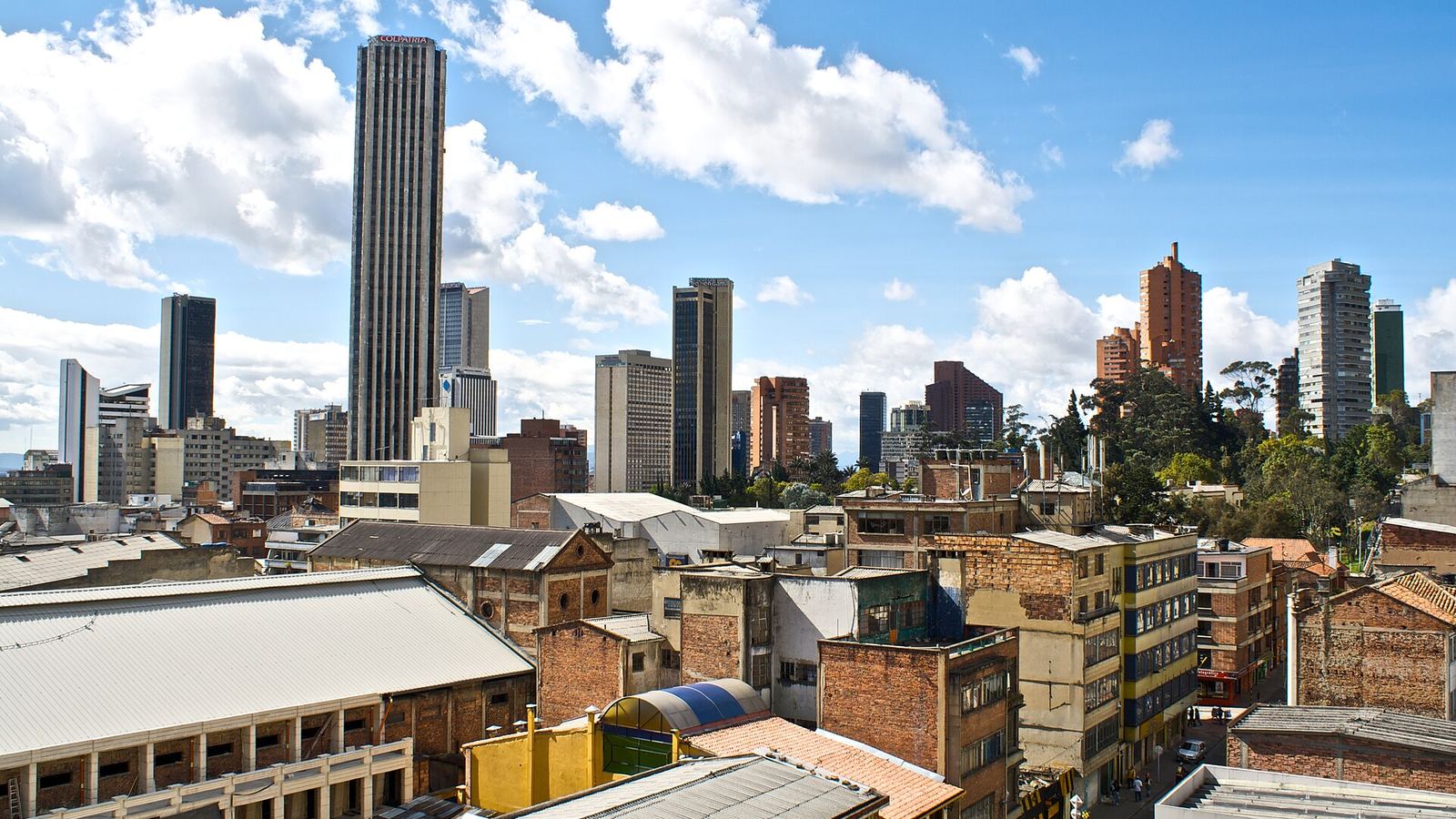
Bogota is a huge, high-altitude city that runs mostly north to south for the better part of 30 kilometers, which is exactly why you want reliable data the moment you arrive: navigating it without a live map is genuinely hard, and the altitude will already have you moving slower than usual. A travel eSIM is the simplest way to stay connected here, installed before you fly and switched on when you land at El Dorado, with no phone shop and no passport registration at a counter. The city is well covered by all three networks, Claro, Movistar, and Tigo, so 4G and 5G are fast across the neighborhoods travelers actually use, and the altitude does nothing to your signal even if it does a number on your lungs.
What This Guide Covers
Jump to the section most relevant to you
Bogota Mobile Coverage
Bogota is thoroughly covered by all three national networks. Claro carries just over half of Colombia's subscribers and posts the widest coverage nationally, Movistar wins the independent 5G experience awards and is the quickest where 5G is live, and Tigo is a dependable urban network. Across the areas a visitor spends time, La Candelaria, the center, Chapinero, Usaquen, and the northern business districts, you can expect strong 4G everywhere and 5G in a growing share of the city.
In practice a travel eSIM in Bogota delivers a comfortable 15 to 50 Mbps on 4G in everyday use, and higher where 5G has been switched on. That is plenty for maps, ride apps like Cabify and Uber, translation, WhatsApp calls, and streaming. You will not notice which carrier your eSIM uses for normal city tasks, though the underlying network matters more the moment you leave for a rural day trip, where Claro reaches furthest.
Altitude does not touch your signal
Bogota sits at 2,640 meters, about 8,660 feet, but that altitude has no effect on mobile coverage: the city is blanketed with towers and your data runs exactly as fast up here as it does at sea level. Altitude is a health consideration, not a connectivity one. What it does mean is that a reliable map is worth even more than usual, because you will want to walk less and plan routes better while your body adjusts in the first day or two.
TransMilenio, SITP, and the Metro
Bogota has no subway yet, so the backbone of getting around is the TransMilenio, a bus rapid transit system where long red articulated buses run in dedicated center lanes through stations you enter with a tapped card. It is fast and it is where a live map earns its keep, because the route network is dense and the express versus local pattern confuses first-timers. A single ride costs around 3,550 pesos in 2026, paid with a rechargeable Tullave card that you also use on the feeder and zonal buses.
Around and beyond the trunk lines, the blue SITP buses cover the neighborhoods the TransMilenio does not reach, using the same Tullave card. Coverage on both systems is strong: you keep a signal on the platforms and on board for maps and messaging as you ride, since the stations sit at street level rather than deep underground.
The metro is coming, but not yet
Bogota's first metro, Line 1, has been under construction since 2020 and is an elevated line projected to open around 2028, with new feeder stations appearing along the way. For any trip in 2026 you are riding the TransMilenio and SITP buses, not a train. Keep your data on to follow the route in real time, because the system map is far easier to read on your phone than on the crowded station signage.
Buy a Tullave card first
You cannot pay the TransMilenio in cash at the turnstile. Pick up a Tullave card at any station window or kiosk, load it with a few thousand pesos, and tap in. One card works across the red trunk buses, the feeders, and the blue SITP buses, so it is the single thing to sort out on your first morning.
Neighborhood Notes: La Candelaria, Chapinero, Usaquen
Bogota coverage is strong across the board, but here is how the main visitor districts feel in practice.
La Candelaria
The colonial old town, a tangle of steep cobbled streets around Plaza Bolivar, the Botero Museum, and the Gold Museum. Coverage is solid here, and a working map is essential because the narrow one-way lanes and hills disorient almost everyone on the first walk. It is also the district where keeping your phone tucked away between uses is smart, so check your route, then pocket it.
Chapinero
The lively middle of the city and home to the Zona T and Zona Rosa nightlife and the Zona G restaurant cluster. Networks are fast and dense here, with 5G common, so streaming, ride-hailing, and splitting bills over an app all work smoothly even on a busy weekend night.
Usaquen
A leafy, upscale district in the north, once a separate village, known for its Sunday flea market and colonial plaza. Coverage is excellent, and you will lean on data to arrange a ride back south afterward, since Usaquen sits a fair way from the center and the return trip is where a good map and a working ride app really pay off.
The short version: you will not hit a coverage dead zone in any neighborhood a visitor is likely to explore. The bigger practical issue in Bogota is distance, the city is enormous, so your data does more work here helping you cross it than it does fighting any signal gap.
Free Public WiFi in Bogota
Bogota has plenty of free WiFi, but treat it as a backup rather than a primary plan. The city and TransMilenio have rolled out free hotspots at some stations and public spaces, and most places you sit down offer a connection, but coverage is patchy the moment you are moving between them.
Where you will find reliable free WiFi:
- Juan Valdez and Tostao cafes: the homegrown coffee chains are everywhere and nearly always have a solid, easy connection.
- Shopping malls: Andino, Unicentro, and Titan Plaza all offer free WiFi throughout.
- Hotels and hostels: essentially universal, and generally the fastest connection you will use all day.
- Museums and public buildings: many, including the Gold Museum area and some TransMilenio stations, provide free access.
Why WiFi alone falls short here
The problem with relying on free WiFi in a city this spread out is that the signal ends the second you step onto the street, exactly when you need a map to find the right TransMilenio platform or the correct SITP bus. Public WiFi is also less secure, so avoid banking or entering passwords on it. An eSIM keeps you online continuously across the whole sprawl, which is why most travelers use WiFi here only as a fallback.
Getting Connected on Arrival at El Dorado
The smoothest plan is to buy and install your eSIM at home a day or two before you fly, then activate it after you land. Most plans only start counting their validity from activation rather than purchase, so you will not burn a day in transit.
Install before you fly
While you still have home internet, scan your provider's QR code to install the eSIM profile. Do not remove your home SIM, since you can keep your usual number active for messages and two-factor codes.
Use the airport WiFi if you need it
El Dorado has free WiFi across both terminals. Connect to the Eldorado Free WiFi network and complete the quick email or phone sign-in if you still need to activate or download anything after landing.
Activate, then plan your ride in
Turn on your eSIM line, set it as your data line, and enable data roaming if your provider instructs you to. Once you see the carrier name and a signal, open a ride app or your map to sort the trip into the city, whether that is an authorized taxi, a booked ride, or the K86 TransMilenio route.
This approach skips the airport SIM stand entirely. By the time other arrivals are queuing to register a local chip against a passport, you are already confirming your route and heading for the taxi line or the bus, which matters when the altitude has you moving at half speed on day one.
Day-Trip Coverage: Zipaquira, Monserrate, Guatavita
Bogota coverage is uniformly strong, but the popular day trips climb into the surrounding Andes and countryside where the gap between carriers starts to matter.
| Destination | Coverage | Notes |
|---|---|---|
| Monserrate | Good | The hilltop shrine above the city at 3,150 meters has a signal at the top thanks to its line of sight over Bogota; the funicular and cable car run frequently. |
| Zipaquira | Good | The town and the famous Salt Cathedral are well covered on the surface; expect no signal deep inside the underground salt mine itself. |
| Guatavita | Variable | The lake and the drive out of the city thin out on the rural stretches; Claro holds best on the back roads where the others fade. |
If your plans lean on rural day trips beyond the city, an eSIM on Claro has the strongest reach outside Bogota. For anything underground, like the Salt Cathedral chambers, expect to lose signal regardless of carrier, so screenshot your tour times and download offline maps before you go. For a city-focused stay with the occasional excursion, any well-reviewed Colombia eSIM serves you well.
Frequently Asked Questions
Does the high altitude in Bogota affect my phone signal?
Not at all. Bogota sits at 2,640 meters, but altitude does nothing to mobile coverage: the city is densely towered and your data runs just as fast as it would at sea level. The altitude affects you, not your phone, since soroche can leave you tired and short of breath in the first day or two. A working map actually helps here, because it lets you plan routes and walk less while you acclimatize in a city that sprawls for miles.
Will my data work on the TransMilenio and SITP buses?
Yes. The TransMilenio stations sit at street level rather than underground, so you keep a strong signal on the platforms and on board for maps and messaging as you ride. The blue SITP buses that fill in the rest of the city are the same. Keep your data on to follow the route in real time, since the express and local pattern of the TransMilenio confuses first-timers and the live map is far easier to read than the station signage.
Is Bogota's free public WiFi good enough to skip a data plan?
No, treat it as a backup. You will find reliable free WiFi in Juan Valdez and Tostao cafes, shopping malls, hotels, and some TransMilenio stations, but the signal ends the moment you step back onto the street, exactly when you need a map to find the right platform or bus in a huge city. Public WiFi is also less secure for logins. Most travelers keep a working eSIM for continuous coverage and use WiFi only as a fallback.
How much data do I need for a few days in Bogota?
For a typical few days of sightseeing, using maps, ride apps, translation, messaging, and some social media, most travelers do well with a 3 to 5 GB plan. Bogota is spread out, so you will lean on your map and ride apps more than in a compact city, but hotel and cafe WiFi covers the heavy lifting like uploads and streaming. If you plan to stream a lot on the move or tether a laptop, size up to 10 GB or an unlimited plan.
Which eSIM network is best if I add a day trip into the Andes?
Claro has the widest reach outside the city, so a Claro-based eSIM like Nomad or Holafly is the safest bet for day trips to Guatavita, the countryside around Zipaquira, or the back roads beyond the metro area. In central Bogota any network is fine. For anything underground, such as the Salt Cathedral chambers at Zipaquira, expect to lose signal on every network, so download offline maps and save your tour details before you leave the city.