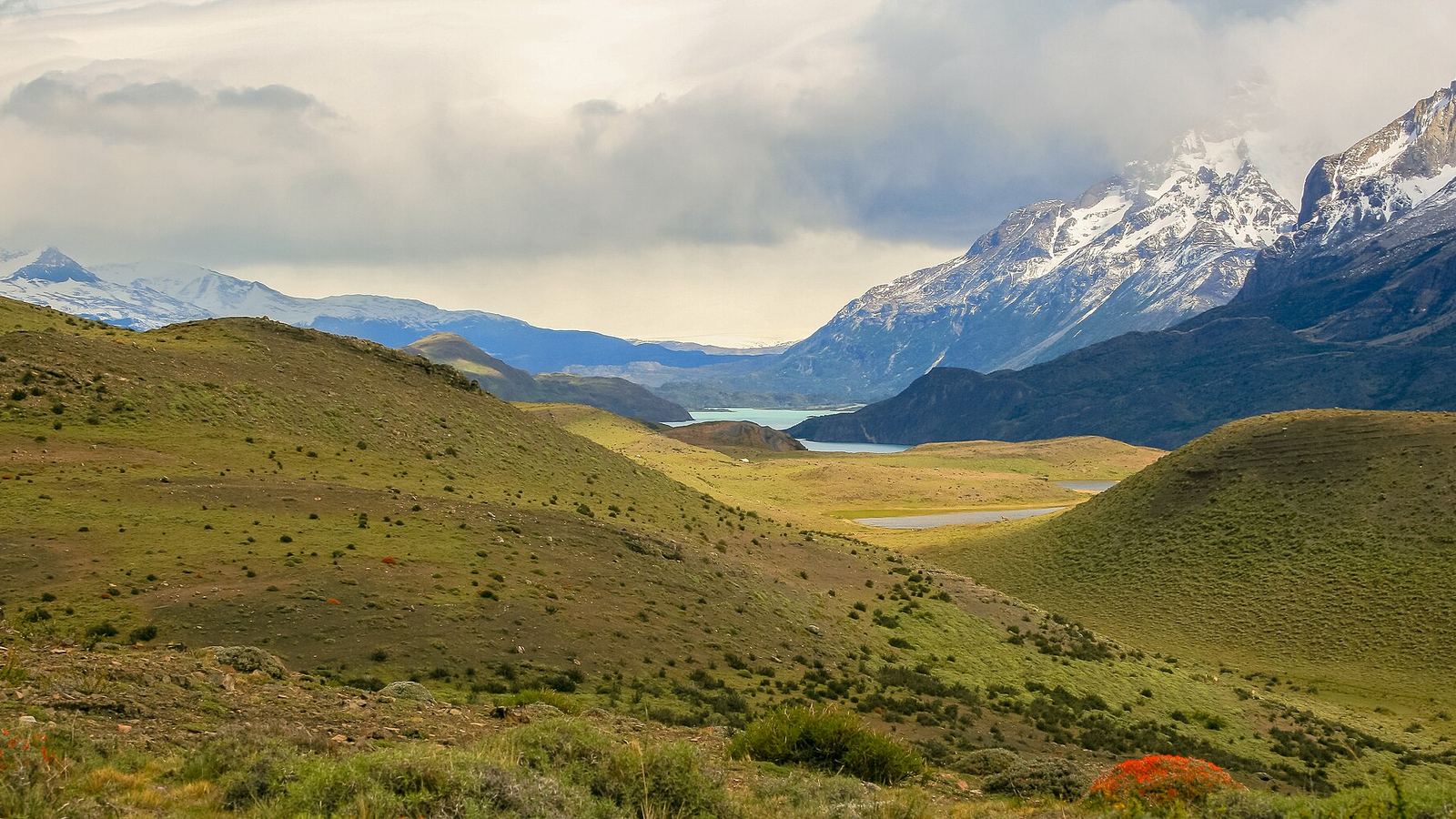
Entel is the local SIM most travelers should reach for in Chile, because it carries the widest signal into the places the country is famous for, the Atacama Desert in the north and Patagonia in the far south, where WOM, Claro, and even Movistar start to run out of towers. WOM is the value option, cheap and fine for a Santiago-and-coast stay but weaker in the wild. Movistar and Claro sit in the middle and are the networks your travel eSIM most likely rides. The friction that has grown here is registration: Chile now makes you register a prepaid line with your passport number, a photo of the passport, and a facial-recognition selfie, so plenty of visitors skip the shop entirely. See our Chile eSIM guide to compare, or let the eSIM Finder match you to a plan.
What This Guide Covers
Jump to the section most relevant to you
How Chile's Four Networks Actually Differ
Chile runs on four operators: Entel, Movistar (Telefonica), Claro (America Movil), and WOM. All four advertise nationwide 4G and 5G in the cities, and across Santiago you genuinely cannot go wrong. What decides a real trip is how far each one reaches once you leave the central valley, because Chile is a 4,300 kilometre sliver of a country that empties out dramatically to the north into desert and to the south into fjords and steppe.
Entel was the first operator in the country and still holds the broadest national map, which is why it keeps a signal on the Carretera Austral, up in San Pedro de Atacama, and out toward the Patagonian towns when the others have faded to nothing. Movistar is the urban speed leader, topping the 5G download charts in Santiago, and it is the network most international eSIMs connect to here. Claro is dependable but city-weighted. WOM is the newcomer that competes hard on price and posts strong 5G availability around the capital, but its rural footprint is the smallest of the four. The plain read: Entel for reach, WOM for a cheap city stay, Movistar and Claro for a balanced central-Chile trip.
The Selfie Rule Tourists Now Hit
Chile tightened its prepaid registration, and the process is built around identity verification. To activate a local SIM you hand over your passport number, a photo of the passport, and a live facial-recognition selfie so the system can confirm the face matches the document. Staff at a full carrier store handle it in a few minutes, but it is one more step, and a busy kiosk may not want to bother. A travel eSIM sidesteps the whole biometric check.
Entel
Entel: The National Coverage Leader
The widest reach into the desert and the far south, and a tourist bundle at the airport
If you are buying one local SIM for a trip that ventures beyond Santiago, make it Entel. It is routinely the only network with a usable bar out on the drive to the El Tatio geysers, along the Carretera Austral, and around Puerto Natales and Punta Arenas, and its Plan Turista bundles a generous chunk of data for a month. In Santiago it is quick too, with 5G across the capital, though Movistar and WOM tend to edge it on raw urban speed.
You can top up an Entel line with a recarga at kiosks, pharmacies, and supermarkets across the country by adding credit through a short code or the app, which keeps you going on a long northern or southern loop without hunting for a carrier shop in a small town. The catch is the registration: the passport-photo-and-selfie step takes a few minutes, so buy at a staffed Entel store or the airport kiosk rather than a corner shop that may not run the verification.
Strengths
Weaknesses
WOM
WOM: The Budget Challenger
The cheapest way onto a Chilean network, strong 5G in the capital
WOM undercuts everyone on price and, thanks to heavy investment around the capital, posts the highest 5G availability of the four networks in Santiago, so for a city-heavy stay it is a genuinely good-value choice. It runs a kiosk in the airport arrivals hall too, handy the minute you land, though it usually accepts cash only and not cards, which surprises travelers arriving with just a bank card. The weakness is the wild: below and beyond the central valley WOM's map thins out faster than Entel's, so it is the wrong pick for an Atacama or Patagonia-focused route.
Strengths
Weaknesses
Movistar and Claro
Movistar and Claro: The Balanced Middle
Solid everywhere the tourists go, and the networks most travel eSIMs quietly use
Movistar is the urban speed champion, topping the 5G download tests in Santiago, and it is the network that Airalo and Nomad travel eSIMs actually connect to in Chile, so if you go the eSIM route you are very likely riding Movistar without ever visiting a shop. Claro is the dependable all-rounder, quick in the cities and fine on the main highways, if a little thinner in the gaps between towns. Both are perfectly capable for a Santiago, Valparaiso, and wine-country itinerary, and both sell tourist data bundles at reasonable monthly rates. Where they lose to Entel is the deep desert and the far south, where their towers give out sooner. Neither is the value leader that WOM is, nor the coverage leader that Entel is, but for a central-Chile trip either does the job.
Chile SIM Plans Compared
| Carrier | Sample Plan | Price | Coverage | Best For |
|---|---|---|---|---|
| Entel | Plan Turista, large bundle, 30 days | ~15,000 to 25,000 pesos (~16 to 26 USD) | Best of the four into the desert and the south | Atacama and Patagonia trips, heavy users |
| WOM | 1 GB plus 50 min, 15 days | ~2,000 pesos (~2 USD) | Strong in Santiago, weak in the wild | Cheap city stays and short visits |
| Movistar | Tourist data bundle, a few GB, 30 days | ~10,000 to 20,000 pesos (~11 to 21 USD) | Good in cities, fastest 5G in Santiago | Balanced central-Chile itineraries |
| Claro | Tourist data bundle, a few GB, 30 days | ~10,000 to 18,000 pesos (~11 to 19 USD) | Good in cities and on main routes | City stays with the odd excursion |
Peso prices above reflect typical 2026 city-store and airport rates. The exchange rate hovers around 950 pesos per US dollar, so these bundles convert to modest sums, and card payment is normal at the carrier stores, though the WOM airport kiosk often wants cash. Informal resellers and hotel desks will run higher, so treat this table as your reference before you pay.
Where to Buy a SIM in Chile
A Staffed Carrier Store in Santiago (Best for Registration)
Full Entel, Movistar, Claro, and WOM stores across Santiago, inside malls like Costanera Center, Parque Arauco, and Mall Plaza, are the cleanest place to buy. Staff run the passport-photo-and-selfie verification for you and confirm the plan is active before you leave. This is where you set up the network you will actually rely on for the trip.
The Entel and WOM Kiosks at Santiago Airport
If you want a line the moment you land, Entel runs a 24-hour kiosk in the arrivals hall of Terminal 2 and WOM has a kiosk nearby. Entel generally takes cards, while WOM typically wants cash, so carry some pesos as backup. Airport prices sit a little above the city stores, but the convenience is real after a long flight.
Kiosks and Supermarkets for Top-Ups
Once your line is active, the ubiquitous kiosks, plus pharmacies like Cruz Verde and supermarkets like Jumbo and Lider, handle recargas through a quick code. This is the easy way to add credit on the road, far simpler than tracking down a carrier shop in a small Atacama or Patagonian town.
Test the Data Before You Leave the Counter
Whichever store you use, put the SIM in and load a map or a website before you walk out. Confirm the plan size and validity match what you paid, and keep the receipt. A minute of checking beats discovering a dead line an hour later with no easy way back to the shop.
eSIM or Local SIM for Chile?
| Factor | Travel eSIM | Local SIM |
|---|---|---|
| Setup time | A few minutes, done before your flight | 10 to 20 minutes at a store, including the selfie check |
| Registration | None | Passport number, passport photo, and a facial-recognition selfie |
| Network | Movistar (Airalo, Nomad) or Entel (Holafly) | Entel reaches deepest into the desert and the south |
| Price (week of data) | ~6 to 20 USD depending on data and unlimited | ~2 to 15 USD, often with calls bundled |
| Best for | City and central-corridor travelers who want zero hassle | Long stays, a local number, or a deep Atacama or Patagonia leg |
For a trip built around Santiago, Valparaiso, the wine valleys, and a couple of domestic flights, a travel eSIM is the easier call: install it before you fly, land connected, and skip the passport-and-selfie stall entirely. WOM's rock-bottom prices are tempting, but the value gap narrows once you factor in the airport queue and the cash-only kiosk. Where a local Entel SIM still earns its place is a long, remote-heavy trip where its reach into the Atacama and Patagonia outclasses the Movistar footprint most eSIMs use, or when you genuinely need a Chilean number for local calls.
Chile Connectivity Tips
Practical Advice for Staying Online in Chile
Take Entel to the extremes: For San Pedro de Atacama, the Carretera Austral, Puerto Natales, and Punta Arenas, Entel is the network with the best odds of signal on remote roads. Even then, download offline maps before you set out, because the El Tatio drive and the Torres del Paine trails have dead zones on every network.
Expect the selfie step: Chile now registers prepaid lines with a passport photo and a facial-recognition selfie. Bring your passport, use a staffed store, and allow a few extra minutes; a busy corner kiosk may not run the verification.
Carry some cash for WOM: WOM is the cheapest network and has an airport kiosk, but it commonly takes cash only, so keep a few pesos on hand if that is your plan.
WiFi carries a lot of the load: Hotels, cafes, and long-distance buses across Chile offer free WiFi, so your mobile data mostly covers maps, ride apps, and messaging while you move between places.
Top up anywhere: Adding credit through a recarga code at a corner kiosk, pharmacy, or supermarket is quick and everywhere, which matters on a long trip through the north or the south.
Frequently Asked Questions
Is it a hassle for a tourist to register a prepaid SIM in Chile now?
It is more involved than it used to be. Chile requires you to register a prepaid line with your passport number, a photo of your passport, and a facial-recognition selfie so the system can confirm the face matches the document. A staffed Entel, Movistar, Claro, or WOM store or the airport kiosk handles it in a few minutes, but a busy corner shop may decline. A travel eSIM avoids the biometric check completely, which is why many visitors skip the local SIM.
Which Chilean network is best if I am heading to the Atacama or Patagonia?
Entel, clearly. It carries the widest footprint of the four operators, so it is the network most likely to hold a signal in San Pedro de Atacama, out on the Carretera Austral, and around Puerto Natales and Punta Arenas. WOM is cheap but weak beyond the cities, while Movistar and Claro sit in between. If your route is remote-heavy, choose Entel locally or an Entel-based eSIM like Holafly, and carry offline maps for the geyser drives and the trekking trails.
What does a tourist data plan cost in Chilean pesos right now?
WOM is the cheapest entry at around 2,000 pesos for 1 GB and 50 minutes over 15 days. Entel's Plan Turista bundles a large monthly allowance for roughly 15,000 to 25,000 pesos, while Movistar and Claro sell tourist data packs of a few gigabytes commonly in the 10,000 to 20,000 peso range. At around 950 pesos per US dollar in 2026, those convert to modest sums, though the WOM airport kiosk usually wants cash rather than a card.
Can I buy a SIM the minute I land at Santiago airport?
Yes. Entel runs a 24-hour kiosk in the Terminal 2 arrivals hall and WOM has a kiosk nearby, both selling tourist SIMs. Entel generally accepts cards, while WOM typically takes cash only, so carry some pesos as backup. You still clear the passport-photo-and-selfie registration on the spot, and airport prices sit a little above the city stores, so a pre-installed eSIM is the smoother way to land connected.
For a two-week Chile trip, should I get a local SIM or an eSIM?
For a classic loop through Santiago, Valparaiso, the wine valleys, and a domestic flight or two, an eSIM is easier: it installs before you fly, connects on arrival, and skips the passport-and-selfie stall. A local Entel SIM earns its place mainly on a long, remote-heavy route where its reach into the Atacama and Patagonia beats the Movistar network most eSIMs use, or if you specifically need a Chilean phone number for local calls.