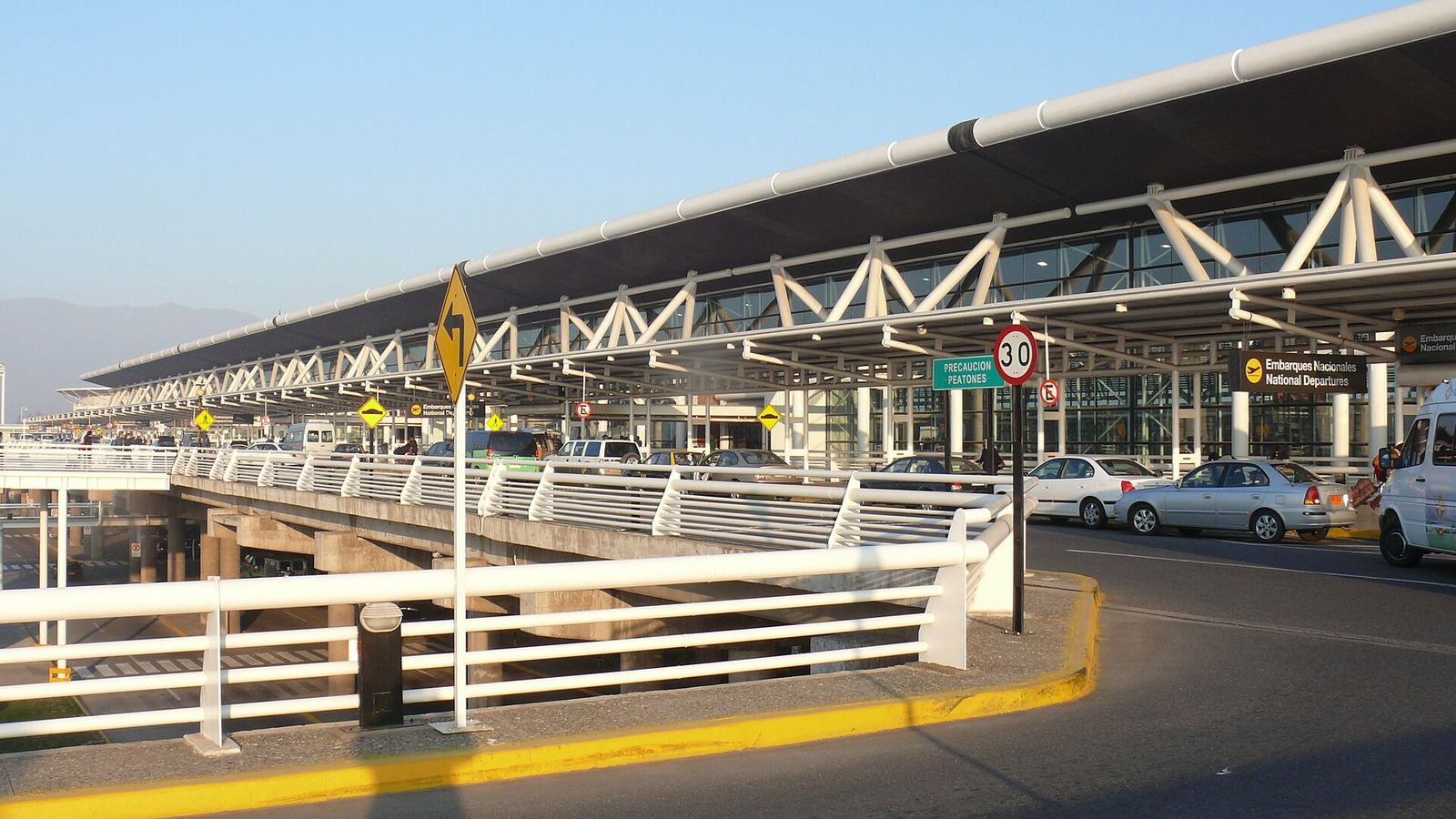
The easy answer at Santiago is to arrive with your eSIM already loaded. Arturo Merino Benitez (SCL) does have SIM kiosks in the Terminal 2 arrivals hall, with Entel and WOM the main options, but buying a local prepaid line here means clearing Chile's passport-and-selfie registration on the spot, and the WOM kiosk commonly takes cash only. An eSIM you set up at home connects on the airport WiFi in a couple of minutes, so you walk out of the terminal already online, ready to find the Centropuerto bus or price a transfer. The airport has free WiFi throughout and those kiosks if you want one, but for most travelers that means queuing and configuring a card while jet-lagged after a long flight.
What This Guide Covers
Jump to the section most relevant to you
SIM and eSIM Options at Santiago Airport
Santiago's airport, officially Arturo Merino Benitez and often still called Pudahuel, split its operations when the new Terminal 2 opened in 2022. Nearly all international flights now arrive at the modern Terminal 2, while Terminal 1 handles domestic services, so most visitors land at T2 and find the connectivity options in that arrivals hall.
Quick Kiosk Summary
Terminal 2 arrivals is where you will find the SIM kiosks. Entel runs a store in the arrivals area, generally open around the clock and accepting cards, and WOM has a kiosk nearby that is cheaper but typically takes cash only. Movistar tends to sit on the domestic side, so for an international arrival Entel and WOM are your two practical on-site choices.
The Entel and WOM Kiosks
The Entel store is the more traveler-friendly of the two: staff can set up a tourist plan, it usually stays open for late arrivals, and it takes card payment. Ask for the Plan Turista bundle if you want a month of generous data. WOM undercuts it on price but commonly wants cash and has a smaller rural footprint, so it suits a city-only stay. Either way you clear the same registration paperwork as anywhere in the country, and airport prices sit a little above the downtown stores.
The Registration Step to Expect
Whichever kiosk you use, Chile now requires prepaid lines to be registered with your passport number, a photo of the passport, and a facial-recognition selfie so the system can match the two. Staff run it for you, but it adds a few minutes on top of the queue, which is exactly the friction a pre-loaded eSIM removes.
eSIM on the Spot
eSIMs are not sold from a physical rack at SCL, but you can buy and install one over the airport WiFi the instant you land, which is the same thing you could do at home with less stress. Loading it before departure is cleaner still, and means you are connected before you even reach the bus stop.
Free Airport WiFi at Santiago (AIRPORT_FREE_WIFI)
SCL offers free WiFi across the terminals, run by the airport operator, and it is genuinely useful because it is what lets you activate an eSIM or buy a plan online the moment you arrive.
Find the network
On your phone's WiFi screen, look for the free airport network, commonly shown as AIRPORT_FREE_WIFI in the Terminal 2 arrivals area. The exact name can change, so pick the official airport option rather than a lookalike.
Accept the terms
A portal page opens where you agree to the terms or register a quick free session. Once it confirms, the WiFi icon goes live and you are online across the arrivals hall.
Use it to activate, then move on
This is your window to switch on a pre-loaded eSIM or buy one if you have not already. Do it here in arrivals, before you walk out to the buses and transfers.
Do not rely on the WiFi once you leave the building
Airport WiFi reaches only as far as the terminal. Board the Centropuerto bus or climb into a transfer and it is gone, right when you want a map for the run into the city. It is also slower and less private than your own mobile data. Use AIRPORT_FREE_WIFI purely to get your eSIM live, then rely on cellular for the journey and the rest of the trip.
Santiago Airport to the City: Transit and Data En Route
SCL sits about 15 km northwest of central Santiago, and there is no Metro line to the airport yet, though a future Line 7 extension is planned, so you will take a bus or a road transfer. This is precisely where you want working data to track the route, message your accommodation, and settle a fair fare. Here are the main options.
| Option | Destination | Time | Fare (one way) |
|---|---|---|---|
| Centropuerto bus | Pajaritos Metro (Line 1), continuing to Los Heroes | 25 to 35 minutes to Pajaritos | ~1,900 to 2,500 pesos |
| Turbus Aeropuerto | Terminal Alameda (near Metro Universidad de Santiago) | About 30 to 45 minutes | ~1,900 pesos |
| Transfer or ride app | Door to door, anywhere in the city | 25 to 50 minutes, more in rush hour | ~12,000 to 25,000 pesos to the eastern comunas |
The two dedicated airport buses, Centropuerto and Turbus Aeropuerto, are the sweet spot for most arrivals: both cost around 1,900 pesos and run frequently through the day. Centropuerto drops you at Pajaritos, right on Metro Line 1, so you can hop straight onto the subway toward Providencia and Las Condes, while Turbus runs to the Alameda terminal near Estacion Central. A private transfer or ride app runs door to door for roughly 12,000 to 25,000 pesos to the eastern comunas, worth it for a group or a late landing with luggage.
Data coverage on the ride in
The airport buses do not offer reliable onboard WiFi, and a transfer car has none, so your own eSIM is the steady option. The networks blanket the Autopista Costanera Norte and the whole approach into Santiago, so with your own plan you keep maps, ride apps, and messages working for the full 25 to 50 minute run, which is when you need them most.
Why Load an eSIM Before You Arrive
There is a clear case for sorting your connection before you ever leave home, especially given the registration step waiting at the SCL kiosks.
Pre-loaded eSIM
Buying at the airport
How to set it up
Buy a Chile eSIM online a day or two ahead, add the profile while you still have home internet, and keep the line dormant until you touch down. When you land at SCL, flip the eSIM on in your settings and you are connected right away, with no need to hunt for AIRPORT_FREE_WIFI first. If you are weighing which plan fits, our Chile eSIM guide lays out the networks and picks.
Santiago Airport Prices vs an eSIM
The SCL kiosks are convenient in the narrow sense that they are right there, but you pay for the location and you inherit the registration step. Here is how the numbers stack up in 2026.
| Where | Typical plan | Price |
|---|---|---|
| SCL Entel kiosk | Plan Turista, large monthly bundle (cards) | ~15,000 to 25,000 pesos (~16 to 26 USD) |
| SCL WOM kiosk | Small data pack, short validity (cash) | From ~2,000 pesos (~2 USD) |
| Online eSIM | Short stay, capped data | From about 6 USD |
| Online eSIM | Larger bucket or unlimited for a week | Around 15 to 25 USD |
The pattern is straightforward: WOM is genuinely cheap if you only need a little data and can pay cash, while Entel's tourist bundle is priced like a mid-range eSIM but comes with the queue and the selfie check. An online eSIM starts near 6 dollars for a short capped plan and runs roughly 15 to 25 for a larger or unlimited week, matching or beating the Entel kiosk for the same data with no paperwork. The airport SIM does give you a Chilean number, which matters only if you specifically need to make local calls.
The verdict
Load a Chile eSIM before you fly and use AIRPORT_FREE_WIFI only to switch it on. Keep the Entel kiosk in mind as a backup if your phone turns out not to support eSIM, or if you truly want a local number, and the WOM kiosk if you just want a cheap scrap of data and have pesos in hand. To match a plan to your trip length, run the eSIM Finder.
Frequently Asked Questions
Can I buy a SIM card when I land at Santiago airport?
Yes. The Terminal 2 arrivals hall has SIM kiosks, with Entel and WOM the main options for an international arrival. Entel usually stays open around the clock and takes cards, while WOM is cheaper but commonly wants cash only. You clear Chile's passport-photo-and-selfie registration on the spot, and airport prices run a little above the downtown stores, so a pre-loaded eSIM is the smoother way to land connected.
How do I connect to the free WiFi at Santiago airport?
On your phone's WiFi list, choose the free airport network, commonly shown as AIRPORT_FREE_WIFI in the Terminal 2 arrivals area, then accept the terms on the portal page to get online. The exact name can change, so pick the official airport option. It is the ideal moment to switch on a pre-loaded eSIM or buy one, but the signal does not follow you onto the bus or into a transfer car.
Is there a Metro or train from Santiago airport into the city?
Not yet. No Metro line reaches SCL, though a future Line 7 extension toward the airport is planned. For now the cheapest ways in are the two airport buses, Centropuerto and Turbus, both around 1,900 pesos. Centropuerto drops you at Pajaritos on Metro Line 1, so you can transfer straight onto the subway toward Providencia and Las Condes. A private transfer or ride app runs door to door for roughly 12,000 to 25,000 pesos.
Will I have data on the ride from the airport into Santiago?
With your own eSIM, yes, for the whole way. The networks cover the Autopista Costanera Norte and the approach into the city, so maps and messages keep working across the roughly 25 to 50 minute trip. The airport buses do not offer reliable onboard WiFi and a transfer car has none, so your own mobile data is the dependable option on the ride in, which is exactly when you want it.
Is it cheaper to buy at the airport or get an eSIM online?
It depends on how much data you want. WOM at the airport is genuinely cheap for a small cash-only pack, while Entel's tourist bundle is priced like a mid-range eSIM but adds the queue and the selfie registration. An online eSIM starts near 6 US dollars for a short capped plan and runs roughly 15 to 25 for a larger or unlimited week, matching or beating the Entel kiosk for the same data with no paperwork and no waiting.