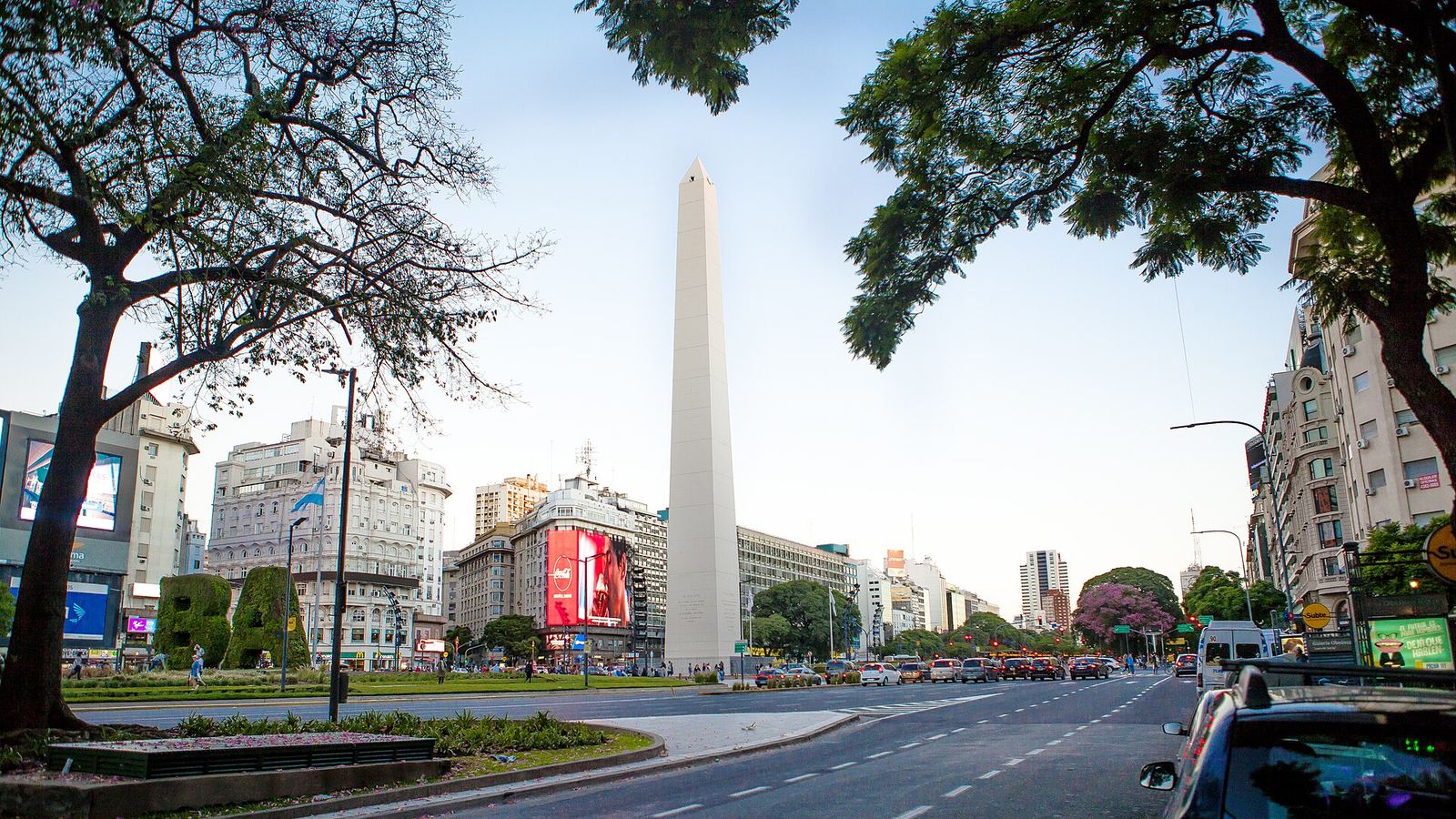
For nearly every visitor, a travel eSIM is the smoothest way to stay online in Buenos Aires. You buy it before the flight, scan a QR code, and your phone connects the moment you clear customs at Ezeiza, with no counter to find and no passport-and-tax-ID registration that trips up tourists buying a local SIM. The city runs on three strong networks, Personal, Movistar, and Claro, and any reputable eSIM rides one of them for fast 4G and 5G across the barrios. There is a local wrinkle worth knowing: Buenos Aires is a cash-and-QR city where the informal blue-dollar rate once made everything cheaper for tourists carrying US bills, but by 2026 that gap has shrunk to a few percent, so an eSIM priced in dollars no longer costs you a hidden premium the way it might have a couple of years ago.
What This Guide Covers
Jump to the section most relevant to you
Buenos Aires Mobile Coverage
Buenos Aires is well connected across the board. Three carriers run the networks: Personal (the largest and generally the fastest in the city), Movistar (the balanced middle, and the network most travel eSIMs ride here), and Claro (strong in town and the widest reaching once you leave the province). Across the capital you will not notice which one your eSIM uses for everyday tasks: maps, Cabify and Uber, translation apps, WhatsApp, and social media all run smoothly.
In practice a travel eSIM in Buenos Aires gives you a steady 20 to 50 Mbps on 4G in normal use, and considerably more where 5G is live. Commercial 5G is switched on across the capital on Personal and Claro, so around the microcentro, Puerto Madero, and the main avenues you may see much faster speeds. The dense downtown and the leafy northern barrios are all comfortably covered, and you can expect a usable signal in the parks, the plazas, and inside most cafes and restaurants.
Which network does my eSIM use?
Airalo and Nomad connect to Movistar in Argentina, while Holafly rides Claro. For a Buenos Aires stay any of them is excellent. The distinction only starts to matter if your trip continues south into Patagonia, where Claro reaches further, which is one reason the unlimited Holafly plan appeals to travelers pairing the capital with Bariloche or El Calafate.
Subte and Street Data Coverage
The Subte, the Buenos Aires subway, is the fastest way across the city, and the good news is that your mobile data mostly keeps working down there. Personal covers roughly 90 percent of the network on 4G, and Movistar has long been the strongest at holding a signal in the tunnels between stations, not just on the platforms. Coverage is not perfect on every line, and the oldest sections can drop briefly, but you can generally keep navigating and messaging while the train moves.
Every Subte station also has free WiFi, though you rarely need it with a working eSIM, since the cellular data is quicker and does not make you log in again each time you change platforms. Line D is the one most visitors use, running from the center out through Recoleta and Barrio Norte to Palermo and Plaza Italia, and coverage along it is dependable.
Get a SUBE card for the turnstiles, not for data
You tap through the Subte, city buses, and trains with a contactless SUBE card, sold at station booths and kioscos and topped up at machines and corner shops. It has nothing to do with your mobile data, but it is the one piece of local kit you do want alongside your eSIM, since most turnstiles will not take a foreign contactless bank card reliably.
Neighborhood Notes: Palermo, Recoleta, San Telmo
Coverage is good across every barrio a visitor is likely to spend time in, but here is how the main districts feel in practice.
Palermo
The sprawling, buzzy heart of visitor Buenos Aires, split into Palermo Soho and Palermo Hollywood, packed with cafes, boutiques, and nightlife. Networks here are strong and 5G is common, so uploading photos from a rooftop bar or navigating the leafy grid between design shops is effortless. The wide parks of the Bosques de Palermo are equally well covered.
Recoleta
The elegant, French-styled barrio home to the famous cemetery where Eva Peron is buried, plus grand avenues and museums. Coverage is excellent throughout, including inside the cemetery grounds, so you can pull up a map of the maze of mausoleums or look up who lies where without hunting for signal.
San Telmo
The oldest barrio, with cobbled streets, tango, and the huge Sunday antiques fair along Defensa. Coverage is solid here too, only marginally busier to load during the Sunday crush when the market fills with thousands of phones. On a normal day it is quick and reliable for maps and mobile payments at the stalls.
The short version is that no barrio a tourist frequents has a real coverage problem. Even the crowded La Boca waterfront around Caminito and the busy Florida shopping street hold up fine, though as anywhere, speeds dip a little when a district is packed shoulder to shoulder.
Free Public WiFi in Buenos Aires
Buenos Aires has plenty of free WiFi, but it works best as a backup rather than your main connection. The city government runs a free public network, BA WiFi, with hundreds of hotspots in plazas, parks, cultural centers, libraries, and transport hubs, and every Subte station carries free WiFi as well.
Where you will find reliable free WiFi:
- Cafes and confiterias: the city runs on cafe culture, and almost every one, from a corner notable to a Starbucks, offers WiFi, usually with the password on the receipt or a wall sign.
- Subte stations and shopping malls: stations, plus malls like Alto Palermo and Abasto, have free connections.
- Public plazas and parks: BA WiFi hotspots cover many green spaces and squares across the central barrios.
- Hotels and hostels: essentially universal, and usually the fastest free option you will use.
Why WiFi alone leaves you stuck
The problem with leaning on free WiFi is the gaps between hotspots. The signal ends the moment you step out of the cafe or off the plaza, which is exactly when you want a map to the next parrilla or a ride app to get home after dinner. Public WiFi is also less secure for anything involving a password or a payment. Most travelers keep a working eSIM as the constant connection and treat WiFi as an occasional top-up.
Getting Connected on Arrival (Ezeiza and Aeroparque)
Buenos Aires has two airports: Ezeiza (EZE), the big international gateway about 35 km southwest of the center, and Aeroparque (AEP), the city-side airport that handles most domestic and some regional flights. The setup that saves the most hassle is to sort your eSIM at home the night before you travel, then activate it once you land.
Add the eSIM at home
While you still have your own internet, scan your provider's QR code to add the eSIM profile to your phone. Keep your home SIM in place so your usual number stays reachable for texts and two-factor codes.
Lean on airport WiFi if you need it
Both airports have free WiFi. At Ezeiza, join the AA2000-Free network in the arrivals hall and sign in through the portal; Aeroparque uses the same AA2000 free service. This covers you if you still need to activate or download anything after landing.
Switch it on and confirm
After customs, turn on your eSIM line, set it as your data line, and enable data roaming if your provider asks. Within a minute or two you should see the carrier name and a data signal. Open a map to confirm you are online before you head for a taxi or the Tienda Leon bus into town.
Doing it this way skips the airport SIM counter entirely. While other arrivals hunt for the single Personal store at Ezeiza or puzzle over the registration rules, you are already checking the fare into the city and messaging your accommodation.
Day-Trip Coverage: Tigre, Colonia, La Plata
Buenos Aires coverage is uniformly strong, but the classic day trips reach into the delta, across the river to Uruguay, or out to a provincial capital, where the picture varies.
| Destination | Coverage | Notes |
|---|---|---|
| Tigre and the Delta | Good in town, variable on the water | The Mitre-line train and Tigre town are well covered; signal thins on the delta launches deeper into the islands, so download a map first. |
| Colonia (Uruguay) | Fine, but it is another country | Reached by a 1 hour 15 minute Buquebus or Colonia Express ferry across the Rio de la Plata. Your Argentina-only eSIM will not work here; you need a regional plan or Uruguay data. |
| La Plata | Very good | The provincial capital an hour south is a proper city with full 4G and 5G, so coverage is a non-issue for the cathedral and museum route. |
The one that catches people out is Colonia. It is an easy ferry hop and feels like a Buenos Aires day trip, but the moment you cross the river you are roaming in Uruguay, and a single-country Argentine eSIM stops working. If Colonia or Montevideo is on your list, buy a regional South America plan that includes both countries, or add a short Uruguay eSIM for the day. For Tigre, cellular data on the train is reliable, but pack offline maps before you board a delta boat, since the wooden launches wander well beyond the towers.
Frequently Asked Questions
Will my data keep working on the Buenos Aires Subte?
Mostly yes. Personal covers around 90 percent of the Subte network on 4G, and Movistar is particularly good at holding a signal in the tunnels between stations, not just on the platforms. A few older stretches can drop briefly, but you can generally navigate and message while the train is moving. Every station also has free WiFi as a backup, though a working eSIM is faster and does not make you log in each time.
Is it hard for a tourist to buy a local SIM in Buenos Aires?
It can be. Argentine prepaid lines are registered to a passport and often a local DNI or CUIT tax number that visitors do not have, so some shops turn tourists away or need a workaround. A full carrier store handles it better than a busy kiosco, but it eats time. This registration hurdle, plus the loss of the old blue-dollar cash discount, is why many visitors now use a travel eSIM instead.
Does a Buenos Aires eSIM cover a day trip to Colonia in Uruguay?
No, not a single-country Argentina plan. Colonia del Sacramento is across the Rio de la Plata in Uruguay, about a 1 hour 15 minute ferry ride, so the moment you land there you are roaming abroad and your Argentine eSIM stops working. If Colonia or Montevideo is on your itinerary, buy a regional South America eSIM that includes Uruguay, or add a cheap Uruguay day plan before you sail.
How much mobile data do I need for a few days in Buenos Aires?
For a typical long weekend of maps, ride apps, translation, messaging, and social media, most travelers do fine on 3 to 5 GB, since hotels and cafes provide so much WiFi. If you stream video, tether a laptop, or upload lots of photos and reels, step up to 10 GB or an unlimited plan so you are not rationing data between cafe stops.
Should I still bring US cash for the blue-dollar rate?
It matters far less than it used to. For years, changing US dollars at the informal blue rate got tourists close to double the official peso, which made cash king. By 2026 that gap has narrowed to a few percent, so paying by card or QR at the market rate is now normal and carrying wads of cash buys little advantage. For connectivity specifically, an eSIM priced in dollars is no longer the expensive option it once seemed against a peso SIM.